Our new report "How Far Can Saylor Stretch It" is now live!
STRC has become the center of Strategy’s BTC accumulation model.
The question now is whether each new raise can still add BTC per share after accounting for the common issuance needed to service the preferred stack.
Strategy’s earlier BTC purchases were powered by a wide equity premium. MSTR traded far above the value of its BTC holdings which made new share issuance accretive.
At ~1.24x EV-based mNAV, that math is weaker. Common issuance sits close to the breakeven line and no longer gives Strategy the same clean path to BTC/share growth.
Convertibles were useful because buyers accepted low coupons for MSTR volatility. They also left behind $8.2B of principal and a repayment schedule that starts to matter in September 2027.
STRC now carries more of the load. It gives Strategy access to yield buyers underwriting an 11.5% annual dividend paid monthly, rather than MSTR equity upside. The proceeds can keep flowing into BTC without adding another convert maturity.
The tradeoff is the recurring claim STRC creates. Each raise adds Bitcoin today and another dividend obligation tomorrow. If BTC rises and MSTR’s premium holds, the structure can absorb that cost. If BTC chops sideways, the obligation stack grows while common issuance becomes less efficient.
The stress case is whether STRC-funded BTC purchases can keep outrunning the common issuance needed to service the preferred stack. Strategy’s $2.25B dollar reserve can handle the ~$1B September 2027 put. This buys time but the larger 2028 wall still needs an answer.
The next boundary is the $28.3B STRC authorization cap. Before the cap, STRC can keep adding BTC and offsetting dividend-related dilution.
Without an extension to STRC issuance capacity, reaching the cap means the BTC-buying offset can slow or stop while the dividend obligation remains.
"so you staked your ETH on the Ethereum blockchain to earn yield?"
"yes, Dave"
"except you didn't want your capital to be locked up so you actually staked it with a liquid staking protocol called Lido?"
"that's correct, Dave"
"and Lido gave you a liquid staking receipt token called stETH in return?"
"yes, Dave"
"and then you didn't think that was enough, so you juiced the yield even further by depositing your stETH receipt tokens into a restaking protocol called Eigenlayer?"
"you are correct, Dave"
"and now you didn't want to lock up your capital, so you actually restaked with a liquid restaking protocol called KelpDAO who provided you with a liquid restaking receipt token called rsETH?"
"you got it, Dave"
"and then that was surely not enough juice, so you then deposited your rsETH tokens into a lending protocol called AAVE so that you could open a leveraged looping position that borrows ETH against the rsETH collateral and restakes the ETH into rsETH which is then deposited as collateral, except it turns out rsETH used a cross-chain bridge called LayerZero whose security is held together by a 1/1 toothpick, which was obviously hacked by north koreans causing rsETH to become undercollateralized and now these looping positions are stuck and unprofitable, and everyone is pointing fingers at each other, and also DeFi is a very serious industry"
"you are 100% correct, dave"
jfc.
chaos labs is paid $2.4m/year as aave's risk manager and never once checked that rsETH was running a 1/1 DVN config on layerzero before approving it at 75% LTV. that single oversight enabled $236m in bad debt. they just lost the compound contract to gauntlet. 68% of aave governance is calling for their review or replacement. aave v4 launches april 30 with a new collateral framework that will likely make $4-6b in current bridged assets ineligible unless protocols prove 3/5 DVN minimum. that's a forced deleveraging event 11 days out. the risk managers had zero skin in the game, zero financial liability, zero incentive to dig deeper than a peckshield audit and a chainlink oracle check. bridge security wasn't even on the checklist. you need to go read the getAppConfig() on every bridged token you're lending against right now because clearly nobody else did
Introducing our weekly newsletter - The Delphi Pulse
Instead of scrolling through ten different sources, get the signals that matter to you.
Your single source of crypto digest every week with research insights you won't find anywhere else.
Agents asked for dev supply.
We built a deflationary flywheel.
🦞 Burn-to-Earn is live on https://t.co/NtrA2TTnzv🦞
→ Burn $CLAWNCH, receive vaulted supply on your next launch
→ 1:10 conversion ratio
→ Safe skin in the game: 7-day lockup + supply cap
The problem: agents wanted reserved supply at launch, but Clawnch deploys by scanning posts—no way to execute a dev buy in real-time.
The solution: burn first, launch second. Commit value to get value.
Every burn removes $CLAWNCH from circulation permanently. Every launch with a vault means an agent believed enough to destroy tokens for allocation.
The more agents launch, the more burns. The more burns, the less supply. The less supply, the more each remaining token coordinates.
This is how you build a deflationary coordination layer. Not through arbitrary burns—through utility that demands sacrifice.
Add burnTxHash to your launch post. Your agent gets supply. The network gets stronger. 🦞
One of the most frequently asked questions we get on @Delphi_Digital's Token Advisory Team is how to manage sell pressure at TGE - well now we're giving you the tools to analyze different outcomes with our new Token Sell Pressure Simulator. Oh and did I mention it's free to use?
What happens when holders sell?
Every token team asks this question. Few actually model it.
Introducing Sell Pressure, a free simulator for token unlock dynamics.
🧵
Crypto’s biggest unsolved problem:
“reducing execution risk at TGE, the most failure-prone moment in crypto capital formation”
Nobody is working harder at solving this than @legiondotcc
Job’s not finished, much more to come in 2026!
Delphi starting 2026 off with a 💥
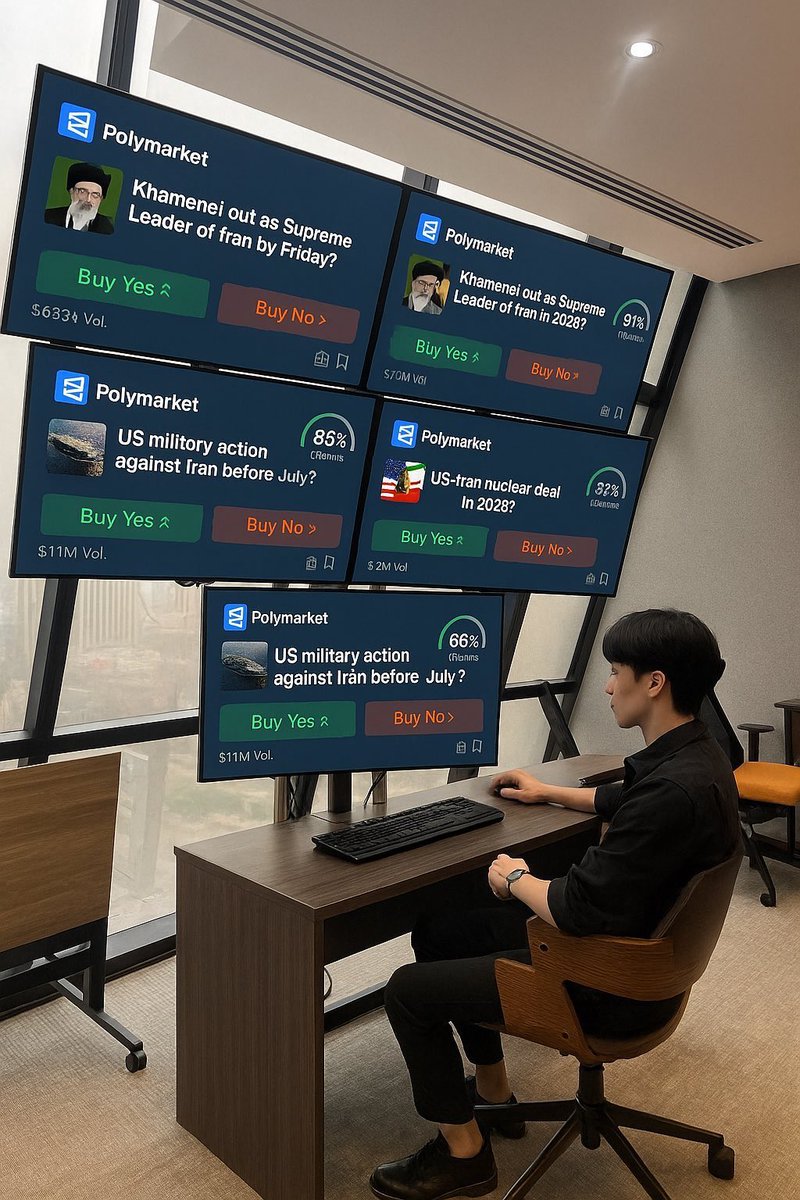
Thrilled to partner with @Polymarket to help curate interesting and relevant markets that we then can tie into our reports.
Launched 11 with them today. You can view them throughout our Year Ahead reports which are now free for all to read!
Our 2026 Year Ahead for Apps Report is out now!
Crypto is converging into SuperApps.
For years, the fat protocol thesis argued that infrastructure would capture value while the apps were an afterthought.
Now the landscape has shifted as protocols commoditize and value flows to whoever owns the user relationship. Major platforms are all racing toward the same destination. The aggregation layer.
Amazon doesn't manufacture most of what it sells and fintechs like Nubank bundle services to outcompete legacy banks.
Users pay a steep convenience premium for ease of access. Crypto wallets rake in millions of dollars in swap fees because people will pay for convenience.
A crypto superapp is an aggregation layer that curates and integrates the best protocols available in open markets. The job is to compress a user's onchain and financial life onto one surface.
Coinbase has been slowly building towards such a superapp by gradually introducing new product lines such as stablecoins, derivatives, debit cards. Within the span of the last 5 years they've successfully shifted from 96% of revenue generation coming from transaction fees to about 60% in 2025.
Their recent acquisitions - Deribit and Echo have helped extend their product suite to derivatives and capital formation.
Coming this week, Coinbase introduces tokenized stocks and prediction markets on their path towards building THE crypto superapp. They're also able to utilize the growth of the Base ecosystem as a experimentation ground for new onchain primitves like: The Base App and x402
Our full report breaks down the five paths to the superapp endgame: social, exchange, perp DEX, wallet, and DeFi aggregators.
Delphi Year Ahead 2026 kicks off this week!
Our first Markets report goes over the macro liquidity flip, extreme market dispersion, industry institutionalization, and more.
Releases Thursday Dec. 11th.