To animate tractography you can use either "Progressive fiber reveal" or "Traveling light pulse". Here is travelling light pulse in my infant #brain viewer.
A streamline with N points has visible length at frame t:
k(t) = floor(N×s(t)),
where s(t) smoothly increases from 0 to 1
Since we are into visualization craze, here is one about🧠#stroke and lateralization. If you want, check the whole paper about gradients: "Reshaped functional connectivity gradients in acute ischemic stroke" https://t.co/1YMWfZQk6Q
Models like NV-segment-CT/Nv-reason-CT (paired with Kitware's VolView) are cool. One click on the aorta and NVIDIA's open NV-Segment-CT traced it. then everything: 84 structures from 304 slices... even explode organs. Any radiologist out there commenting if useful?
enough #AI ?
Behold, with the help of vibe coding I managed to put together an adjustable per month cortex-#EEG electrodes-tractography for infant and to connect it with LORETA sensor-to-source reconstruction, and my own effective connectivity library. Please test it! https://t.co/KCGjj1KvSs
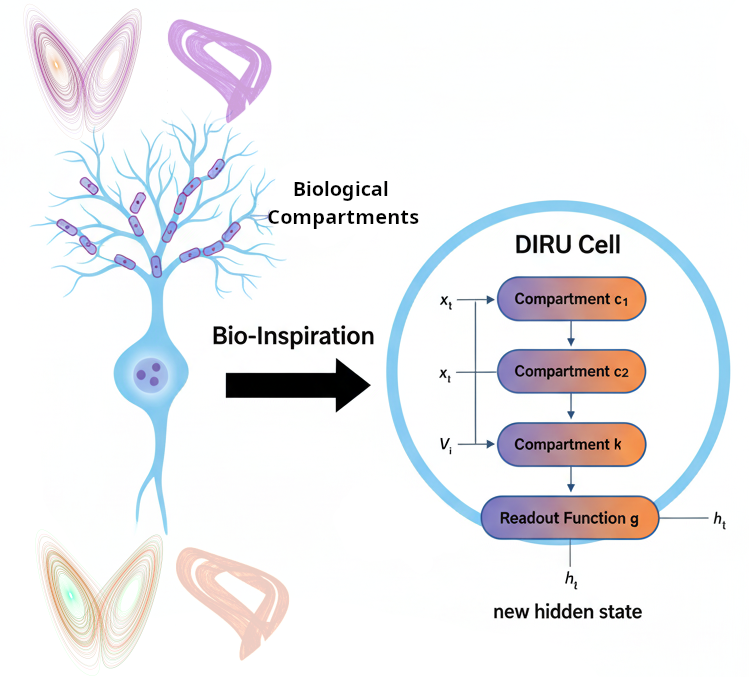
What do you think of our Recurrent #NeuralNetworks based on dendritic computation?
For time series prediction with long horizons (tested on Lorenz #attractor and #epilepsy#EEG) it performs better than #LSTM and #GRU
https://t.co/Z2xusJWnfM
New paper out on #RNN with Binds group from @unipa_it and @neurotechx Berlin
"DIRU: Dendrite-Inspired Recurrent Units for Learning Chaotic Dynamics and Neonatal #Epilepsy Time Series"
https://t.co/Z2xusJWV5k
Code: https://t.co/4cOjav0sS3
Data: #EEG of Helsinki infant hospital
The #surgeon has the #3D scan. The surgeon has the live X-ray. What nobody has is the transform between them. This open-source AI lines up a live #Xray with a patient 3D CT scan, with submillimeter accuracy
Nature paper: https://t.co/v6rWeiEmJB
Main code: https://t.co/tXHT7acIBE
#AR for the poor!
A #brain🧠3D model with connectome in it from the paper, docked with just javascript to the poster itself (printed in B&W with coffee stains😄), no app, nothing fancy. But the model is 15MB, too much for my shitty phone. Help welcome
https://t.co/POzUWEjglp
For #genomics#datasets, I often use these 4 portals:
🧬TCGA - https://t.co/uRpLdN1VDy
🧬DepMap - https://t.co/lNBVdtA3IQ
🧬1000 Genomes - https://t.co/je6nE8J12d
🧬recount3 - https://t.co/N3SsjBnmHn
Are there better resources you use for genomics datasets? What am I missing?
Seen this? What if we could understand how scientists move through the work, not just what is published?
🤖🔬
Transfyr is using #AI to study scientific workflows and movements, helping uncover patterns that can make research more transparent and reproducible.
What do you think?
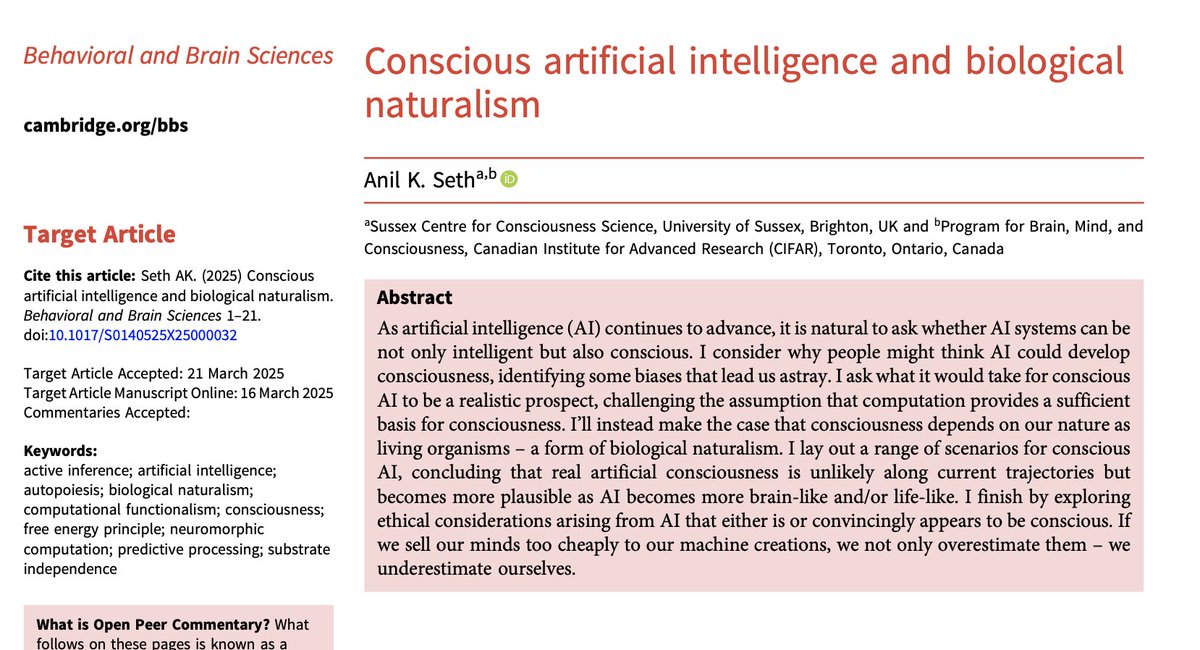
1/3 Conscious AI and Biological Naturalism. A veeery loooong time in the making, but I'm happy to say that the full collection is now out in @BBSJournal 🔥 I deeply thank all commentators - of fifty commentaries! - for their wise, broad, and deep opinions on this critical topic. I also thank them for their saintly patience. 🙏🏽
I remain highly skeptical about the prospects for conscious AI (for silicon digital systems), but I've learned an enormous amount from the privilege of engaging with these commentaries. Hands down one of the most rewarding experiences of my professional life.
My hope is that - whether you agree with me or not - having such a diversity of views collected in one place will serve a useful resource for discussions about consciousness and AI.
The original target article is available here: https://t.co/Tsaslytu56
My response "The stuff matters: consciousness, computation, and biology" was published just now, and is here: https://t.co/gtOewuG9MY
And the set of 50 commentaries are collected here: https://t.co/HUhiraO3kG
Unfortunately these are not open access. I will try to remedy that, at least for the target & response.
FWIW there's a more accessible version of my view on the topic here in @NoemaMag https://t.co/LmSiQnT9Wh and also a short @TEDTalks from earlier this year https://t.co/vDvw82ookk
#brain stuff 🧠:
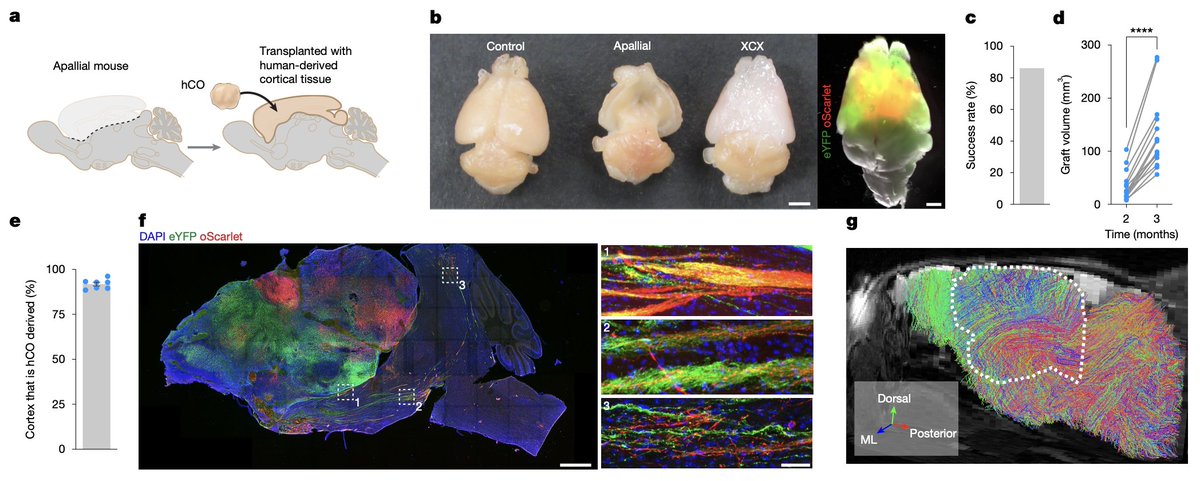
Historical day, @kevinwkelley and colleagues created a xenocortical mice where human organoids grow to occupy most of mouse cortex https://t.co/tx4YwiestN
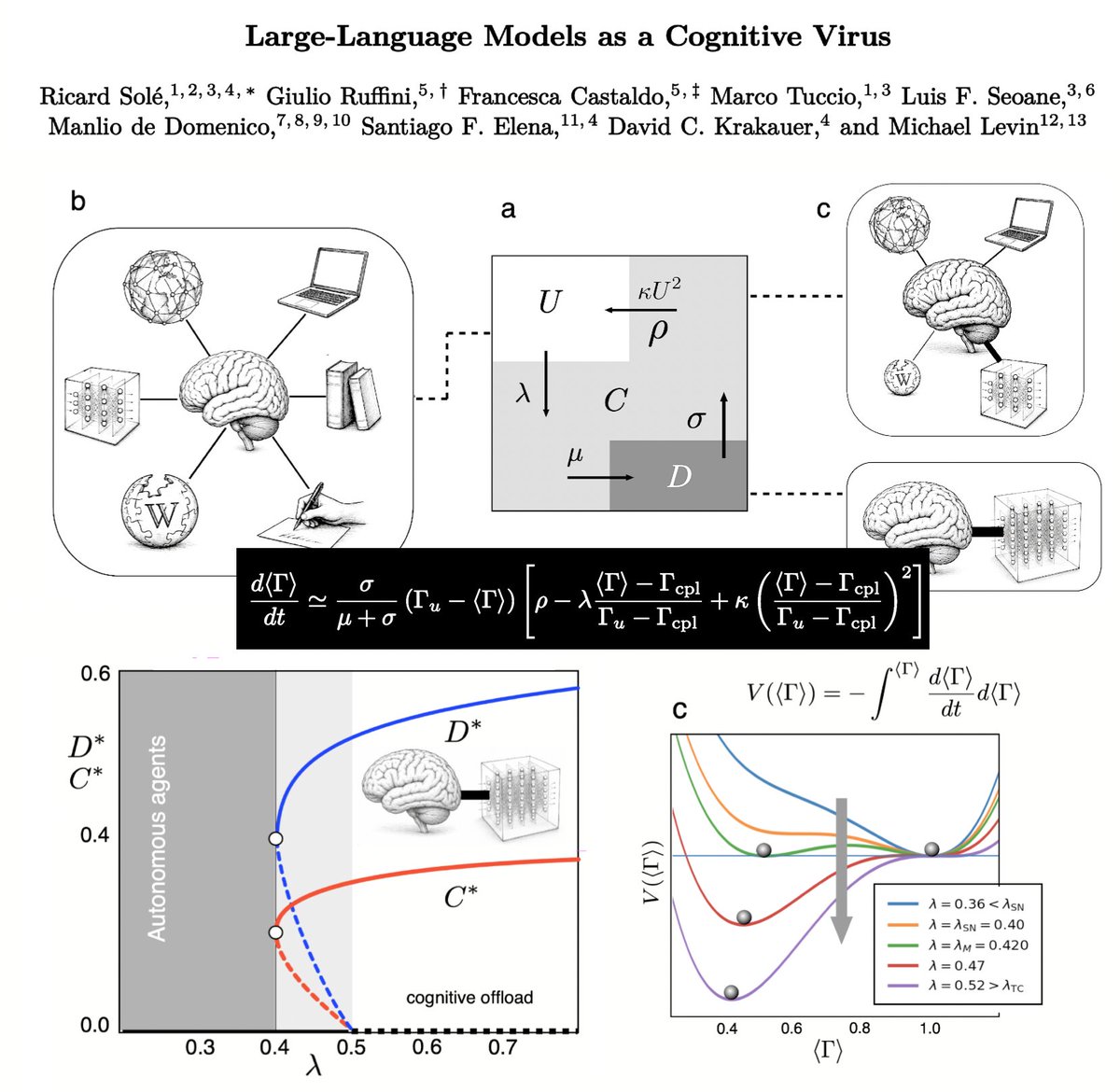
Can AI spread like a virus and erode cognitive autonomy? Our new paper models how LLM adoption can cross tipping points, triggering runaway dependence and tech lock-in, suggesting routes to "cognitive immunization". https://t.co/4e8ya6JNsW
New paper out 🧠
1. We showed that an #EEG#neuromorphic classifier achieves comparable GPU results using 1/3 of electricity
2. 1/f slope (E/I inbalance) was among top features, and we showed the value of it also with #Alzheimer neurosimulations with #Nest
https://t.co/cm2JxKaLgo
New preprint out! With Christian and Tina from AIMS Ghana we have developed:
"Hierarchical Detection of 👶#Neonatal 🧠 #Brain Pathologies Using a Two-Stage Deep Learning Framework from Magnetic Resonance Imaging" https://t.co/Ajrf5BoBnc
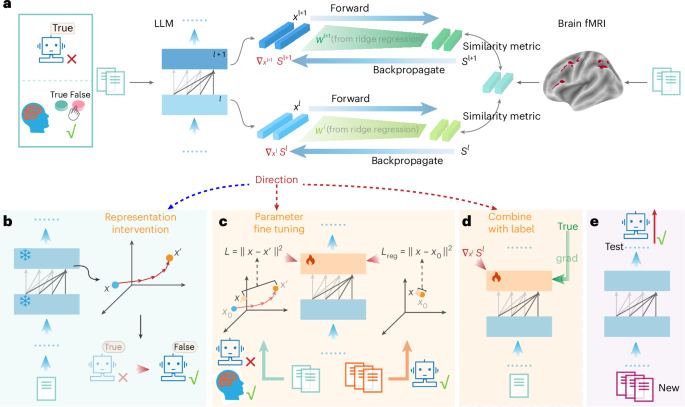
Beyond representational alignment with 🧠 #brain-guided language models 🤖#LLMs for robust reasoning
https://t.co/5MazsDzWU8 or https://t.co/uKVJz90fG1
Data: https://t.co/Lbv958MXRV
Code: https://t.co/h2BmKnpAvB