@Gautamjharnaa I don’t believe so. We are trying to raise awareness of this issue. It was pretty safe and easy and may increase the lung function and chance of lung transplant.
Presenting our study showing that performing a recruitment maneuver after apnea testing improves oxygenation and reduces atelectasis for potential lung donors at #NCS2023 supported by @midamtransplant foundation. Thanks to collaborators at @WUSTLNeuroICU
Exciting new research on SAH brain injury neuroprotection! 🧠✨
A recent randomized controlled trial shows that noninvasive transauricular vagus nerve stimulation (taVNS) can significantly improve outcomes for patients recovering from a subarachnoid hemorrhage (SAH).
Key findings: 📉 taVNS significantly reduces key inflammatory cytokines (TNF-α and IL-6) in both blood plasma and cerebrospinal fluid. 🧠 The therapy reduces the rate of radiographic cerebral vasospasm, helping blood vessels return to normal caliber more rapidly. 🏥 Patients receiving taVNS demonstrated higher rates of favorable functional outcomes and a significantly lower rate of discharge to a skilled nursing facility or hospice.
This represents a highly promising, low-risk bioelectric approach to neuro-immunomodulation in the ICU! ⚡👂
Source: Huguenard AL, Tan G, Rivet DJ, et al. Auricular vagus nerve stimulation for mitigation of inflammation and vasospasm in subarachnoid hemorrhage: a single-institution randomized controlled trial. J Neurosurg. 2025;142:1720-1731. https://t.co/Di5k4K1NJh
HOPE trial at #ESOC2026 🚨
Tailoring systolic BP to recanalisation status after EVT improves 90-day outcomes in acute ischemic stroke.
Findings:
•mRS 0–2: 60.0% vs 46.7%.
•Hemorrhage: 22.3% vs 31.6%.
•Mortality: 15% both.
•Supports individualised BP post-thrombectomy.
This is one of the most consequential positions to shape the future of #Neuroscience research and we need a strong, visionary leader to take the helm at @NIH_NINDS ✅ #NeuroTwitter
🚨We review the role of AI-based imaging tools in stroke care, focusing on automated detection of imaging abnormalities & emerging tools that provide quantitative imaging biomarkers to support treatment decisions @SpringerNature : https://t.co/LXO05xGoNQ Led by @barakhanov!
ICYMI: #ISC26 Stroke Early Career Debate Recap: In this #BloggingStroke post, Kristina A. Rankine shares highlights from this session on open vs closed ICU models in stroke care.
https://t.co/d4kY9qENOx
@sauravmed@LBGoldsteinMD
#FlashbackFriday !
🧬🧠Study identifies new genes and pathways shared between cerebrovascular diseases and neurodegenerative diseases
Read more below!👇
https://t.co/KKoRsoWRRS
Our editorial on how genomics and multi-omics can accelerate scientific discovery across stroke research and advance new drug discovery; an introduction to an upcoming special issue for @_JCBFM - with excellent review and original articles https://t.co/GO5vfXkUtV
Get ready for this. These Chinese investigators report a cohort of 121 malignant MCA infarction patients age >60, 47 of whom underwent drill-assisted sterotactic aspiration of the infarcted tissue from 24-72 hrs after onset. Check out the CT images and the 70 mL of nectrotic brain tissue in the image below to give you an idera of what they were doing.
Retrospective, not randomized -- but the results were great.
Herniation: 47% vs 9%
Death: 65% vs 9%
Favorable mRS (0-3): 3% vs 26%
Not only #curingcoma –– cheating death.
https://t.co/uUULG3qAFb
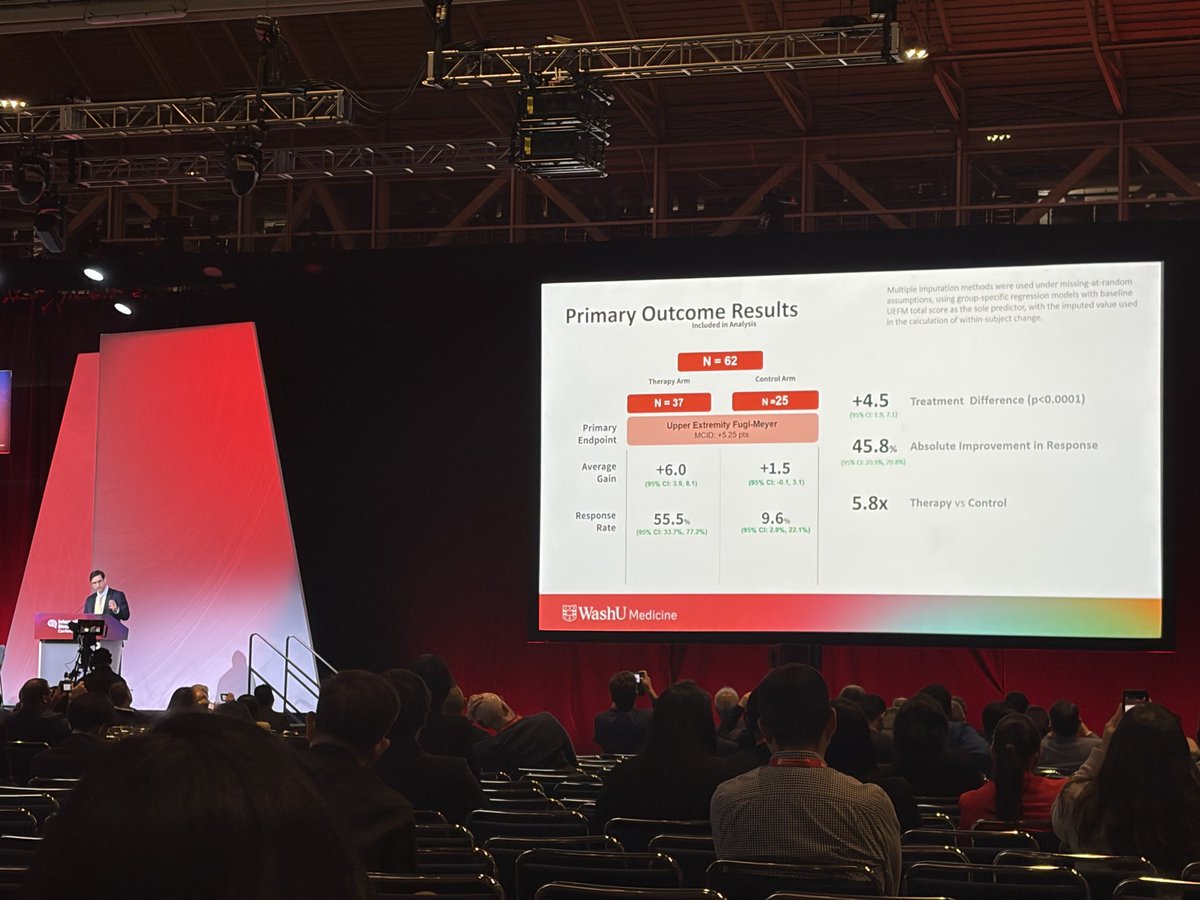
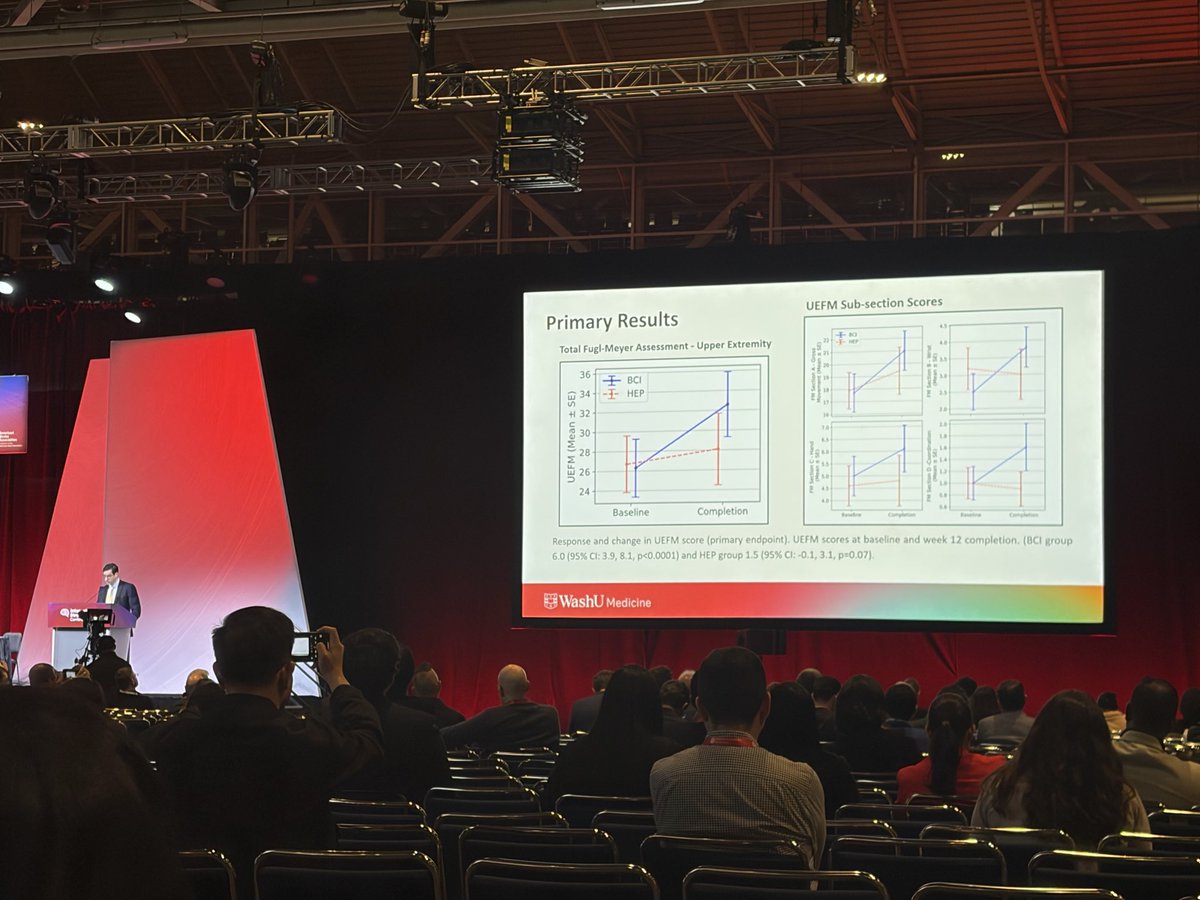
@leuthardt presents results of the IpsiHand to augment motor function of patients with stroke. Unique randomized controlled trial of a #BCI to improve home-based stroke recovery. Game-changer.
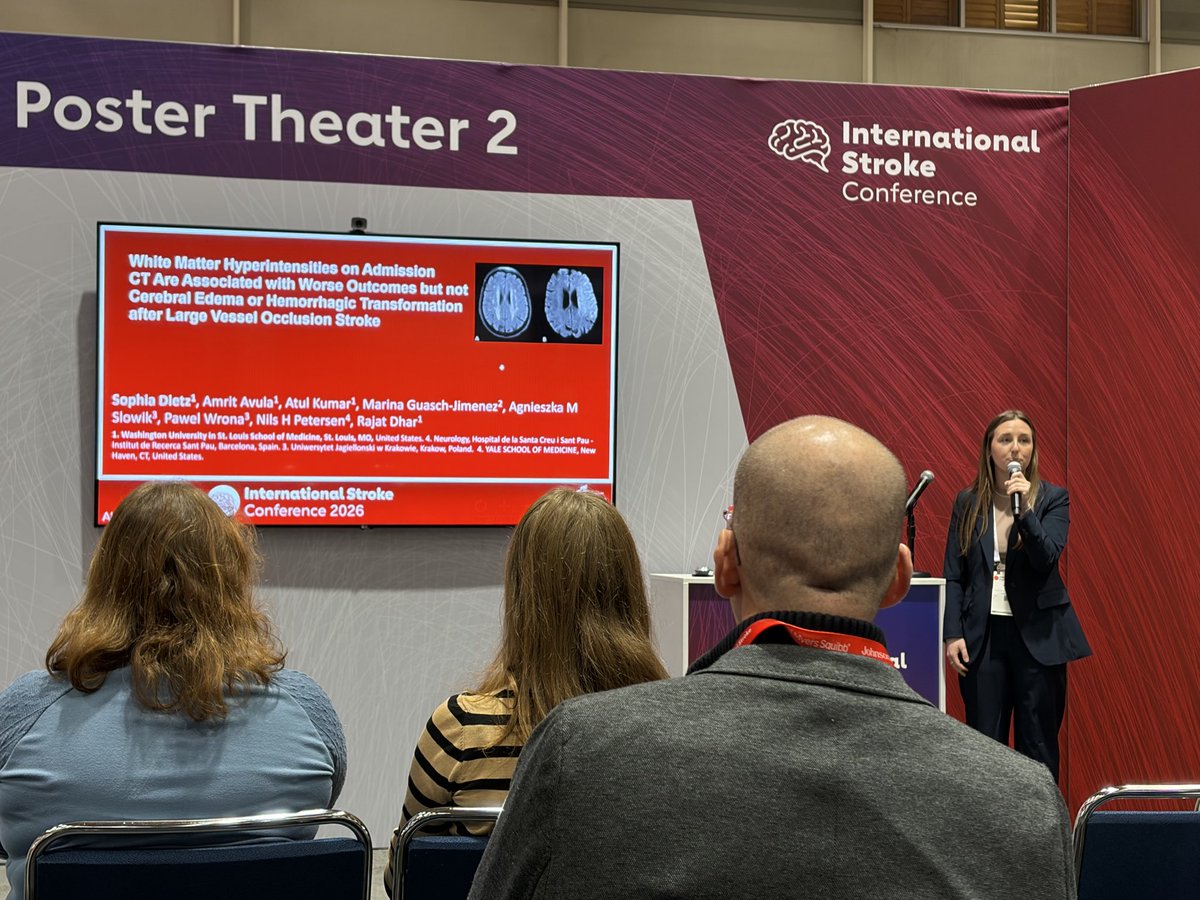
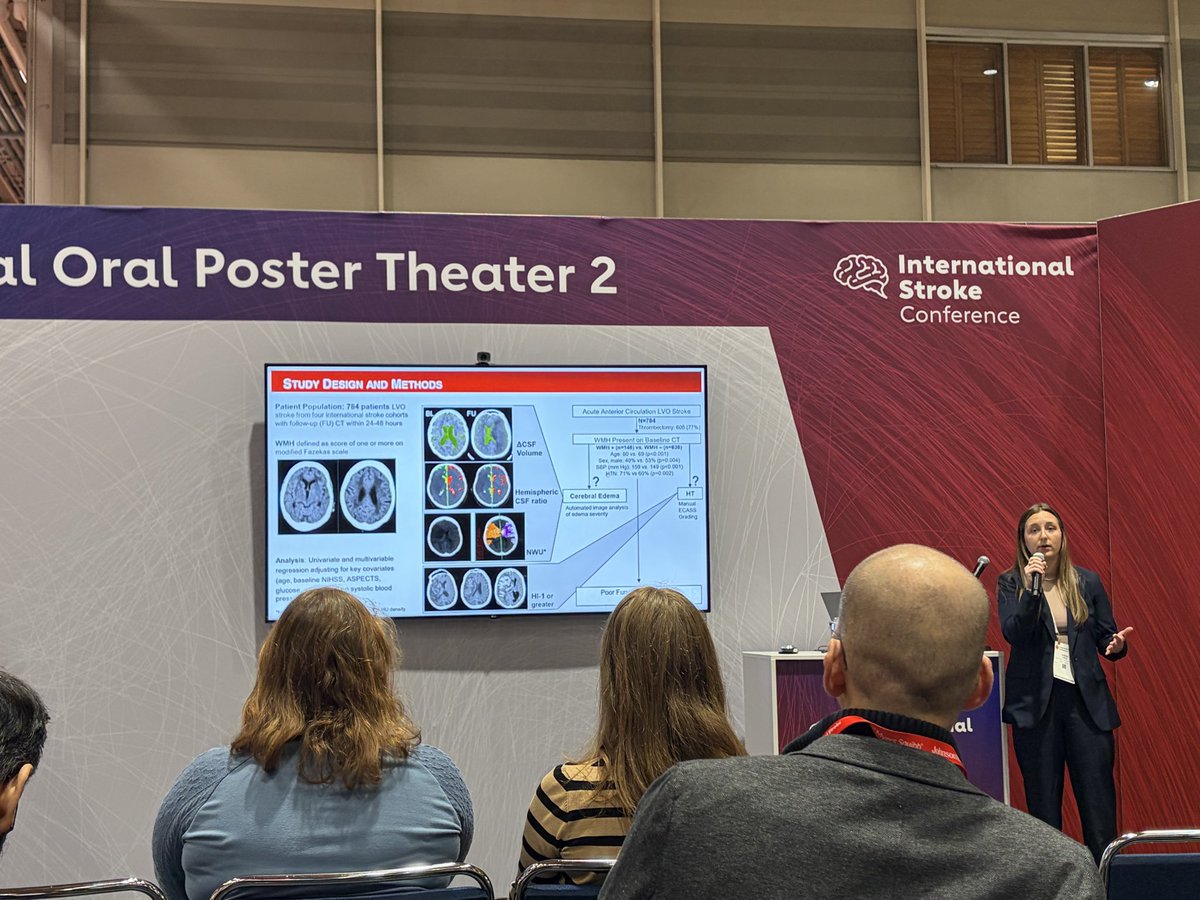
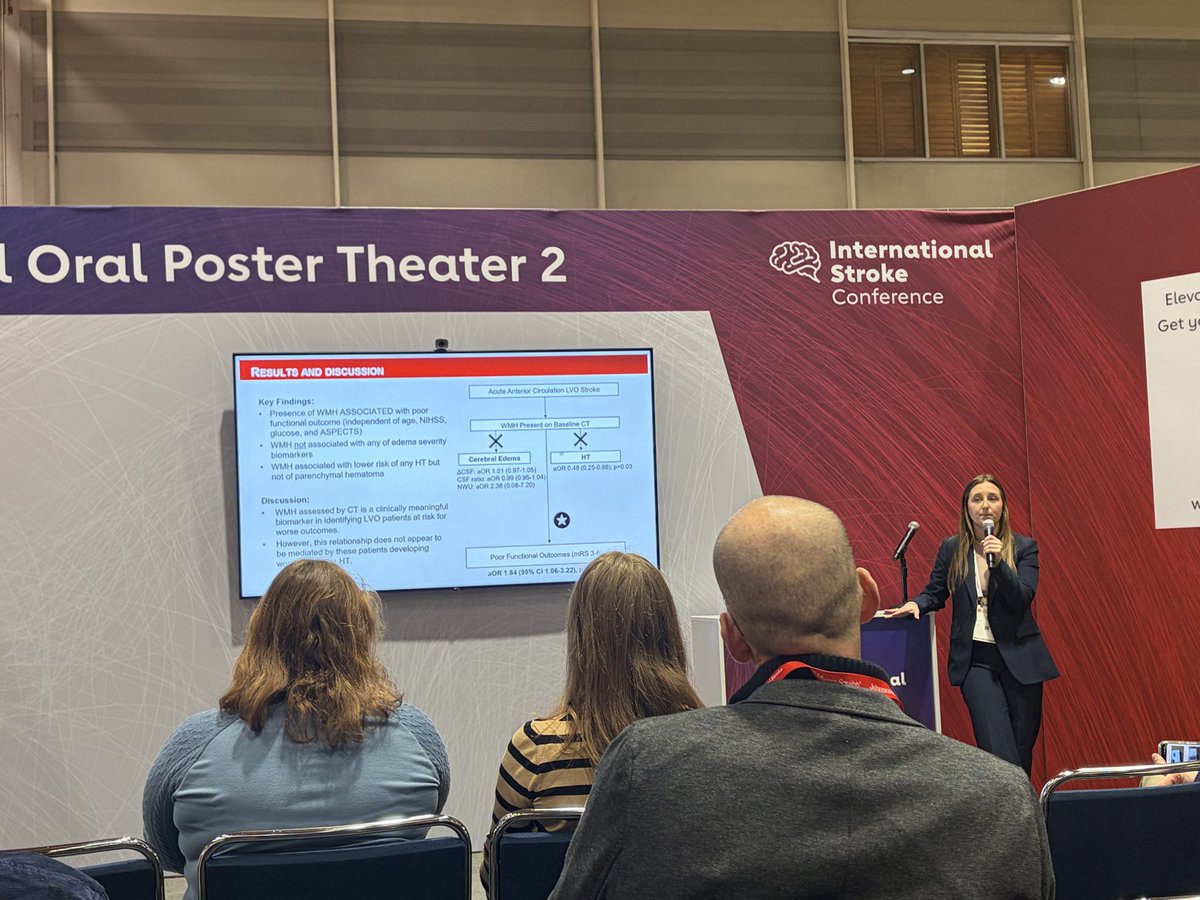
Sophia Dietz (@washumedicine M2) presents at #ISC2026 on how white matter hyperintensities on CT relate to worse LVO stroke outcomes but are not associated with more cerebral edema formation.
Dr. Walter Koroshetz is a highly respected leader whose tenure’s marked by numerous advancements in treatment of neurological diseases. His departure will be deeply felt by neurologists, researchers, & the many patients whose lives have been positively impacted by his leadership.
Our new paper on using an #XNAT based neuroimaging platform and #docker containerized imaging pipelines to extract stroke imaging biomarkers on 8000+ CT scans was just published in #theJDI#imaginginformatics@SIIM_Tweets
https://t.co/KIAZRo2aYO
We welcome collaborations ...
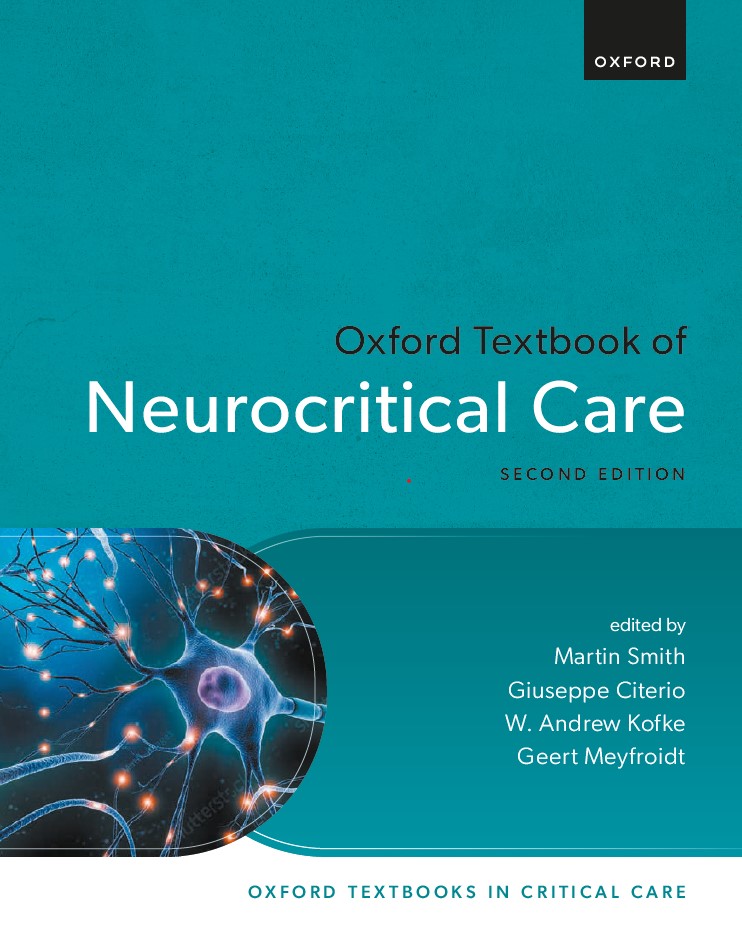
The 2nd edition of the Oxford textbook of Neurocritical Care is now available. With grateful thanks to the co-editors @Dr_Cit@AndrewKofke & Geert Meyfroidt and all contributors.
https://t.co/aoBoVe6KoL
@SNACCNeuro@NCCUQS@OUPAcademic @OUPMedicine @naccsuk