That's our ForWArd project! Spoiler: it's about waves in ice, and what happens to ice after it has been broken into small chunks. For the few people here not yet fluent in Norwegian there is an English version:
https://t.co/RjB5yBFa2m
Curious about how AI can enhance sea ice observation and modeling? Join our free online workshop on Monday, November 4th, 2024, at 13:30 CET. Check out the program and register here: https://t.co/TJgiVN98qm
SAVE THE DATE for Climate Informatics 2025!
📅 Conference: 28-30 April 2025
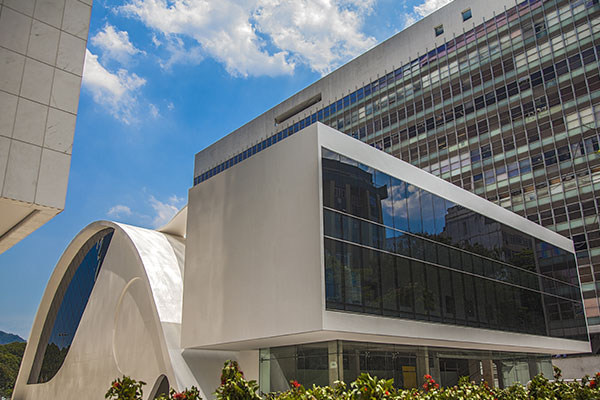
🇧🇷 Location: Centro Cultural Fundação Getúlio Vargas, Rio de Janeiro, Brazil
📝 Paper and Extended Abstract Submission Deadline: 10 January 2025
Stay tuned for more information coming soon!
Consider submitting your research to this session at the upcoming LPS conference in Vienna, especially if you're using AI to integrate Earth system models and Earth system observations.
Abstracts are now open for ESA Living Planet Symposium (📅 23 - 27 June 2025 | 📍 Vienna, Austria). Submit your work to our session
🌎 "D.02.04 Machine Learning for Earth System Observation and Prediction"
🔗 Submission portal: https://t.co/dyXRp9JH3m
📝 Deadline: 2024-12-01
On Thursday also, a nice session with Matilde Brandt Kreiner about machine learning for observing and forecasting sea ice with great speakers Anton Korosov (@Nansensenteret), Anja Frost (@DLR_en), @Wulftore, @CyrilPalerme, @charlottedur75, and @ampersandmcd
Summer temperatures impact not only sea ice extent but also sea ice thickness 🧊
Sea ice thickness is a key parameter for understanding changes in the polar regions❄️
🔽The thinning of Arctic sea ice for June & August visualised in the #MyOceanViewer 🌊🔎
AI is undeniably a positive force, but it's up to us to push research forward ethically and responsibly.
For this reason, we've partnered with an incredible group of researchers to develop CodeCarbon, an open source library to track and reduce CO2 emissions from your computing
Check out the latest paper I'm excited about: ArchesWeather. The authors developed a highly efficient emulator of ERA-5 running at 1.5° resolution.
While might seem low, the impressive part is that the model was trained on just 2 A100 GPUs for 2.5 days!
https://t.co/WSZekPOyPR
Discussion open for comments on @EgUsphere: Reconstruction of Arctic sea ice thickness (1992–2010) based on a hybrid machine learning and data assimilation approach https://t.co/kZVxO5skTS
The second #SuperIce seminar is already today‼️
Hear two talks about machine learning, sea ice, and seasonal predictions.
More info here, including the sign-up link to join online 👇
https://t.co/M9gt4mpxEx
I am very glad to invite you to the second #SuperIce webinar on Sea Ice and Data assimilation/machine learning on June 24th at 14:00 CEST.
We will have the pleasure to have two presentations: