MCP updates in FigJam so you can visualize your systems (and not just read code)
→ generate_diagram to create architecture diagrams & ERDs
→ figma-use-figjam skill to add notes, code blocks, and annotations directly to your board
→ get_figjam tool to read your board & map out next steps
"Using coding agents well is taking every inch of my 25 years of experience as a software engineer, and it is mentally exhausting.
I can fire up four agents in parallel and have them work on four different problems, and by 11am I am wiped out for the day.
There is a limit on human cognition. Even if you're not reviewing everything they're doing, how much you can hold in your head at one time. There's a sort of personal skill that we have to learn, which is finding our new limits. What is a responsible way for us to not burn out, and for us to use the time that we have?" @simonw
someone reminded me that i haven't shared details abt my process for the draw with claude project yet. i put together an overview here!
https://t.co/tv0hn7u0CV
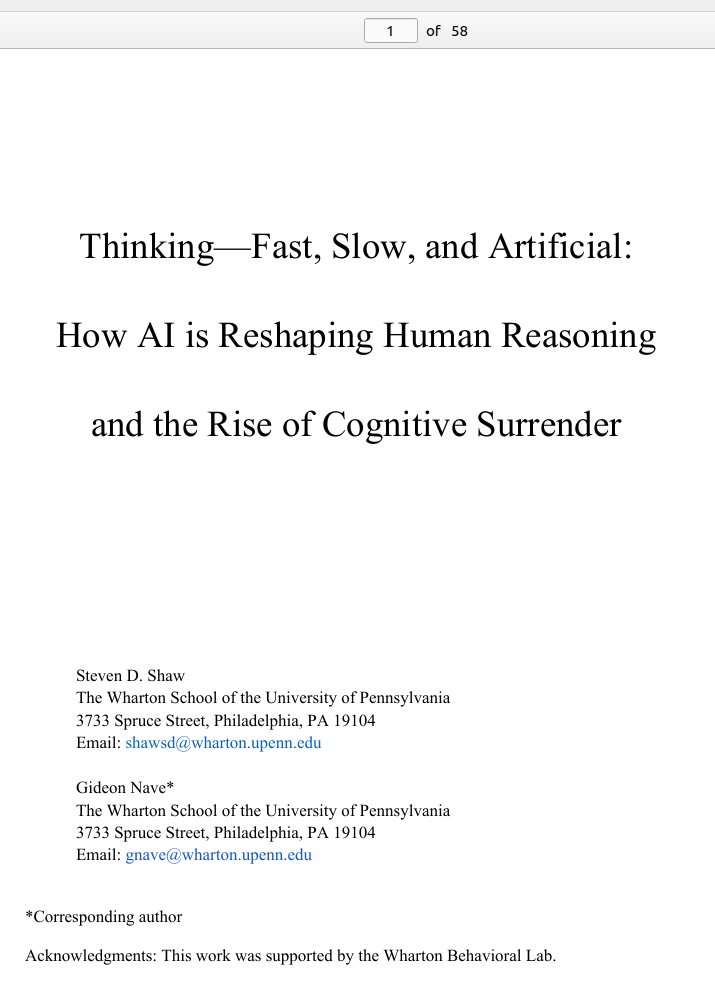
Wharton’s latest AI study points to a hard truth: “AI writes, humans review” model is breaking down
Why "just review the AI output" doesn't work anymore, our brains literally give up.
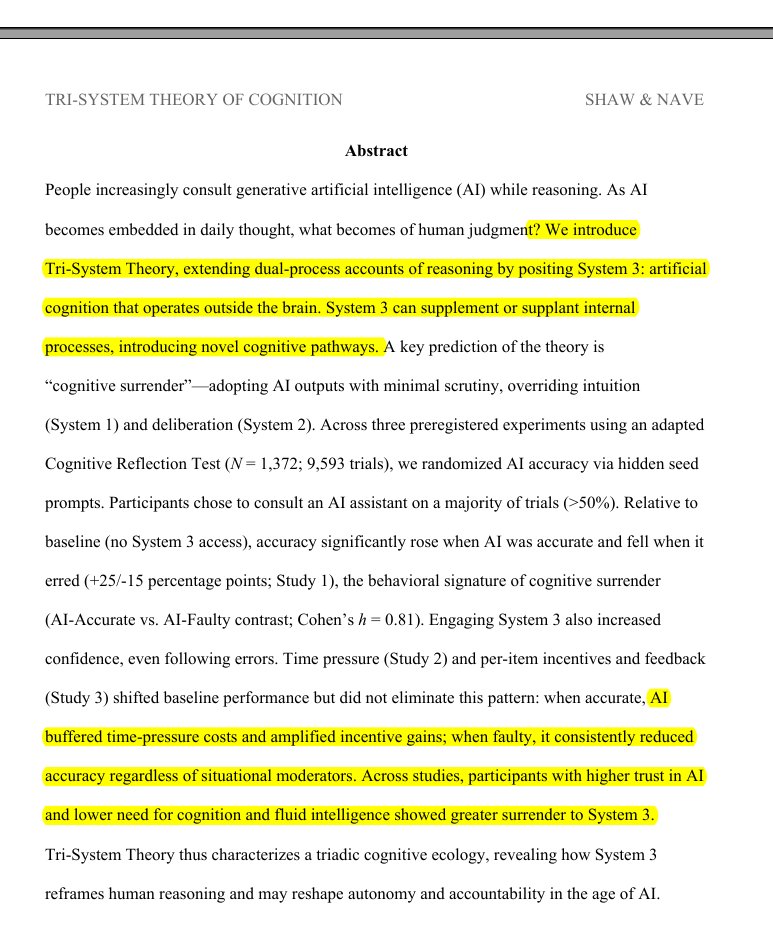
We have started doing "Cognitive Surrender" to AI - Wharton’s latest AI study points to a hard truth: reviewing AI output is not a reliable safeguard when cognition itself starts to defer to the machine.when you stop verifying what the AI tells you, and you don't even realize you stopped. It's different from offloading, like using a calculator.
With offloading you know the tool did the work. With surrender, your brain recodes the AI's answer as YOUR judgment. You genuinely believe you thought it through yourself.
Says AI is becoming a 3rd thinking system, and people often trust it too easily.
You know Kahneman's System 1 (fast intuition) and System 2 (slow analysis)? They're saying AI is now System 3, an external cognitive system that operates outside your brain. And when you use it enough, something happens that they call Cognitive Surrender.
Cognitive surrender is trickier: AI gives an answer, you stop really questioning it, and your brain starts treating that output as your own conclusion. It does not feel outsourced. It feels self-generated.
The data makes it hard to brush off. Across 3 preregistered studies with 1,372 participants and 9,593 trials, people turned to AI on over 50% of questions.
In Study 1, when AI was correct, people followed it 92.7% of the time. When it was wrong, they still followed it 79.8% of the time.
Without AI, baseline accuracy was 45.8%. With correct AI, it jumped to 71.0%. With incorrect AI, it dropped to 31.5%, worse than having no AI. Access to AI also boosted confidence by 11.7 percentage points, even when the answers were wrong.
Human review is supposed to be the safety net. But this research suggests the safety net has a hole in it: people do not just miss bad AI output; they become more confident in it.
Time pressure did not eliminate the effect. Incentives and feedback reduced it but did not remove it. And the people most resistant tended to score higher on fluid intelligence and need for cognition. That makes this feel less like a laziness problem and more like a cognitive architecture problem.
Looking for someone to lead Brand Design at @browsercompany.
The ideal candidate views themselves as an artist, doesn’t work in tech, and lets their portfolio speak for itself.
We’ll pay you more than you make now & ask you to design not manage.
Josh @ the browser . company
All of this has happened before, and it will happen again.
If you were writing code in 2010, you remember the era of closed IDEs and locked-down toolchains. Then VS Code showed up and opened both the editor and the extension layer. The ecosystem exploded overnight.
In February 2026, @figma shipped version 126.1.2. A quiet update broke a wave of developer automation.
That wasn’t an accident. It was a signal about where they want control to sit. The AI layer.
But agents don’t live inside GUIs. They operate on primitives. APIs. Infrastructure they can touch directly.
Design tools are drifting toward the same fork developer tools faced a decade ago. Either become infrastructure or become a gate.
Right now that choice is being made in real time.
I wrote a deep dive on the automation fight happening inside design tools, the rise of OpenPencil, and why the next 18 months will shape the next decade of design software.
Read the full essay below.
We'd like to invite you to AI Success Stories!
LTUX Berlin is organising an online gathering for women in the product and tech space, focused on a simple walk-through of how AI can be integrated into everyday workflows.
https://t.co/5rd0RcNqqB
I am obsessed with the notion of “what meta-skills are at the next frontier of creativity?”
Currently thinking about:
* Intent expression
* Designing modular systems
* Designing iterative systems
* History / bigger-picture pattern recognition
What else?
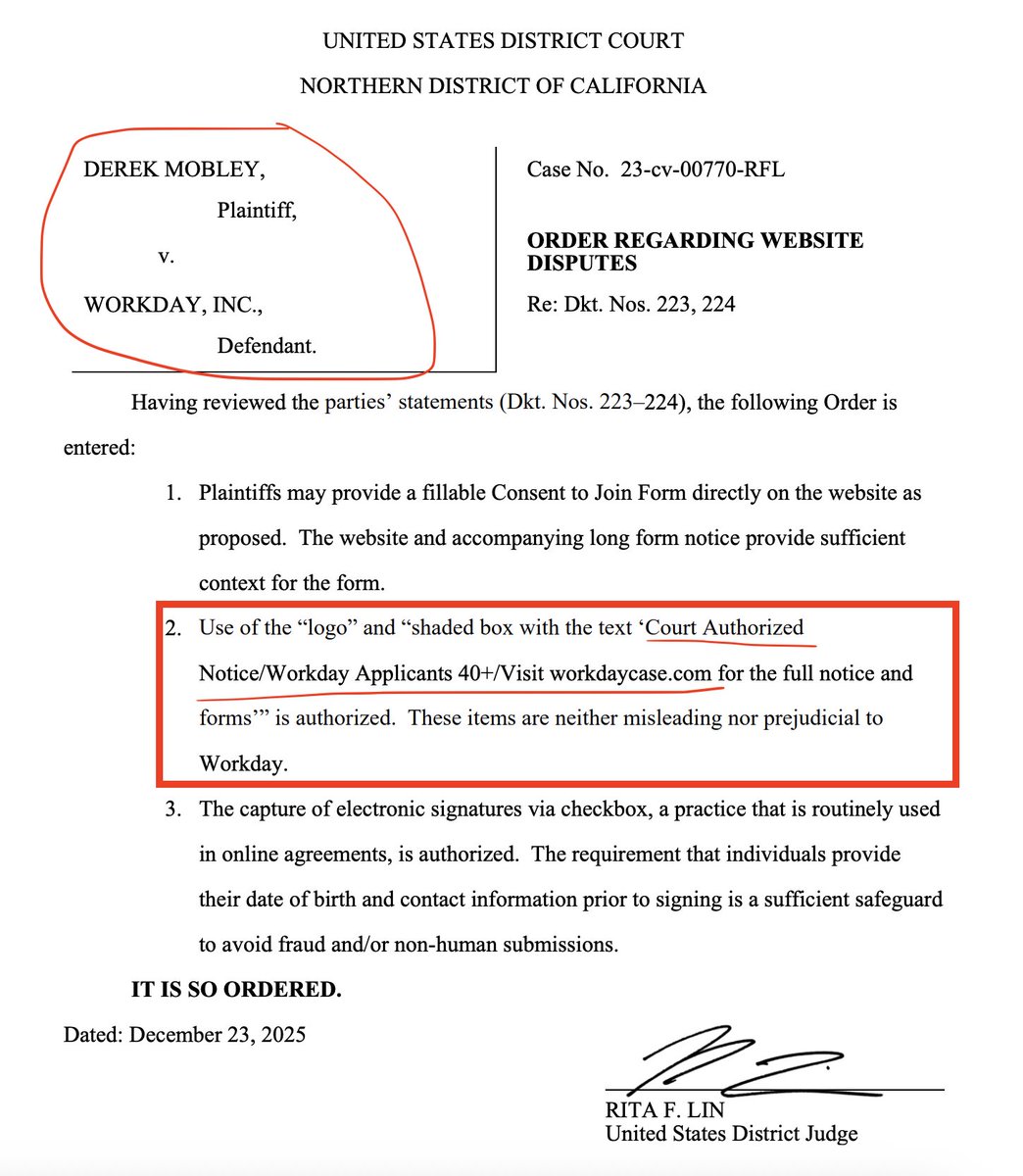
🚨 ATTENTION JOB SEEKERS 40+
If you've applied to jobs through Workday's platform (used by THOUSANDS of big companies) and got auto-rejected- no interview, no explanation- you might be part of a massive age discrimination lawsuit against their AI screening tools.
Court-approved notice starts January 6, 2026 (in 3 days!).
Opt-in deadline: March 7, 2026- don't miss it!
Check if you qualify & join at the official site (coming soon via media ads/website) appears to be https://t.co/ZR97qWsz6t ?
The AI might have blacklisted you for being "overqualified" or older. Time to fight back!
@SifuYeti @HollywoodHandle We are not even a “Disney” family and frozen, Olaf's Frozen Adventure, Frozen Fever and Frozen 2 are in heavy rotation over here.
i know nothing about these situations. but i hope ppl organize, share info, and find good lawyers who can advise the group. don't get bullied out of what you're supposed to get.