“Happy” hereditary breast and ovarian cancer week.
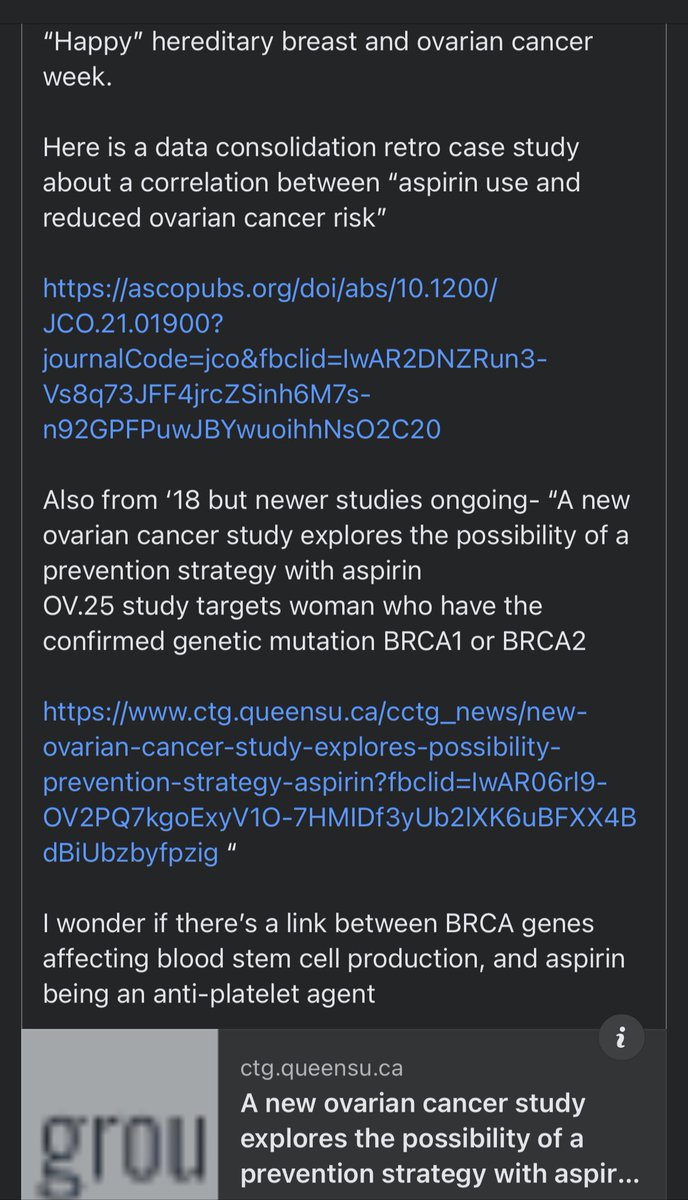
New data consolidation and retro as well as ongoing study, on correlation btw aspirin use and lower OC risk. Wonder if it’s to do with BRCA genes affects on blood stem cell production, and aspirin being an antiplatelet agent
@kpharmd12@Pharmassists fill it for cash. give them the ‘friends and family’ price along with a receipt so they can submit their own insurance claim. if they go somewhere else that’s their prerogative. we cannot afford to subsidize the insurance companies. no hard feelings. hope to see you next time.
I can’t stop thinking about a patient I saw last week. A woman around my age, thriving in her career, doing everything right. She was diagnosed with breast cancer three years ago and had her mastectomies at a major center here in Texas.
She wanted reconstruction and was given a flap procedure that removed her muscles on both sides. That choice has left her weak, in pain, and unable to do the activities she loves. She came to me hoping I could fix it but the truth is, once those muscles are gone, I can’t put them back. And this happened only a few years ago.
We’ll spend the next six months doing everything we can to help her, but her story matters because it was preventable.
If she had been given the full range of options, and if someone had explained the differences between flap surgeries, this extremely active woman would have chosen to have her muscles preserved. And if her surgeon wasn’t comfortable offering that option, she could have — and should have — been guided to someone who could.
As we update the Women’s Health and Cancer Rights Act, we must ensure this never happens again.
All reconstructions are not the same.
All flaps are not the same.
But right now, our coding system treats them like they are.
Here’s what needs to change:
-Distinguish muscle-sacrificing reconstruction from perforator (muscle-sparing) reconstruction
-Require counseling that clearly explains the differences and documents that patients were given true options
- Define what “adequate networks” really mean and explore a national network so patients can access qualified microsurgeons no matter where they live
Patients shouldn’t need insider knowledge to protect themselves. As surgeons, we have the responsibility and the opportunity to build a system that protects them before harm is done.
We can do better. And we will.
When I saw that Doctor Mike donated $10,000 to the gofundme to help save my practice, I cried happy tears. Who does that?!
It was such an honor to be on Dr. Mike’s podcast @thecheckuppodcast. His whole crew is the real deal—every bit as kind and genuine as you’d hope.
They welcomed me with open arms, gave me space to share more of my story, offered great advice, and reminded me I’m not alone.
If you haven’t listened yet, I hope you will. Being embraced by this community means more than I can say.
Thank you, Doctor Mike, for everything 🩵
So… who does that? Great doctors who see me taking the hit for all of us… and want me to keep going. If you haven’t stepped up to donate…now is the time.
https://t.co/iLNDQkzeSy
Shout out to my talented daughter Emma for winning Rare Artist of the Week for her “rare disease story-telling and advocacy”
Her piece entitled “Paternal Stripes” calls attention to the MEN1 syndrome that affects me and has led to the premature death of her forefathers 🦓
While you're here, would you consider supporting me in my chemo and cancer journey? Being unable to work while fighting this out is expensive, but I've been kept afloat by so many of your amazing people.
💕
Most viewed in the last 7 days from @JAMA_current:
USPSTF recommends all women undergo routine #breastcancer screening every other year beginning at age 40, an update from the 2016 recommendation to start at age 50.
https://t.co/gBHM5bmGSL
These cancers whisper & it’s very hard to have the symptoms taken seriously. It’s wild to see the overcorrection when you have a known genetic cancer syndrome & yet still I had to beg a pcp to do my ca-125 for baseline surveillance, they obsess about breasts tho
(not Dr Lewis!)
Comedian Janey Godley has died, aged 63. Over the past few years she has been actively sharing her feelings on social media about her ovarian cancer diagnosis, how she was coping with treatment and all the mixed emotions that came with it. RIP Janey.
On this day in 2005, the HERA study on breast cancer was published in NEJM. In the past 20 years, nearly 3 million women have been treated with trastuzumab, the first approved fully humanized monoclonal antibody. https://t.co/dgf73tWHMl
#pinktober#BreastCancerAwareness
Join us on 10/30 for a webinar in honor of National Breast Cancer Awareness Month led by doctors from NYU Langone Health. Come learn about the fight against breast cancer and breast cancer education through prevention, treatment, and advocacy.
RSVP Here: https://t.co/RTidIx2cAg
It's the FIRST ever Global Lobular Breast Cancer Awareness Day! This inaugural awareness day is set to have a tremendous impact in the world. Be sure to check out the @LobularBCA for more details. https://t.co/AQwQV7myAn
#BreastCancer#ILC#GlobalLobularBreastCancerAwareness
A woman with a rare ovarian tumor driven by EZH2 activity responded to tazemetostat, an EZH2 inhibitor, but T-cell acute lymphoblastic leukemia later developed. Read the full correspondence: https://t.co/Kg7mGVvb9Z
Her heartfelt @NEJM on her dx of Li–Fraumeni syndrome ➡️ https://t.co/WIqRZa9fHt
Her epic @TEDMED talk "The courage to live with radical uncertainty": https://t.co/aNWmboT3W9
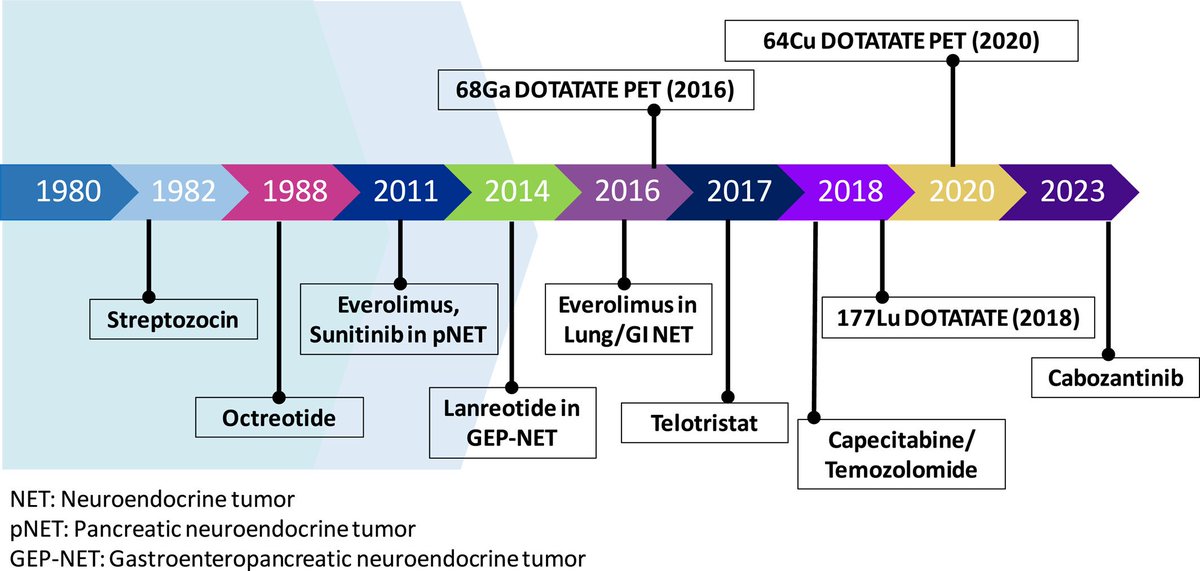
In advance of @CureNETs Know Your NETs virtual conference this weekend, this is a beautiful visualization of the tangible, if non-linear progress in the neuroendocrine field over the years 👇🦓❤️
Conference link: https://t.co/iDQnDNxwTE
Graphic source: https://t.co/7xFV79BynC
Interesting preprint on mesodermal cultures focusing on Ewing sarcoma!
Cell cultures are never trivial and also the base in which we can make discoveries in multiple fields
https://t.co/PiM1M64oEq
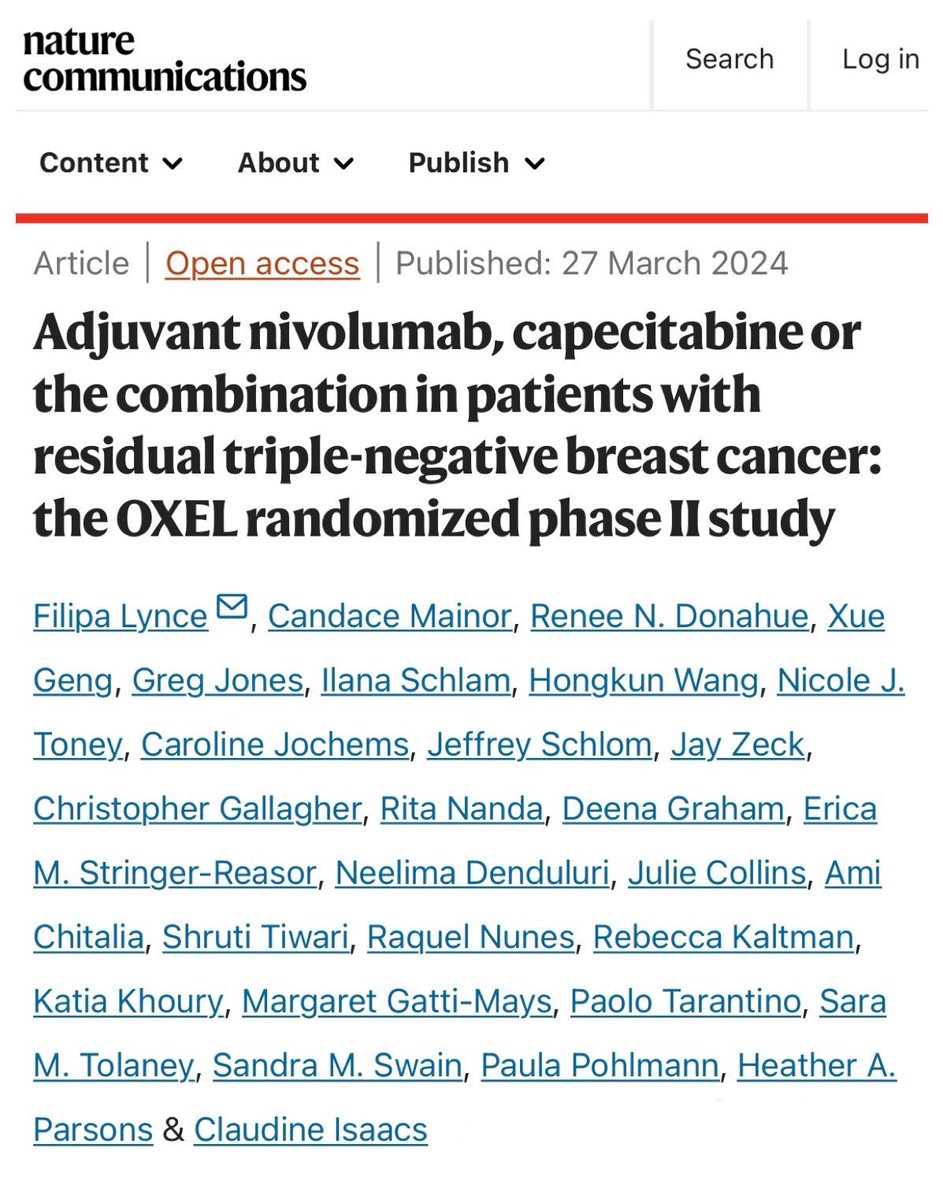
The OXEL trial, led by @FilipaLynce, is out on @NatureComms. Among 45 pts with residual TNBC after NAT, adjuvant nivo/cape were well tolerated, increased peripheral immune score & led to numerically improved 2y iDFS (91%) vs nivo (47%) or cape alone (53%). https://t.co/9h5sfN8VPt
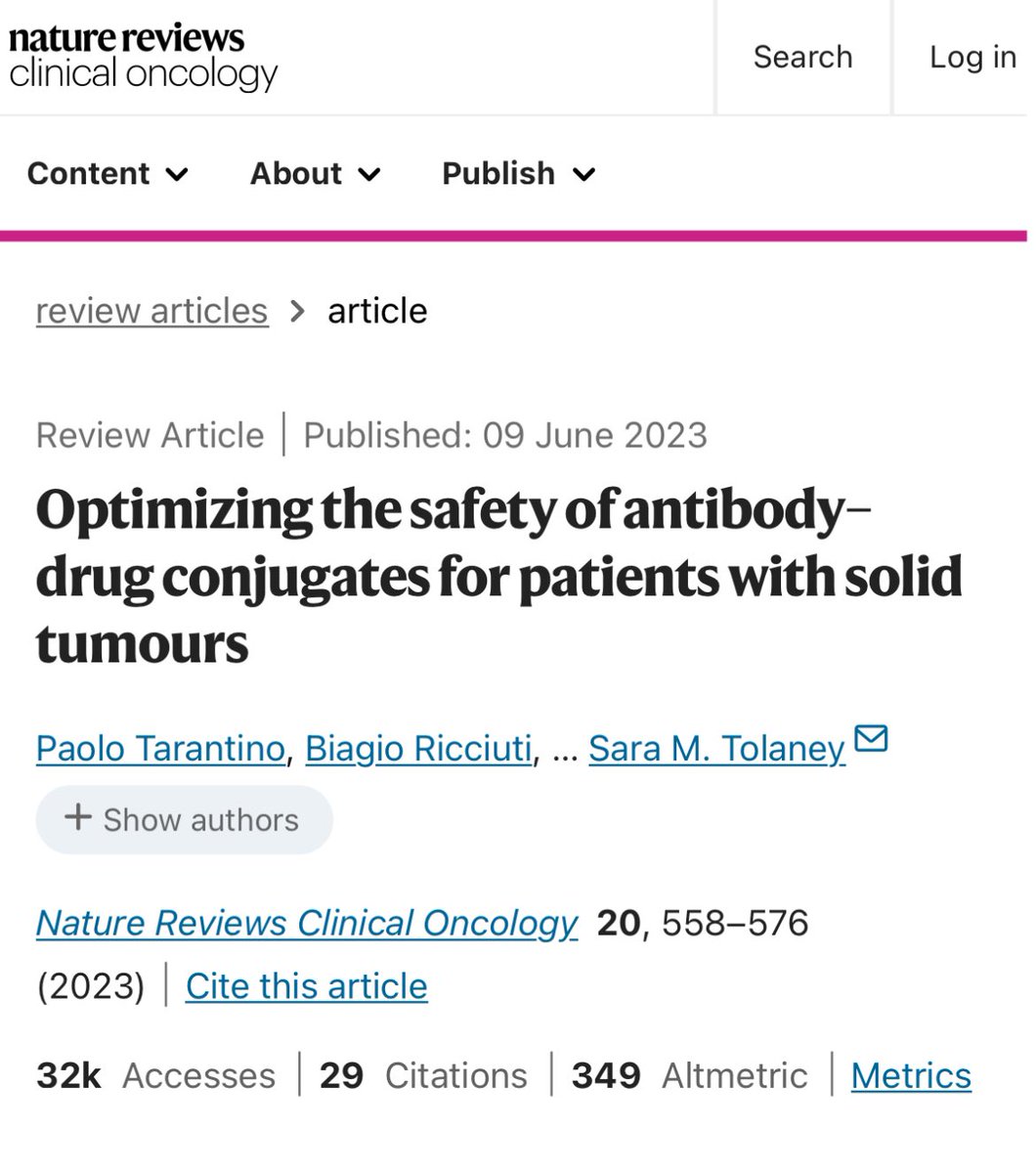
Grateful to @Nature for selecting our article on Optimizing the Safety of ADCs for their Outlook on Cancer treatment. As a result, the article will be open access for the next 6 months. Make sure to download a copy if you’re interested in ADCs! https://t.co/TUzAf6fdFw