Exciting news! The Bittrees Research membership is now live. Anyone can become a member by donating 0.025 ETH to the organization.
👇
https://t.co/G2y7J4Up7d
DAOs are so dead that I see nobody noticed or discussed this proposal that @ENS_DAO essentially dissolves itself and transfers control of the entire treasury (almost half a billion in ENS + stables) to the ENS foundation.
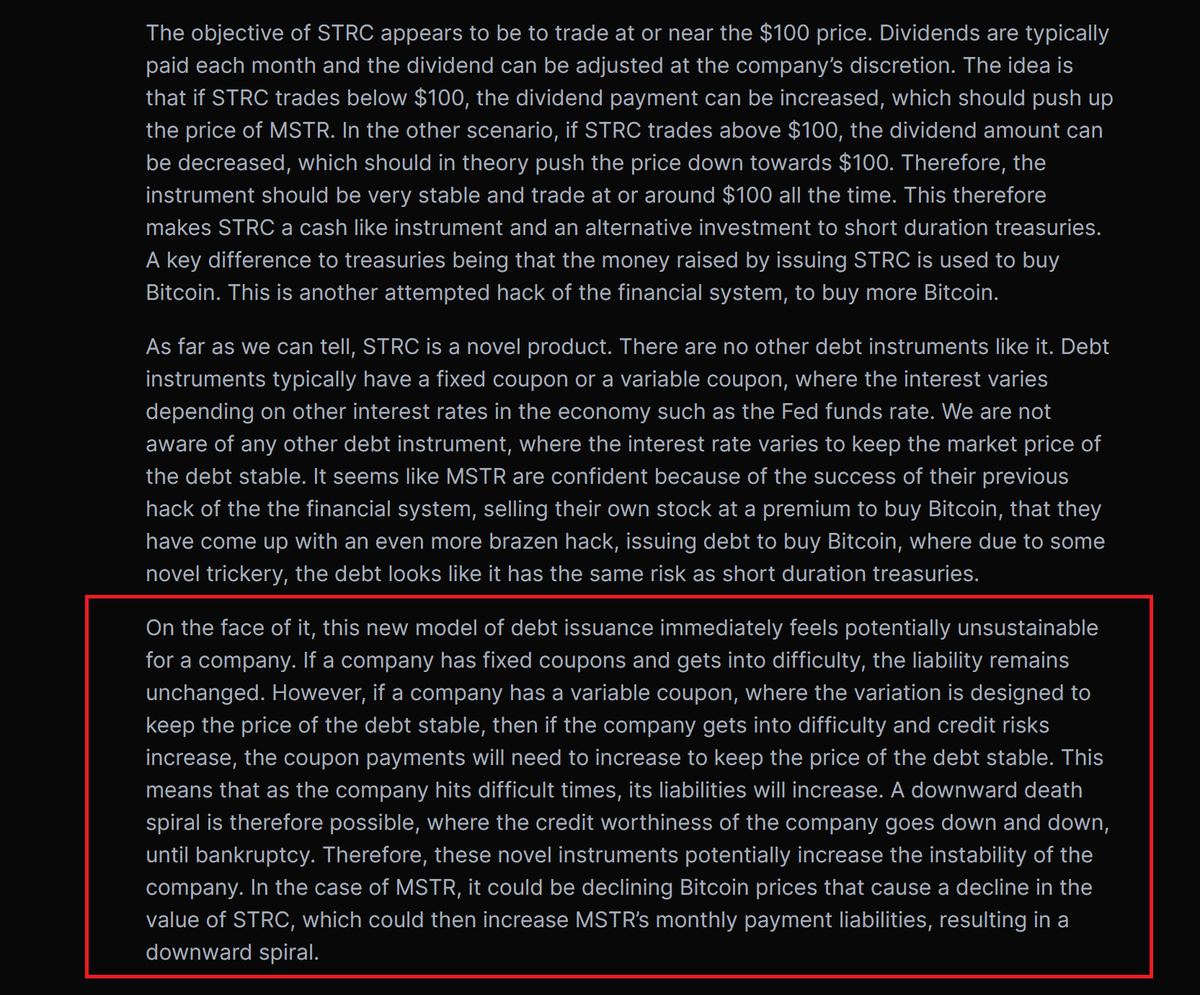
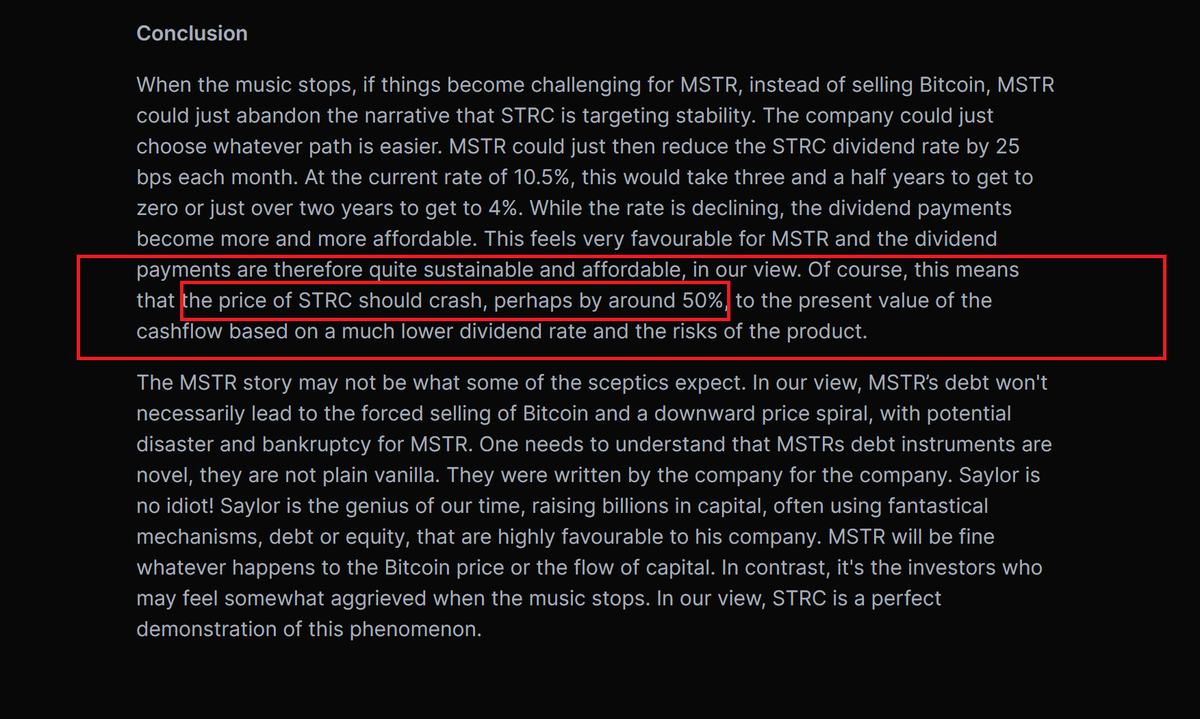
Now might be a good time to read our Nov 2025 article on $STRC
"the price of STRC should crash, perhaps by around 50%"
We warned you!
https://t.co/nonS6RO7Uo
The FCA should make clear that user-controlled software is not, by itself, safeguarding, arranging, operating a qualifying cryptoasset trading platform, or arranging staking where the provider does not have control of user assets, does not exercise discretion, and does not act as a custodial intermediary in the transaction.
HUGE.
Looks like we got a non-partisan vote out of Senate Banking with the BRCA still intact. I'm thrilled. The last minute compromise reflects Coin Center's analysis from last January, there were some steps forward since then and then back but we are feeling very comfortable.
Today we submitted a response to the UK HMRC's call for evidence on the taxation of stablecoins.
Our position is simple: stablecoins should be treated like cash for tax purposes.
NEW: @Securitize and @Computershare partner to enable U.S. listed companies to issue equity securities in tokenized form, opening a new pathway for public companies to bring shares onchain.
ON THIS DAY (2022): The Central African Republic (CAR) became the second country in the world to adopt $BTC as legal tender, voting unanimously to recognize Bitcoin alongside the CFA franc.
It didn't last. The experiment was reversed within a year.
stop acting like crypto is dead bro
we literally built a financial system that doesn't care where you were born. if you grew up outside the west you know exactly what this means.
programmable money that anyone on earth can access with a phone. no one telling you what you can or can't do with your own money.
blockchains couldn't even handle basic load until like 2 years ago. we're still at the very beginning.
zk proofs, prediction markets, onchain capital markets, instant global payments with a few lines of code, self-custody without asking anyone for permission, perpetuals on literally everything
we haven't even scratched the surface. the defeatist energy needs to stop
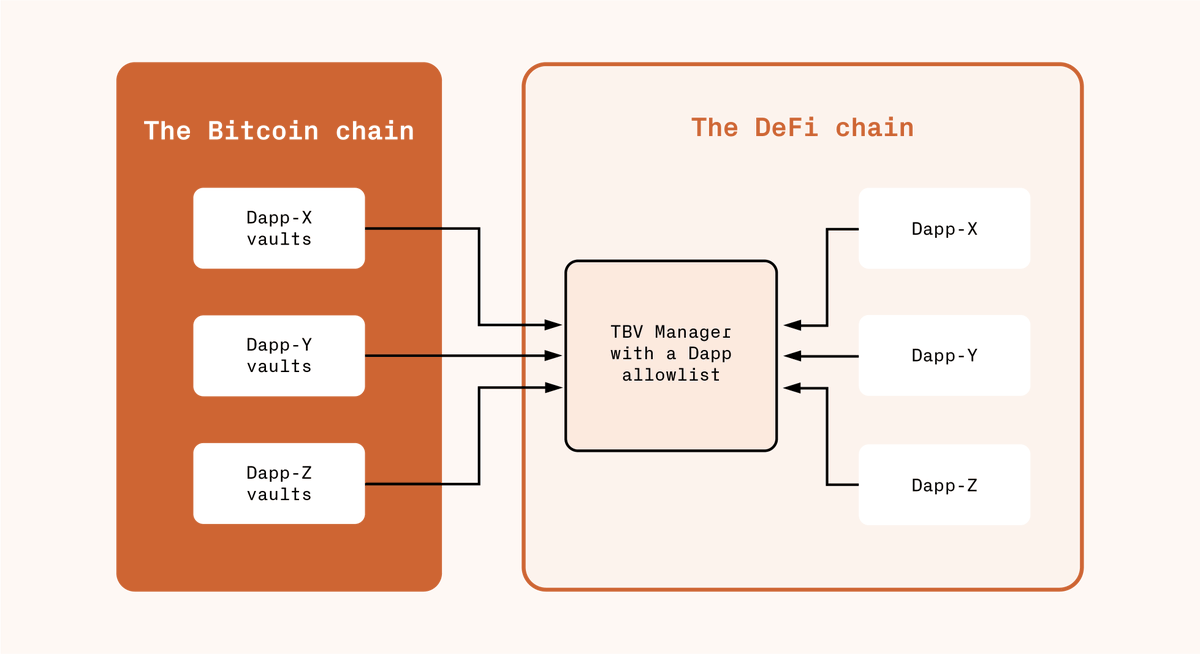
TBVs are chain agnostic. The first deployment is on Ethereum, with @aave v4 as the first integrated application.
BTC is posted as collateral by yourself or through the Vault Providers, which verifies vault creation, activates vaults for selected application and oversees redemption once an integrated application signals that a vault is ready to be redeemed.
I accidentally broke my brain reading about Nobel Prize winners last month.
There's this thing called "Janusian thinking" that basically explains why some people's minds work like magic while the rest of us think in straight lines. Named after Janus, the Roman god with two faces pointing opposite directions.
The psychologist who discovered it, Albert Rothenberg, was trying to figure out what made breakthrough thinkers different. He interviewed dozens of Nobel laureates, major artists, revolutionary scientists. What he found sounds impossible.
These people can hold two different ideas in their mind at the same time. They can explore both without switching back and forth or forcing a quick comparison. They can consider “yes” and “no” to the same question simultaneously and stay clear-headed.
Einstein too talked about this when he described his relativity breakthrough. He was imagining riding alongside a beam of light while also standing perfectly still. Both perspectives at once. Mozart said he could hear an entire symphony "all at once," every note, every contradiction, every resolution happening in a single moment of awareness.
Your average person's mind works like a courtroom. Evidence comes in, you weigh it, you reach a verdict. Case closed. But Janusian minds work more like... I don't know, like a quantum computer that can process multiple realities simultaneously until something new emerges from the overlap.
I've started noticing it in conversations. When someone can genuinely see both sides of something without needing to pick one, it drives people nuts. They want you to land somewhere definite. The ability to live in that tension space reads as wishy-washy or indecisive.
Most creative advice tells you to "think outside the box." But Janusian thinking is weirder than that. It's being inside and outside the box at the same time. It's thinking the box exists and doesn't exist simultaneously.
Which explains why truly creative people seem slightly unhinged. They think they're choosing between realities. But, they're inhabiting multiple realities at once, mining the contradictions for insights the rest of us never see.
Sadly, most of us have trained ourselves out of this ability. We've learned that holding contradictions feels unstable, so we rush toward resolution. We've been taught that changing your mind means you were wrong before, so we defend positions instead of exploring them.
But the people changing the world have kept that childlike ability to hold impossible thoughts without needing them to make sense immediately.
We just need to live in the questions everyone else is too scared to ask.
The Supreme Court just killed a $1 BILLION piracy case.
SCOTUS just went 9–0 in favor of Cox Communications, after record labels tried to hold them liable for users pirating music on their network.
“Under our precedents, a company is not liable as a copyright infringer for merely providing a service to the general public with knowledge that it will be used by some to infringe copyrights.” - Justice Thomas
The theory from the labels was basically this: you got thousands of notices, you didn’t kick people off fast enough, so you’re on the hook.
That sounds simple until you realize what it turns into.
If that argument won, ISPs become REQUIRED enforcement arms. Cutting off people’s internet based on allegations. Whole households. Businesses. Anyone sharing a connection. That’s arguably nuts.
SCOTUS drew a pretty clean line: providing infrastructure doesn’t make you automatically responsible for what users do on top of it. This is huge for where liability stops.
Because the same argument shows up everywhere now. Platforms. Marketplaces. Prediction markets. Crypto rails. Every regulator and plaintiff is trying some version of “you enabled it, so you own it.”
The Court just said… not so fast.
Why this matters in plain English: if this went the other way, the safest move for any platform or network would be over-police everything or shut people down early just to avoid liability.
That’s how you end up with a much more restricted internet real quick.
Instead, the Court kept the bar higher. You don’t get tagged with massive liability just for being the pipe.
Seems a bit massive to me!
A few things:
1) it is more than just Coinbase who cares about stablecoin yield
2) including the BRCA in CLARITY is a red line; if it were stripped out, crypto would walk away from the bill
3) de minimis is part of an entirely separate tax-focused legislative effort—not CLARITY
In 1971, the U.S. told the world it wouldn't honor its own money. We've been living with the consequences ever since.
Nixon goes on television and says the dollar is no longer convertible to gold. The link between money and scarcity, severed overnight.
What followed: 55 years of printing money to cover deficits. They print the difference. Every time.
It kind of worked. Until it didn't.
Inflation compounds. Purchasing power erodes. The debt grows. Foreign buyers lose interest. So the central bank prints more and buys its own debt. Circular logic with a printing press.
Bitcoin was built for exactly this moment.
21 million hard cap. No exceptions. No Sunday night speeches changing the rules. The supply schedule is public, fixed, and enforced by energy, not politicians.
You can't print more Bitcoin to cover a deficit. You can't debase it by committee. You can't change the rules when the politics require it.
The system that broke in 1971 broke because there was no constraint on issuance. Bitcoin is the constraint.
🦄 Uniswap wins another case that sets a new legal prescendent
TLDR:
If you write open source smart contract code, and the code is used by scammers, the scammers are liable, not the open source devs
Good, sensible outcome