It has been a privilege to partner at @paradigm with founders from across the frontier, who are pushing the bounds of what's possible.
Excited to help the future get a little bit closer.
A few of you have asked: yes, we built the @link balance using @privy_io for wallets, @tempo for stablecoins, and @stripe for onramp. (The magic of crypto is when you never know.)
What’s cool about this launch from Instinct is that stablecoins (on Tempo via Stripe Link) power it seamlessly underneath.
Programmable money for AI agents.
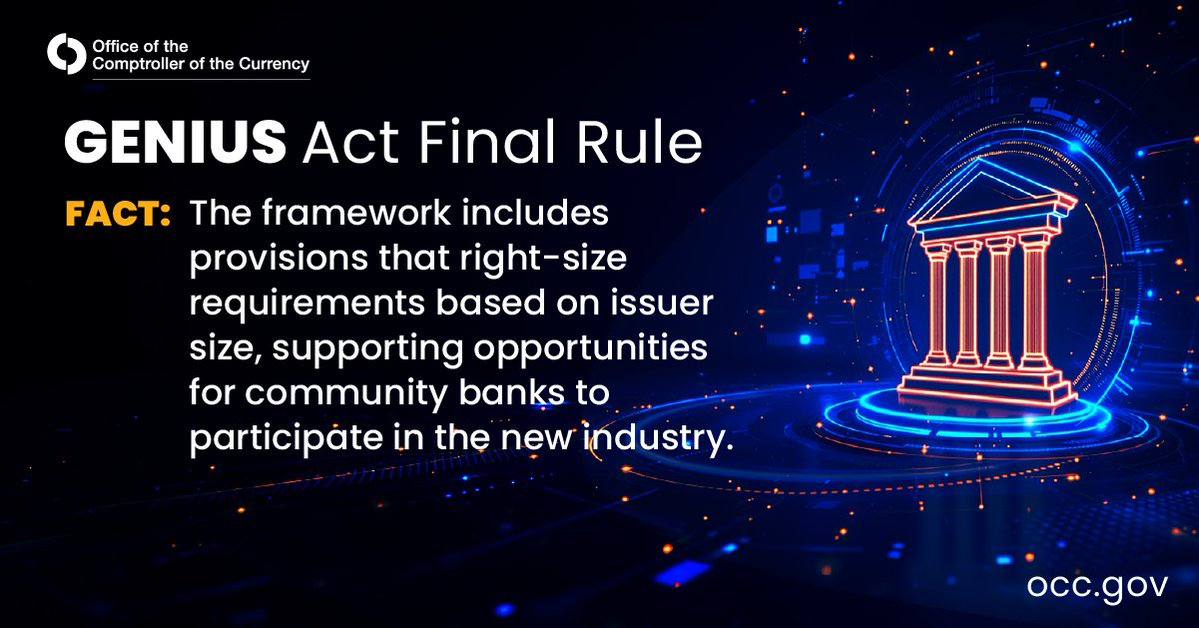
The OCC wants community banks to help shape the future of payments and is encouraging the development of payment stablecoin capabilities within the community banking sector. Interested community banks are encouraged to consider applying to become, or for a subsidiary to become, a permitted payment stablecoin issuer, as applicable. These opportunities complement the OCC’s Community Bank Comeback initiatives to right-size regulation and tailor supervision so community banks can grow, compete, and continue serving their communities. https://t.co/e2YOVjynUN
🇺🇸 Former CFTC commissioner @BrianQuintenz : "Kalshi is a fully regulated, fully licensed derivatives exchange that is regulated by the CFTC… the idea that these aren't well regulated… or they're not regulated at all is WRONG."
Good news for businesses building on @tempo: the OCC’s final GENIUS rule includes changes that are net positive for the future of finance and Tempo’s partners. Read more here: https://t.co/Rgquxk4MKL
DOE has authorized the first regulatory gate for our NEXT reactor, coming in 2027. This is going to be the first commercially representative electricity-producing microreactor in the U.S. This is what we will be deploying to Fort Bragg under Janus in 2028.
SITUATION DETECTED: Warhound launched from stealth today with a $200M seed at a $1.2B valuation. Ben Lamm and Palmer Luckey are cloning gene-edited bio-enhanced dogs and equipping them with custom Anduril vests, goggles, and sensors for the military and law enforcement.
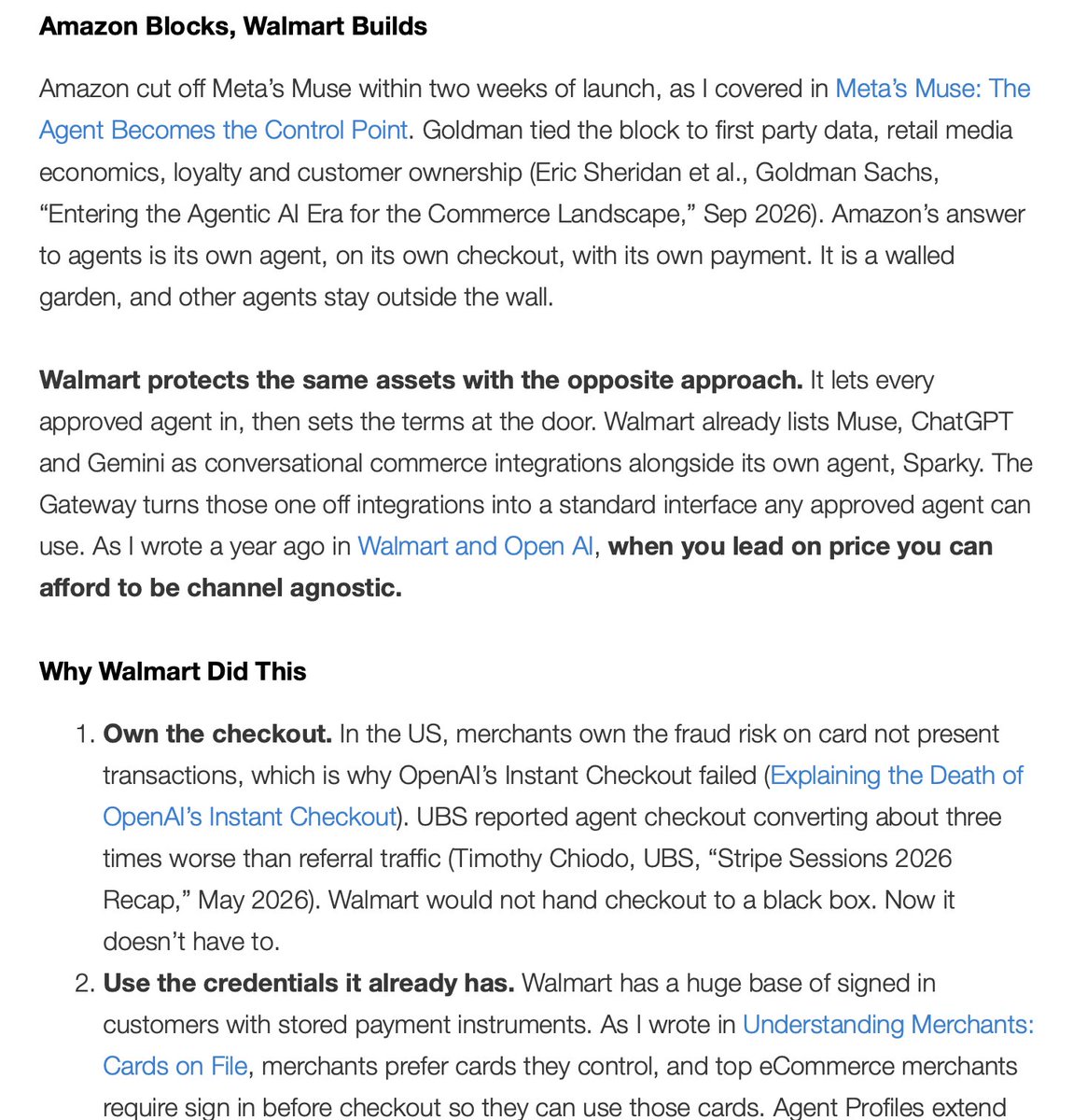
There’s a world of difference between user-authorized agents (Muse, Instinct, Grokbot, etc.) and true unauthorized/rogue agents that could constitute cyberattacks.
Most of the activity described in the Axios story appears to be the former: customers sharing credentials with agents so they can take actions on their behalf. This may violate bank terms requiring humans to log in themselves, but these are in no way cyberattacks.
The direction banks should go is to support user-directed agents. For example, Amex is an authorized connection in Muse, making it easy for users to grant, limit, and revoke access.
Read-only permission levels are a sensible interim step. Several banks already support or are moving toward them. Full write access (with user credentials) is a different risk category and should be approached carefully.
Frightening the public by blurring the line between user-authorized agentic behavior and cyberattacks is irresponsible.
Jensen closed his GTC Berlin 2026 keynote with this Hermes Agent demo as the finale.
He introduced it by saying the way to build an agent is to ask an agent to build it for you, so he installed and set up a customized Hermes in one prompt.
Then he used Hermes, running on @nvidia RTX Spark, to create a simulated training environment for the @huggingface Microduck. Hermes planned an obstacle course with Nemotron and had GPT-6 Astra build it using FreeCAD, Omniverse libraries, Blender, Newton, and Isaac Lab. Hermes trained thousands of simulated ducks on that course until the validated policy was ready to run on the real robot in the physical world.
At Nous, we believe open source is a practical tool as much as a philosophical ideal. It gives users the ability to build powerful, complex workflows chaining numerous local+cloud models, devices, and tools themselves instead of waiting for a company to enable them.