My latest for @TheAtlantic, reported from my own Arctic city of Tromsø, Norway—a region changing four times faster than global averages. Thank you to @akr4sci, @MorvenMuilwijk, and @rolfrodven for explaining how threats to Arctic climate research threaten us all.
The U.S. has slashed Arctic climate science, despite taking a greater geopolitical interest in the region, Brett Simpson reports—a move that will limit how clearly the U.S. can understand a place that is key to the world’s future: https://t.co/vhCb8O1Skg
Intriguing—in the most serious and timely sense—article from the researcher @brettvsimpson. https://t.co/oEvMIylBKN There are numerous unresolved issues regarding maritime law, making it dizzying. What do we do with the ice and the Arctic? There is no clear answer, and the region is already the scene of intense geopolitical competition.
Some polar-law scholars argue that curbing climate catastrophe may require a radical reimagining of sea ice, @brettvsimpson reports: https://t.co/Zuuzf3FEH9
The Trump administration doesn't want to talk about climate change. But it is a military reality in the Arctic, @brettvsimpson reports: https://t.co/IHkkTzM6qj
ETHICS is what's missing in much conversation about #water. Congratulations to @brettvsimpson for winning a Covering Climate Now award for this fantastic story about water ethics in California.
Something unexpected lies deep beneath California’s Mojave Desert: an enormous amount of water. But whether the state should draw from this untapped ancient resource is a matter of intense debate, @brettvsimpson wrote last year: https://t.co/ZZ8gvLYr1y
Covering the Arctic as a climate writer has (perhaps inevitably) led me to write about security.
The high North is Russia's most militarized zone. Soon, Arctic NATO states will outnumber Russia 7:1. In the world's fastest changing region, tensions are rising with temperatures.
For Russia’s Scandinavian neighbors, the full-scale invasion of Ukraine disrupted a cool calculus of neutrality, Brett Simpson writes. https://t.co/pPbrJXuuZo
The war in Ukraine pushed Germany, which was falling behind on renewable energy goals, to enact some ambitious new policies. Some of those changes are going well, but they face headwinds elsewhere.
By @brettvsimpson
https://t.co/QFybWgdu3o
Russia’s exclusion from the Arctic Council seemed an appropriate response to its war of aggression but the group has fractured along territorial lines, awaiting a return to a status quo that seems increasingly impossible.
By #IWMFgrantee@brettvsimpson: https://t.co/kQtYgEBmyU
Russia’s exclusion from the Arctic Council seemed an appropriate response to its invasion of Ukraine, but it may have made the group obsolete, writes @brettvsimpson.
https://t.co/YD0OXJZOZq
In my latest analysis for @ForeignPolicy: what does Russia's war of aggression mean for the future circumpolar cooperation?
Abundant thanks to @IWMF and @boell_us for the support!
https://t.co/5i3E6jNIRw
Norway is laying the groundwork to become a renewable energy superpower. But one major obstacle still stands in its way: ordinary Norwegians, writes @brettvsimpson. https://t.co/urtuUjLy8X
Last year, Norway won big off of the European energy crisis. Now this oil-rich nation is laying the groundwork to become a renewable energy superpower.
In my latest for @ForeignPolicy: Nordic energy opportunism and a few contradictions.
Something unexpected lies deep beneath California’s Mojave Desert: an enormous amount of water. But whether the state should draw from this untapped ancient resource is a matter of intense debate, writes @brettvsimpson: https://t.co/fPeWy7t7TL
Fossil water, or paleowater, is the largest freshwater resource on the planet. But it's buried deep—for most of human history, most didn't know it was there.
CA's Mojave hides a massive supply from the last Ice Age. So should we tap it?
My latest (& biggest) for @TheAtlantic:
Something unexpected lies deep beneath California’s Mojave Desert: an enormous amount of water. But whether the state should draw from this untapped ancient resource is a matter of intense debate, writes @brettvsimpson: https://t.co/fPeWy7t7TL
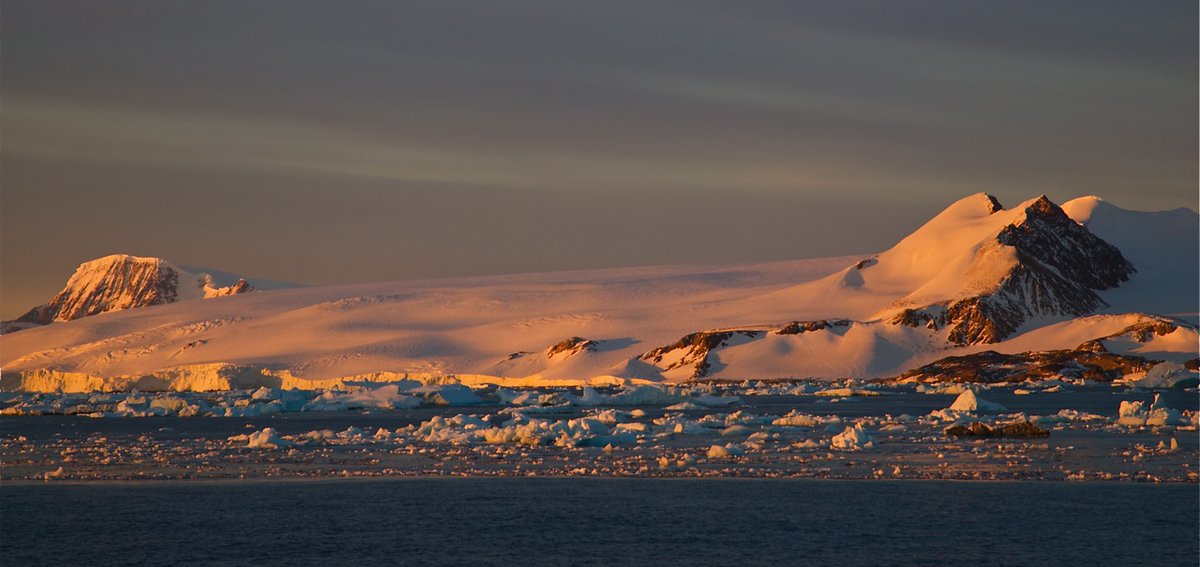
An area of sea ice bigger than Texas is 'missing' around Antarctica, and that has consequences. The steady global decline of sea is a clear signal of the #ClimateEmergency
https://t.co/TdVZKvmdMl
As the year comes to a close, I am feeling especially grateful to @pulitzercenter. In 2021, they helped get me to the Norwegian Arctic. In 2022, they were the first to support reporting on the herring harvest in Sitka, AK, long before the story had a home: https://t.co/95A08wMYwc
The soldiers we lost in the 18 years after 9/11: 7,014.
The people not in cars killed by people driving cars in the US in the same timeframe: 112,519.
Here is a story about a boy on a bike. It shouldn't have been a sad story but it is. (@BicyclingMag)
https://t.co/y1Z0ypuAiL