“A commitment to historic Reformed theology and social justice? Yeah right! That doesn’t work.”
Doesn’t it? A 🧵
1. The Westminster Larger Catechism, esp. Q. 122-149
I have, more or less, left this platform. Come find me on the Gram and FB. I’m most active on the Stack, where I continue to post quotes related to Reformed theology and urban ministry every day.
NEW Post | Let the minister wear their tender, bleeding hearts on their sleeves. The power of Christ is made known in churches when those who minister love people enough to suffer with and for them.
Amidst all the talk about the ethics of AI, this is a topic often neglected. How does AI consumption impact the poor and marginalized and how should Christians respond?
https://t.co/UKxcsAizN1
White American theologians have been virtually silent on black liberation, preferring instead to do theology in the light of a modern liberalism that assumes that black people want to integrate into the white way of life. Such silence is inexcusable, and it is hard not to conclude that those who maintain it are enslaved by their own identity with the culture and history of the slave masters.
James Cone, 96
First Twitter friends and now real-life friends! @neulsaem did an amazing job on his paper presentation at Kuyper Con today. He re-imagines neo-Calvinist theological retrieval through the lens of Korean, neo-Confucian social order.
Bavinck and Kuyper studies continue to grow.
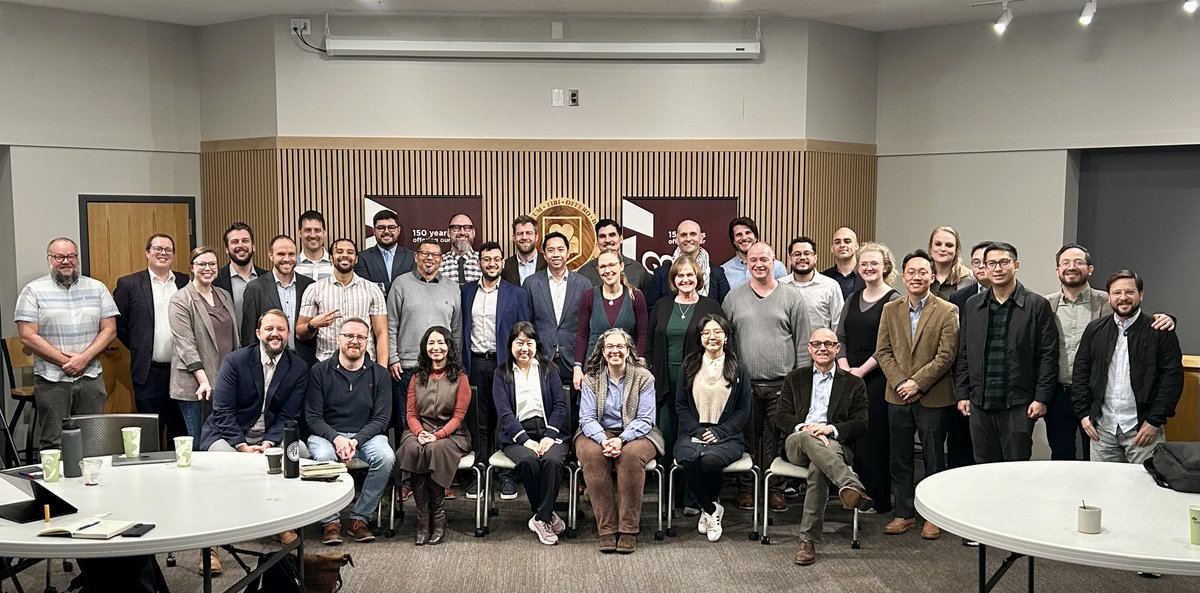
Wonderful few days meeting with emerging scholars from around the world working on Reformed public theology and Neo-Calvinism. @UtrechtTU@neo_calvinism@calvinseminary
If God alone is sovereign, then we are all, the king included, creatures dependent upon him, and adoration of royalty and the esteem of princes as beings of a higher sort, are heinous offences committed against the glory of his name.
Abraham Kuyper
The liberal understanding of social and political action is not the only option. One must recall that theological liberalism was born during the heyday of bourgeois economic liberalism, and that in many ways it reflects its values. Just as economic liberalism was predicated on the theory that wealth was the reward of work and wits, and that the few who deserve economic success will achieve it, so is theological liberalism content with a social and political action that makes it possible for a few more people to achieve success. There is, however, another sort of political and social action—one that seeks not merely the evolution of today into tomorrow but rather the breach that mañana announces. This is the practice of the prophets. This is also the manner in which the early church is politically active. It is a small group of insignificant people, and yet their activity soon brings upon them the wrath of the mighty Roman Empire. Why? Because by their mere existence, by their living out mañana, they question the very foundations of the Roman social order.
Justo L. Gonzalez, Mañana: Christian Theology from a Hispanic Perspective, 166.
I am really benefiting from this book by @_KarenHao. "Data Colonialism," not original to Hao, is exactly the term I've been searching for to capture the discriminatory expansion of data centers and the unjust accumulation of wealth in AI at the expense of the poor.
As we consider the ethics of AI, the Christian use of AI, and how to instruct our youth in the place of AI, we need to weigh the gross injustices being committed in the name of progress.