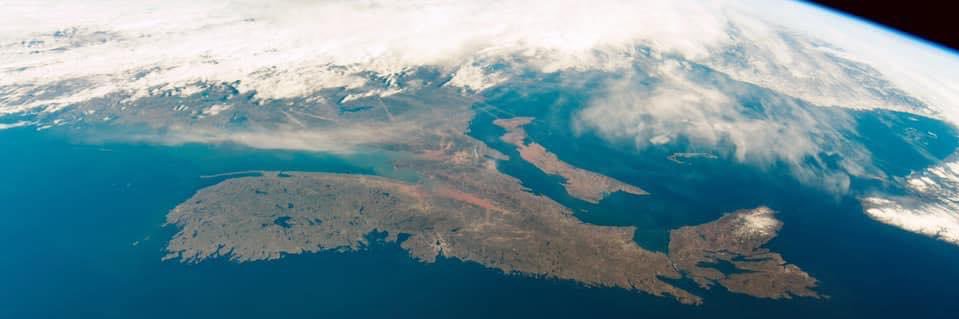
Norway has joined the Royal Navies of the UK, Canada and Australia to forge a formidable future Global Combat Ship partnership.
Read more: https://t.co/d3d313OmWD
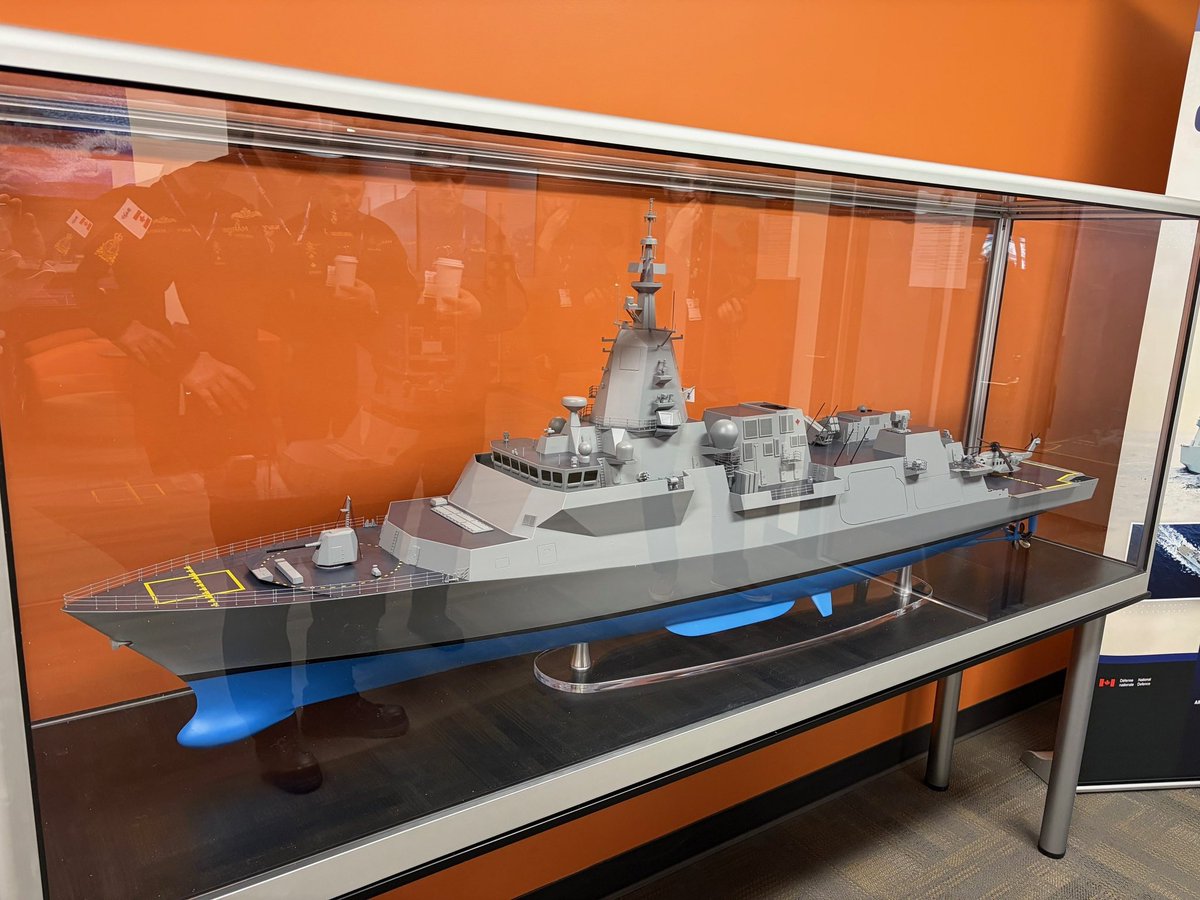
Yesterday, the Deputy Commander of the Royal Canadian Navy, Rear-Admiral Charlebois, and the Director of Naval Major Crown Projects – Combatant, Capt(N) Tremblay, unveiled a detailed scale model of the River-class destroyer ⚓️🇨🇦. 1/2
The Australian government has revealed a significant defence partnership with Canada, marking Australia’s largest-ever defence export deal. 🇨🇦🇦🇺
https://t.co/g6bamqd1MX #CANZUK
Wab Kinew on Trump's remarks about US women's hockey team: "I'm a hockey parent through & through... not because I have dreams of NHL greatness in the future for my kids ... I want them to learn how to be respectful, win or lose. And on that count, Team USA men's team failed us."
I’m worried Trump thinks this is a video game. Americans will die in this. The Pentagon knows. And is right to present this in very realistic terms. For all who r cheerleading for war - do so knowing the costs. Those of us who have experienced war I feel r tad bit more cautious and circumspect at this time. I vividly recall a conversation I had with a good friend and Trump supporter prior to his first term – he was a former Seal and his son was in the teams too. He said he was voting for Trump so he would not have to worry about his son going off to forever wars.
I'm working on several new pieces, which are taking longer than I thought. But I wanted to share this updated piece about the River-class with you all.
https://t.co/p3R57pxq4i
🚨BREAKING: In a tremendous blow to Donald Trump, the House has just voted to END Donald Trump’s tariffs on Canadian goods.
Six Republicans voted with the Democrats: Massie, Fitzpatrick, Newhouse, Kiley, Hurd, and Bacon. Trump’s control is slipping.
This video should unsettle anyone who takes the United States seriously as a nation.
Because it exposes something dangerous: the trivialization of the world's most consequential office. It shows how carelessly the power, credibility, and accumulated moral authority of a superpower can be squandered for a few seconds of viral attention.
In any other major democracy, this behavior from a head of state would trigger a constitutional crisis. Paris would burn. Berlin would convene emergency sessions. In the Nordic countries, resignation would follow within hours. Across functioning democracies, the public, institutions, and political class would recognize this for what it is: an assault on the dignity of the state itself. Leaders are not free to perform as entertainers without consequence. National honor is not personal property, it's held in trust.
But the United States is not just another country with a provocateur in charge. It is the linchpin of global order. It maintains formal alliances and security guarantees with forty to fifty nations. It underwrites the financial architecture, trade systems, and diplomatic frameworks that billions of people depend on daily. When the American president speaks—or posts—it doesn't land as satire, meme, or personal whim. It reads as a signal about what the country is becoming.
American power has never relied solely on carrier strike groups or economic output. It has rested on something more fragile and more valuable: trust. The belief that beneath domestic turbulence lies institutional seriousness, predictability, and a baseline commitment to dignity. That belief is now disintegrating in real time.
Millions of American companies operate globally. They negotiate multibillion-dollar contracts in environments where reputation is currency. Boardrooms in Frankfurt, Singapore, and Dubai aren't debating whether a post was clever—they're asking whether the United States remains a reliable partner. Whether agreements signed today will be honored tomorrow. Whether American leadership has devolved from institutional to purely theatrical.
Consider tourism, which sustains millions of American jobs—airlines, hotels, restaurants, museums, entire regional economies. Soft power isn't an abstraction. It materializes in flight bookings, conference locations, study-abroad programs, and decades of accumulated goodwill. A quiet, decentralized boycott doesn't require government action—only a collective sense that a nation no longer respects itself.
Now picture this image being studied by foreign ministers, central bank governors, defense strategists, and sovereign wealth fund managers. Picture them asking a coldly rational question: How do we write binding thirty-year agreements with a country whose public face will be this, relentlessly, for years to come? How do we plan for the long term when the tone is impulsive, mocking, and unbound by the gravity of office?
This is where the real calculus begins. Trillions in foreign capital depend on confidence that America is stable, credible, and rule-governed. That confidence is now being traded for what, exactly? Applause from an online mob? A dopamine rush from manufactured outrage? Content designed to dominate the news cycle rather than serve the national interest?
Every serious nation eventually confronts this choice: burn long-term credibility for short-term spectacle, or safeguard the reputation previous generations bled to build. The United States spent eighty years constructing an image of reliability, restraint, and leadership under pressure. That image wasn't born from perfection—it came from a visible commitment to standards that transcended impulse.
This isn't a partisan issue. Europeans who value democratic norms recognize something ominously familiar here. Americans—Democrat and Republican alike—who believe in responsibility and restraint should see it too. Power attracts scrutiny. Leadership demands discipline. A superpower cannot behave like a reality TV contestant without paying a price.
The presidency is not a personal broadcast channel. It's a symbol carried on behalf of 330 million people and countless international partners who never voted but whose lives are shaped by American decisions anyway. Every post either reinforces or erodes the idea that America can be counted on when it matters most.
So the question is no longer whether this is offensive. The question is whether this is who America chooses to be: a nation that trades a century of hard-won reputation for viral moments. A country that replaces statecraft with content creation. A republic governed like a season of reality television.
History offers a harsh lesson here. Great powers don't fall because enemies mock them. They collapse when they begin mocking themselves—publicly, proudly, and without grasping the cost until it's far too late.
Stay connected,
Follow Gandalv @Microinteracti1
The lies are the point. The lack of investigation is the point. Gaslighting us about videos we all saw is the point. Disobeying courts is the point. Falsely calling protesters domestic terrorists is the point.
You've never wanted anything as much as Donald Trump wants civil war.
"I've always said, will they be there if we ever needed them? That's really the ultimate test. I'm not sure of that. We've never needed them. They'll say they sent some troops to Afghanistan…They stayed a little back, off the front lines”
🇨🇦
This video on Canada's AOPVs is excellent. It really gets the details right, and has a couple nuggets I hadn't seen anywhere else.
It also makes me super jealous. What a cool thing to do.
https://t.co/IaoN4E8Rm4