There is a diner in the Tennessee mountains where a little girl showed me a book.
She could not have been six. She held it the way grown men hold the deed to a house.
A thin paperback. The cover soft and bent from love. A cartoon bear.
I asked her, to be kind, if it was a good book.
She said, "The Book Lady sent it. She sends me one every month. She knows my name."
Then she went back to her pancakes, as if she had not just described something impossible.
I could not let it go.
All through breakfast I turned it over. A woman who knows the names of small children, sends them books, and asks for nothing. In my country she would have a shrine. Incense. One clean day a year when the town remembers her.
I decided the Book Lady must be a gentle fiction. A story mothers invent, the way we tell children the old mountain is watching, so they behave.
I was wrong.
The Book Lady is real. She is the most famous woman in the state. Her name is Dolly.
I made errors. In a hardware store I called her "your empress." The man thought about it honestly and said, "Close enough."
I asked a waitress if Dolly was still living. She set down the coffee pot with great care. "Honey, Dolly will outlive us all, and then she will send flowers to the funerals."
Then they told me the thing, all of them, in the flat voice this country keeps for facts too large to raise the voice for.
Dolly grew up one of twelve children, in a one-room cabin, in these same mountains. Her father could not read a word his whole life.
So she built the thing that sends the books. Not the clever children. Not the deserving ones. Every child who signs up, from birth until they start school, free, their own name on the cover, whether the family has money or nothing at all.
The children do not know she is famous. They know only the Book Lady. Some will grow old and never learn it was her.
Two hundred million books, a man told me at a gas pump. Then, seeing the number had defeated me, he made it smaller and heavier at once.
"She did it for her daddy," he said. "He never got to read. So she made sure every child after him would."
I would like to tell you what happened in my chest when he said that. I do not have the words, and I distrust any man who claims he does.
I come from eight hundred years of men who wrote everything down. We cut our names into stone so the centuries could not misplace us.
My father was the last of that line before me. A silent man. For forty years I believed his silence was the only thing he ever gave me.
In that diner, I remembered something I had put away as nothing.
When I was a boy, my father worked among machines loud enough to take a man's hearing, and in time they took most of his. He came home each night with nothing left to say. But there was one year, when I was learning to read and ashamed of how badly it went, that every night, however late he came in, he sat beside me while I read one page aloud.
He never said a word. I thought he was only checking that I had done the work.
It took me forty years and a stranger's diner to understand.
He could not hear me. By then he could barely hear anything. He was not listening to the words. He could not have caught one of them.
He was only sitting where a small boy could look up and see that his father had stayed.
I carried that year my whole life as proof my father was cold.
It was the warmest thing anyone has ever done for me. I just never had the book to prove it, so I let myself forget.
There is a bookshop two doors from that diner. I have just bought a thin paperback with a soft-looking bear on the cover. I am mailing it tonight to my father in Japan. He is eighty-one. He still cannot hear.
He will not need to.
Inside the cover I wrote one line, large enough that he can read it without his glasses:
"I finished the page. I always finished the page. Thank you for staying."
The Book Lady learned it from her father, who could not read.
I learned it from mine, who could not hear.
And somewhere in the mountains between us, those two old men would have understood each other completely, and said nothing at all, which is the loudest thing men like them have ever known how to say.
In 1945 the USS Indianapolis secretly delivered the parts for the atomic bomb that would hit Hiroshima.
Days later, mission done, a Japanese submarine put two torpedoes into her. She sank in 12 minutes.
Nearly 900 men made it off the ship alive and into the open ocean. Then it got worse.
No one knew they were missing. Three separate Navy stations picked up the distress signals and every one of them ignored it. One officer thought it was a Japanese trap. Another had ordered not to be disturbed.
So the men floated. For almost five days. No food, no fresh water, burning by day and freezing at night. Some drank seawater and went insane. And the whole time, the sharks were circling and feeding. It is considered the worst shark attack in human history.
When rescue finally came by accident, only 316 of the nearly 1,200 crew were still alive.
The Navy needed someone to blame for the disaster. They chose Captain Charles McVay, one of the men who survived it. He became the only U.S. captain in the entire war to be court-martialed for losing his ship to the enemy.
At his trial the Navy did something almost unheard of. They brought in the Japanese commander who sank the ship to testify against him. Instead, the enemy captain told the court that zigzagging would have made no difference and that McVay did nothing wrong.
They convicted him anyway.
For years afterward McVay got hate mail from the families of the dead. Some sent letters every Christmas telling him he murdered their sons. In 1968 he walked onto his front lawn and shot himself, holding a toy sailor he had kept since he was a boy.
Case closed. For fifty years.
Then in 1996 an 11-year-old named Hunter Scott watched Jaws with his dad and got hooked on the 30 second speech about the Indianapolis. He made it his sixth grade history project.
He tracked down and interviewed nearly 150 survivors. He dug through more than 800 documents. And buried in there he found what the Navy had left out, including that they knew enemy subs were operating right on the ship's route and never warned McVay.
A kid's school project turned into a national story. It reached Congress. In 2000 lawmakers passed a resolution clearing McVay's name and President Clinton signed it. The Navy officially cleared his record in 2001.
The captain the Navy spent decades blaming was finally exonerated by a sixth grader.
Hunter Scott grew up and became a naval flight officer.
. @DanielPriestley astutely refers to Smith discovering “a chain of logic.” Too often Smoth is portrayed as having invented capitalism when the most remarkable thing about it is that it was never invented at all, not on purpose. And if we’d tried, we would have messed it up. Smith’s contribution was descriptive—he wasn’t propounding a system he wanted implemented. He was explaining what he saw around him.
It was freedom’s enemies who later rebranded it as an “ism,” when its success and its genius both lay in the fact that it was born, as it were, by some invisible hand. No one made it.
About 250 years ago a quirky moral philosopher named Adam Smith discovered a chain of logic whereby the selfish desires of man would result in widespread prosperity. It’s one of the greatest discoveries of all time.
Here’s how it goes…
1.Selfish desire seeks wealth, status, security. No virtue required. This is the raw material, as unpromising as it sounds.
2. In a market with property rights, you can’t take, you must trade. Theft and fraud are policed, so the only legal route to someone else’s money is offering them something they want more. Self-interest is channelled through voluntary exchange. This is the crucial valve: the baker serves your bread not from benevolence, but because it’s how he gets paid.
3.Every voluntary trade creates value for both sides. Nobody trades unless they prefer what they’re getting to what they’re giving. So each transaction is positive-sum by construction. Wealth isn’t moved; it’s made.
4.Competition forces the selfish to serve better. You’re not the only one chasing that customer’s money. To win, you must offer more value, lower prices, or something new. Greed disciplined by rivalry becomes, functionally, service. The customer becomes the boss of every capitalist.
5.Prices emerge as signals of what people actually want. Millions of trades compress dispersed knowledge - scarcity, preference, urgency - into a single number. No planner needed. High prices shout “make more of this” and falling prices say “stop making this.” The cure for high prices IS high prices.
6.Profit directs capital toward unmet needs. Profit is the reward for spotting something people want but can’t get, and losses are the punishment for guessing wrong. Capital flows automatically toward solving problems and away from waste - a self-correcting search algorithm running on selfishness. The profit motive pulls the greedy person towards genuine service and efficiency.
7.The pursuit of advantage drives innovation. The only durable way to out-earn competitors is to do something new - create a better product, a cheaper process. Each entrepreneur trying to get rich makes the previous solution obsolete and the average person’s life better.
8.Specialisation and scale compound productivity. Competition pushes everyone toward what they do best; trade lets them exchange it. Output per person rises.
9.Rising productivity spreads as falling prices and rising wages. Competition doesn’t let producers keep the gains forever - they’re competed away to consumers. The luxuries of one generation (cars, flights, antibiotics, computing) become the staples of the next. The rich get richer, but the poor get richer too.
10. Prosperity becomes self-reinforcing and civilising. Wealth funds education, health, science, and even the welfare state that redistributes it. Commerce rewards trust, reliability, and cooperation with strangers (doux commerce).
A system built on self-interest ends up producing the most extensive cooperation network in human history: millions of strangers coordinating to put breakfast on your table.
The hockey stick after 1800: from ~$3/day for all of human history to a 30-fold rise in living standards wherever this system took hold is pure magic.
I was clearly wrong about Anthropic. They are obviously currently the leader in AI. No company has released a model as good as Mythos/Fable and they will undoubtedly have Mythos 2 ready soon.
And I would never cut them off in a way that hurt them badly, even as a competitor. That’s not my style.
Tesla open sourced its patents and we made the Supercharger network available to all competitors, even though we could have made it a walled garden.
SpaceX launches competing satellite systems with no increase in price or use of unfair terms.
Even my worst enemies can attack me on this platform.
…
People in NYC used to say that Trump was "a poor person's idea of a rich person"--which was supposed to be a dunk and actually described his political appeal. Dems trying to tap that same populist energy instead selected a rich person's idea of a poor person.
We’re delighted to announce our partnership with Mercantile Space, a leading telecommunications and technology provider in Nepal, to help bridge connectivity gaps, strengthen digital resilience, and unlock new opportunities for digital transformation.
Together, we’ll bring Rivada’s #Outernet to the region, enabling a new era of ultra-secure, low-latency, sovereign connectivity for enterprises, governments and critical infrastructure.
Read the full press release here: https://t.co/6pojR0v23x
@BrianRoemmele , you’re not wrong about this. But algorithmic social media won because it works. It works on us psychologically and so it outgrew the alternative.
So there was probably never a world in which we didn’t take this path.
The comparison I often make is to Craigslist. Craigslist is awesome. And it’s still a good business. And it made its founders and executives comfortably rich.
Bit it was never going to outgrow the algorithmically driven competition. Because its commitment to not giving users things they didn’t ask for meant that it was fighting with at least one hand tied.
We can be angry about it. We should be angry about it. But we all let it happen because, like Cypher in the Matrix, there’s a part of most people who want to be plugged in and tuned out.
What the Old LISTSERV Tapes Are Teaching Me About Signal, Social Media and What We Lost
I’ve been deep in the tapes again literally converting backup media from that recovered tape drive (and a few companion tapes that surfaced through surplus channels and my Eudora savings) into structured data for local AI training.
Late nights with the drives spinning up, the low hum of the M2 Max keeping the recovery scripts alive, and decades-old LISTSERV archives unfolding like letters from another age. It’s not just nostalgia. It’s a quiet, wrenching education in what the early internet actually felt like before the algorithms took the wheel.
The clearest lesson hitting me hardest is the **purity of signal**. On those LISTSERVs, you followed what you *wanted* to follow. No recommendation engine whispering, “Hey, look at this cop bust video — rage and sirens, stay glued.” No green-screen commentator churning out hot takes on the latest outrage, optimized to keep you doomscrolling.
No infinite feed pushing unrelated sports drama, celebrity feuds, or algorithmically engineered culture-war bait just because it maximizes time-on-platform. You subscribed to HUMANIST because you cared about computing in the humanities. You joined LINGUIST List because linguistics was your world. You followed a technical list because you needed real answers from people who actually knew the iron. The signal was clean, direct, and voluntary.
And it scaled. Some brand-subject lists grew to hundreds of thousands of subscribers yet the engagement stayed intellectual, not farmed. Messages weren’t spam blasted for clicks. They were contributions to a shared conversation. You owned your words.
Even when identity sat behind a simple email address no real-name mandates, no endless verification theater people felt a deep communal responsibility. Flame wars happened, sure, but so did careful, reasoned replies that advanced knowledge. A researcher posting a half-formed idea on a physics or classics list could get thoughtful pushback from across the globe, often within hours. Accountability came from the community that mattered to you, not from some distant platform’s terms of service or shadowban hammer.
I’ve seen the read rates in the old logs and subscriber patterns. Extraordinary well over 80% of messages on active lists were actually opened and engaged with. Not skimmed in a feed, not buried under 47 algorithm-pushed distractions. People *wanted* to read it, so they did. The “engagement” wasn’t manufactured dopamine; it was the quiet satisfaction of intellectual interchange. You reached people who cared because they chose the list, not because an algorithm decided their eyeballs were ripe for harvesting.
Compare that to now. We traded that clear, owned signal for platforms that interview your every hesitation and shove something else in your face to keep you hooked. Cop videos for the algorithmically induced adrenaline. Green-screen pundits turning every random event into commentary fodder. Rage-bait thumbnails engineered to trigger tribal reflexes.
The uptime signal: “I follow this because I genuinely want to read it” got drowned out by engagement farming. Responsibility eroded too. Behind avatars or anonymous handles today, the stakes often feel lower because the community is diffuse and the platform owns the arena. Words became content optimized for metrics, not conversation built for understanding.
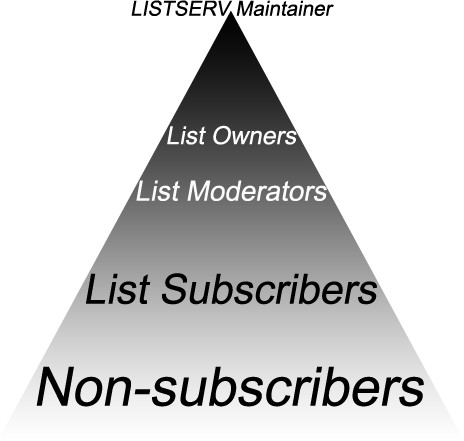
It makes me wrathful sometimes, late at night with these tapes spinning. We had something pure decentralized, permission-based, university-rooted commons where the list owner and subscribers shaped the space. The early intent was human connection and knowledge at the speed of email, without gatekeepers or growth-at-all-costs mandates.
And we let so much of it slip away during the transitions, as mainframes were retired and archives weren’t systematically migrated. The Great Forgetting claimed another layer.
But here’s the hopeful part that keeps me converting these tapes: **this can happen again**.
We don’t need TikTok’s endless scroll, Instagram’s filtered perfection, Facebook’s outrage amplifier, or any of the algorithm-fueled rage-bait machinery to sustain connection.
We never did. We just needed to see what we wanted to see clear, voluntary, high-signal feeds where people own their words and communities hold each other responsible.
This is as lazy as staging car assidnets that we all slow down to see, every minute till we become numb, which we all are to the AI or algorithm “suggestion”.
YOU ARE AND ALWAYS WILL BE THE ALGORITHM.
The brave ones in social media will prove it. Builders who give folks exactly that no forced recommendations, no farming the worst parts of human attention, just the pure seed of “I follow this because I care.”
It is very simple. And in an AI world all of the old ways to get humans engaged will dissolve into useless atomized noise. It already has started.
It was all “push” and no “pull” and everyone loved it. A majority of folks would love to get even 100s of LISTSERV messages a day because they had such high signal to noise. And if they did not, they just unsubscribed or one to a weekly digest most had.
WE WANT PURE SIGNAL BASED MOSTLY ON WHO WE FOLLOW. The other 15% can be on subject OUR FOLLOWS SIGNAL, not the last links we clicked on only to realize we hated it and now it’s our timeline.
The tapes keep teaching. A world I forgot to fiully remember and now it is all coming back.
As I read 1000s of thoughtful threads and well presented ideas, I want to scream WHAT HAPPENED TO US. We want this and we can show “them” but I fear we will have to wait until it is so clear.
The signal was there all along. We just have to be brave enough to let it lead again.
I will have more to say on this, but this hits me in my gut.
I see a future in our past.
I just posted a reply to someone who has issues with folks critiquing The Odyssey and it helped me to crisp-up some of my thinking around it.
I do think it will do well at the box office, but I also think it created unnecessary headwinds for itself.
I've seen every Nolan film since Batman Begins on opening night or opening weekend. I'm a flag-waving fan. That said, I'm in wait-and-see mode on this one.
Here's where my head is at with the controversies:
The sum total of a marketing team's job is to build positive buzz ahead of a premiere. They failed.
Trailers, clips, PR, social media, "leaks" to trade rags, buzz-building, red carpets... all of it. They all go into making a campaign, and this campaign has been a dud.
Some lowlights include:
>> Comments from Nolan himself stating that authenticity was important when creating the score, then releasing clips using decidedly contemporary dialogue. (e.g. "Daddy," "let's gooooo!," etc.) Is authenticity important or not? Mixed signals.
>> Releasing clips that any savvy marketer who has ever used social media know would fuel endless B.S. cycles was an unforced error. Total self-inflicted wound.
>> Admitting that the source material was Wilson's translation vs. a more classical interpretation was a lightning rod from the get go. It's loaded with interpretive biases that, again, runs counter to his "let's be authentic" ethos.
>> Yes, casting was going to be controversial. Lupita is stunning, but not what anyone would consider a classic interpretation of Helen of Troy. They had to know that going in, so any and all backlash should have been anticipated. What they didn't predict, however, is that simply crying "racism" wouldn't work anymore. Critiques of her being cast in this role are legitimate and worthy of discussion. This has nothing to do with racism and everything to do with making a deliberate choice that confounds expectations in an intentionally inflammatory way.
>> Ditto with his choice of using Leguizamo. He's the Latino version of Mark Ruffalo - someone who hasn't said anything positive in the public eye in years. Chronic crybabies don't play as well in 2026.
>> I get why they shut down comments on their posts this week, but again, it points to a marketing team that doesn't understand social media. It's not going to stop people from using the content anyway and it gives the double-whammy of appearing to be afraid of criticism. Not such a great look for an auteur.
>> Studios MUST do a better job of prepping their stars for interviews. Lupita stepped on the same landmine that Milly stepped on which is the landmine that Rachel used to blow up Snow White. She took a potshot at the source material and risked alienating 50% of the potential audience in the process. She hinted that this interpretation of The Odyssey "fixed" the "representation" issues from the original text. Anyone hoping to see what the original story would look like in the hands of a masterful director is now soured.
There have been other critiques - from the color palette to inauthentic armor to seemingly ignoring Greece in the runup to the film - but the main challenges from my POV are those listed above.
Blaming @elonmusk or @Nerdrotics or @TheCriticalDri2 or @disparutoo or @ThatChrisGore or any of the dozens of other people who have leveled fair criticism at what has been shared so-far is intellectually lazy.
Overall, it feels like a premise, film, and campaign that's tuned to 2020-2022 culture vs. 2026 culture.
If it has an Achilles' Heel, that's going to be it.
The most interesting part of the red card saga isn't the ruling. It's how differently Americans and Europeans process the idea that they might have been wronged.
Europeans are fundamentally different from Americans in one particular way: they expect life to be aggravating and at times unfair. It's just a fact of moving through the world. I joke that in Europe, the customer is always wrong. You didn't read the fine print. The only pharmacy in town is closed every other Tuesday for three hours, and even if the times weren't posted, that's still your problem. Too bad if you want the bill, because the waiter's on his union-mandated half-hour smoke break, and you're just going to have to wait.
To quote the great Mark Knopfler: sometimes you're the windshield, sometimes you're the bug. There's something freeing in that. Things are less in your control, so there's less angst in managing your expectations.
In America, things couldn't be more different. We simply can't accept a wrong left unrighted.
The flight attendant sneezed handing you a drink on your one-hour flight? 15,000 frequent flyer miles. Didn't like your appetizer? A replacement is on the way, and the whole course comes off the bill. There's a reason our interstates are lined with trial lawyer billboards.
Europeans have turned complaining into a continental pastime with no expectation that the universe owes them a remedy for their grief. You gripe about the train being late, your friends nod solemnly and everyone goes back to their apéro. In America, we launch a full-blown investigation of the train system, sue the government (and its contractors) that allowed for the tardiness and hold a Congressional hearing on the state of national infrastructure.
So to an objective observer, the red card shouldn't have happened, and VAR was a travesty. To Americans, our star player shouldn't be unfairly banned from a match we couldn't afford to lose for a card he so obviously didn't deserve.
Who cares that FIFA used a little-used reversal to fix it. Who cares that other people are mad about it. We. Were. Wronged. It was unjust. It must be corrected. We would accept nothing less.
Europeans waxing poetic about the sanctity of the game are, of course, talking about a governing body whose last tournament host was decided via confirmed cash bribes — one that imposed dress codes on women, shrugged off widespread allegations of modern slavery and reconfigured the entire tournament calendar to suit the host country. Which is exactly the point. If you've made peace with all of that, at least enough to watch the tournament four years later, a probationary suspension isn't actually a scandal.
Maybe that's the real divide. Over millennia, Europeans have made peace with being the bug. Americans have never once considered it, and apparently, we're not about to start now.
The banjo is America’s instrument - born in struggle, forged in freedom, and ringing and twanging for 250 years. 🪕🇺🇸
@MrWinMarshall delivers a beautiful tribute to the banjo on America’s 250th Independence Day:
Our thoughts on the importance of AI sovereignty.
1. Your AI sovereignty dictates your institution’s future. Sovereignty is the precondition for choice. Relinquishing sovereignty transfers the future choices of your institution to others, who are likely to exploit it for their gain and your loss.
2. Data retention is your treasure. Transfer it at your own peril. Your ability to win is dictated by your ability to recognize and use your unique edges, and you keep winning by compounding the underlying data to generate new insights. Transferring that data hands over access to your pre-existing winning plays and yields the means of production for new ones.
3. Tokenmaxxing hijacks your value orientation and decreases your institutional fortitude and intelligence. The pursuit of high token usage incentivizes disposable scripts over robust software — with the addictive feeling of false progress. There is a reason why those selling tokens refuse to charge based on value.
4. Controlling your weights is controlling your fate. Weights are the distilled form of hard-won, accumulated institutional knowledge. If you let others control your weights, you are allowing them to migrate the alpha of your business to theirs.
5. There is no contradiction between sovereignty and alpha. The architecture that maximally preserves sovereignty is one that enables institutions to own their tribal knowledge, and to compound it as alpha.
6. Politicizing the technical issues involving sovereignty is what your adversary wants. Techno-politicization is the wellspring of false sovereignty. Techno-politicization drives decisions that seem to reduce dependency, but ultimately limit agency — especially on the battlefield in the West.
7. Real expertise is existential. Allowing politics or favoritism to determine your technical decisions rewards whoever is best at politics, not whoever is right. Listen to those closest to the problems, not those speaking most compellingly about them.
8. Learn from institutions that are winning or that have consistently delivered. Institutions facing existential threats do not have the luxury of making technical decisions based on political preferences.
9. Only listen to institutions, countries, and people who have a proven record of being right. A track record of correctness is the best and only signal for future correctness. Judging something as right or wrong based on who you like is exceedingly misguided.
Disappointed to see this using the “conservative pounce” formulation.
I’m Gen X. All of us, including liberals like me, were there when we watched a nation filled with brilliant people put its best minds to making socialism work. It was an unparalleled disaster — not just economically, but environmentally, and certainly from a human rights perspective as well.
The fact that we now have people on both the right and the left who think Lenin was on to something, or that “real socialism has never been tried,” is mind-blowing. It represents a massive generational failure of our K–PhD system. They didn’t learn the history, philosophy, or economics that would have prevented them from falling for the same midwittery that too many of our grandparents fell for.
Sure, it sounds nice. Utopia always does. But it was a colossal disaster that we must not repeat.
So no, Axios. The news isn’t that the GOP is sounding the alarm. It’s that more genuine liberals aren’t.
Maritime operations don't stop where terrestrial networks end, and neither should connectivity.
With Rivada's #Outernet, maritime operators have secure and resilient communications without ever relying on ground infrastructure. We deliver seamless connectivity across open oceans, remote shipping lanes, and polar routes, keeping vessels, cargo, and crews connected wherever they sail.
Discover the future of maritime connectivity at https://t.co/jO1KprTNCw.