There are good things and bad things about AI in education & research just like everywhere else, but it’s also true that it’s not going away and that AI increasingly is becoming part of the tool set available to research & teaching, as well as a subject for both study & learning
My timeline seems to have people surprised that U Chicago is getting Claude, but tons of schools (including U Penn where I teach) have school-wide AI
There are lots of things that need to be figured out about AI & scholarship but safe & equitable access is a necessary foundation
Would be interested to see results from modeling BS and real master's degrees separately. Teacher motivation was also unobserved.
No one would expect teachers who want the cheapest & easiest degree possible, & motivated purely by the salary raise, to be transformed.
Using massive administrative data from North Carolina, researchers looked at the effect of teachers earning Master's degrees on the achievement of their students
With this data, they could take out teacher fixed-effects, plausibly allowing causal conclusions
They found bupkes
A case study of why I think that we overestimate the perfection level of our work prior to AI, and underestimate the degree to which AI may already be good enough at some critical tasks where it is not perfect.
It is increasingly clear that the careless mass introduction of 1:1 devices (on each kid's desk) in the 2010s was, at best, a waste of billions that could have been spent on teachers. At worst: a major cause of declining ed outcomes.
@mattyglesias Let's overlay those reading scores with a plot of the $ shifted away from public schools into charters and virtual "schools" and virtual homeschooling vouchers
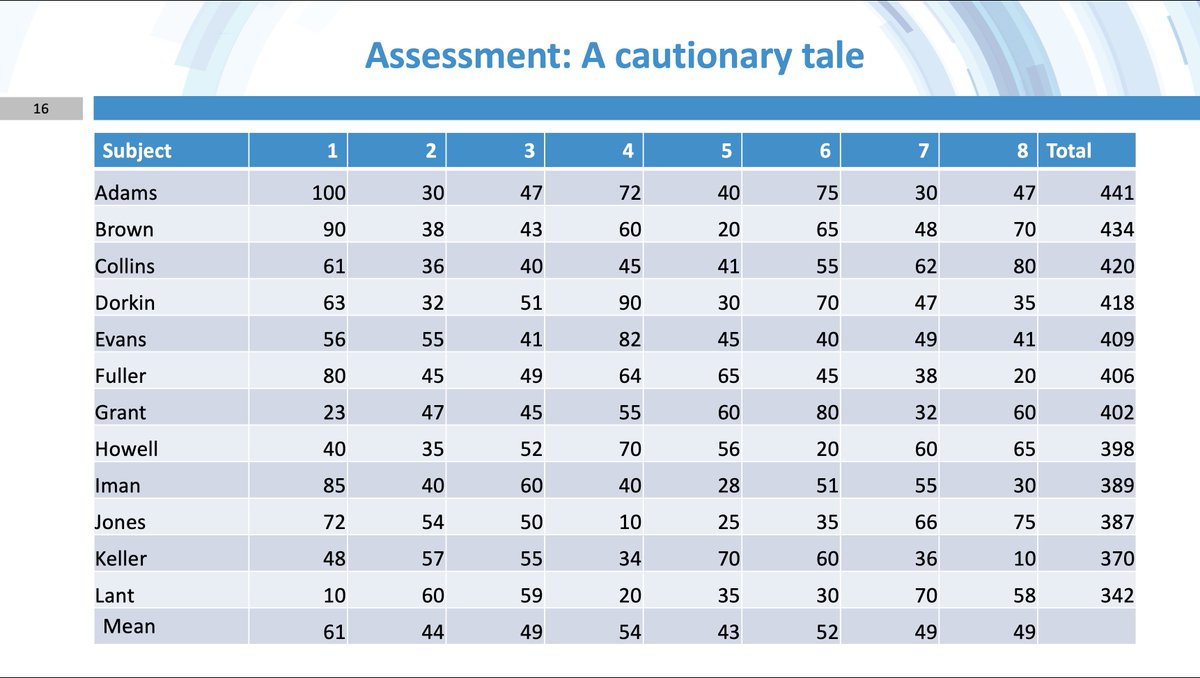
Here's a link to a new post on Substack about combining student scores (based on an example that Paul Black and I used in our MA module on Exploratory Data Analysis in the 1980s). If anyone knows where this came from, I'd love to know. https://t.co/xkehIY5DW8
This is a foundational question for those in education and educational measurement to consider. Some thought-provoking replies here...
..and some other replies, too!
.@usedgov has issued a request for public feedback on redesigning @IESResearch and how it can modernize its programs, processes, and priorities. The public comment period is open through October 15. View the request here: https://t.co/rwQVCFgu1c
I have previously been against any use of detectors due to false positives & the fact they only caught non-sophisticated users.
I think there is still a lot of reason to be worried about how they are used & what it means to “cheat” with AI, but my original reasons are less true.
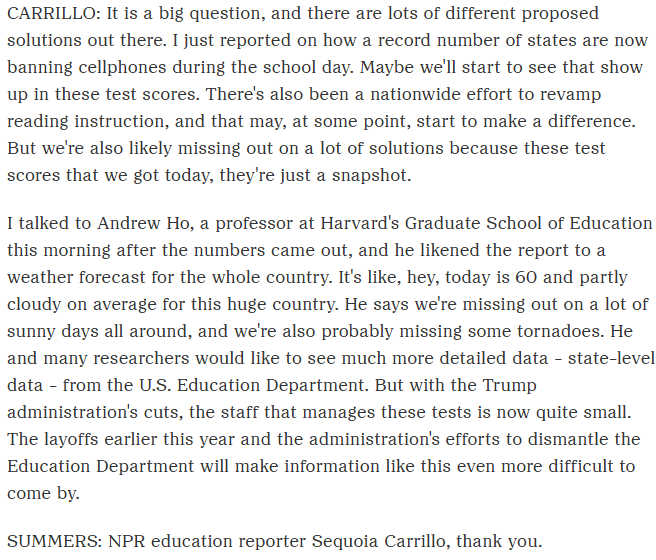
What do I see in high school NAEP results? Missing data.
Why can't we tell if this is pandemic decline or recovery? We haven't measured since 2019.
Why can't we see bright spots? No state data.
We need more high school NAEP to learn from states succeeding with kids this age. @NPR
I'll return to my broader point: evidence suggests AI, at its current level of capability, will have a big impact on jobs, education, and our society. We only get to shape those outcomes if we realize that they are going to happen. Giving people an excuse to dismiss AI hurts them