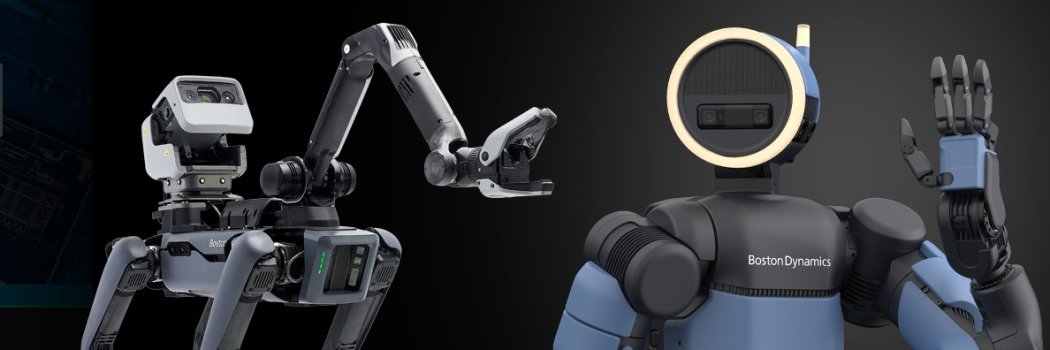
The thing nobody talks about is that in 10 years we'll have a million bipedal robots and in 25 years we'll have a billion. You’ll buy yours for $10k and it will be as important to your life as your smartphone is now
People often use Grasshopper because they don't understand code.
And I don't buy that you can't tweak with a software agent. (Claude Design literally has a Tweaks panel).
I think what you're getting at is that users want a generative interface that matches their mental model, and people are accustomed to Grasshopper for that. But if you can specify any user interface you want... if you can model the way you personally think as a front end at no appreciable expense or effort... why settle for Grasshopper?
More discussion on https://t.co/NJugsk9fnj
A significant portion of my network is still the AEC computational design community. I'm seeing a lot of posts where coding agents are being used to suggest or generate visual graphs in tools like Grasshopper. I'm genuinely curious, why? ("Because I love to use Grasshopper" is a perfectly legitimate answer, btw.)
I ask because: The affordance of visual graphs is that they reduce the barrier to entry for computational authorship and provide a dev env that doesn't require compilation/hosting/etc., but all of that goes away with agents. If I'm making a quick sketch that I want to put into a Rhino or Grasshopper context, I tell the agent to write it as a giant Python node with I/O config in the comments. If I want to make a reusable or distributable tool, the additional effort to compile a Rhino plugin or a web application is trivial. (The more extreme argument of this is that you could clone a new Rhino for each and every problem you encounter, and that the very act of building an entire desktop application is now transient and disposable.) And from a user experience perspective: They just want good UX, it doesn't matter how the tool was built (right?).
@Karthikvarmamkv A real-time map is probably easier (and more important). The ideal condition is the most recent condition. Maybe precision matters more than accuracy, and both are the harder problems, but both are less important in a VLM context.
I've long been interested in automating reality capture with robotics as the prerequisite mapping step required for robots to understand the world with enough precision and accuracy to effectively manipulate it.
A lot has happened since I stepped away from construction robotics to spend a few years designing behavior authoring UX for generally capable humanoids. This includes the emergence of VLMs capable of semantic and inherent spatial reasoning for robot action, and world models that act as virtual gyms to evaluate, refine, and collect data for VLA policies.
This week I attended Reality Capture Network's R-CON to see if everyone's as Bitter Lesson-pilled as I am, and if they're as curious as I am about agents that understand space. This capability fundamentally alters the reality capture landscape by shifting the focus from collecting measurement data to, quite literally, having conversations with your jobsite.
My takeaways:
(1) There's tension between licensed surveyors and their methods of control, and the democratization of reality capture services and solutions afforded by newer imaging technologies. The debates were informed and nuanced, and I emerged with an appreciation for both sides. Like most things, the future is not mutually exclusive and will lie somewhere in the middle. There's a more extreme version of this argument where next-gen VLMs will replace all LiDAR-based surveying, but the argument that computer vision will subsume all surveying work is nearly as old as computing itself.
(2) There wasn't a compelling argument against the generalist frontier models becoming more capable than models trained on proprietary construction customer data in the areas of safety monitoring, work quantification/progress monitoring, and QA/QC/deviation detection. It was suggested that post-training might always be required, or that the neolabs might outperform the frontier labs in specialized spatial understanding, but I wouldn't bet against the latter if GPT Astra and Gemini Argon are just the beginning of language models with advanced spatial comprehension.
(3) Robotic reality capture is the assumed future. I no longer have to waste my breath defending the concept, and can focus on making it reliable enough for obvious ROI. Also: "dog" has become the fully accepted shorthand for reality capture quadrupeds, just as "drone" is shorthand for aerial capture, which I love.
(4) The agentic revolution has breathed new life into longtime construction AI players like @openspaceai (2017), @doxel_ai (2016), and @AliceTech_AI (2015). This isn't to suggest they were struggling in the interim, but rather that there's more reason to be excited about these companies now than when they first arrived on the scene. (And imagine the "frontier-native" startups coming next...)
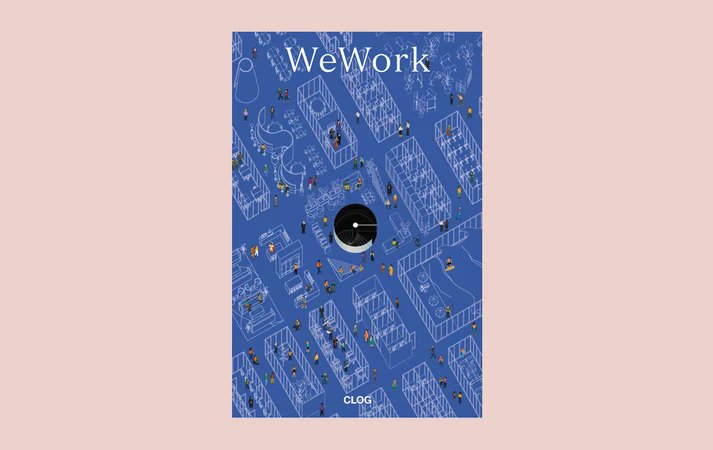
Clog WeWork is finally here https://t.co/pUvhm4e790 with contributions from Kashuo Bennett, Darrick Borowski, Jeremiah Britton, Christian Callaghan, Annie Cosgrove, Ashley Couch, Hanneke van Deursen, Chuck Driesler, David Fano, Silva Francisco, Jesse Ganes, Joe Geis, Andrew Heumann, Haruka Horiuchi, Olivia Howard, Florian Idenburg, Nicholas Kaspareck, Phil Kirschner, Adam Koogler, Jesse LeCavalier, Robert Linkens, Lauren Lynch, Jonathan Massey, Kyle May, Patrick McAndrews, Mick McConnell, Miguel McKelvey, Andrew McQuiston, Eric Moed, Paul Mosley, Corinne Murray, Federico Negro, Adam Neumann, Fed Novikov, Anibal Piccioni, Jacob Reidel, Lakshmi Rengarajan, Pierce Reynoldson, me, Michel Rojkind, Viral Shah, Sam Sidersky, Barbara Stallone, LeeAnn Suen, George Valdes, Devin Vermeulen, Robert Walker, Charles Weak, Dillon Wilson, Ebbie Wisecarver, and Phillip Youakim
The next issue of CLOG will examine the impact #wework has had on the way we create and experience the built environment!
*Submissions Due Jan 20th*
https://t.co/p7niYWf3V3
I joined @Toroosian for episode 150 (!) of his Machine Minds Show to discuss the challenges of designing the interaction layer for a robot that could eventually do anything, and the challenges of keeping Rick from interrupting your podcast recording.
Episode page: https://t.co/6xv74CzkGD
YouTube: https://t.co/IezNKGKF6z
Thanks to @ShakirWorks (@HelloRobo_co) for introducing me to Greg
$200M Series A, just... wow.
Ryan Luke Johns has always been one of the most singular minds in construction robotics, and if you've seen my talks you know that earthmoving is one of the few task categories where on-site robotics makes sense for construction (when construction is industrialized, it becomes primarily offsite factory work and logistics). Congratulations to Ryan and the team at @GravisRobotics !
More info here: https://t.co/1V9ZBHgEe7
It's hard to overstate how revolutionary Claude Design is, not just as a design tool delivering unprecedented time-to-value to the designer, but as an omen of how all software interfaces will be irrevocably transformed
"Fully autonomous capture. Ground robotics and autonomous flight both get more investment." @procoretech to acquire @DroneDeploy after Drone deploy shrewdly acquired StructionSite and Rocos to build out their ground robotics product. Exciting news in the world of construction robotics, automated reality capture, and digital twins.
Today, we announced that we have signed an agreement to acquire DroneDeploy, the robotics and visual intelligence platform for the built world.
Read the full news release here: https://t.co/3DRIgppUyc
Sometimes a writer digs past the immediate campaign to piece together the longer-term story. @johnkoetsier at @Forbes did a great job at that for the Atlas at the WorldCup campaign: hardware simplicity, behavior generality, and deployment strategy.
https://t.co/hNYPNL0uMZ
There was a small cadre of robotics designers at @figma Config 2026 but I suspect this group will grow. Software interfaces are the most obvious and tangible method of humans interacting with autonomous systems.
The big idea from Config is that the design/build boundary is dissolving into a single canvas, with the agent(s) absorbing the work that can be standardized.
There is no longer any meaningful distinction between an author persona and an end-user persona, and any application becomes capable of doing anything. This will be helpful with the application-scaling problem that accompanies the rise of general purpose robotics.
I hope you were able to catch @brianringley at Config. He gave a talk on our team’s philosophy and the challenges of designing a product that can do anything.
CONFIG ROBOTS: Boston Dynamics Distinguished Product Manager & HRI Designer, Brian Ringley (@brianringley)
"Hardware is more important than ever by virtue of this software explosion."
"There's a lot of conversation about how the 'AI brain will commoditize hardware. So whoever solves the AI layer of robotics, the hardware won't matter anymore. They're all just physical agents, & we can deploy the same AI on everything.'
I actually think that the opposite is true.
No matter what that intelligence is, you still need this physical body that's capable of interacting with the world, that can do it over & over again, that won't break down, & that can move in new & efficient ways."
@BostonDynamics@_albertorod_@figma