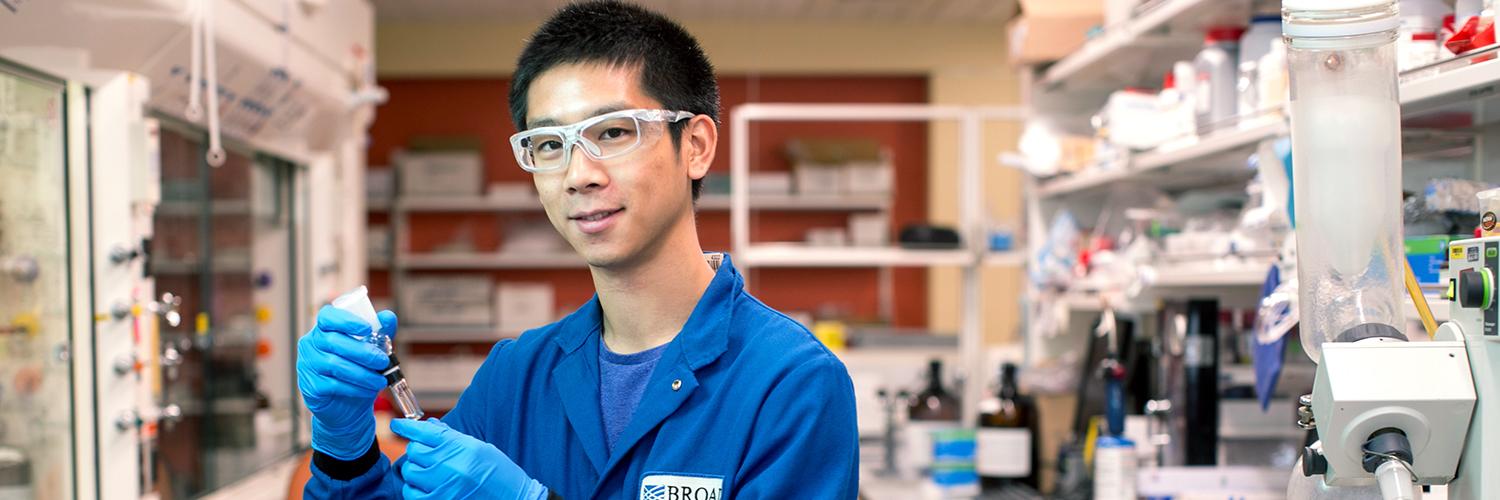
Join us on Thursday, August 6, at 6PM ET in Cambridge, MA (or online) for a Broad Discovery Series talk with @JD_Buenrostro: Uncovering Adversity's "Molecular Scars."
Register: https://t.co/LP4TdpUhfY
PERC is also part of a broader coalition that includes Critical Path Institute, N=1 Collaborative, Global Genes, Worldwide Clinical Trials, Beam Therapeutics, Prime Medicine, and Mahzi Therapeutics. (5/5)
We're thrilled to announce that a Broad-led consortium of 12 organizations has been selected to receive funding from @ARPA_H under its THRIVE program to launch the Pediatric Epilepsies and Rare CNS (PERC) Gene Editing Platform. https://t.co/gTZ99b9gl7 (1/5)
We are honored to collaborate with Boston Children’s Hospital, The Jackson Laboratory, Children’s Hospital Colorado, Children's Hospital of Philadelphia, Apertura Gene Therapy, Viralgen, Rare Epilepsy Network, RARE Hope, and the Dravet Syndrome Foundation. (4/5)
Broad scientists developed the Blended Genome Exome (BGE) sequencing method, which delivers high-quality, unbiased data at a lower cost than existing gold-standard methods and makes large-scale genetic studies more feasible. https://t.co/WG1wLHda7U
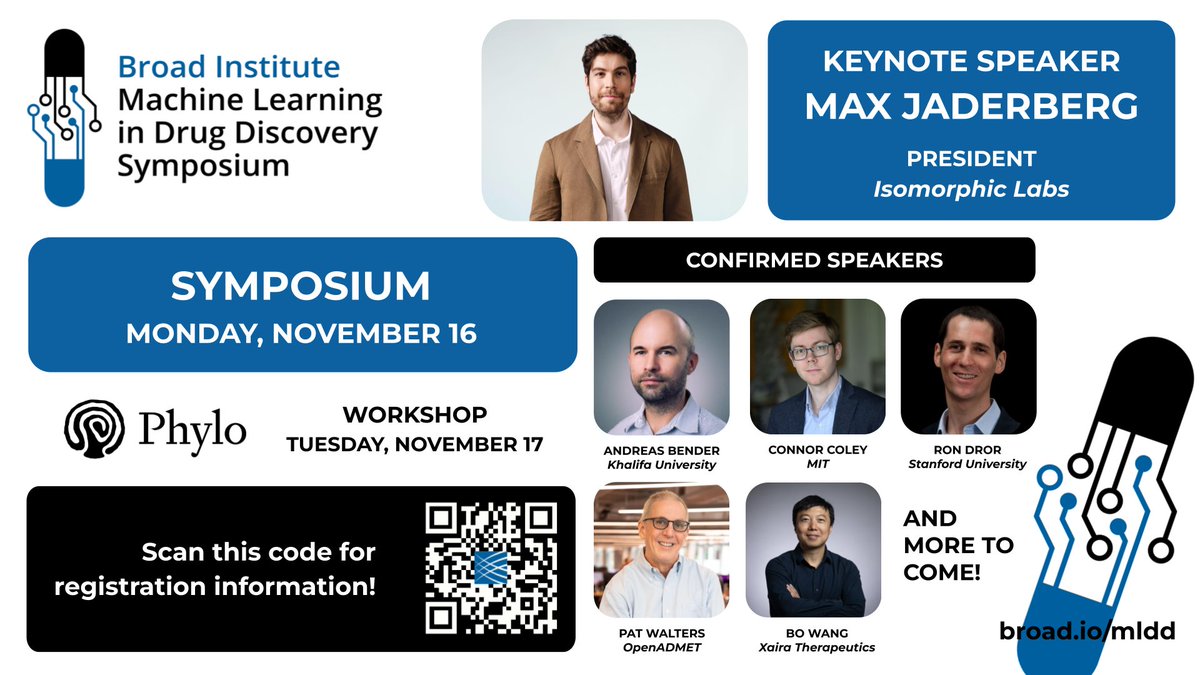
🎙️ Early-bird registration is now open for the 2026 @broadinstitute's #MachineLearning in #DrugDiscovery symposium!
Reserve your seat now 👉 https://t.co/W8kCN6M9zi
🗓️ Nov 16-17, 2026
➡️ Contact us for exciting #sponsorship opportunities and win free tickets and more!
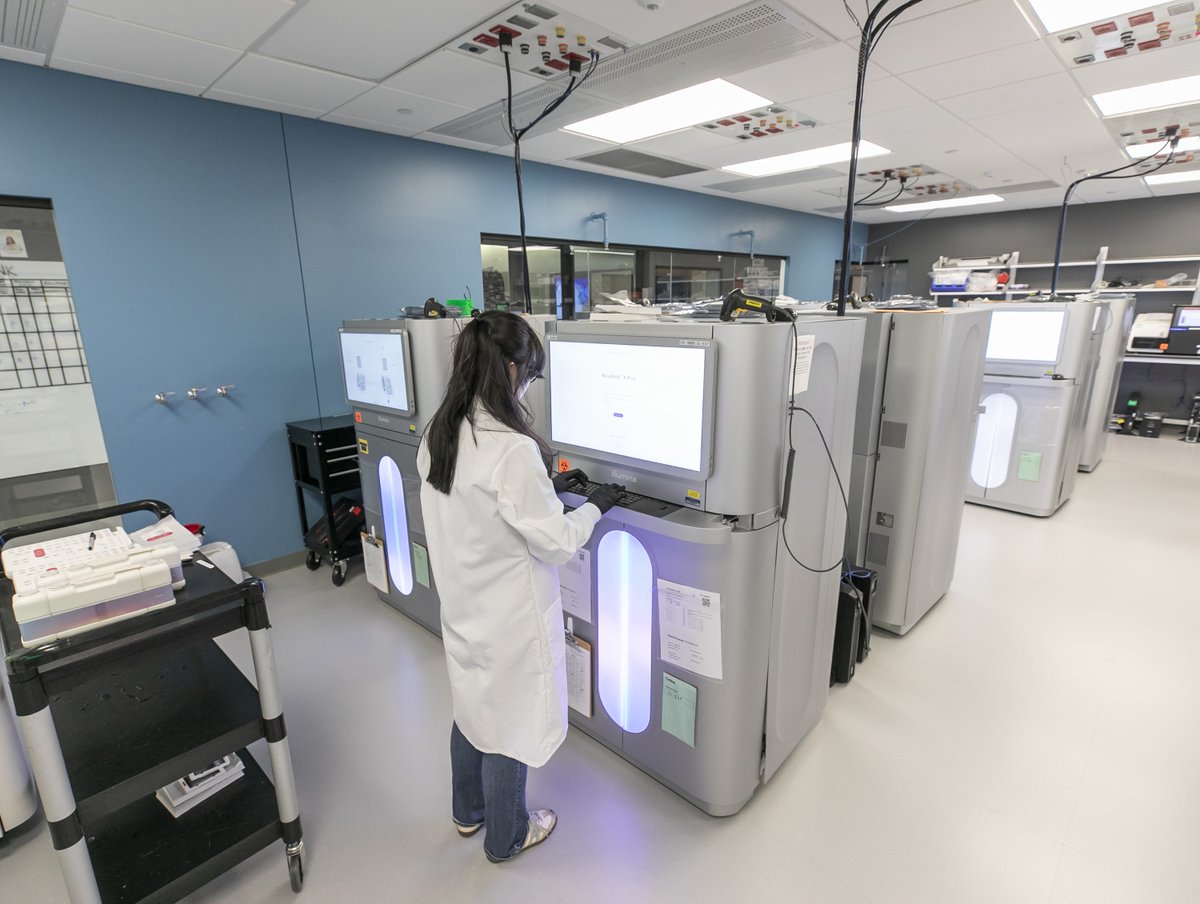
The @NIH@AllofUsResearch Program is now the largest integrated genomics and health database in the world, including 535,000 whole genome sequences–with roughly 60% sequenced at Broad. This data will power next-generation discoveries in precision medicine.
https://t.co/WlQasoTN6q
NEWS: NIH's All of Us Research Program is now the largest integrated genomics and health database in the world.
Read the full story ➡️ https://t.co/A5YdkcdZgc
Prime editing has continuously improved since @davidrliu's lab introduced it in 2019. 3 new studies from his lab advance prime editing systems, addressing key bottlenecks by increasing the efficiency and improving its potency when delivered into the body. https://t.co/r9qYb2eaXb
The recording of "Genotype, Phenotype, and GWAS data" by Elise Robinson is now available: https://t.co/kQBYCj5QHm. This talk is part of @broadinstitute's MPG Primer series. For more info, check out https://t.co/QsLDWVsltD.
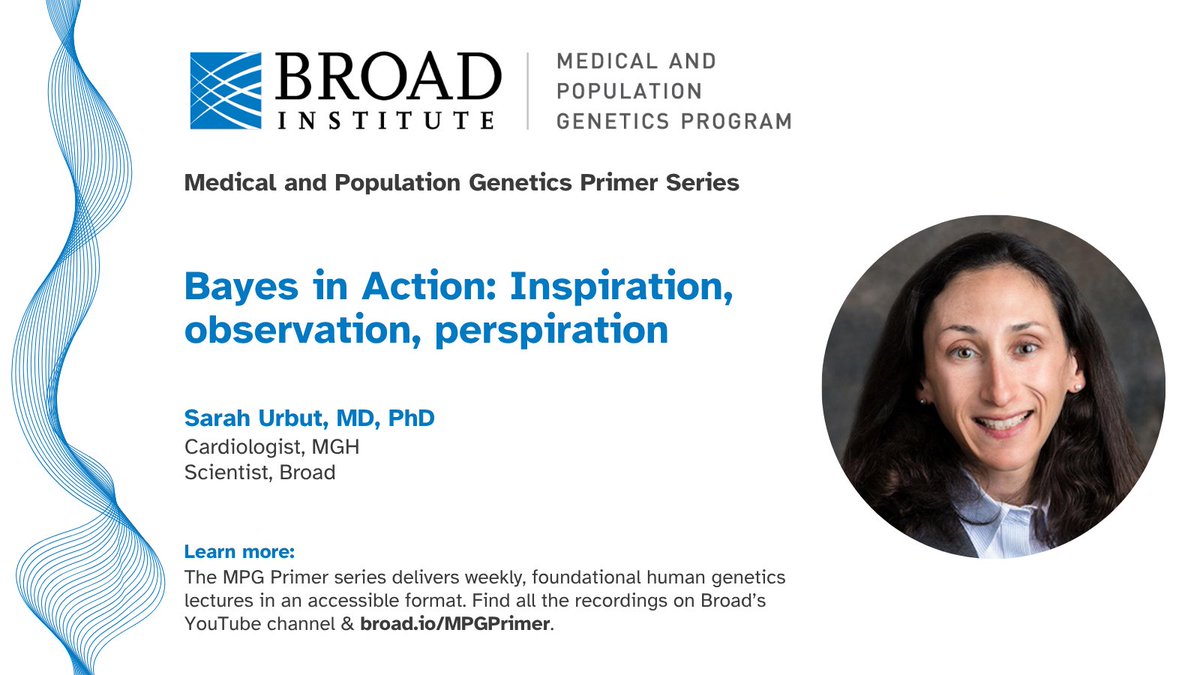
The recording of "Bayes in Action: Inspiration, observation, perspiration" by @tigerstatdoc is now available: https://t.co/YnrbBJ18It. This talk is part of @broadinstitute's MPG Primer series. For more info, check out https://t.co/QsLDWVrNE5.
The recording of "Noncoding variants in genetic diagnoses" by Lindsay Romo is now available: https://t.co/p02SIoVwo0. This talk is part of @broadinstitute's MPG Primer series. For more info, check out https://t.co/QsLDWVrNE5.
New research in Nature Methods from Project Ex Vivo shows AI models learn more from diverse cell states than from scaled datasets alone, a finding that could reshape how therapies are matched to patients. https://t.co/bcbTVz1Z6C
The 2026 Richard N. Merkin Prize in Biomedical Technology honors Graeme Clark, Erwin Hochmair, Ingeborg Hochmair, Michael Merzenich, and Blake Wilson for developing the modern cochlear implant — a device used by more than 1 million people worldwide. https://t.co/DPnsJxalFQ
Happy to share the latest paper from my postdoc in @davidrliu’s group, out now in @NatureNano! We develop a workflow for optimizing in vivo prime editing delivered via LNPs, advancing our ability to benefit patients with prime editing. See David’s thread below!
Today in @NatureNano, we report an all-RNA lipid nanoparticle (LNP) system for efficient in vivo prime editing (PE). We identify bottlenecks in transient prime editor delivery, develop a workflow for LNP optimization, and use it to rescue a mouse model of phenylketonuria.
https://t.co/WAH8LHAb9z
1/12
In 3 new studies, @davidrliu's lab has optimized key prime editing components (guide pegRNA motifs, reverse transcriptase stability and delivery via lipid nanoparticles), addressing bottlenecks that previously impeded its use in animals and human patients. https://t.co/r9qYb2eaXb
🎉 Huge news!! OurHealth is returning research polygenic risk scores for coronary artery disease. This is offered through our new ancillary study, OurHealth-PRS. You are eligible if you’ve joined the OurHealth main study, returned your saliva sample, and it has been sequenced.