@chess_feed Knight to F5 (covers King's escape route)
Black moves queen or rook wherever
Rook to E3 - double check (rook and bishop) and mate
Definitely took me longer than 2min!
@CForoutanNejad Thanks for your input - I'm sorry this story hasn't met your expectations. I tried to convey that the identity of the materials involved remains unconfirmed. Iran has strongly refuted the perchlorate claims, but I suspect official confirmation of cause may take a while longer
Reflecting on Two Decades of Change in Research
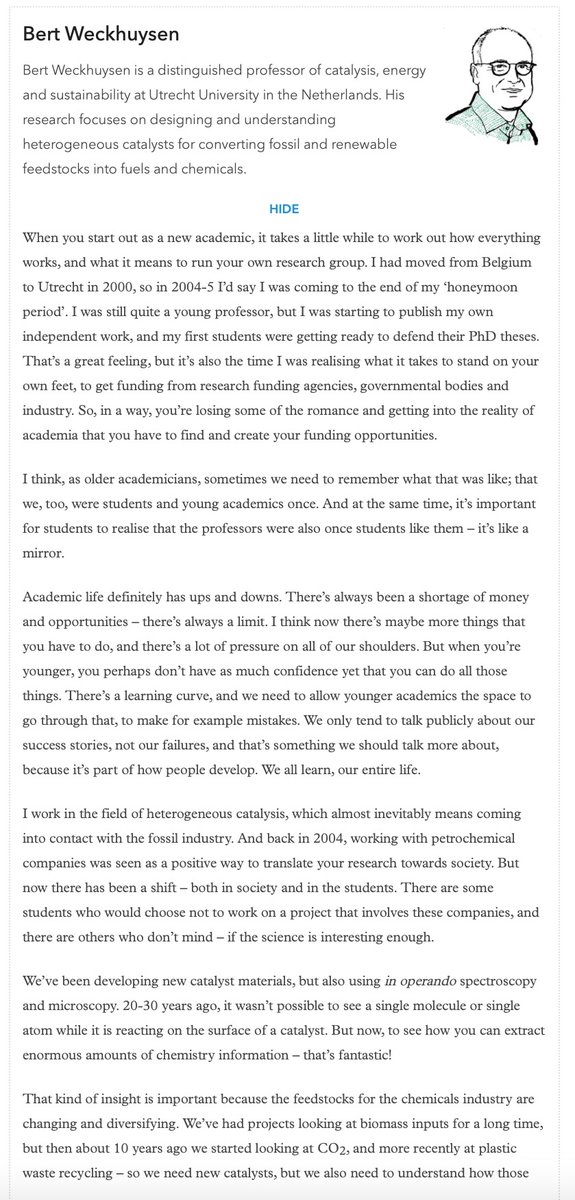
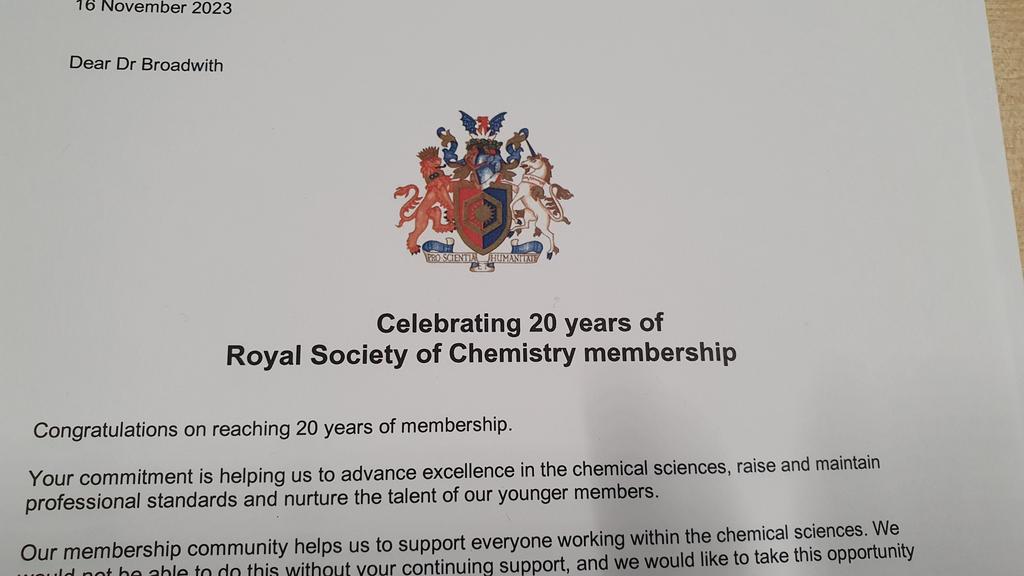
I became a @RoySocChem member in 2004, when Chemistry World was first launched. To mark @ChemistryWorld 20th anniversary, Phillip Broadwith asked 20 of us to look back at the last two decades of our careers in chemistry. Some interesting perspectives on the past period emerges from these 20 interviews.
"I think, as older academicians, sometimes we need to remember what that was like; that we, too, were students and young academics once. And at the same time, it’s important for students to realize that the professors were also once students like them – it’s like a mirror."
More Information: https://t.co/jLwUTPDRlQ
@UniUtrecht@ARCCBBC@mcecresearch
@DrSimEvans It seems a 'cycle' is involves heating a 'standardised load soaked with water' to check the cavity reaches the temperature set on the thermostat within the cycle duration (although neither the temp nor duration appear to be defined in the linked regs) https://t.co/6OFBRoyfbD
@DrSimEvans Looking at the load graph on my Solar invertor, I'd estimate that my oven uses ~its rated load while heating to temperature (~5-15min) followed by a much lower load (~400-500W) to maintain temperature (obvs somewhat dependent on set temp).
ATTENTION SCIENCE AND TECHNOLOGY JOURNALISTS!
Are you interested in writing for the Observer? I am looking for new writers and ideas for the Science & Technology pages of the Observer New Review.
For an idea of the types of pieces we publish, please take a look at this thread…
This was a great article to work on - I had some absolutely fascinating conversations about the breadth of chemical endeavour, the evolution of various sectors over time, and the challenges ahead for the future.
Hoping the next 10 will be equally interesting and inspirational
It's been 20 years since Chemistry World first went into print. How has the world of chemistry changed in that time? @broadwithp asked chemists who became members of @RoySocChem in 2004 to look back at the last two decades of their careers!
https://t.co/hnSASEMKab
@Popher The fondant centre starts out hard, and softens over time (after manufacturing) because there's an enzyme (invertase) incorporated in it. The enzyme breaks down and softens the hard, crystalline sugar. Maybe this one didn't get enough invertase mixed in😞 https://t.co/azEfiwkHkY
@WG_RumblePants About 9 miles west in Cambourne (don't really want to share more than that on here - what's the best way to get in touch with you more privately to arrange?)
@WG_RumblePants If you come and collect them, then tbh you can have them for a donation of your choice to @Chance2Shine https://t.co/nZKpbEM4Dj
(If you'd rather I post them to you you'll need to cover the postage, as well)
Check out some February highlights from the past 20 years with @broadwithp! 2023's cover was inspired by Joseph Wright of Derby's painting The Alchemist Discovering Phosphorus, and 2006's was about high-temperature superconductors – a technology still very much in the news now.
@PoliticalGraham@villagemoments It's a No-ball before that, because the keeper's gloves go in front of the stumps while the ball is live (Law 27.3 https://t.co/d3fNtwNitK)