When students are working with sounds, connecting them to letters, and building words, they’re developing orthographic mapping.
Routines like word chaining give them that repeated practice.
🎧 Episode with Anjanette McNeely is out now
https://t.co/Am1FQ9SKAT
In our latest Substack, we explore how vocabulary is knowledge to be built, not a strategy to be deployed. Through explicit instruction, implicit support, and recursive practice, words move from exposure to ownership.
https://t.co/tA6sttMTZF
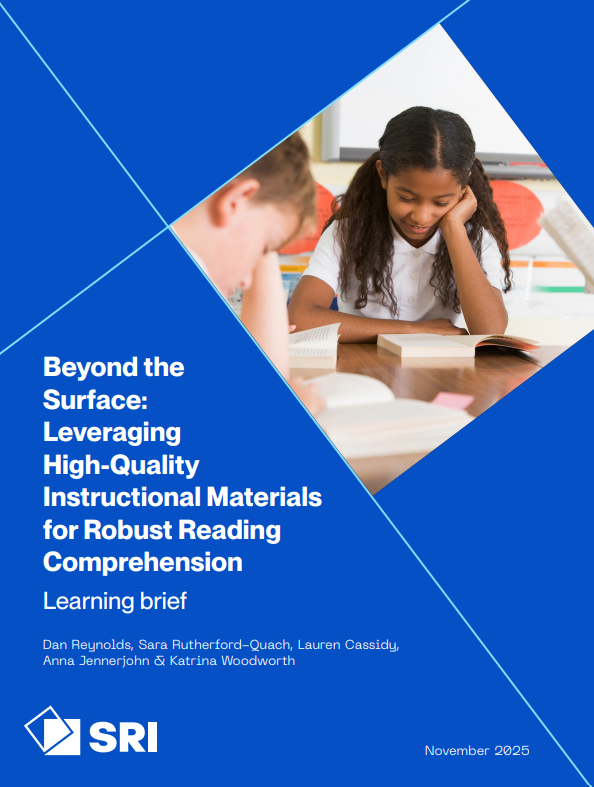
New research from SRI Education highlights a gap between the adoption of high-quality instructional materials (HQIM) and the depth of reading comprehension instruction in elementary classrooms.
Although teachers widely use comprehension-focused curricula and students are actively engaged with texts, most classroom lessons still result in surface-level understanding rather than deep, robust comprehension.
This brief explains why this distinction matters, identifies instructional practices linked to deeper learning, and offers actionable steps that school and district leaders can take to ensure students develop meaningful understanding from complex texts.
Read the brief here: https://t.co/CX82CksGth
Think-Pair-Share has the widest gap between success and failure in the classroom. With clear prompts, tight timing, and real accountability, it’s a powerhouse for thinking. Toss it in without intentional design and it collapses into noise. With TPS, intentionality is everything.
I think I am going to post these in my room, right next to Dr. Archer's Archerism chart.
Responsive Teaching Principles by @C_Hendrick :
"Adjust the teaching, not your expectations."
"Reteach don't just repeat."
"Feedback is a change, not a comment."
"Slow down to speed up."
"Make excellence explicit."
"Use tasks to reveal, not just to assess."
Gaurav is right, this is pure brilliance.
"Students don’t become confident writers just from opportunities to write. They get there through intentional instruction, guided practice, and, eventually, independent practice."-- TWR
Big words aren’t scary… when you know how to teach them. 💪
In our latest blog, we share flexible routines and practical tips focused on helping kids own multisyllabic word reading.
👉 Teachers, this one’s for you! Click the link to read. https://t.co/UQZ6vUQAlI
✨ Jessica Toste shares a peel-off strategy for multisyllabic words: identify prefixes + suffixes first, then put the whole word together. 💡
🎧 Hear more routines for reading big words in a new episode THIS FRIDAY with Jessica Toste & Brennan Chandler. https://t.co/r5clKkOZi8
Every teacher should listen to this episode.
Every interventionist should listen to this episode.
Every teacher of reading should listen to this episode.
Every reading specialist.
Every administrator and every ed leader who makes decisions around reading should listen to this episode.
Understanding at which learning stage the learning is breaking is essential to the remediation and acceleration of the student's reading and learning.
Thanks, @literacypodcast and Dr. Burns, for this great episode.
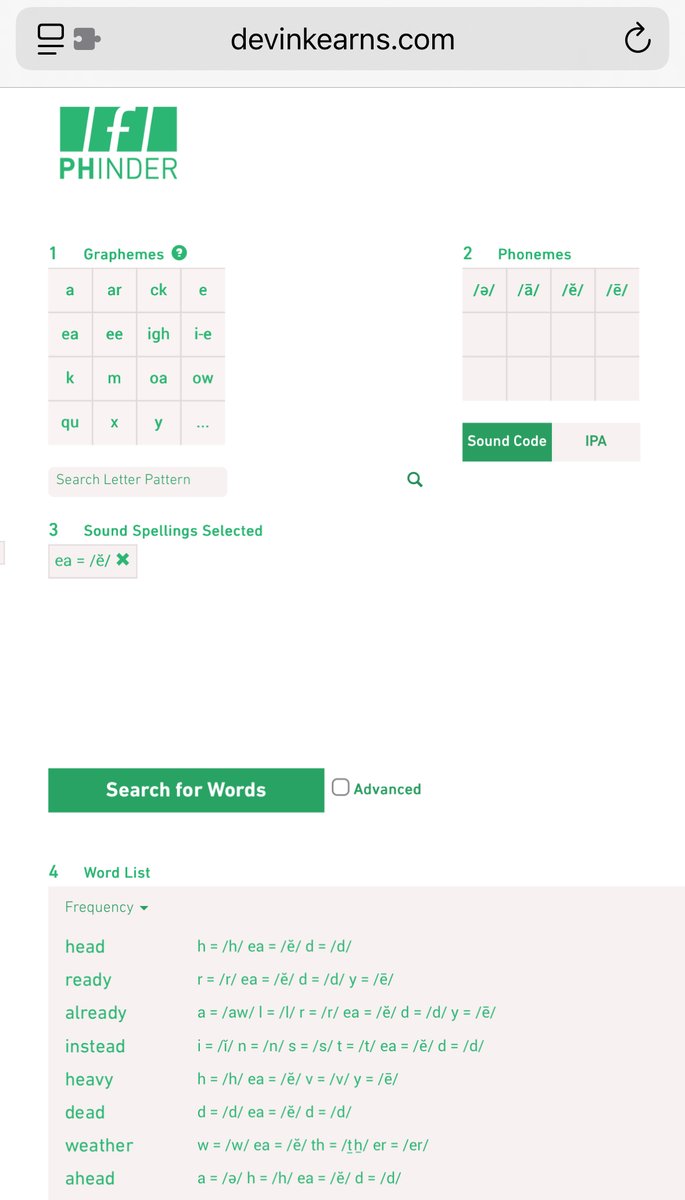
📚 PHinder is a free tool from Dr. Devin Kearns that helps you find phonics patterns based on their frequency in real words.
🔍 Just type in a pattern or sound and PHinder will do the rest. (You’ll love how nerdy-cool it is. We did!)
👉 Try it out: https://t.co/QiwkhXiMdB
To my friends using UFLI, check out this timer that can be used to support pacing:
https://t.co/48P2Zy6GpX
The app, Multitimer, is free in the App Store. It’s easy to use and provides a quiet alert to move on to the next step.
#UFLI#perkypacing
This is why your child is not getting Educational Assistant support.
This is why there is no Spec Ed Teacher to help your child catch up on basic math or literacy skills.
This is why the ventilation in your child’s classroom is not working.
https://t.co/i2sHuyLTVx
Students + LEDs + @starwars = Epic Makerspace Fun! May The Circuit Be With You on May the 4th. Get ready to awaken the Force in your classroom with our Light Saber Paper Circuit tutorial! FREE Templates 🔦 https://t.co/652xc2qrYJ #EdTech#PBL
Words are powerful. 🤩
We are thrilled to have linguist and author Lyn Stone on the podcast today.
🎧 If you're curious about how etymology and morphology can transform student learning, this episode is for you.
🔗 https://t.co/9ru2OzZl3p