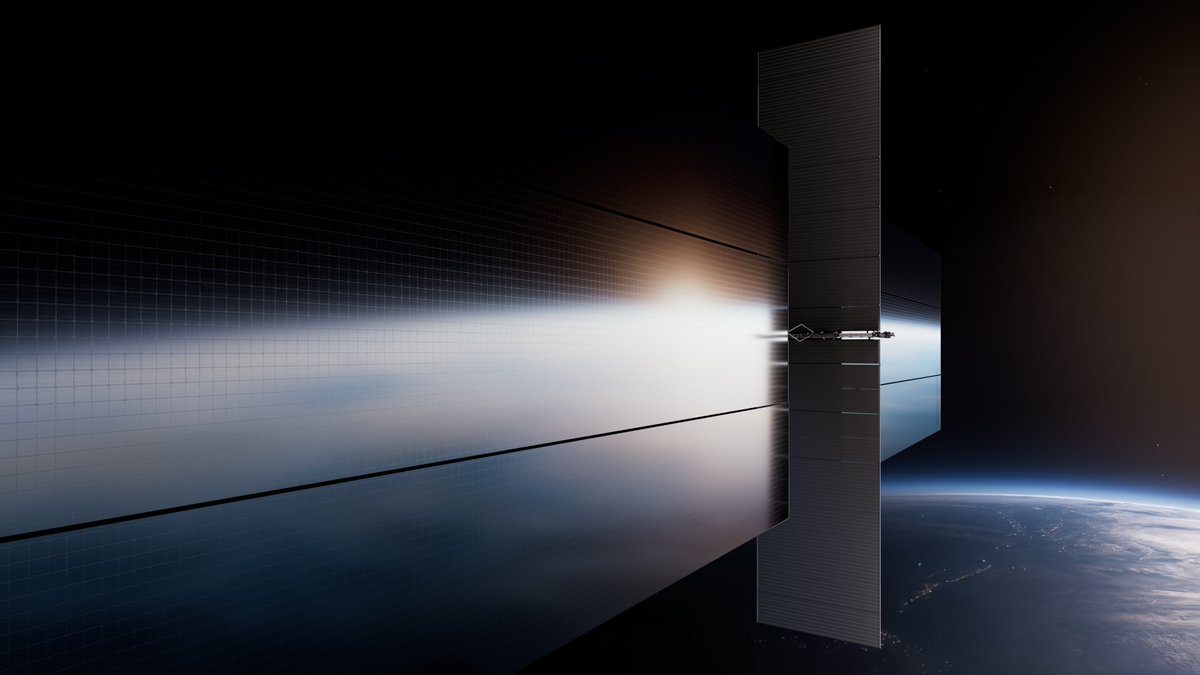
SpaceX is partnering with @Nvidia to design the Starmind AI1 satellite compute payload.
Each of the Starmind satellites will include NVIDIA Rubin GPUs and Vera CPUs for datacenter class space compute → https://t.co/4MOQv0DvTQ
For my first post, I’m sharing a letter @NVIDIA signed on why open models matter.
AI will transform every industry, power every company, and be built by every country.
Open models strengthen safety and cybersecurity, accelerate innovation and diffusion, and enable sovereignty.
The world needs both frontier closed models and frontier open models.
https://t.co/AUKzoQ5Ikb
"But as we know the English historically struggle here in Massachusetts." - @JohnStrong early on in the match
England remains without a goal after 65 minutes...
MICRON $MU JUST REPORTED $41.5 BILLION IN QUARTERLY REVENUE
Here is every May quarter over the last decade to put that number in context:
May 2016: $2.9B
May 2017: $5.6B
May 2018: $7.9B
May 2019: $4.8B
May 2020: $5.4B
May 2021: $7.4B
May 2022: $8.6B
May 2023: $3.7B
May 2024: $6.8B
May 2025: $9.3B
May 2026: $41.5B
That is a 4.5x increase year over year and more than the previous four May quarters combined.
Anthropic has confidentially submitted a draft S-1 registration statement to the Securities and Exchange Commission.
Pending completion of SEC review, this gives us the option to pursue an initial public offering.
Read more: https://t.co/onGZAhRLvD
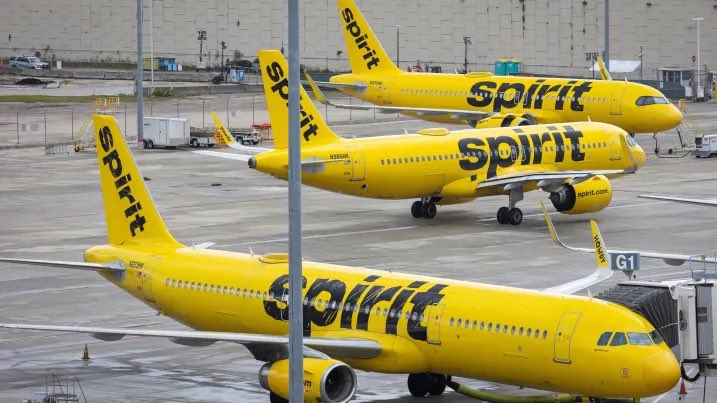
SPIRIT AIRLINES IS NOW GONE
Spirit Airlines has shut down. The company sent this note out to people with flights
“We regret to inform you that all Spirit Airlines flights have been canceled, effective immediately”
Elon Musk avait dit un truc qui m'avait marqué sur l'allocation de ressources. En substance : passé un certain niveau de richesse, l'argent n'est plus de la consommation, c'est de l'allocation de capital.
Cette phrase change tout.
L'économie, dans le fond, c'est juste un problème d'allocation. Tu as des ressources finies et des usages infinis. Qui décide où va quoi ?
Imagine une cour de récré. 100 enfants, des paquets de cartes Pokémon distribués au hasard. Tu laisses faire. Très vite, un ordre émerge. Les bons joueurs accumulent les cartes rares, les collectionneurs trient, les négociateurs trouvent des deals. Personne n'a planifié. Et pourtant chaque carte finit dans les mains de celui qui en tire le plus de valeur. Le système maximise le bonheur total de la cour. C'est ça, la main invisible.
Maintenant fais entrer la maîtresse. Elle trouve ça injuste. Léo a 50 cartes, Tom en a 3. Elle confisque, redistribue, impose l'égalité. Trois effets immédiats. Les bons joueurs arrêtent de jouer, à quoi bon. Les mauvais n'ont plus de raison de progresser, ils auront leur part. Les échanges s'effondrent. La cour est égale, et morte. Elle a maximisé l'égalité, elle a détruit le bonheur.
Le problème de la maîtresse, c'est qu'elle ne peut pas avoir l'information que la cour avait collectivement. C'est le problème du calcul économique de Mises, formulé en 1920. L'URSS a essayé de le résoudre pendant 70 ans avec le Gosplan. Résultat : pénuries, queues, effondrement. Pas parce que les Soviétiques étaient bêtes, parce que le problème est mathématiquement insoluble en mode centralisé.
Quand Musk a 200 milliards, il ne les consomme pas, il les alloue. SpaceX, Starlink, Neuralink, xAI. Chaque dollar est un pari sur le futur. Et lui a un track record. PayPal, Tesla, SpaceX. Il a démontré qu'il sait identifier des problèmes immenses et y allouer des ressources avec un rendement spectaculaire.
L'État aussi a un track record. Hôpitaux qui s'effondrent, éducation qui décline, dette qui explose, services publics qui se dégradent malgré des budgets en hausse constante. Le marché identifie les bons allocateurs, la politique identifie les bons communicants.
Le profit n'est pas une finalité, c'est un signal. Il dit : tu as alloué des ressources rares vers un usage que les gens valorisent suffisamment pour payer. Plus le profit est gros, plus la création de valeur est grande. Quand Starlink est rentable, ça veut dire que des millions de gens dans des zones rurales ont enfin internet. Quand un ministère est en déficit, ça veut dire qu'il consomme plus qu'il ne produit. L'un crée, l'autre détruit, et on appelle ça redistribution.
Dans nos sociétés il y a deux catégories d'acteurs. Les entrepreneurs et les bureaucrates. L'entrepreneur prend un risque personnel pour identifier un problème, mobiliser des ressources, créer une solution. S'il se trompe il perd. S'il a raison, ses clients gagnent, ses employés gagnent, ses fournisseurs gagnent, l'État collecte des impôts. Il est la cellule de base du progrès humain.
Le bureaucrate ne prend aucun risque personnel. Son salaire est garanti. Au mieux il maintient une rente existante. Au pire il la détruit par excès de réglementation, mauvaise allocation forcée, incitations perverses qui découragent ceux qui produisent. Mais dans aucun cas il ne crée.
Regarde les 50 dernières années. iPhone, internet civil, SpaceX, Tesla, Google, Amazon, Stripe, mRNA, ChatGPT. Toutes des inventions privées, portées par des entrepreneurs, financées par du capital risque. Pas un seul ministère n'a inventé quoi que ce soit qui ait changé ta vie au quotidien.
La France est devenue le laboratoire mondial de la dérive bureaucratique. 57% du PIB en dépenses publiques, record absolu. Une administration tentaculaire, une fiscalité qui pénalise la création de richesse. Résultat : décrochage face aux États-Unis, à l'Allemagne, à la Suisse. Fuite des cerveaux. Désindustrialisation. Dette qui explose.
Et le pire c'est que la mauvaise allocation s'auto-renforce. Plus l'État prélève, moins les entrepreneurs créent. Moins ils créent, moins il y a de base fiscale. Plus l'État s'endette et taxe. Boucle de rétroaction négative parfaite. La maîtresse pense qu'elle aide, et chaque année la cour produit moins.
Dans nos sociétés, ce sont les entrepreneurs, toujours, qui font avancer la civilisation. Les bureaucrates au mieux maintiennent une rente, au pire la détruisent. Aucune société n'a jamais progressé en taxant ses créateurs pour subventionner ses gestionnaires.
La question n'est jamais qui a combien. C'est qui alloue le mieux la prochaine unité de ressource pour maximiser le futur de l'humanité. La réponse depuis 200 ans n'a jamais changé. Ce ne sont pas les fonctionnaires.
Microsoft is offering its first ever voluntary buyout to about 7% of its staff.
Eligible US employees include workers at the senior director level and below whose combined years of employment and age total 70 or more.
JUST IN:— Apple is reportedly planning to integrate Starlink connectivity into the iPhone 18 Pro, currently in talks with SpaceX, with a potential release in 2026, per The Information
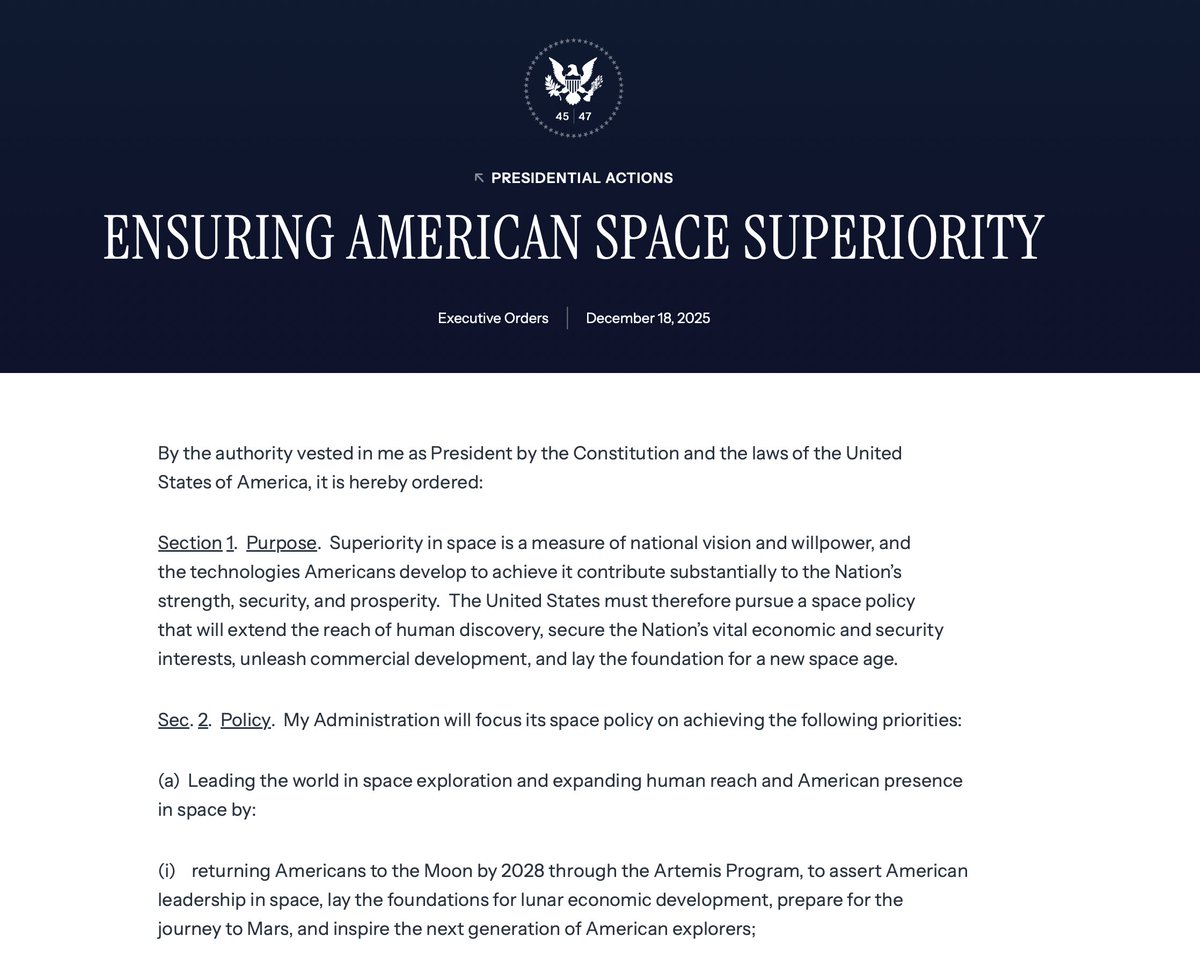
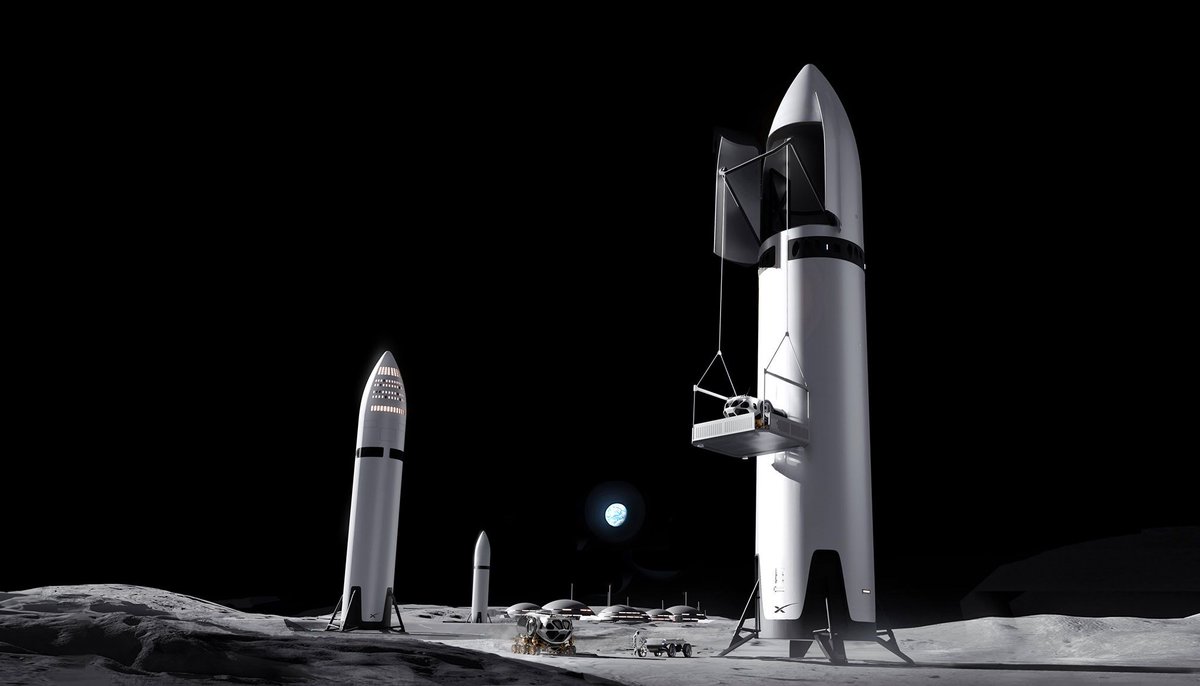
NEWS: Today, Trump signed an executive order committing the United States to return to the Moon by 2028, build a lunar outpost by 2030 and prepare for the journey to Mars.
Everything in the Executive Order:
• Return Americans to the Moon by 2028
• Begin building a permanent lunar outpost by 2030
• Make U.S. space superiority a core national priority
• Expand commercial launch, lower costs, increase cadence
• Develop next-gen space-based missile defense by 2028
• Detect and counter threats in LEO and cislunar space
• Rapidly modernize national security space architecture
• Deepen allied cooperation in space security
• Grow the U.S. commercial space economy
• Target $50B+ in new space investment by 2028
• Support a commercial successor to the ISS by 2030
• Enable space nuclear power for lunar and orbital missions
• Improve space weather forecasting
• Lead on space traffic management & debris mitigation
SpaceX is about to become the most important company on Earth. And maybe off it.
$30-40B raise. $1.5T valuation. Largest IPO in history. Those are the headlines.
Here’s what they’re actually telling you.
Musk just told investors that Starlink will generate $22-24B in 2026 revenue, up from $8B in 2024. That’s tripling in two years. At 100x forward revenue, the market is pricing Starlink like it’s the next AWS.
The comparison isn’t crazy.
AWS did $90B last year with 31% of cloud market share. Starlink has 8M subscribers and approximately zero real competition. Amazon Kuiper has 153 satellites. Starlink has 7,000+. OneWeb did $216M in 2024. Starlink did $8B. By the time Kuiper launches commercial service in late 2026, the race is already over.
But Starlink is the boring part of this story.
Musk said last month that “cost effectiveness of AI in space will be overwhelmingly better than AI on the ground” within 4-5 years. SpaceX plans to use IPO proceeds to build space-based AI data centers. Starship can deliver 100GW per year to high Earth orbit. For context, total US electricity consumption is 490GW. Average AI data center demand is projected to hit 123GW by 2035, up from 4GW today.
The math: Earth cannot build power plants fast enough. Gas turbine backlog is 7 years. Nuclear takes a decade. Meanwhile Musk is talking about solar-powered AI satellites with radiative cooling in orbit. Google’s Sundar Pichai called it a “moonshot” and said Project Suncatcher could launch prototype servers by 2027. His exact words: “only possible because of SpaceX’s massive advances in launch technology.”
ARK just published an open-source valuation model. Monte Carlo simulation, 17 variables, 1 million iterations. Base case: $2.5T by 2030. Bull case: $3.1T. That’s a 38% CAGR from December’s $350B round.
The model assumes:
- Full Starlink constellation (42,000 satellites) by 2035
- $300B annual revenue at maturity (15% of global communications spend)
- Mars development funded by Starlink cash flows
And here’s where it gets weird.
Musk announced 5 uncrewed Starship launches to Mars in 2026. He gives it 50-50 odds. If they land intact, crewed missions begin 2029-2031. By 2033, he’s targeting 500 launches per window. The goal: 1 million people on Mars, self-sustaining city in 20 years.
The timeline:
- 2026: 5 test flights (10t payload each)
- 2028-29: 20 launches, first humans
- 2030-31: 100 launches
- 2033: 500 launches
ARK’s model explicitly excludes Mars revenue because “projecting cash flows from extraterrestrial settlements can be speculative.” But they note Mars infrastructure could eventually enable asteroid mining.
Jensen Huang called space data centers “a dream.” Fair. Radiation shielding for Blackwell GPUs doesn’t exist. Deploying tens of thousands of square meters of thermal radiators is science fiction today.
But SpaceX has a history of turning science fiction into quarterly revenue.
At $1.5T, you’re paying for:
1. Starlink monopoly on LEO internet (priced in)
2. Space-based AI compute infrastructure (speculative)
3. Mars colonization (not priced, possibly unquantifiable)
Here’s the bear and bull cases.
Bear case
100x multiples assume flawless execution on subscriber growth, zero price compression from competition, and regulatory goodwill in 100+ countries. Musk’s timelines slip by years. Starship has had multiple test failures.
Bull case
SpaceX is the only company that can simultaneously solve the AI power crisis, provide global internet, and make humanity multiplanetary. The TAM is literally civilization.
I don’t know if SpaceX is worth $1.5T or $3T or $500B. Neither does anyone else. The honest answer is that traditional valuation frameworks break when you’re pricing optionality on space-based computing and interplanetary colonization.
But I know this… if you’re building a 20-year portfolio and you can only own one company, the argument for SpaceX has never been stronger.
I would like to clarify a few things.
First, the obvious one: we do not have or want government guarantees for OpenAI datacenters. We believe that governments should not pick winners or losers, and that taxpayers should not bail out companies that make bad business decisions or otherwise lose in the market. If one company fails, other companies will do good work.
What we do think might make sense is governments building (and owning) their own AI infrastructure, but then the upside of that should flow to the government as well. We can imagine a world where governments decide to offtake a lot of computing power and get to decide how to use it, and it may make sense to provide lower cost of capital to do so. Building a strategic national reserve of computing power makes a lot of sense. But this should be for the government’s benefit, not the benefit of private companies.
The one area where we have discussed loan guarantees is as part of supporting the buildout of semiconductor fabs in the US, where we and other companies have responded to the government’s call and where we would be happy to help (though we did not formally apply). The basic idea there has been ensuring that the sourcing of the chip supply chain is as American as possible in order to bring jobs and industrialization back to the US, and to enhance the strategic position of the US with an independent supply chain, for the benefit of all American companies. This is of course different from governments guaranteeing private-benefit datacenter buildouts.
There are at least 3 “questions behind the question” here that are understandably causing concern.
First, “How is OpenAI going to pay for all this infrastructure it is signing up for?” We expect to end this year above $20 billion in annualized revenue run rate and grow to hundreds of billion by 2030. We are looking at commitments of about $1.4 trillion over the next 8 years. Obviously this requires continued revenue growth, and each doubling is a lot of work! But we are feeling good about our prospects there; we are quite excited about our upcoming enterprise offering for example, and there are categories like new consumer devices and robotics that we also expect to be very significant. But there are also new categories we have a hard time putting specifics on like AI that can do scientific discovery, which we will touch on later.
We are also looking at ways to more directly sell compute capacity to other companies (and people); we are pretty sure the world is going to need a lot of “AI cloud”, and we are excited to offer this. We may also raise more equity or debt capital in the future.
But everything we currently see suggests that the world is going to need a great deal more computing power than what we are already planning for.
Second, “Is OpenAI trying to become too big to fail, and should the government pick winners and losers?” Our answer on this is an unequivocal no. If we screw up and can’t fix it, we should fail, and other companies will continue on doing good work and servicing customers. That’s how capitalism works and the ecosystem and economy would be fine. We plan to be a wildly successful company, but if we get it wrong, that’s on us.
Our CFO talked about government financing yesterday, and then later clarified her point underscoring that she could have phrased things more clearly. As mentioned above, we think that the US government should have a national strategy for its own AI infrastructure.
Tyler Cowen asked me a few weeks ago about the federal government becoming the insurer of last resort for AI, in the sense of risks (like nuclear power) not about overbuild. I said “I do think the government ends up as the insurer of last resort, but I think I mean that in a different way than you mean that, and I don’t expect them to actually be writing the policies in the way that maybe they do for nuclear”. Again, this was in a totally different context than datacenter buildout, and not about bailing out a company. What we were talking about is something going catastrophically wrong—say, a rogue actor using an AI to coordinate a large-scale cyberattack that disrupts critical infrastructure—and how intentional misuse of AI could cause harm at a scale that only the government could deal with. I do not think the government should be writing insurance policies for AI companies.
Third, “Why do you need to spend so much now, instead of growing more slowly?”. We are trying to build the infrastructure for a future economy powered by AI, and given everything we see on the horizon in our research program, this is the time to invest to be really scaling up our technology. Massive infrastructure projects take quite awhile to build, so we have to start now.
Based on the trends we are seeing of how people are using AI and how much of it they would like to use, we believe the risk to OpenAI of not having enough computing power is more significant and more likely than the risk of having too much. Even today, we and others have to rate limit our products and not offer new features and models because we face such a severe compute constraint.
In a world where AI can make important scientific breakthroughs but at the cost of tremendous amounts of computing power, we want to be ready to meet that moment. And we no longer think it’s in the distant future. Our mission requires us to do what we can to not wait many more years to apply AI to hard problems, like contributing to curing deadly diseases, and to bring the benefits of AGI to people as soon as possible.
Also, we want a world of abundant and cheap AI. We expect massive demand for this technology, and for it to improve people’s lives in many ways.
It is a great privilege to get to be in the arena, and to have the conviction to take a run at building infrastructure at such scale for something so important. This is the bet we are making, and given our vantage point, we feel good about it. But we of course could be wrong, and the market—not the government—will deal with it if we are.
Thank you, Mr. President @POTUS, for this opportunity. It will be an honor to serve my country under your leadership. I am also very grateful to @SecDuffy, who skillfully oversees @NASA alongside his many other responsibilities.
The support from the space-loving community has been overwhelming. I am not sure how I earned the trust of so many, but I will do everything I can to live up to those expectations.
To the innovators building the orbital economy, to the scientists pursuing breakthrough discoveries and to dreamers across the world eager for a return to the Moon and the grand journey beyond--these are the most exciting times since the dawn of the space age-- and I truly believe the future we have all been waiting for will soon become reality.
And to the best and brightest at NASA, and to all the commercial and international partners, we have an extraordinary responsibility--but the clock is running. The journey is never easy, but it is time to inspire the world once again to achieve the near-impossible--to undertake and accomplish big, bold endeavors in space...and when we do, we will make life better here at home and challenge the next generation to go even further.
NASA will never be a caretaker of history--but will forever make history.
Godspeed, President Donald J. Trump, and Godspeed NASA, as America leads the greatest adventure in human history 🇺🇸