But I do think there’s a deeper structural question here that goes beyond just the coaching hire.
At some point you have to ask whether the organization is truly prioritizing building a winner or maximizing asset value.
Because the Timbers did have high-end talent: Evander. Ayala. Santi Moreno. Surman now looks like another valuable piece.
But if the pattern becomes: develop talent → increase value → sell talent → reset expectations,
then fans are justified in wondering whether the actual goal is sustained contention or simply maintaining financial health while remaining “competitive enough.”
And that creates a strange dynamic in evaluating coaches. Because if your best players are continually sold off, and roster balance is inconsistent, maybe no coach was realistically positioned to succeed at the highest level.
That’s not absolving Neville. But it does complicate the simplistic “fire the coach and everything is fixed” narrative.
I’m not saying the press is “shilling,” but the coverage does feel oddly deferential toward management.
Phil Neville was relentlessly analyzed, criticized, and ultimately fired. Fine. That comes with the job.
But where is the equally tough scrutiny of Ned Grabavoy?
He hired Phil. He pursued him aggressively. He built the roster. He oversaw the transfer windows. If the team lacked balance, depth, defensive quality, or enough top-end talent to truly compete, that’s not solely a coaching issue.
Yet much of the coverage treats the GM almost like a neutral observer instead of a central decision-maker.
That’s what feels off.
A serious organization asks: Did the coach fail? Did the roster fail? Did the front office misjudge the situation? Did ownership provide enough resources? Were the expectations realistic?
Instead, the conversation often gets flattened into: “coach bad, firing necessary.”
That’s incomplete analysis.
I had the same thought. After hearing the details Laura Loomer revealed today about Lauren Boebert and Thomas Massie, it’s hard not to step back and ask a larger question: is this really the caliber of people we are sending to Congress? Yes, we deserve better. But deserving better also means demanding better — not just from politicians, but from ourselves as voters, media consumers, and citizens. A republic ultimately becomes a mirror. The real question may not simply be “How did these people get elected?” but “What kind of society keeps rewarding this?”
Ah yes—Portland, where the real crises are… food choices.
We’ve seen this movie before. Two women come back from Mexico, make burritos, and get run out of town for being the wrong race. Not bad food. Not unsafe practices. Wrong identity.
Now we’re back at it again—deciding which foods people are morally allowed to cook, sell, or eat.
Meanwhile, walk into any store and you’ll find shelves full of Yerba mate brands—many owned, marketed, and scaled by people with zero connection to South America. Funny how that’s fine when it’s commercialized at scale, but a small operator or chef becomes a moral violation.
And while we’re busy policing menus, we’re also apparently fine dragging a teenager like Barron Trump into public discourse—something that used to be universally off-limits.
So let’s summarize the moral framework:
Cooking food from another culture = offensive
Running a small food business = suspect
Massive companies doing the same thing = totally fine
Going after a kid in politics = also fine
Got it.
And now foie gras—served in a handful of restaurants—is somehow a legislative priority. Not crime. Not economic decline. Not the hollowing out of the city. No—this is what rises to the level of government action.
At some point you have to ask: is this actually about harm, or is it just about control?
Because from the outside, it looks like a city that selectively enforces ideology, punishes small players, ignores consistency, and calls it virtue.
That’s not principled governance.
It’s performance.
There’s nothing “commend” here. This isn’t candor —it’s a damning admission of how warped the priorities have become.
Thomas Friedman is effectively saying he’d prefer a dangerous regime remain in power—one he himself has spent years describing as oppressive, destabilizing, and a threat to the world—if the alternative is a geopolitical outcome that benefits Donald Trump or Benjamin Netanyahu.
That’s not nuance. That’s not analysis. That’s political tribalism overriding basic moral and strategic clarity.
If you truly believe Iran’s regime is as dangerous as he has long argued—repressive at home, aggressive abroad, and destabilizing across the region—then its weakening or removal should be evaluated on those terms. Full stop.
Rooting against that outcome—not because it’s wrong, but because of who might get the credit—isn’t principled. It’s cynical, small, and frankly indefensible.
And it says a lot more about the commentator than it does about the situation.
There’s nothing “to his credit” here. This isn’t honesty—it’s a damning admission of how warped the priorities have become.
Thomas Friedman is effectively saying he’d prefer a dangerous regime remain in power—one he himself has spent years describing as oppressive, destabilizing, and a threat to the world—if the alternative is a geopolitical outcome that benefits Donald Trump or Benjamin Netanyahu.
That’s not nuance. That’s not analysis. That’s political tribalism overriding basic moral and strategic clarity.
If you truly believe Iran’s regime is as dangerous as he has long argued—repressive at home, aggressive abroad, and destabilizing across the region—then its weakening or removal should be evaluated on those terms. Full stop.
Rooting against that outcome—not because it’s wrong, but because of who might get the credit—isn’t principled. It’s cynical, small, and frankly indefensible.
And it says a lot more about the commentator than it does about the situation.
Jones’s piece is smart in one respect: he notices that the two sides are often talking past each other. But he still misses the core point.
He treats the debate almost entirely as a narrow dispute over how many improper voters can be caught at the moment of registration or at the polling place. That is too cramped a frame. The real argument for stronger election rules is not just about catching a handful of ineligible people one by one. It is about the overall integrity, cleanliness, and public credibility of the system.
That is where his analysis falls short.
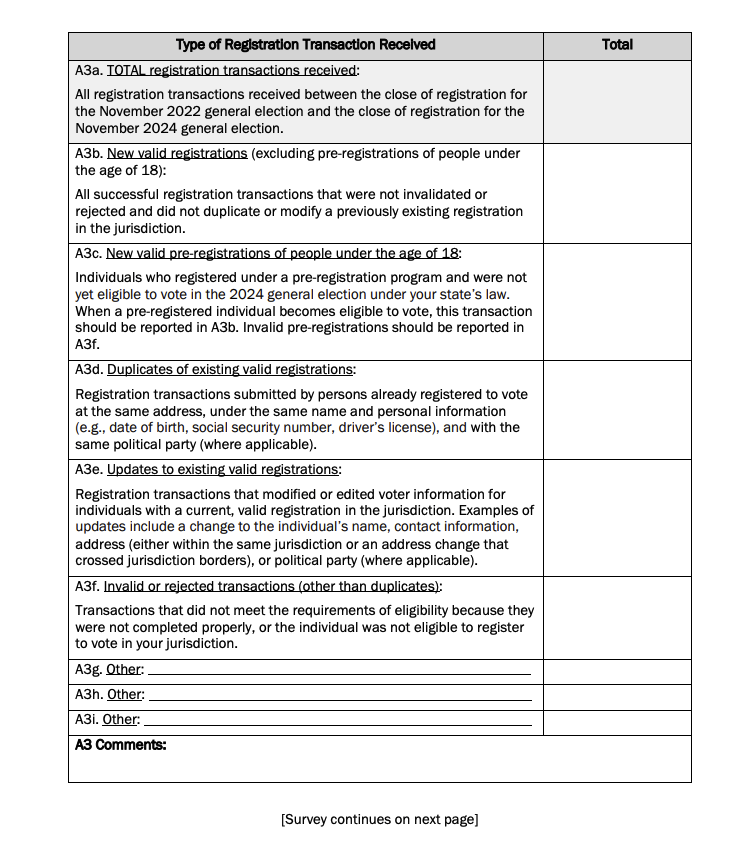
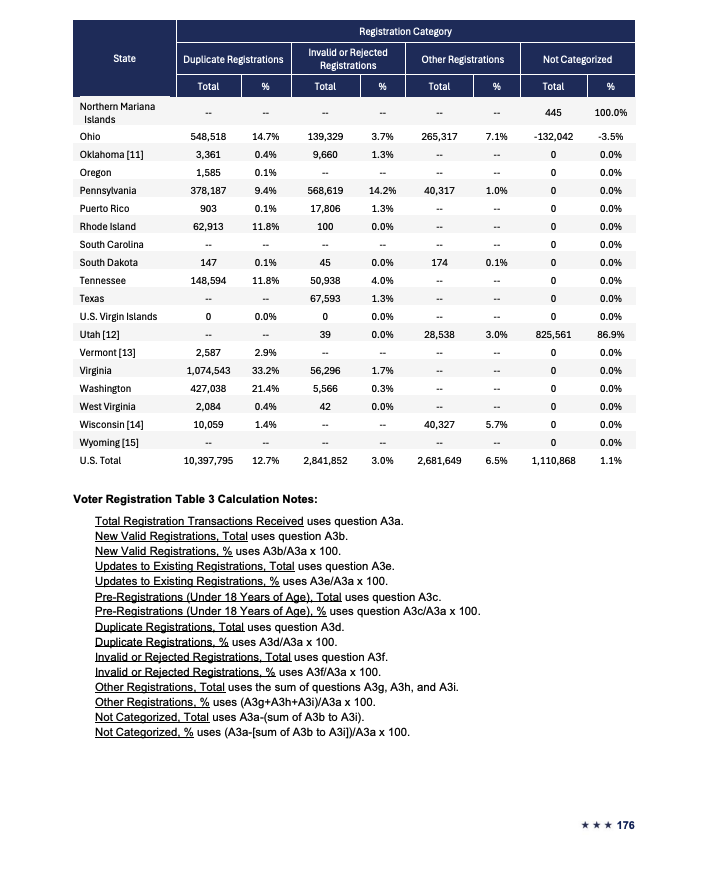
The issue is not merely whether a clerk can identify a noncitizen standing in front of him. It is whether the broader structure of voting makes abuse harder or easier. A system with in-person voting, voter ID, and tighter verification does more than catch isolated bad actors. It helps keep voter rolls cleaner and reduces ballots moving outside direct supervision. We’ve already seen what happens when rolls aren’t clean — in places like Oregon where large numbers of ineligible registrations had to be removed. If those names remain on the rolls, ballots exist outside real-time verification and can be misused.
That is the point Van does not really engage.
He keeps returning to the claim that documented noncitizen voting is rare, as though that settles the matter. It does not. Even if true, that answers only how many people have been caught. It does not answer the structural question: what kind of voting system gives the public the greatest reason to trust the result? Election law is not just about prosecutions after the fact. It is about minimizing opportunity before the fact.
Van is also too willing to separate voter ID from mail voting, when for many people the two are connected. A photo ID requirement at the polls is one thing. But a system that permits widespread mail voting and reduced face-to-face verification creates the gap that produces mistrust. The concern is not just who shows up in person, but ballots cast outside supervision.
That does not mean every mailed ballot is fraudulent. It means confidence weakens as the chain lengthens. The longer the chain, the harder it is for the public to trust it.
So Van’s “both sides” treatment sounds fair-minded, but it is incomplete. He focuses on the small number of known improper votes while underplaying the larger institutional question: what rules prevent doubt from arising in the first place?
That is why many Americans support stronger verification rules — not because they believe fraud is proven at scale, but because legitimacy depends on visible safeguards. Confidence is not a side issue. It is part of the substance.
In short: Van argues as though the only relevant question is, “How many bad votes can you prove occurred?” The deeper question is, “What kind of system gives citizens the strongest reason to trust the result?” On that question, tighter voter ID rules and less reliance on mail voting are not distractions. They are the point.
𝗖𝗘𝗡𝗧𝗖𝗢𝗠 𝗜𝗦 𝗧𝗔𝗟𝗞𝗜𝗡𝗚 𝗗𝗜𝗥𝗘𝗖𝗧𝗟𝗬 𝗧𝗢 𝗧𝗛𝗘 𝗜𝗥𝗔𝗡𝗜𝗔𝗡 𝗣𝗘𝗢𝗣𝗟𝗘
CENTCOM Commander Admiral Cooper just delivered a message — not to the Iranian regime. 𝗗𝗶𝗿𝗲𝗰𝘁𝗹𝘆 𝘁𝗼 𝘁𝗵𝗲 𝗜𝗿𝗮𝗻𝗶𝗮𝗻 𝗽𝗲𝗼𝗽𝗹𝗲.
Stay inside. The regime doesn't care about you — they are launching missiles and drones 𝗳𝗿𝗼𝗺 𝗽𝗼𝗽𝘂𝗹𝗮𝘁𝗲𝗱 𝗮𝗿𝗲𝗮𝘀, using you as human shields. We have warned you repeatedly.
And then this: 𝘛𝘩𝘦𝘳𝘦 𝘸𝘪𝘭𝘭 𝘣𝘦 𝘢 𝘤𝘭𝘦𝘢𝘳 𝘴𝘪𝘨𝘯𝘢𝘭 𝘢𝘵 𝘴𝘰𝘮𝘦 𝘱𝘰𝘪𝘯𝘵, 𝘢𝘴 𝘵𝘩𝘦 𝘗𝘳𝘦𝘴𝘪𝘥𝘦𝘯𝘵 𝘩𝘢𝘴 𝘪𝘯𝘥𝘪𝘤𝘢𝘵𝘦𝘥, 𝘧𝘰𝘳 𝘺𝘰𝘶 𝘵𝘰 𝘣𝘦 𝘢𝘣𝘭𝘦 𝘵𝘰 𝘤𝘰𝘮𝘦 𝘰𝘶𝘵.
Read that again. The Commander of CENTCOM is telling 90 million Iranians that there is a signal coming — a moment when it will be safe to come out. That is not the language of a military campaign. 𝗧𝗵𝗮𝘁 𝗶𝘀 𝘁𝗵𝗲 𝗹𝗮𝗻𝗴𝘂𝗮𝗴𝗲 𝗼𝗳 𝗹𝗶𝗯𝗲𝗿𝗮𝘁𝗶𝗼𝗻.
The Iranian people have lived under this regime for 47 years. They've been shot in the eyes for showing their hair. Thirty-two thousand k!lled in the crackdown of January 2026 alone. The regime launches its missiles from their neighborhoods and then hides behind them.
America is not at war with the Iranian people. 𝗔𝗺𝗲𝗿𝗶𝗰𝗮 𝗶𝘀 𝘁𝗲𝗹𝗹𝗶𝗻𝗴 𝘁𝗵𝗲𝗺 𝘁𝗼 𝗵𝗼𝗹𝗱 𝗼𝗻. The signal is coming.