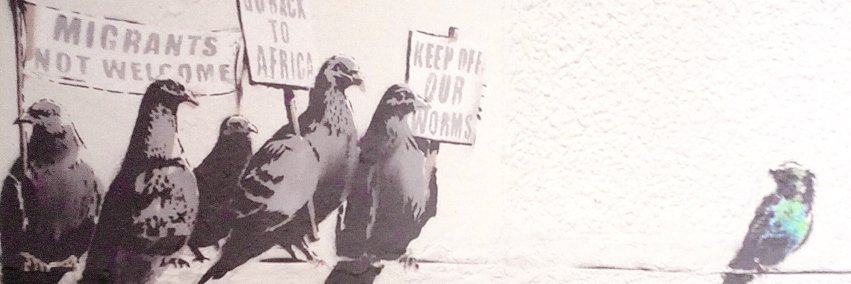
@GCSCS_RuG@SherminAmiri That is true, but not the same as a threat to a culture. There have been many waves of immigrants to the UK, there are always worries as you describe, but they always become identifiably british after a couple of generations. Threats to a culture tend to come from the majority.
@GCSCS_RuG@SherminAmiri It would be, but in most of the cases I have seen, their culture is not actually being attacked. Rather, another culture (usually a minority group) is asking for equal status or someone is extrapolating to an imagined one threatening future
@BNHWalker And we could do better than PMQT in parlaiment. However, I suspect their value is in dramatising political conflict (so the public sees their views aired) rather than real debate.
@GCSCS_RuG@SherminAmiri Language is flexible like that, but unfortunately people use phrases like "original inhabitants" to exclude others they do not like (e.g. different religion, immigrants etc.)
Upcoming workshop 24-26th June, Groningen, NL on "Power to the People: Participatory Modeling for Societal Resilience". https://t.co/8A3uI59KKE #participatory#modeling#resilience#society
@Soarpoints OK, I am corrected, but it is still a great novel. I suspect many of the others have been voted for without people reading them - worthy novels.
It took me a while, but we finally have the second episode of the Computational Social Science podcast!
This time, we talk about collective intelligence 🧐
You can find it on YouTube...
https://t.co/C3JlVxVMsZ
...or on your favourite platform:
https://t.co/xvLsa65DJF