Why Multilatinas Are Becoming More American
From Grupo Bimbo’s billion-dollar U.S. investment plans to Nubank’s entry into the American banking market, regional companies are increasingly treating the U.S. not just as an export destination, but as a home market.
What does this deeper integration mean for Latin America’s global competitiveness?
Conrado Tenaglia explores the trend in Americas Quarterly.
@AmerQuarterly, @ConradoTenaglia, #LatinAmerica #Business, #Trade, #Investment, #multilatinas
https://t.co/EU1CUA6DT1
Daniel Ortega has forced journalist Carlos Fernando Chamorro into exile twice. But he hasn't been able to silence him.
From abroad, Chamorro and his team at Confidencial continue to investigate Nicaragua’s authoritarian regime, document its abuses, and keep independent journalism alive.
Can journalism from exile help keep the flame of freedom alive in Nicaragua?
My analysis in Americas Quarterly, featuring comments from Gema Kloppe-Santamaría, Steve Hendrix, and Kevin K. Sullivan. Photographer Elmer Josue Rivas.
@AmerQuarterly, @ArriojaJoseE, @GemaKloppe, @hendrixse, @ElmerJRivas
#Nicaragua #PressFreedom #Democracy #Journalism
https://t.co/zGYMkCysBI
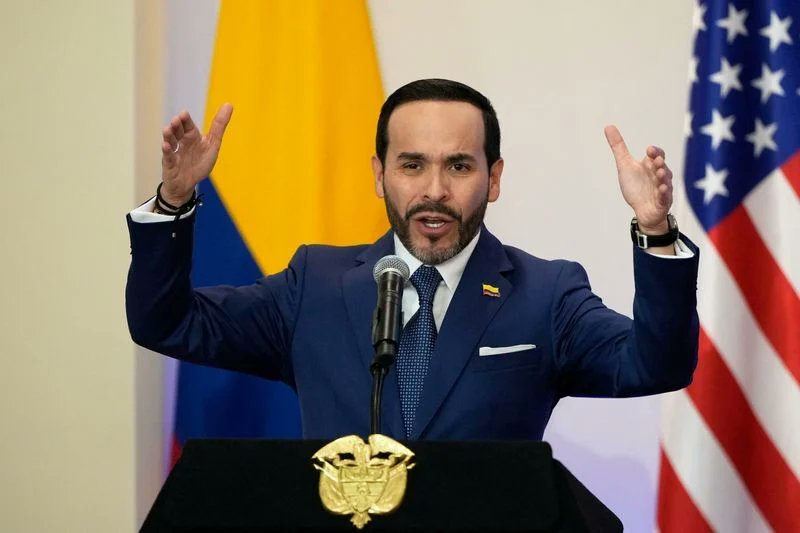
Colombia's largest remaining rebel group has long silenced moderate voices within its ranks, posing a challenge to new President Abelardo de la Espriella. Why hasn't the ELN made peace? https://t.co/rScklI3wp7
The battle for Latin America’s AI future isn’t just about who has the best AI model.
It’s about who builds the foundational infrastructure beneath it—and whose standards, technology, and expertise shape the region’s digital future.
As the U.S. and China compete for technological influence, Latin American countries are trying to preserve something of their own: technological sovereignty.
"Chinese companies have already accumulated a significant technological presence in the region, and U.S. firms are increasing their investments from Mexico to Argentina. Yet, this competition is far from a winner-take-all outcome."
Analysts Brian Fonseca and Alexandra Bishop dissect the intricacies of this consequential contest for Americas Quarterly.
@AmerQuarterly, @BrianPFonseca, #AI #LatinAmerica, #China, #Technology, #ArtificialIntelligence
https://t.co/xAVjq5lw5A
Latin America is racing to become the next data-center powerhouse.
Brazil, Mexico, Chile, and Argentina are leading the way, attracting billions in investment. But will data centers actually transform the region’s economies—or simply become another extractive industry?
Andrés Oppenheimer argues that the real race is for something else: talent, education, and AI adoption.
Only at Americas Quarterly.
@AmerQuarterly, @oppenheimera, #LatinAmerica,#AI ,#DataCenters, #Technology, #DigitalInfrastructure, #Argentina, #Brazil, #Mexico, #Chile
https://t.co/nHV9hEdts5
Brazil’s election revealed something bigger than the presidential runoff: the country’s right has built power that extends well beyond the presidency.
Congress, governorships, and a broader conservative coalition could shape Brazilian politics regardless of who wins on October 25.
Parties identified with right-wing ideology won 260 of the 513 lower house seats, with another 81 going to the center-right. Flávio Bolsonaro’s Liberal Party elected 121 lawmakers, the largest caucus, and is projected to have 28 senators in the next legislature. Those legislators will not necessarily vote as a disciplined bloc, but the winner would still have to negotiate with a conservative majority.
Professor Fernanda Magnotta on what lies ahead for Latin America's largest democracy only at AQ.
@AmerQuarterly, @fermagnotta, #Brazil, #BrazilElections, #LatinAmerica, #elections, #Democracy
https://t.co/8SKClKlhmc
REACTION: Flávio Bolsonaro and Lula Advance to Brazil’s Presidential Runoff
Flávio Bolsonaro outperformed expectations, finishing ahead of President Lula in the first round, 47.03% to 45.16%.
Bolsonaro's Liberal Party also emerged as the largest force in both chambers of Congress, and starting next year it will hold more seats than any other party in the Senate (28 of 81) and the lower house (121 of 513).
Now comes the Oct. 25 runoff. What does the result mean for Brazil’s political and economic future?
Analysis by Brian Winter, Alessandra Ribeiro, and Thomas Traumann for Americas Quarterly.
@BrazilBrian, @traumann, @tendencias_tci
#Brazil #BrazilElection #Lula #FlavioBolsonaro #LatinAmerica
https://t.co/H68Mv9Gut5
The “desvisados” are back.
Two decades ago, U.S. diplomats in Nicaragua coined the term for officials who lost their American visas amid corruption and attacks on democratic institutions.
Now Washington is using visa restrictions across Latin America again—to denounce and expose corruption, narcotics, diplomatic disputes— and even national security concerns.
Will “desvisar” change behavior?
Steven E. Hendrix, a former U.S. diplomat and senior USAID official, analyzes the latest developments and their implications for Americas Quarterly.
@AmerQuarterly@hendrixse
#LatinAmerica #USForeignPolicy #Diplomacy #VisaPolicy #Corruption
https://t.co/GxJYFBCBeG
Before Alexander the Great conquered an empire stretching from Greece to India, he was a student of Aristotle.
More than 2,300 years later, archaeologists have identified the school where the philosopher educated the young Macedonian prince.
History, philosophy and archaeology come together in a remarkable discovery in northern Greece.
Learn about Mieza.
https://t.co/51tYvG4ZFv
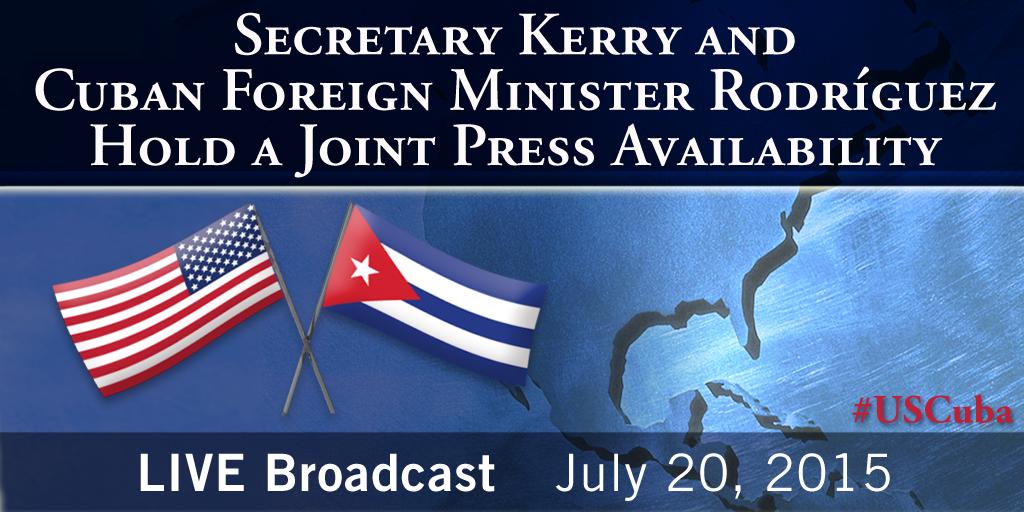
Cuba’s future was debated intensely at the UN General Assembly, with fiery comments from Washington and Havana dominating the exchange.
Each camp claims to speak for a Cuban public that has rarely been asked what it wants. Meanwhile, the island is enduring its biggest economic crisis since independence, as crippling fuel shortages overlap with a historic collapse of an already derelict public infrastructure.
What are Cubans actually asking for?
Read Orlando Perez's analysis in Americas Quarterly.
@AmerQuarterly@Perez1oj
#Cuba #CubanPeople #LatinAmerica #USCuba
https://t.co/43Knbstq6N
Citgo is more than Venezuela’s most valuable foreign asset, and what happens to the company could have consequences far beyond the courtroom.
It may now be one of Washington’s most powerful bargaining chips.
The Trump administration has repeatedly delayed approval of the court-ordered sale of Citgo to Elliott Management, raising a bigger, essential question: Could Citgo's fate become part of Washington’s strategy for Venezuela’s political and economic transition?
Brandon Mulder reports for Fortune.
@brand4on #Citgo #Venezuela #ElliottManagement #USVenezuela #oil
https://t.co/mcLC1nYGNE
Colombia is turning to the IMF as fiscal pressure mounts
Colombia has held talks with the International Monetary Fund in recent weeks, including discussions on possible financing, as the government races to contain a deepening fiscal crisis that has rattled investors, three sources with knowledge of the matter said on Monday.
Colombia's Finance Ministry confirmed it had asked the IMF to send a technical mission to the country, following meetings in Bogota between IMF Deputy Managing Director Nigel Clarke and Colombian officials.
Colombia's budget shortfall to be much larger than previously forecast this year and to widen even further in 2027. The government increase borrowing by more than $10.5 billion this year. In 2027, borrowing is set to reach $71.7 billion, more than double what was initially planned.
Reuters' Nelson Bocanegra, Carlos Vargas and Andrea Shalal report.
#Colombia #IMF #Economy #LatinAmerica #FiscalPolicy
https://t.co/jt5JmBN0ND
Venezuela is talking about elections. But when?
Delcy Rodríguez has promised elections at the “right moment.” Washington has backed a three-phase plan for stabilization, recovery and transition. Yet there is still no electoral timetable.
For Venezuela’s democratic transition, the missing piece may be the most essential one: a date.
"The lack of a clear, verifiable roadmap to hold a vote in the country is becoming a test that boils down to a single question: Is Washington willing to set an electoral timetable when doing so may conflict with its most immediate economic and strategic intentions?"
Analyst and professor Benigno Alarcón Deza dissects the conundrum and its political implications for Americas Quarterly.
@AmerQuarterly, #Venezuela #Elections #Democracy #USVenezuela #LatinAmerica
https://t.co/QtleC46ykZ
Venezuela's Rodríguez promises elections at the "right moment"
Delcy Rodríguez made that pledge in her first address to the U.N. General Assembly—but added that Venezuelans would determine the “right moment” to move forward.
“I wish to state this very clearly before this General Assembly: Elections will be held in Venezuela,” she said.
Will this promise mark the beginning of a different political phase in the country?
What conditions will define the "right moment"?
#Venezuela #DelcyRodriguez #UNGA #USVenezuela #LatinAmerica
https://t.co/RIeNAfAsf3
“To the victor belong the spoils.”
A year after President Trump told the UN General Assembly, “your countries are going to hell,” on September 22 he threatened Iran with annihilation, celebrated the U.S. operation in Venezuela, predicted the end of Cuba's regime, and said that safety and security will be coming to Mexico.
A revealing speech about his administration’s vision of the new American power — the Trump Doctrine —and his message to the Western Hemisphere.
Here are some quotes for the posterity:
On Iran:
“But I have a big decision to make. Will a deal be made with Iran that lets them rebuild and create a far greater country than it ever was before, maybe one of the greatest in the Middle East or even the world?. Or do I annihilate the Islamic Republic and do it quickly, never giving them a chance to kill and destroy people and countries again?”
On Venezuela:
"Our actions in Venezuela are proof that the United States will no longer permit threats to America to gain a foothold anywhere in the Western Hemisphere. And if necessary, we will use our unmatched military might to secure the vital national interests of the United States."
"The biggest oil companies in the world are going in, and the numbers are absolutely incredible. When you add the United States and Venezuela together, we have more than 60% of the oil in the world, so it's perhaps the biggest deal. It was a war, but it's perhaps the biggest deal ever made to the victor belong the spoils."
On Cuba:
"My administration is also seeking a fundamental change in the situation in Cuba, where the communist regime is under great pressure, the biggest pressure they've ever been under. It's an absolutely failed state. It's failing like never before, and it will fall."
(His comments prompted Cuban officials to walk out of the General Assembly.)
On Mexico:
"Communism will never be coming to America, but freedom will be coming to Cuba, and safety and security will be coming to Mexico."
"It's unacceptable for the United States to share a 2,000 mile border with a territory controlled by enemy cartels. So Mexico must reclaim control of its soil from the enemies of humanity."
Great story by Zolan Kanno-Youngs and David E. Sanger for the NYT.
#Trump #UNGA2026 #Venezuela #ForeignPolicy
https://t.co/5GYwOyaInX
From China Shock to China Choke
The “China Shock” was about cheap goods flooding global markets.
The new challenge may be something different: China’s growing ability to dominate—and potentially constrain—access to critical minerals, batteries, rare earths, and key industrial supply chains. Now, the question is what China could withhold.
Marcos Troyjo writes for AQ. From “China Shock” to “China Choke”: What does it mean for the Americas?
Worth your time, only at Americas Quarterly.
@AmerQuarterly, #China, #Trade, #SupplyChains, #CriticalMinerals, #LatinAmerica
https://t.co/VFM5XponVW