Don't believe everything you read on right-wing medias, in papers and more. The shirt Hannah Spencer wore at PMQ's is a 15 year old charity shop find, not a £2,000 Gucci purchase like many would want you to believe! 🤥
Why would people spread misinformation about Hannah? Hmm?
🏆 Referee announced for 2026 #SuperCup!
We're pleased to share that Somali referee Omar Artan will officiate the highly anticipated match between PSG and Aston Villa in Salzburg.
HISTORY LESSON
The Nazi Party branded itself the 'National Socialist German Workers' Party' to appeal to working-class men. After staging massive 'pro-worker' May Day rallies on May 1, 1933, the very next day Hitler banned independent trade unions, seized their assets, and arrested their leaders.
On May 2, 1933, the SA (Storm Troopers), SS, and police occupied trade union offices nationwide in a coordinated action. They seized assets, records, and funds while arresting union leaders and officials. Contemporary U.S. State Department reports and other sources noted around 50 prominent arrests in the initial wave, including key figures like Theodor Leipart (chairman of the General German Trade Union Federation, ADGB), Peter Grassmann, and former Labor Minister Rudolf Wissell.
Many more local and regional leaders faced arrests in the following days and weeks. Large numbers endured beatings, imprisonment, or transfer to early concentration camps such as Dachau (opened in March 1933 primarily for political opponents).
Some officials were maltreated immediately, and the action extended to union banks and press offices.
This crackdown dismantled independent German trade unions (with millions of members, many aligned with Social Democrats or leftists) and replaced them with the Nazi-controlled German Labour Front (DAF). It formed part of the broader Gleichschaltung (coordination) process to eliminate independent organizations.
Over the period 1933–1945, thousands of German trade unionists, including leaders, activists, and officials, were arrested and held in prisons or concentration camps. Many suffered torture, extended detention, or surveillance after release. While outright executions of union leaders were relatively fewer in the early phase compared to other groups, many died later from camp maltreatment, disease, execution, or involvement in resistance.
The overall scale of persecution against labour organisers aligns with the regime's aim to crush independent working-class organising rather than immediately exterminate every individual.
This fits the documented pattern of political repression: by the end of July 1933, nearly 27,000 people (mostly political prisoners including communists, socialists, Social Democrats, trade unionists and left-wing activists and intellectuals) were held in early camps and detention sites.
The Nazis moved swiftly after seizing power to neutralise potential opposition from organised labor through mass arrests, violence, and forced integration into a state-controlled structure.
#JustSayin
JD Vance took time this week to explain to the British that the murder of 18-year-old student Henry Nowak was actually about immigration.
Justice Secretary David Lammy apparently rang Vance to set the record straight. “You’re wrong about this,” Lammy told him. Which must have been an uncomfortable conversation for a vice-president who has built an entire political career on being confidently incorrect about things happening in other people’s countries.
Meanwhile, across the Atlantic, England’s football squad was busy preparing for the World Cup in Kansas City, Missouri. Nine people were shot near England’s planned training facility and hotel on Troost Avenue at four in the morning. Police arrived to find a large crowd scattering. A second shooting the same evening, just miles away on Troost Avenue, left two people dead. 
The Kansas City Police were quick to reassure everyone that the incident “did not occur near a World Cup venue or anything else World Cup-related.”  Which is technically true, in the same way that a house fire next door isn’t technically in your living room.
The Americans are hosting a World Cup. They have strong opinions about immigration and British crime statistics. They would just like everyone to ignore the bit where nine people get shot near the visiting team’s hotel before breakfast.
Gandalv / @Microinteracti1
The Man Nobody Is Talking About. His Name Is Sir Philip Barton.
Buried inside Tuesday's committee testimony, beneath the headlines about constant pressure, bullying and secret job searches, is the detail that may prove the most consequential of this entire affair. It concerns not Olly Robbins, not Morgan McSweeney, not even Keir Starmer. It concerns the man who was there before all of them. The man who said no. The man who then left his post eight months early.
Sir Philip Barton was the Permanent Under-Secretary at the Foreign Office when Peter Mandelson's appointment was announced in December 2024. He was, in other words, the most senior civil servant in the building at the precise moment the machinery of state was being directed to place a man with documented links to Russia and China into the most sensitive diplomatic posting in the Western alliance.
What Robbins told the committee on Tuesday is this. Barton pushed back. When the Cabinet Office argued that vetting Mandelson was unnecessary, that a peer and Privy Councillor did not require developed vetting, Barton refused to accept it. He insisted that vetting was a requirement. He had to be, in Robbins's own words, very firm in person. He also voiced reservations about the appointment to Jonathan Powell, the National Security Adviser, reservations that were noted and not acted upon. He was worried, Robbins suggested, about exactly the same reputational risks that had been detailed to the Prime Minister before the appointment was announced.
Then Sir Philip Barton left his post. Eight months before his tenure would otherwise have concluded.
The question Richard Foord put to Robbins on Tuesday was the right one. Why did Barton's tenure end early? Robbins said he did not know. He suggested ministers may have felt it was time for a change. That answer is not an answer. It is the absence of one.
Consider what the timeline now shows. A senior civil servant pushes back against the appointment, insists on vetting when the Cabinet Office wants to bypass it, raises reservations with the National Security Adviser, and departs eight months ahead of schedule. His replacement arrives to find the appointment already treated as a fait accompli, the vetting process under constant pressure from Downing Street, and the question of outcome entirely subordinate to the question of speed.
If Barton was removed because he stood in the way of this appointment, then Robbins was not the first civil servant sacrificed to protect it. He was the second. And the question of who else was moved aside, overruled or silenced in the months between December 2024 and the moment the security services finally said no, becomes the most important question this affair has yet produced.
Starmer sacked Robbins for following the rules. The Foreign Affairs Committee will now call Barton to give evidence. What he says will either confirm what the timeline already suggests or provide an alternative explanation that the evidence does not currently support.
There is a pattern here that goes beyond process failure. Process failures are random. They point in different directions. What this affair has produced is a series of events that point consistently in one direction. Officials who comply are retained. Officials who push back depart. The security services are bypassed. The vetting is treated as an administrative inconvenience. And the one question nobody at the top of this government will answer is why this appointment, this man, this post, mattered so much that every obstacle was removed to make it happen.
Barton apparently asked that question. He left eight months early. The country deserves to know why.
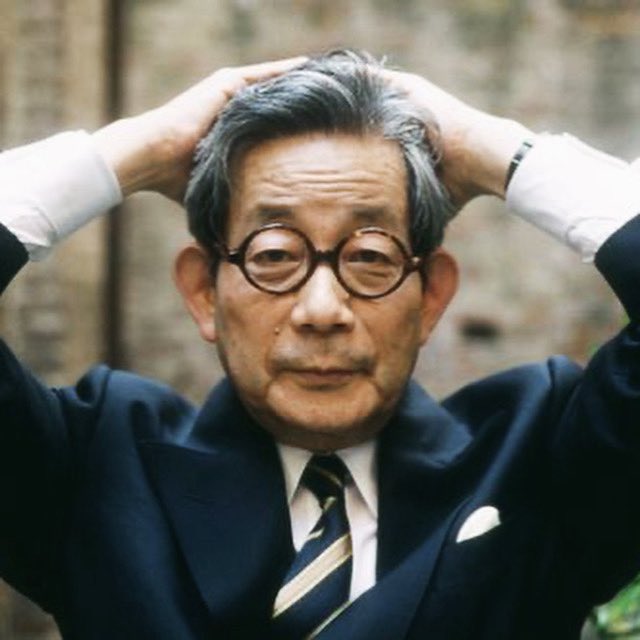
L’an dernier, j’ai eu la chance de consulter à Tokyo les incroyables manuscrits de Kenzaburô Ôe, prix Nobel de littérature. Pas besoin de connaître le japonais pour en apprécier la beauté. Mardi 17 mars à 15h, au Collège de France, je recevrai Kenichi Abe, professeur à l’université de Tokyo, pour une conférence sur ces trésors dont il a la garde. Le 24 mars, une seconde conférence portera sur les traductions de littérature japonaise pendant la guerre froide. Entrée libre. Renseignements : https://t.co/85TyDX6q7O
My Fellow Shakespeareans - I’ve recorded all 154 Sonnets for my latest project, “Patrick Stewart Performs the Complete Sonnets of William Shakespeare”.
This special audio production is available to listen to April 7.
Preorder now: https://t.co/f3PqlGvwR4
@SimonAudio
Rock Art
Long Thread of 107 Slides
Decorative Symbols and Motifs
For Artists and Craftspeople
3,000 Decorative Patterns of the Ancient World
By
W. M. Flinders Petrie