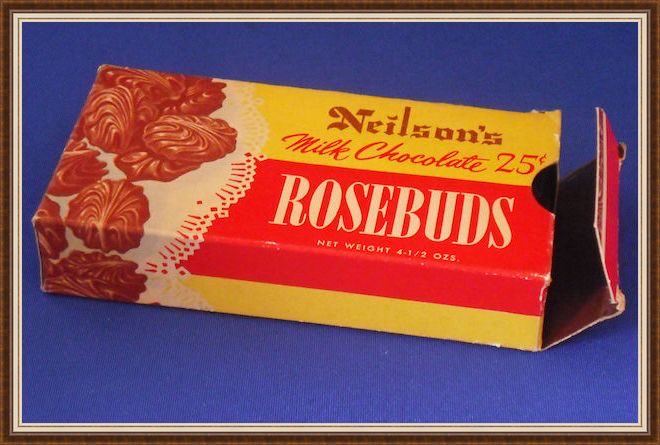
We love getting notes from customers every Thanksgiving about our cranberry sauce. It's a great product, but not well distributed due to other priorities.
You can find it at Walmart stores or online in Canada. (Probably should have posted this last week 😂)
https://t.co/ZqhANDbbhN
One of the most extraordinary images in Christian history is not in Rome, Jerusalem or Constantinople. It is in Mexico City, where millions of pilgrims come to contemplate an image of the Virgin Mary that has helped shape the religious identity of an entire continent.
Today, 12 October, a special Jubilee begins at the Basilica of Our Lady of Guadalupe, marking fifty years since the dedication of the present basilica in 1976.
The Jubilee will continue until October 2027, inviting pilgrims to reflect upon a devotion that has become inseparable from the history of Christianity in the Americas.
But the story of Guadalupe is considerably more interesting than a simple account of popular Marian devotion.
According to the Catholic tradition, in December 1531, the Blessed Virgin Mary appeared to an indigenous convert, St Juan Diego, on the hill of Tepeyac, near what is now Mexico City.
She asked that a church be built there, and the image associated with those apparitions became one of the most recognisable religious images in the world.
What makes it particularly fascinating is the way the image speaks across two different cultural worlds.
Mary is recognisably the woman described in Revelation 12, clothed with the sun, with the moon beneath her feet. Yet her appearance and the visual language surrounding her have also been understood in relation to the indigenous cultures of sixteenth-century Mexico.
The result is an image that expresses something profoundly Catholic: the Gospel does not belong to one civilisation.
Christianity entered the Americas through a historical encounter that was often violent, frequently unjust and marked by enormous human suffering. The conquest of Mexico cannot be romanticised, nor can the destruction of indigenous cultures be ignored.
But neither should the religious history that followed be reduced to a simple story of cultural obliteration.
The emergence of the Guadalupan devotion illustrates a more complicated process in which indigenous peoples became participants in the development of a distinctively American Catholicism.
This is important because the Church's understanding of evangelisation is not that every people must become culturally European in order to become Christian.
The Gospel is universal precisely because it can take root within different languages, artistic traditions and cultural identities, transforming them without requiring the disappearance of everything that makes them distinctive.
And here the figure of Mary becomes especially significant.
In the Gospel of Luke, she proclaims that God has looked upon the lowliness of His servant, scattered the proud and lifted up the humble.
At Guadalupe, Catholic tradition presents the Mother of God addressing herself to an indigenous man who occupied a marginal position within the colonial social order.
Whatever questions historians continue to investigate about the earliest documentary evidence for the apparitions, that theological significance is central to the devotion.
The Mother of Christ is not the possession of conquerors, emperors or the socially powerful.
She belongs to the whole Church, and her maternal concern extends particularly to those whom the world is inclined to overlook.
There is another fascinating dimension to Guadalupe.
The image has become a symbol not merely of Mexican Catholicism, but of Mexican national identity itself. It has accompanied political upheavals, struggles for independence, social movements and generations of migrants who carried their devotion far beyond Mexico's borders.
Yet Mary cannot ultimately be reduced to a national emblem either.
Her significance transcends the political identities that have gathered around her image, because her entire purpose is to direct humanity towards her Son.
That, perhaps, is the most important thing to remember as this Jubilee begins.
The extraordinary cultural influence of Guadalupe is worth studying. Its artistic and historical significance is immense. Its place in the formation of modern Mexico is undeniable.
But for the Catholic pilgrim, the deepest significance of Guadalupe lies elsewhere.
The woman whom Christians honour as the Mother of God is also the woman who said, at Cana, “Do whatever he tells you.”
Every authentic Marian devotion leads us back to that command.
And perhaps that is why, nearly five centuries after the events traditionally associated with Tepeyac, pilgrims still come from across the world to stand before this image.
They are not simply visiting a monument to Mexican history.
They are coming to encounter a Mother who points them towards Jesus Christ.
En cette Action de grâce, alors que nous nous réunissons en famille et entre amis, je suis particulièrement reconnaissante envers les personnes qui font de notre communauté un endroit où il fait si bon vivre. De nos bénévoles et organismes communautaires aux voisins qui veillent les uns sur les autres, votre gentillesse et votre générosité font d’Oakville un endroit si spécial. Je vous souhaite, ainsi qu’à vos proches, une très joyeuse Action de grâce! 🍁
Every time I see someone say, “I would never be Catholic” or “I will never become Catholic,” it makes me chuckle.
Because I used to be one of those people.
Jesus can soften the hardest of hearts.
Our home isn't a hotel for the Third World. Canada and the Western world were built by our blood, our sacrifice, and our people. This is our home, and its fate should be decided by our own people.
Not everyone knows it, but Christopher Columbus painted the Crusader Cross on all his sails.
In 1492, Spain was just finishing up the Reconquista—the quest to retake all the land stolen by Muslims—and they viewed Columbus's expedition as another way to compete with Islam.
I don't know how Canada believes it can continue. The number of immigrants we are bringing in will destroy any sense of cultural identity we have. We will be shattered into cultural ghettos that hate one another.