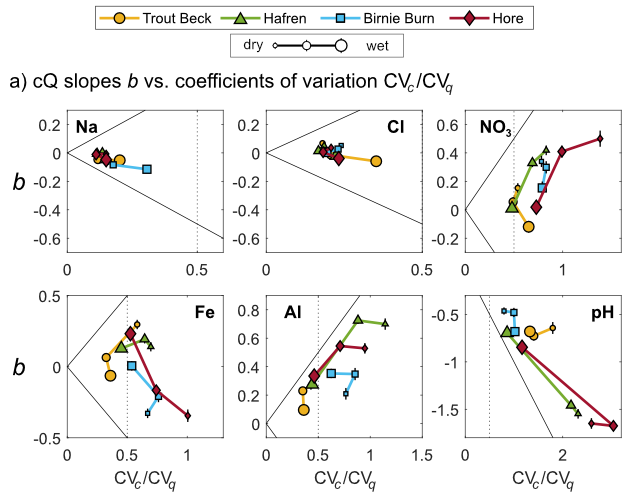
New @BigCzcn paper! Threshold C-Q responses were rare for 11 solutes across CAMELS catchments; solutes were dominated by 1 or 2 C–Q patterns; & links to catchment/hydroclimatic attributes were weak. Great ref paper for your fave solute or region! https://t.co/o35ZAJbix7
We found that:
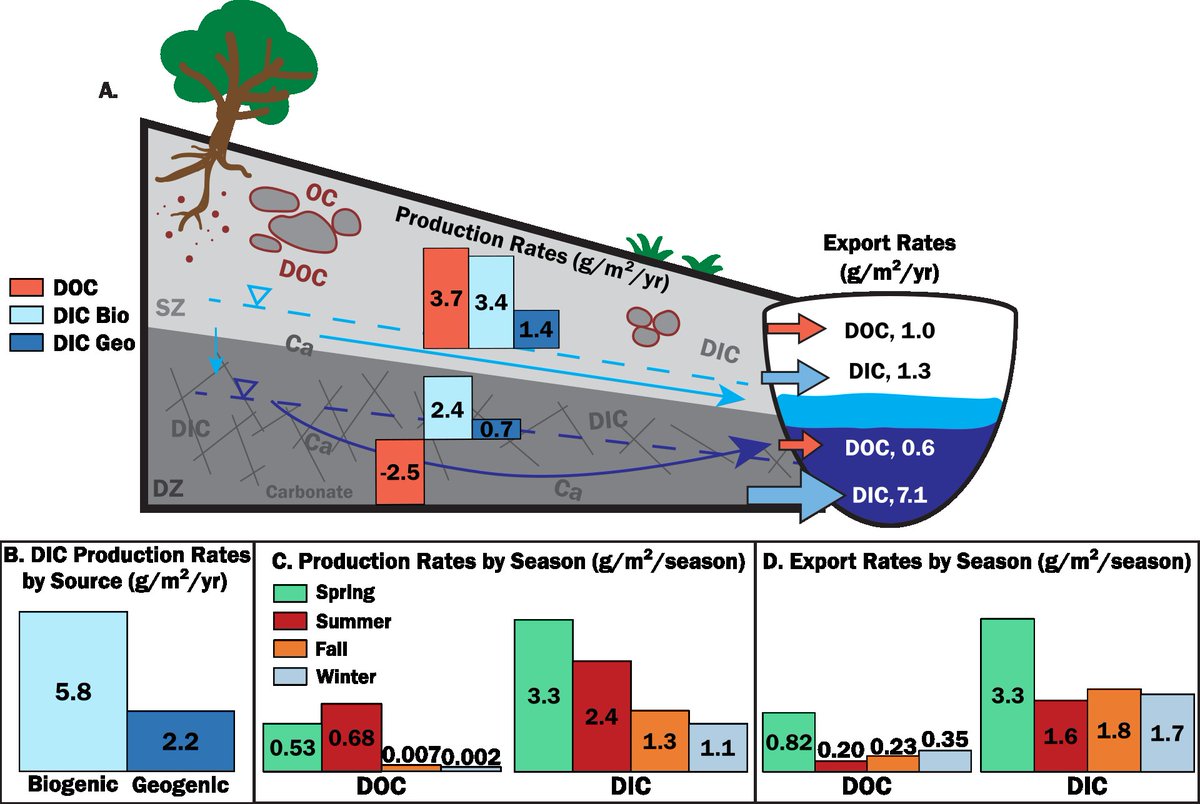
DOC was mainly produced in summer and exported in spring from the shallow subsurface;
DIC was exported mostly from the deep subsurface in spring;
DIC originated more from biogenic (soil respiration) than geogenic (weathering) sources in a carbonate-based catchment.
When, where, and how much are dissolved carbon species produced and laterally exported at the catchment scale?
We used a new reactive transport model, BioRT-HBV, to illuminate the “invisible” subsurface processes that control DOC and DIC in stream water.
https://t.co/pX9p8azLVO
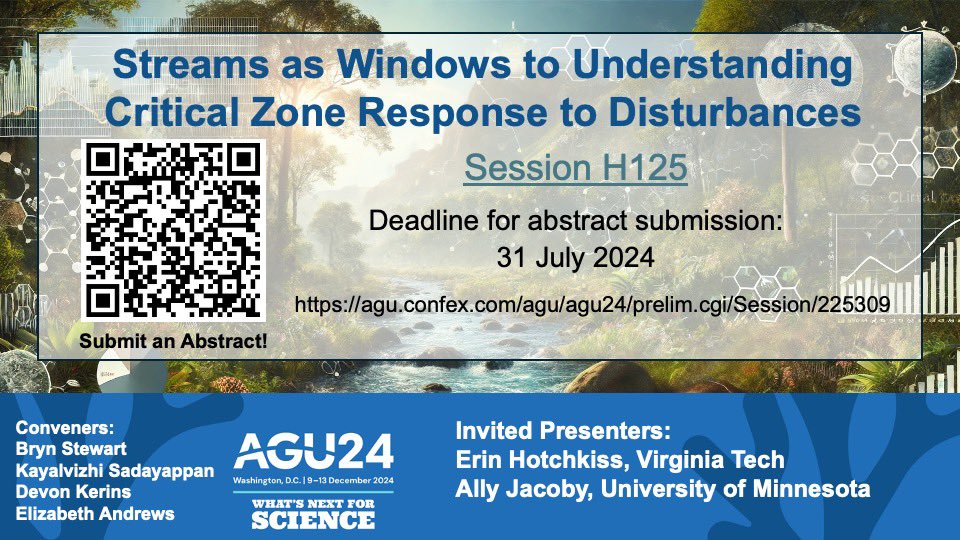
Hi! Working on the impact of disturbances (#LULC changes and #climatechange) on #catchment processes?
We invite you to present your work in the #AGU23 session H134: “Understanding and scaling catchment response to disturbances”
https://t.co/9XTsl5s3wp
Starting off my first week back at work after maternity leave with a new paper: @andreas_musolff, @LiReactiveWater and I looked at the effect of catchment wetness and #connectivity on concentration discharge relationships: https://t.co/ShXnalktIc (1/3)
@marc_peipoch Thank you! Negative power law exponents (b values) range from -0.55 to 0 across the analyzed sites, but the majority of values fell in the -0.3 to -0.1 range.
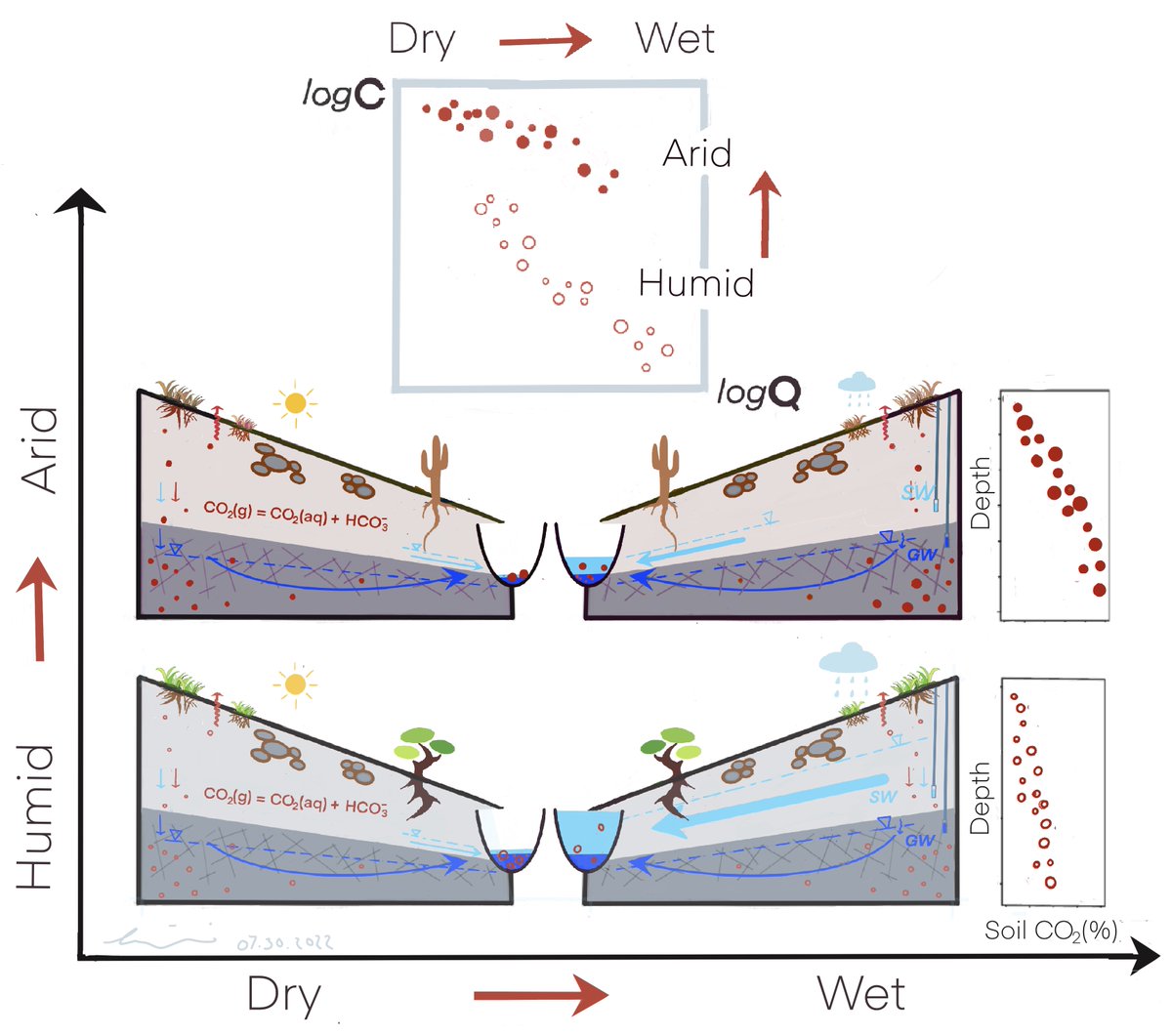
What drives dissolved inorganic carbon (DIC) in rivers?
Data from > 100 US rivers show 1) mean conc are higher in arid climates; 2) intra-site instantaneous conc almost universally decrease with discharge, consistent with observed soil CO2 profiles.
https://t.co/GPDtkYSMG5
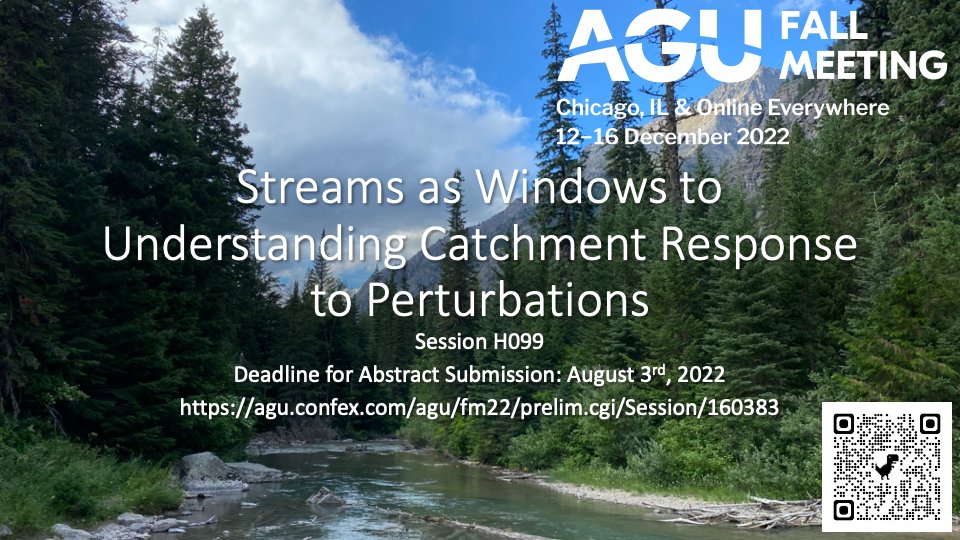
New #AGU22 hydrology session H099! Submit your abstracts on using #CriticalZone science to understand catchment processes and response to perturbation. More details at: https://t.co/idV6TnlARh
Abstract submission deadline: 3 August 2022
First WARR talk in 2022! Th 2/17. My dear friend Prof. Pamela Sullivan @pamlsulli@OSUCEOAS will lead off, followed by, ah ... me. Would love to see you there. Register: https://t.co/MeKNVRivKz
How does stream chemistry reflect the distribution of solutes in the subsurface? See my virtual talk for the #ESA2020 meeting at: https://t.co/qAGda6itot
Excess nutrients can pollute natural waters, causing significant harm to aquatic ecosystems. We're trying to determine how hydrology influences the amount of nutrients flowing through natural waters with concentration-discharge analyses. @kh_freeman#GeoWriters