La mayoría de las veces no necesitamos que nos resuelvan los problemas, sino sentirnos queridos. Y sentirse querido empieza cuando alguien te presta verdadera atención. Escuchar de verdad es decir: “tú me importas”. A veces, una mirada amable puede cambiarle el día a alguien.
🚨 Repartidor :
Mientras los diputados faltan hasta 60 veces, este repartidor saca adelante a su familia.
😭
¿Qué falló en México?
🥹
#TioTendencias#MorenaEsCorrupción
Mi estimado piloto… tu todavía no lo sabes, pero tu vida va a cambiar para bien gracias a tu ingenio, ganas de salir adelante y sobre todo a que aparentemente nada te detiene.
¿Nos ayudan a encontrarlo?
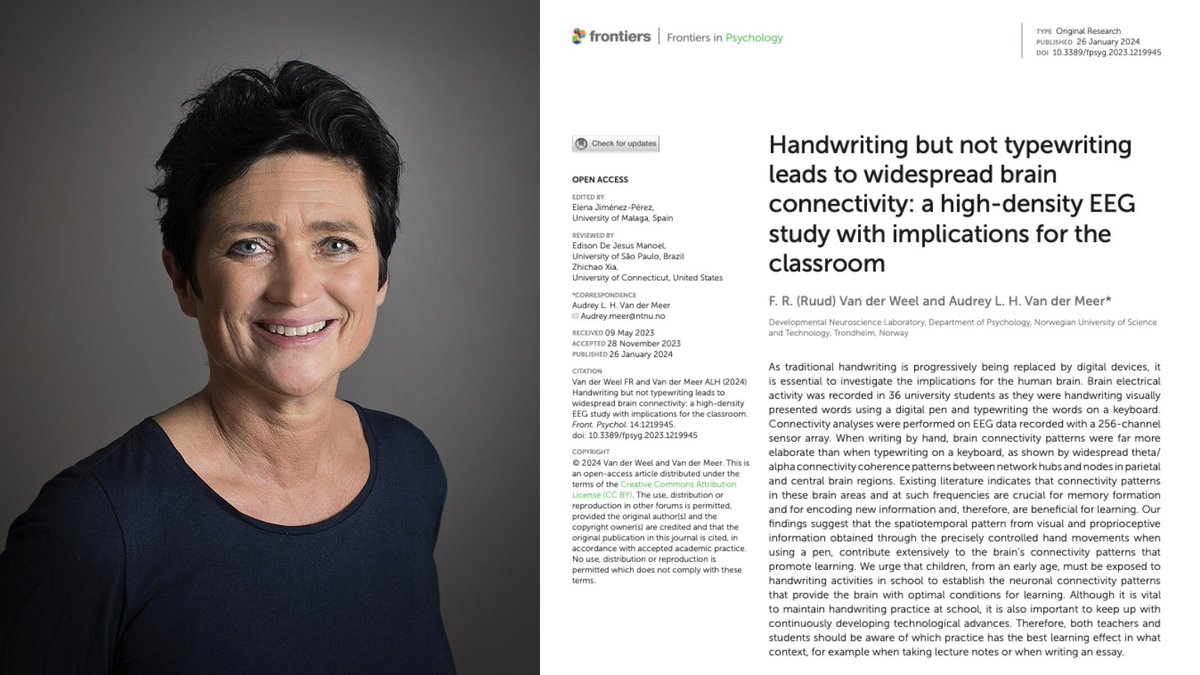
A Norwegian neuroscientist spent 20 years proving that the act of writing by hand changes the human brain in ways typing physically cannot, and almost nobody outside her field has read the paper.
Her name is Audrey van der Meer.
She runs a brain research lab in Trondheim, and the paper that closed the argument was published in 2024 in a journal called Frontiers in Psychology. The finding is brutal enough that it should have changed every classroom on Earth.
The experiment was simple. She recruited 36 university students and put each one in a cap with 256 sensors pressed against their scalp to record brain activity. Words flashed on a screen one at a time.
Sometimes the students wrote the word by hand on a touchscreen using a digital pen, and sometimes they typed the same word on a keyboard. Every neural response was recorded for the full five seconds the word stayed on screen.
Then her team looked at the part of the data most researchers had ignored for years, which is how different parts of the brain were communicating with each other during the task.
When the students wrote by hand, the brain lit up everywhere at once.
The regions responsible for memory, sensory integration, and the encoding of new information were all firing together in a coordinated pattern that spread across the entire cortex. The whole network was awake and connected.
When the same students typed the same word, that pattern collapsed almost completely.
Most of the brain went quiet, and the connections between regions that had been alive seconds earlier were nowhere to be found on the EEG.
Same word, same brain, same person, and two completely different neurological events.
The reason turned out to be something nobody had really paid attention to before her work. Writing by hand is not one motion but a sequence of thousands of tiny micro-movements coordinated with your eyes in real time, where each letter is a different shape that requires the brain to solve a slightly different spatial problem.
Your fingers, wrist, vision, and the parts of your brain that track position in space are all working together to produce one letter, then the next, then the next.
Typing throws all of that away. Every key on a keyboard requires the exact same finger motion regardless of which letter you are pressing, which means the brain has almost nothing to integrate and almost no problem to solve.
Van der Meer said it plainly in her interviews.
Pressing the same key with the same finger over and over does not stimulate the brain in any meaningful way, and she pointed out something that should scare every parent who handed their kid an iPad.
Children who learn to read and write on tablets often cannot tell letters like b and d apart, because they have never physically felt with their bodies what it takes to actually produce those letters on a page.
A decade before her, two researchers at Princeton ran the same fight using a completely different method and ended up at the same answer. Pam Mueller and Daniel Oppenheimer tested 327 students across three experiments, where half took notes on laptops with the internet disabled and half took notes by hand, before testing everyone on what they actually understood from the lectures they had watched.
The handwriting group won by a wide margin on every question that required real understanding rather than surface recall.
The reason was hiding in the transcripts of what the two groups had actually written down.
The laptop students typed almost word for word, capturing more total content but processing almost none of it as they went, while the handwriting students physically could not write fast enough to transcribe a lecture in real time, which forced them to listen carefully, decide what actually mattered, and put it in their own words on the page.
That single act of choosing what to keep was the learning itself, and the keyboard had quietly skipped the choosing and skipped the learning along with it.
Two studies. Two countries. Same answer.
Handwriting makes the brain work. Typing lets it coast.
Every note you have ever typed instead of written went into your brain through a thinner pipe. Every meeting, every book highlight, every idea you captured on your phone instead of on paper was processed at half depth.
You did not forget those things because your memory is bad. You forgot them because typing never woke the part of the brain that would have made them stick.
The fix is the thing your grandmother already knew.
Pick up a pen. Write the thing down. The slower road is the faster one.
El actor japonés Hiroyuki Sanada habló sobre las contradicciones de la naturaleza humana:
«Algunas personas sueñan con tener una piscina en casa, mientras que aquellas que la tienen apenas la usan. Aquellos que han perdido a un ser querido sienten un profundo sentido de pérdida, mientras que otros a menudo se quejan de sus familiares vivos. Los que no tienen pareja anhelan una, mientras que los que la tienen a menudo no la valoran. Los hambrientos darían cualquier cosa por una comida, mientras que los saciados se quejan del sabor de su alimento. Los que no tienen coche sueñan con poseer uno, mientras que los que lo tienen siempre buscan uno mejor».
La clave de la felicidad es la gratitud: ver y apreciar de verdad lo que ya tenemos, y entender que en algún lugar, alguien daría cualquier cosa por lo que nosotros damos por sentado.
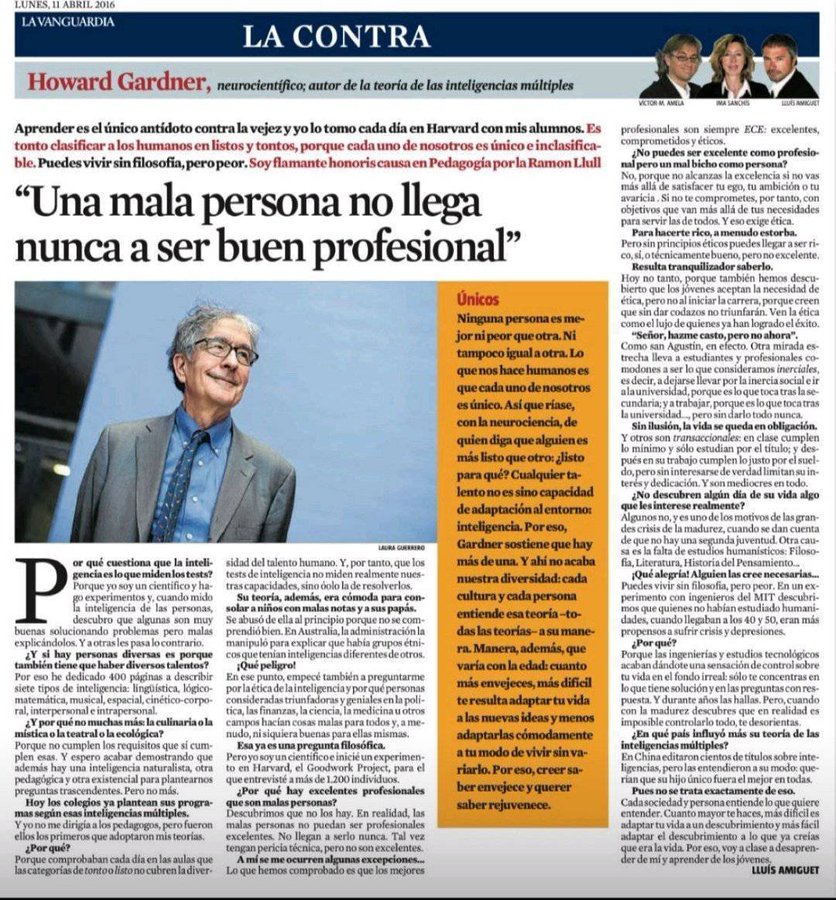
La gran tarea educativa de nuestro tiempo no es solo enseñar a los niños a pensar, sino ayudarlos a volver a disfrutar la vida. En un mundo saturado de pantallas, estímulos y velocidad, recuperar el asombro por lo sencillo —un abrazo, el viento, una flor, una conversación— se vuelve una forma profunda de salvar la inteligencia y el corazón. Porque una vida lograda no nace de tenerlo todo al alcance, sino de aprender a encontrar sentido, gratitud y propósito en lo que verdaderamente importa. Mi participación: "Lo que no se aprende en la escuela", con @lopezdoriga
#FórmulaNoticias #TeleFormula #RadioFormula #Asombro #Propósito
No solo heredamos genes: también habilidades socioemocionales como la sociabilidad o la estabilidad emocional. El estudio revela que la infancia es clave y que las madres tienen un papel más influyente en esta transmisión https://t.co/DKpM5pjuxP
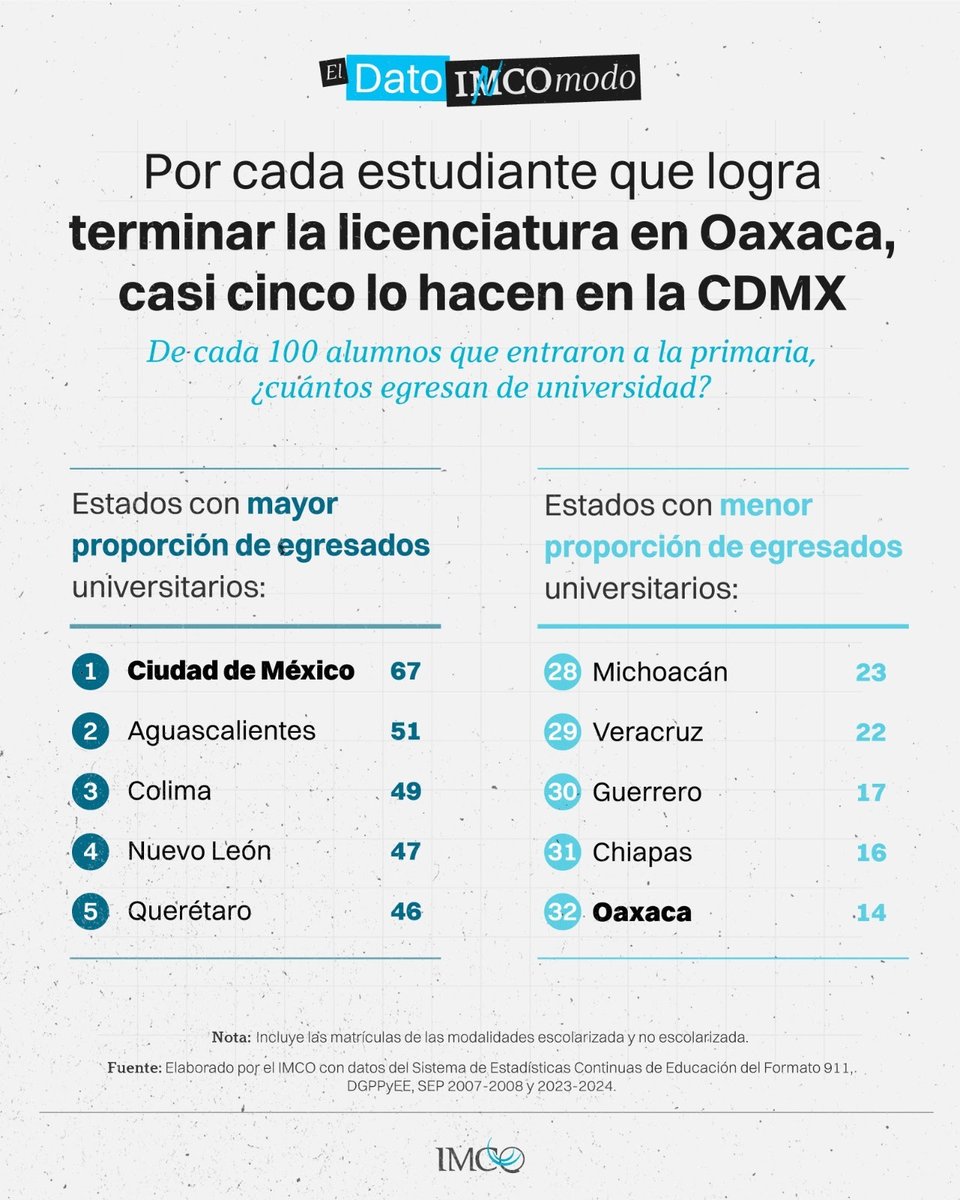
🎓 En México, las brechas educativas empiezan desde la educación básica y se hacen más grandes en la #universidad.
De cada 100 estudiantes que ingresaron a primaria:
▪️ En la CDMX, 67 egresan de la universidad.
▪️ En Oaxaca, 14.
En una época obsesionada con la novedad y el atajo tecnológico, olvidamos que solo se aprende, se interioriza y se disfruta de verdad aquello que se repite. Repetir es aprender.
“Cuesta mucho educar a un niño, pero cuesta mucho más no hacerlo”, decía Don Jesús Reyes Heroles cuando estaba al frente de la @SEP_mx. Y lo decía un hombre que entendía algo fundamental: la educación no era un programa de gobierno, era el cimiento de la República. Reyes Heroles sabía que un país que abandona sus escuelas termina abandonando también su democracia, su justicia y su futuro.
Hoy esa frase retumba más fuerte que nunca en México. Mientras millones de niños tienen problemas graves de comprensión lectora y matemáticas, seguimos discutiendo la educación con visión política, burocrática y electoral. Escuelas sin condiciones dignas, maestros rebasados, abandono escolar, desaparición de mecanismos de evaluación y una generación entera creciendo en medio de pantallas, violencia y desigualdad. El costo ya lo estamos pagando.
Porque cuando un niño no aprende, no pierde sólo él. Perdemos todos. Perdemos ciudadanía, pensamiento crítico, movilidad social y capacidad de construir un país menos violento y más libre. Lo entendió Reyes Heroles hace décadas. Lo dramático es que México, en 2026, parece haberlo olvidado.
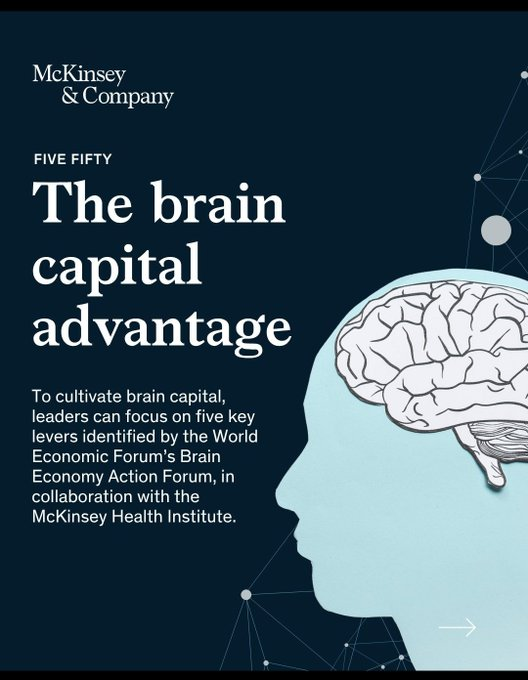
¿Cuál es la próxima ventaja competitiva?
El activo más valioso de la organización: tu cerebro
El "Capital Cerebral": es una combinación de salud cognitiva, habilidades mentales y bienestar con 5 palancas clave
Se redefine el éxito corporativo https://t.co/6c5xVqQeEO
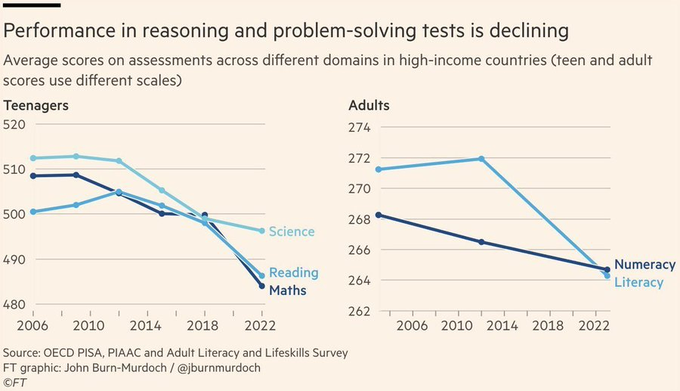
Disminución de las habilidades de razonamiento y resolución de problemas
Los resultados en matemáticas, lectura y ciencias están bajando tanto entre adolescentes como adultos en países de altos ingresos
¿Estamos perdiendo el pensamiento crítico en la era digital?
Suecia está reduciendo el uso de laptops escolares y volviendo cada vez más a la enseñanza con lápiz y papel. Mira mi entrevista con la experta de la Univ. de Harvard y mi conclusión: https://t.co/120xhnKFex
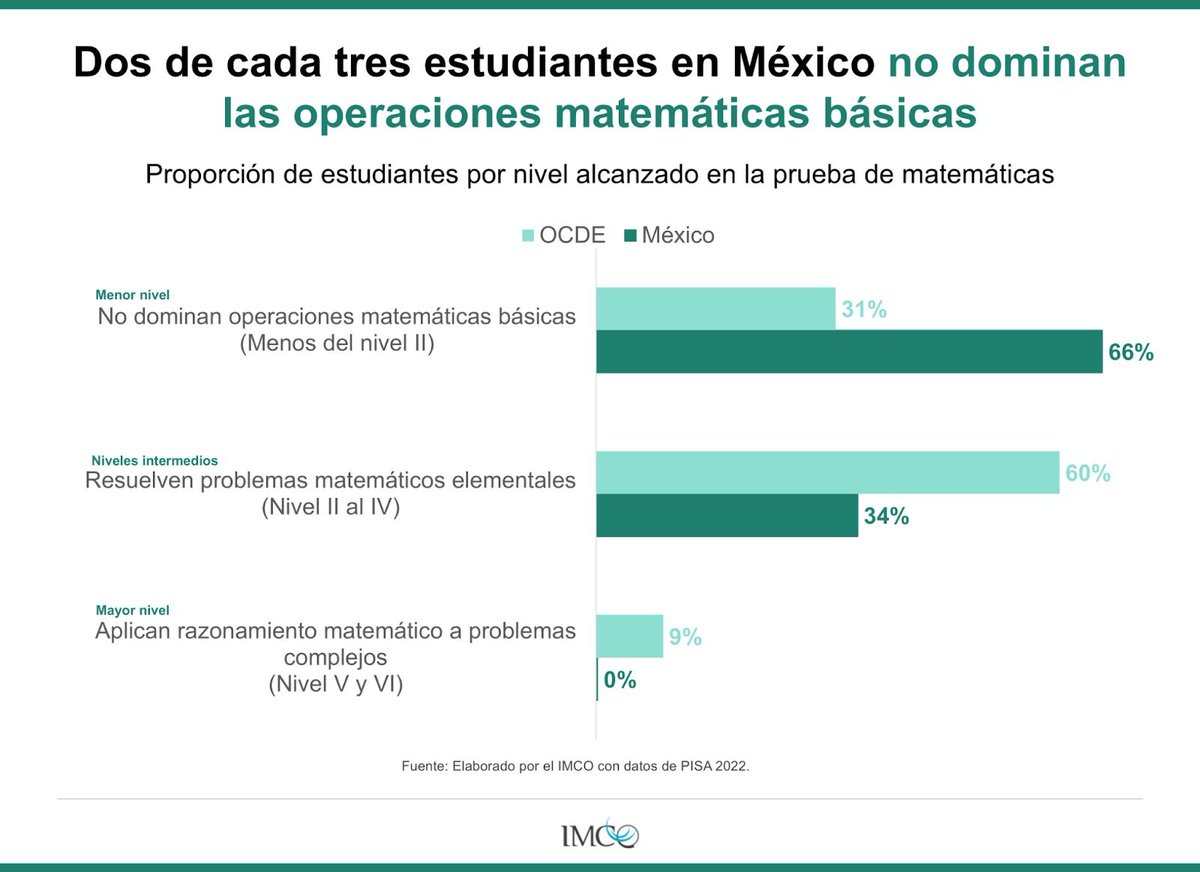
🔢 #México, enfrenta rezago en matemáticas:
🧒 66% de estudiantes no domina operaciones matemáticas básicas.
👧 34% resuelve problemas matemáticos elementales.
🧒 Nadie alcanza el mayor nivel de razonamiento matemático.
🔴 Antes de reducir el #CicloEscolar, se deben dimensionar sus efectos en el desarrollo de habilidades y en las brechas educativas.
#Educación 🎓 En 2022, México tuvo una caída matemáticas, comprensión lectora y ciencias, registrando su peor puntaje desde 2003📉.
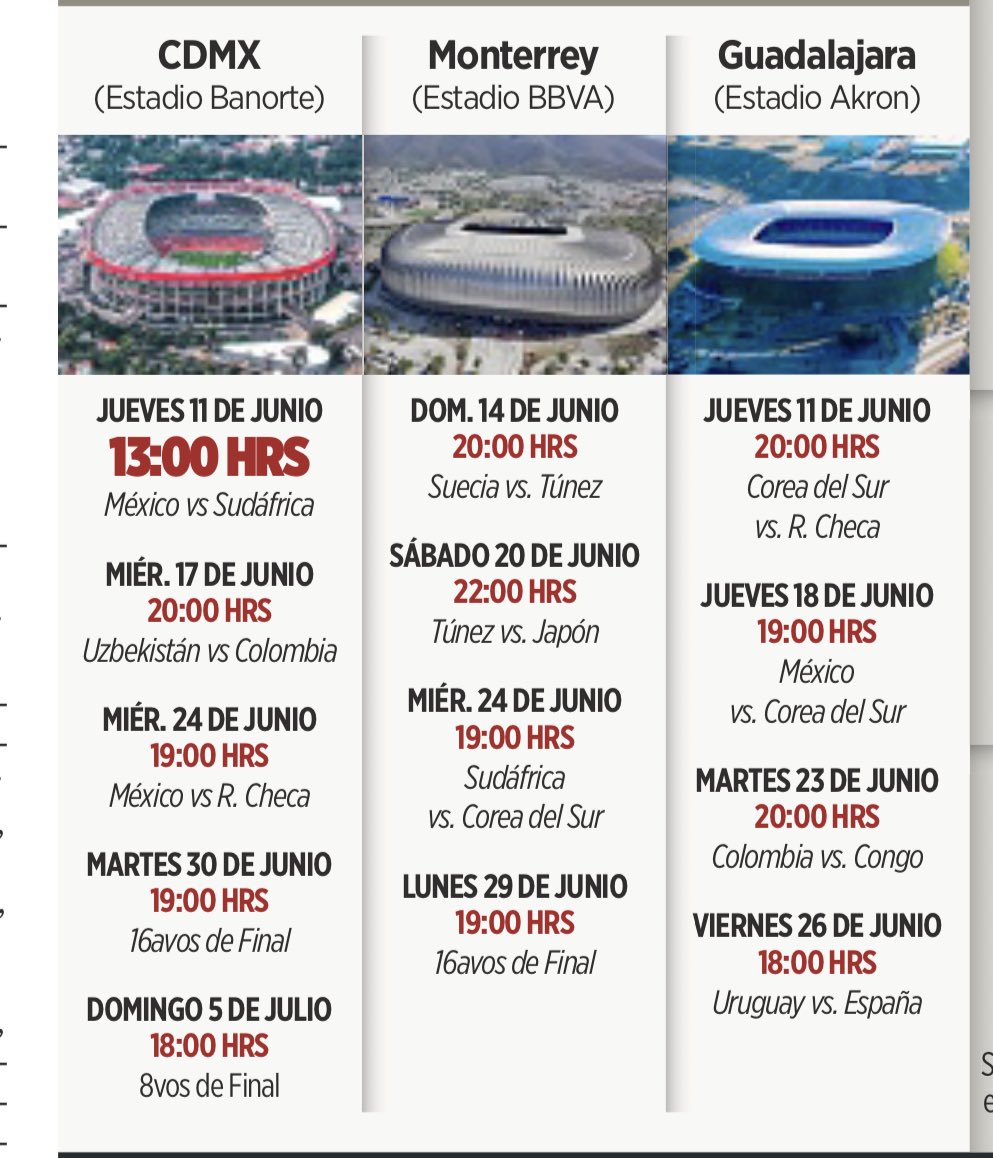
De último minuto, México anticipó el cierre del #cicloescolar al 5 de junio. Más de un mes antes de lo previsto. ¿Qué impacto tendrá en el rezago educativo🤔?
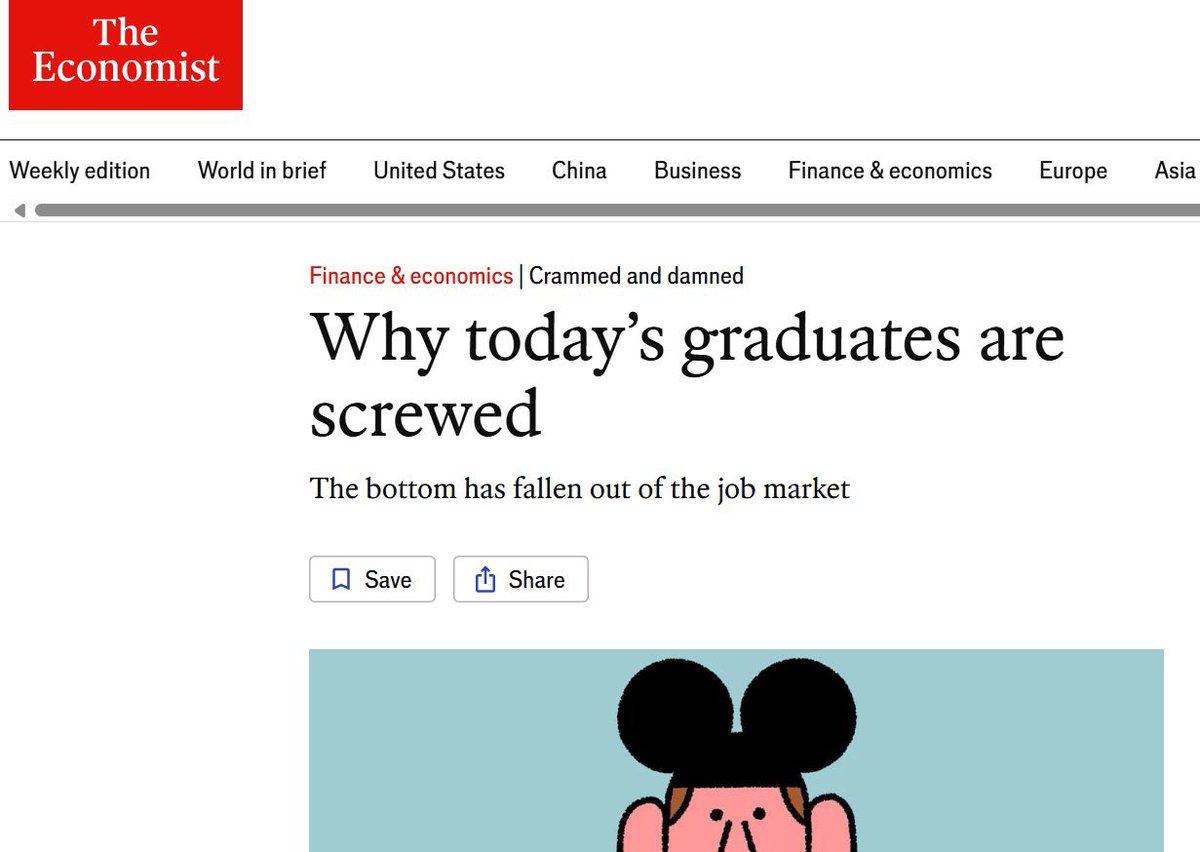
Cada vez más graduados descubren que el viejo contrato social se ha roto: estudiar una carrera ya no garantiza empleo estable, salarios altos ni trayectorias ascendentes. The Economist: Si cae la prima salarial universitaria y empeora la inserción laboral, toca repensar qué universidad, para qué empleos y con qué habilidades https://t.co/wLTnUTjDpv