Former PM. I run a prop quant model to show you a best of breed portfolio devoid of the noise. Read my work on Substack for FREE . Check out Formidium too...
Memory is cyclical. Pricing is decelerating. The trade is over. That is the bear case. I think the conclusion is premature. $MU $SNDK $WDC $STX
https://t.co/F6mklnDfsz
Memory is cyclical. Pricing is decelerating. The trade is over. That is the bear case. I think the conclusion is premature. $MU $SNDK $WDC $STX
https://t.co/F6mklnDfsz
With the memory trade...
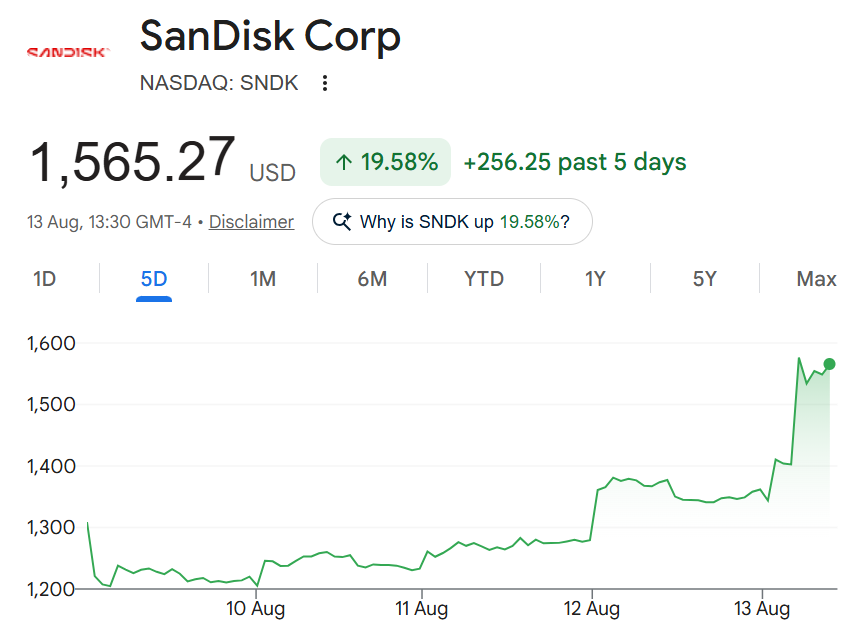
Don't forget who had conviction and advocated for buying the bottom/dip while the whole of X capitulated over the weekend.
$SNDK: +30% this week
$DRAM: +17%
Samsung: +16%
$MU: +13%
SK hynix: +12%
Now, I wanted to emphasise that if names can go up 20% in a day, they can most certainly fall 20% in a day.
We saw that during July.
I would therefore encourage everyone invested in memory to use this time to build some solid conviction and foundational understanding.
A first class ticket to losing money is through a lack of understanding over your invested companies.
Often times, even a basic understanding can be enough to carry you through a trade from start -> finish.
If not, bottoms will be sold and tops will be bought...
And most importantly, do not plainly copy-trade.
In the long-run, it's in your best interest to miss out on 10% gains (for example) on a stock to instead spend time doing research into a company mentioned on X from your favourite account.
View that 10% "loss" as an investment into yourself as a...well...investor!
Those "losses" will compound in your direction over time.
Hear me out.
> Burry shorted Palantir. It poppe within a week.
> Burry shorted Nebius. It popped within a week.
> Burry called the market top in January 2023. The market went up for two straight years.
This man has more paid subscribers than anyone in finance.
Burry went from being a Portfolio manager to milking Retail. Giving him easy millions per month with Zero. Absolutely Zero regulatory headaches,
The Greatest trade he ever made.
@TheStalwart Joe - San Francisco the city and the Bay Area are two different things. Most of the wealth has been created in Santa Clara County, which is quite nice.
Somebody want to let @elonmusk know that his quality control gets poor marks?
Don't put a non-functional email address in responses to clients!
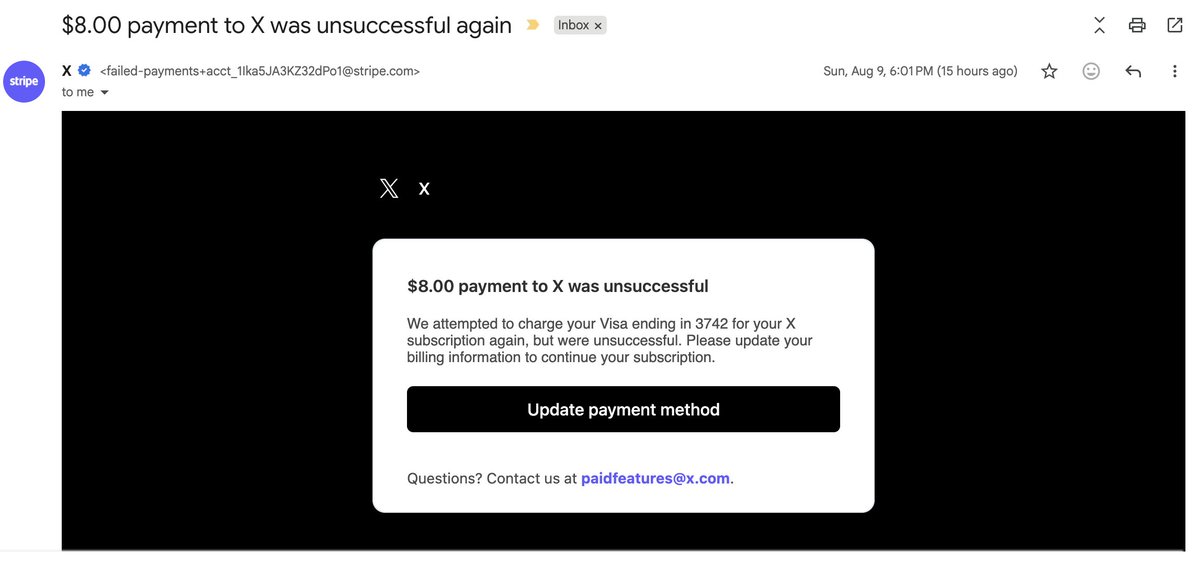
I guess maybe I'll castrate myself and go to BlueSky (or focus on Substack) as it's impossible to renew on this platform using any form of payment.
Power is THE binding constraint.
Data centers are being shut down, GPUs are sold out, models are being commoditized and spot rates are rising all leads to power being critical. Not fanciful plans for power, future forecasts of BTM or distributed batteries blah blah blah but energized power today.
This means the following hierarchy is developing from greatest to least value:
1. Hyperscaler
2. Neocloud
3. Model maker
Ideally, you are 1+3 (Google, SpaceX, Meta) where you own massive power today and have a leading set of models to keep API pricing from 3rd parties honest enough to benefit them vs the model maker. But even if you are just (1), you can still extract great economics from (3) because owning the power is the leverage.
This means (2) needs to scale up fast. If Neoclouds do not scale up fast and move up the value stack towards hyperscalers (solely measured by energized compute online today) they are going to leave a lot of revenue on the table which will complicate their long term financing plans.
Also, starting now, a neocloud’s real competitors will be well capitalized frontier model companies who will do sweetheart deals with (1) and/or will vertically integrate and try to become (1). You can see this in the fact pattern (Ant+AWS, OAI+Stargate).
Get your hands on power.
It’s the spice.
X, Tesla, these are probably one of the worst run businesses I have ever seen.
Simple things like being able to pay for a blue check can be so complicated because the payment system algorithm sucks. Customer Service? Forget about it.
TIme to focus on Substack.
Chińczyk podsumowuje Afrykę w kilku zdaniach. Kluczowa scena w jednym z najważniejszych filmów dokumentalnych XXI wieku:
"Bardzo długo rządzili wami Europejczycy. Powinniście byli nauczyć się od nich, jak działają różne rzeczy. Doświadczenie i wiedza powinny być przekazywane z pokolenia na pokolenie. Tylko w ten sposób można iść do przodu. Tymczasem wy cofnęliście się w rozwoju. Zaniedbaliście wszystko, co wam zostawili. Mało tego: kompletnie zniszczyliście infrastrukturę i cały sprzęt. Co gorsza, w ogóle nie oszczędzacie pieniędzy. W dniu wypłaty tracicie rozum. Wszystko wydajecie, mija 48 godzin i już prosicie o pożyczkę."
Wow, the catastrophic fund blow-up may be even worse than many people realize.
It appears the public equity portfolio was effectively wiped out by leverage and transferred to satisfy margin obligations, while the fund’s reported positive YTD return was largely supported by the unrealized appreciation of its private Anthropic investment.
A simplified example:
• 75% of NAV in public equities falls to zero after forced liquidation = -75%
• 25% of NAV in Anthropic gains 620% = +155%
Overall fund return:
-75% + 155% = +80% YTD
So a fund can still report +80% YTD even though its entire public equity portfolio has been lost.
If this characterization is accurate, it highlights an important lesson: headline fund returns can hide dramatically different outcomes across different parts of the portfolio. A large unrealized gain in a private asset can mask the complete destruction of a highly leveraged public book.
SF is extremely meritocratic when you are:
- ex-Anthropic employee
- ex-OpenAI employee
- Stanford dropout
- MIT dropout
- Harvard dropout
- PhD dropout at 15
- former poker champion
- former chess master
- Thiel fellow
- born to parents who worked at Roblox
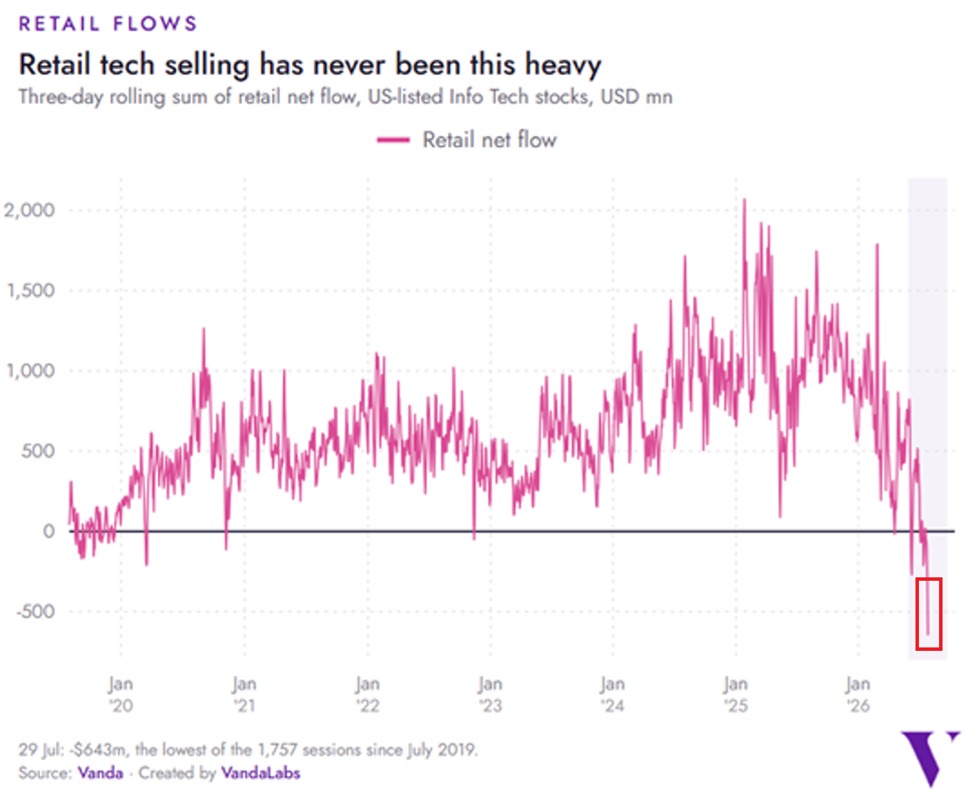
Retail investors are selling US tech stocks at a record pace:
Retail investors sold -$316 million of US-listed information technology stocks on Wednesday, the largest daily sale on record.
Over the 3 days ending Wednesday, retail investors sold -$643 million of tech stocks, the largest such outflow since data began in 2019.
Even during the 2020 pandemic selloff, 3-day tech stock sales never exceeded -$200 million.
In total, retail investors sold -$243 million of single stocks on Wednesday, the biggest daily sale since 2020, and only the 9th daily outflow so far in 2026.
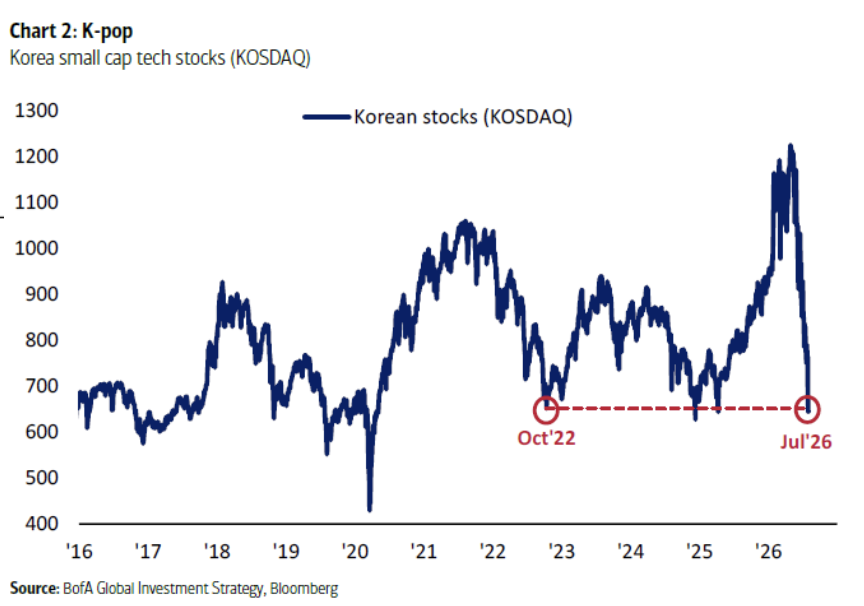
Tech stocks are experiencing historic swings.