This #ManateeAwarenessMonth, add your name to safeguard threatened and endangered species! ✍️
Tell Congress to pass the Protect Gulf Life Act and reverse the dangerous, sweeping changes made by the so-called “God Squad” earlier this year: https://t.co/1WBKUlaQTw
The Beaver Moon will light up the night sky tonight. November’s full moon gets its name from the time of year when beavers are busy preparing for winter.
Find a quiet spot outdoors, look up and enjoy the show.
Photo at Black Canyon of the Gunnison National Park by Graham Green
📸 + 💭: IG @/kendallrosephoto
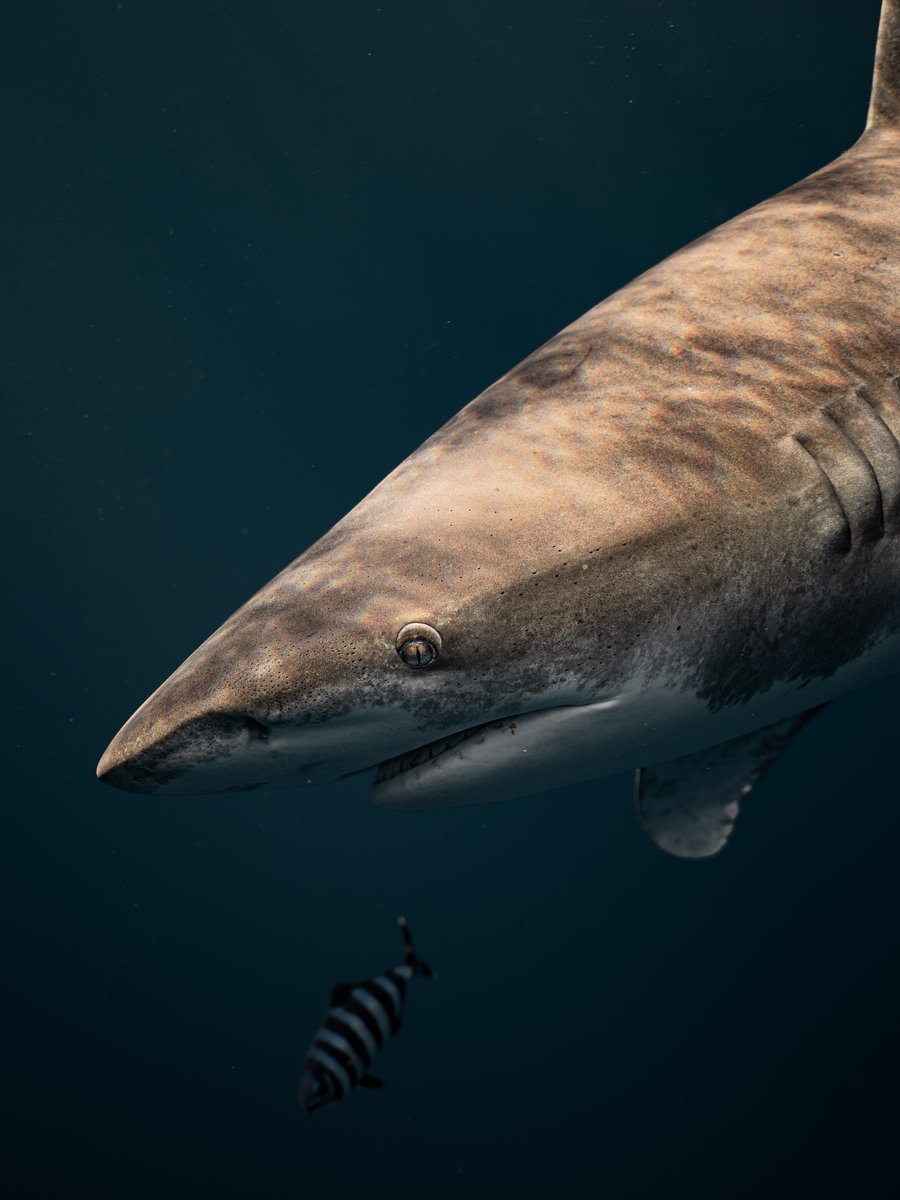
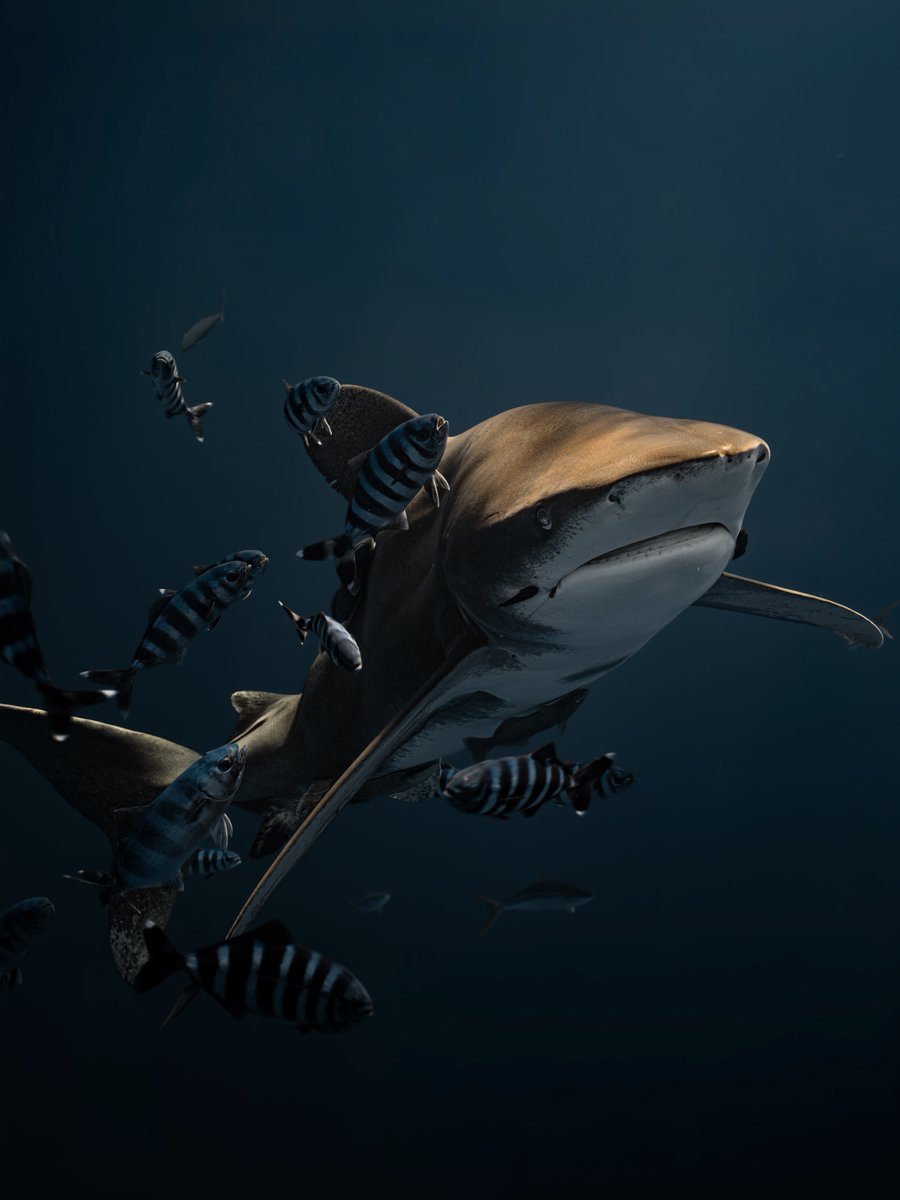
“Oceanic whitetip sharks (Carcharhinus longimanus) are especially inquisitive because curiosity is a useful survival strategy in the open ocean. They are opportunistic scavengers. Unlike a reef packed with places to hide and things to investigate, the pelagic ocean is vast and relatively empty. So when these sharks encounter anything unusual, it can pay to check it out.
They also have a slow, deliberate, exploratory hunting style. Rather than relying purely on speed, they often investigate objects using multiple senses including smell, vision, touch and their ability to detect electrical signals. That can make them appear remarkably bold and interested compared with more cautious shark species!
#sharks #oceanicwhitetip #sharkdiving #underwaterphotography #MarineMonday
I don't know why this hasn't received more publicity, but this fifty-foot sculpture was unveiled recently in South Dakota.
It's called 'Dignity' and was done by artist Dale Lamphere to honor the women of the Sioux Nation.
Presented by National Geographic Society in partnership with @Rolex.
The Southern Ocean is home to an incredible variety of marine life, from delicate, translucent creatures to some of the world's largest mammals. Now it's time to step into this unique underwater world.
Our messenger is figuratively blowing up with comments asking about how the lead azide detonation in Iowa for noon CST Friday, November 20th, 2026, will affect us here in Michigan. The answer is, not extremely likely unless the initial explosion billows above the first couple hundred feet. For those who missed the news, according to the EPA and Army officials, partial evaporation of liquid in storage allowed the material to recrystallize, increasing its sensitivity to shock and friction and making transport to a different location too hazardous to do. The army is planning to contain the denotation as much as they can, but there will still likely be a lead dust plume regardless of containment.
Maroon
The initial area where lead will likely cover the surfaces after the blast, dependent on surface winds, which will likely carry most of it directly north.
Red (Most Likely)
This is the area where very fine particulates may carry in the air up to 24 hours after the detonation on Friday close to the surface. As long as the plume stays below 1,000 feet, most of the fine particulates of lead dust will travel due north/north-northeast.
Pink
Above 3,300 feet, the winds start to shift to out of the southwest, potentially bringing very find lead dust to parts of the Green Bay region if the initial plume from the source gets that high.
Blue
While highly unlikely, if the initial blast somehow reached close to 10,000 feet tall, the same wind could shift the lead dust plume further east towards Madison and Milwaukee, WI and perhaps portions of the Mackinac Bridge region. Again, this is highly unlikely though.
To reiterate, we are not too concerned with lead exposure from this lead azide detonation while over here in Michigan, but we took the time today to use our meteorology and create this path potential map up to 24 hours after detonation. If you know anyone primarily in the maroon zone 100 miles from the blast, let them know that this event may be harmful to their health. Additionally, exposure to crops sourced and eaten from far eastern Iowa will need to be considered for very minor amounts of lead exposure over the next several years.
These baby stars are going straight to the top of the charts 🌟
A new album from @ChandraXray collects snapshots of baby stars across the galaxy and beyond and transforms that data into sound.
Press play: https://t.co/CY9PIlVZOq
Thanks to a natural antifreeze in its blood, the Atlantic wolffish can swim in icy Arctic waters even during the coldest part of winter.
#WildNordic is now streaming on @DisneyPlus
Presented by National Geographic Society in partnership with @Rolex.
The Pacific Ocean is the world's largest and deepest ocean, and home to some of its biggest characters.
Just 34 minutes before its cameras were turned off in 1990, Voyager 1 captured this iconic view of Earth – a pale blue dot in the vastness of space.
Today, Voyager 1 is one light-day away from Earth. A little piece of our planet journeying through interstellar space. 🌎💙
Autumn in Alaska never disappoints!
Brilliant fall colors blanket the tundra along the Savage Alpine Trail at Denali National Park and Preserve, with the snow-covered Alaska Range towering above.
Photo by Jeremy Nickoson