History rarely names its infrastructures while they’re being built.
Gold was just metal until it became money.
TCP/IP was just plumbing until it became the internet. Bitcoin may be next.
The Movement to Anchor Stablecoins on Bitcoin 🔗 https://t.co/N2QIFg0CTj
Lightning dev updates don't trend on X, but they keep shipping.
September brought progress on splicing: resizing a Lightning channel, adding or removing bitcoin, without closing it or pausing payments.
Splicing gives operators flexibility over capital. The splicing spec took four years to stabilize. Core Lightning now supports moving funds out of several channels and into others in one transaction, resizing them together.
New capabilities bring new attack vectors.
@lightningdevkit fixed a vulnerability where malicious peers could inflate splice-related fees. @acinq_co shipped security fixes affecting splicing, channel closing, and on-the-fly funding.
This kind of work is making Lightning dependable enough to build services around. Flexible liquidity management has real value when you can trust it under difficult conditions.
Fewer operational headaches for payment providers.
More dependable service for merchants.
That's a foundation for wider adoption.
I might be biased but Senator Gillibrand is arguably the MVP of CLARITY.
Incredibly smart and effective. Brought many Dems on board. I don’t think we’d even have a shot without her.
@darkside2030 in the Bitcoin vs everything else debate, worth actually understanding what Bitcoin solved. Byzantine generals problem. double spend. difficulty adjustment. proof of work. halving. each one matters. together they’re unreplicated
@dmweisberger The most powerful argument for Bitcoin is watching the most powerful banker in the world lose his composure over stablecoins.
"Mad is Bad" is a perfect frame. Tip o' the hat to Artie. Appreciate the actual clarity here Dave
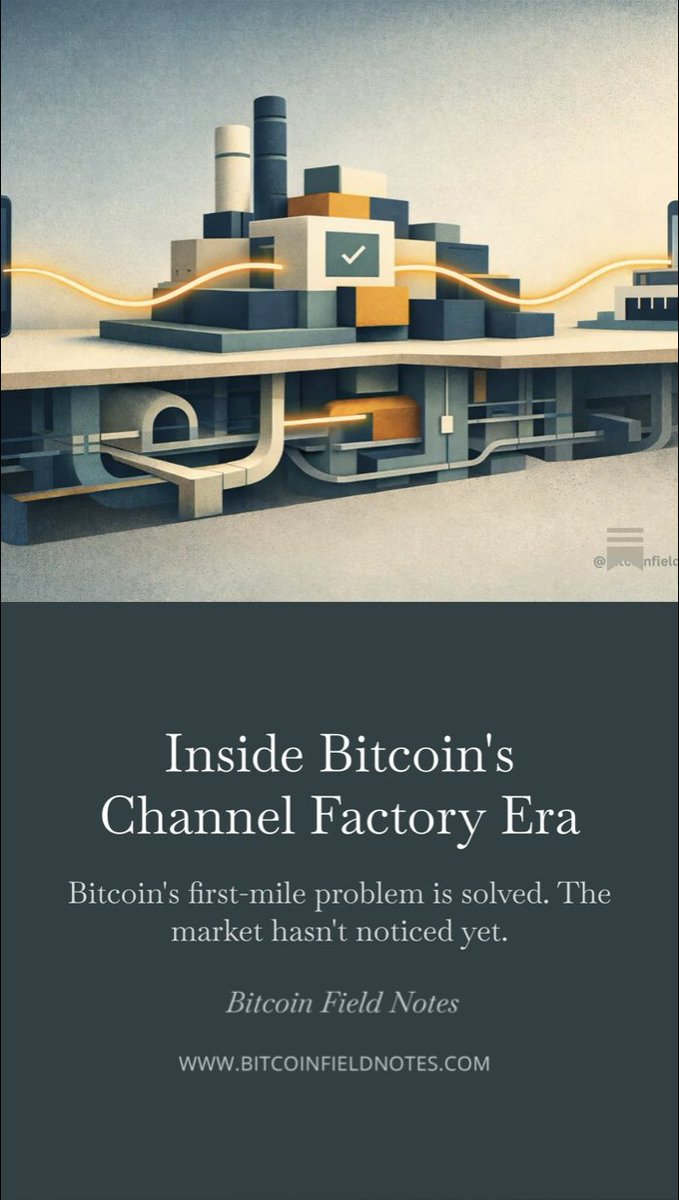
Lightning has had a first-mile problem. Using it meant understanding channels and inbound liquidity before you could move a single sat. For years, that was the bottleneck.
In 2026, the bottleneck is gone.
Ark, from developer Burak Keceli, replaces bilateral channels with a shared coordinator. One on-chain transaction onboards hundreds of users at once.
Spark, from Lightspark, took a different path: statechains with "leaves" that let a single UTXO be subdivided and transferred off-chain. Fast finality. Native stablecoin support. USDT on Spark is already live.
Ark and Spark aren't competing highways. They're both on-ramps to Lightning. Breez wrapped both in an SDK developers can actually ship on. Block's Spiral team built LDK, the open-source toolkit behind Cash App's Lightning experience.
Lightning's first-mile problem is solved. The app ecosystem on top of it is just getting started.
Full piece: https://t.co/r8fwiWaJrl
@DocumentingBTC