Jim Rohn warned about the trap of always planning for "someday"—the bigger house, the nicer vacation, the moment when you'll finally have "enough."
But lifestyle is an art you practice NOW, not a destination you arrive at later.
https://t.co/e3CD15GLqV
The object of your definite chief aim should become your "hobby." You should ride this "hobby" continuously; you should sleep with it, eat with it, play with it, work with it, live with it and THINK with it.
Our lives come down to the meaning we give things, yet most of us never claim that power. We let the world write our story instead.
But that story isn't ours. When the same pain keeps circling back, that's our call to grow, to face what we've been running from.
And on the other side is freedom, the kind we only get when we claim our truth.
We are the meaning makers.
In theory, consistency is about being disciplined, determined, and unwavering.
In practice, consistency is about being adaptable. Don't have much time? Scale it down. Don't have much energy? Do the easy version. Find different ways to show up depending on the circumstances. Let your habits change shape to meet the demands of the day.
Adaptability is the way of consistency.
If you’re unwilling to make yourself the dumbest person in the room, I promise you’ve built a company with a very low ceiling.
And that ceiling is you.
🚨📲 𝗡𝗘𝗪: Maria Guardiola (Pep’s daughter) shares the following message on Instagram:
“Football is a game that is played with the brain. You must be in the right place, at the right moment. Neither too early, nor too late.”
— Johan Cruyff
“If we lose, we will still be the best team in the world. But if we win, we will be eternal.”
— Pep Guardiola
Elon Musk's first wife once described what it's like to watch him fail.
She said he doesn't react the way normal people react. When a rocket explodes, most people in the room go silent. Some cry. Some start calculating the financial damage.
Musk pulls out his phone and starts making calls. Not emotional calls. Engineering calls. "What failed. When can we fix it. When's the next launch." His voice doesn't change. His face doesn't change. The rocket that just cost $60 million is already in the past. The next one is all that exists.
She said it was the most unsettling thing she'd ever witnessed. Not because he was cold. Because he genuinely wasn't affected. The failure didn't register as failure. It registered as data. An experiment that produced results. Results that inform the next experiment.
This is why he wins. Not because he doesn't fail. He fails more spectacularly than anyone in history. He wins because failure occupies zero psychological space. It enters as data and exits as action.
Most people lose not because they fail but because they spend weeks processing the failure before acting again. Musk spends zero seconds. The gap between failure and next attempt is a phone call.
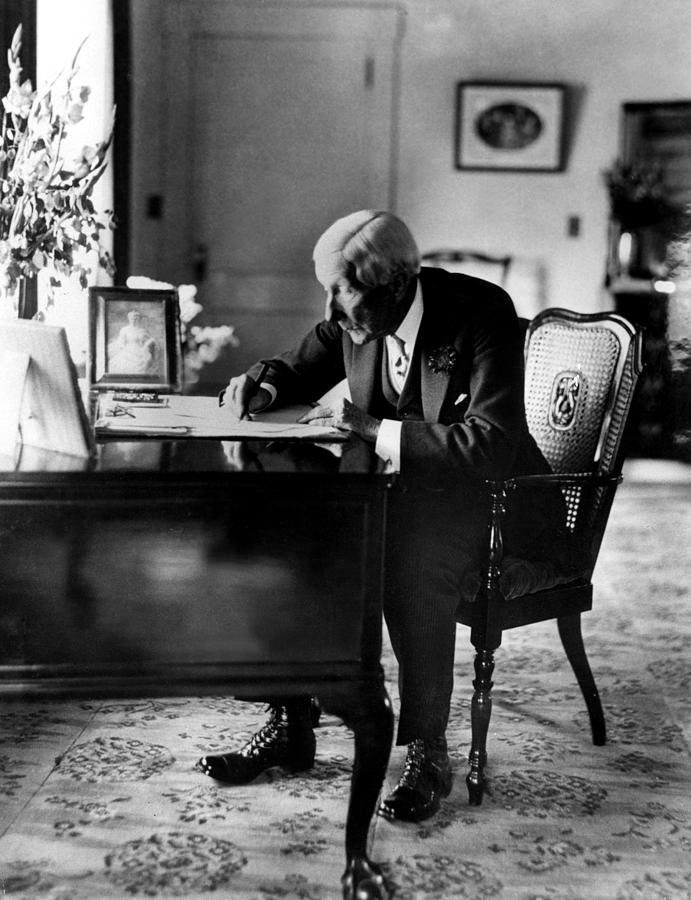
How John D. Rockefeller attacks his work:
“He believed there was a time to think and then a time to act. He brooded over problems and quietly matured plans over extended periods. Once he had made up his mind, however, he was no longer troubled by doubts and pursued his vision with undeviating faith.
Unfortunately, once in that state of mind, he was all but deaf to criticism. He was like a projectile that, once launched, could never be stopped, never recalled, never diverted.”
That last sentence is brilliant:
"He was like a projectile that, once launched, could never be stopped, never recalled, never diverted."
Was he onto something here?
Elon Musk was asked why his companies move faster than anyone else.
His answer:
"I'm constantly addressing the limiting factor. Whatever the limiting factor is on speed, I'm going to tackle that. If capital is the limiting factor, I'll solve for capital. If it's not the limiting factor, I'll solve for something else."
He then said something most managers never figure out:
"If something is going really well and making good progress, there's no point in me spending time on it."
"The irony is if something's going really well, they don't see much of me. But if something is the limiting factor, they'll see a lot of me."
He spends his time entirely on whatever is blocking the next step.
Not on what's interesting. Not on what he's best at. But on whatever is the bottleneck right now.
Most leaders do the opposite... They gravitate toward what they're comfortable with and away from the hard problem.
From: @dwarkesh_sp and @collision
I had learned, from years of experience with men, that when a man really desires a thing so deeply that he is willing to stake his entire future on a single turn of the wheel in order to get it, he is sure to win.