Research Powering Policy And Action
@BU_Tweets’ Center on Emerging Infectious Diseases improves resilience against epidemics globally.
Home of @beacon_bio.
Tick bites can cause serious illnesses including Lyme disease. The good news is that there are a few simple steps you can take to protect yourself and your family from ticks whenever you’re outdoors. Here’s how: https://t.co/ixcqN1ZcHM
Supporting our analysis of potential health threats connected to the mass-gatherings associated with FWC2026 on @beacon_bio, we've developed interactive maps to highlight locations of related stadiums, team basecamps, airports, & large scale events.
https://t.co/UE631ZSINV
The 2026 FIFA World Cup kicks off next week & we'll be following along to bring our users the latest information on any emerging health risks related to these mass-gatherings across North America. Learn more about what you can expect from our coverage here https://t.co/ck1yMd1dxf
And did you know there are nearly 40 other events with >250K participants happening concurrent with #FIFA#WorldCup this summer?
Check out these maps by CEID staff on #FWC2026 games and concurrent mass-gathering events by size
https://t.co/JdGLSG0x5r
Our baseline risk assessment is out. We will publish any new disease events related to the World Cup over the course of the games.
FIFA World Cup 2026 – Canada, USA, Mexico: Communicable disease context
https://t.co/4xXi8oFinW via @beacon_bio
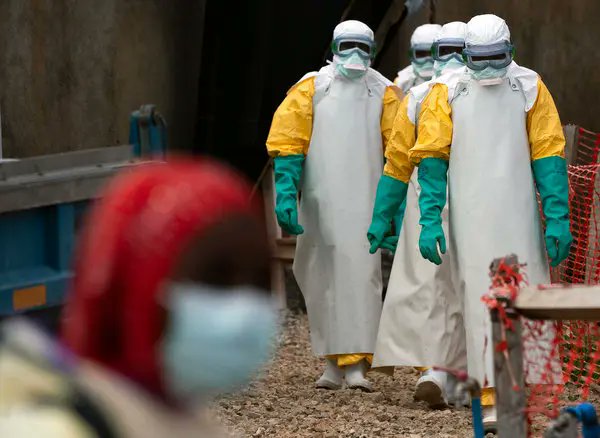
"The garbage disposal units of the body are backing up, and that backs up into the blood system," Dr. John Connor explains the progression of organ failure in Ebola patients, speaking with @npr.
https://t.co/kbjEoJ7HC3
This summer five @busph students are conducting their practica with CEID to assist with our daily disease risk assessments around the @FIFAWorldCup, sent to public heath departments throughout North America.
https://t.co/gploQQcJlH
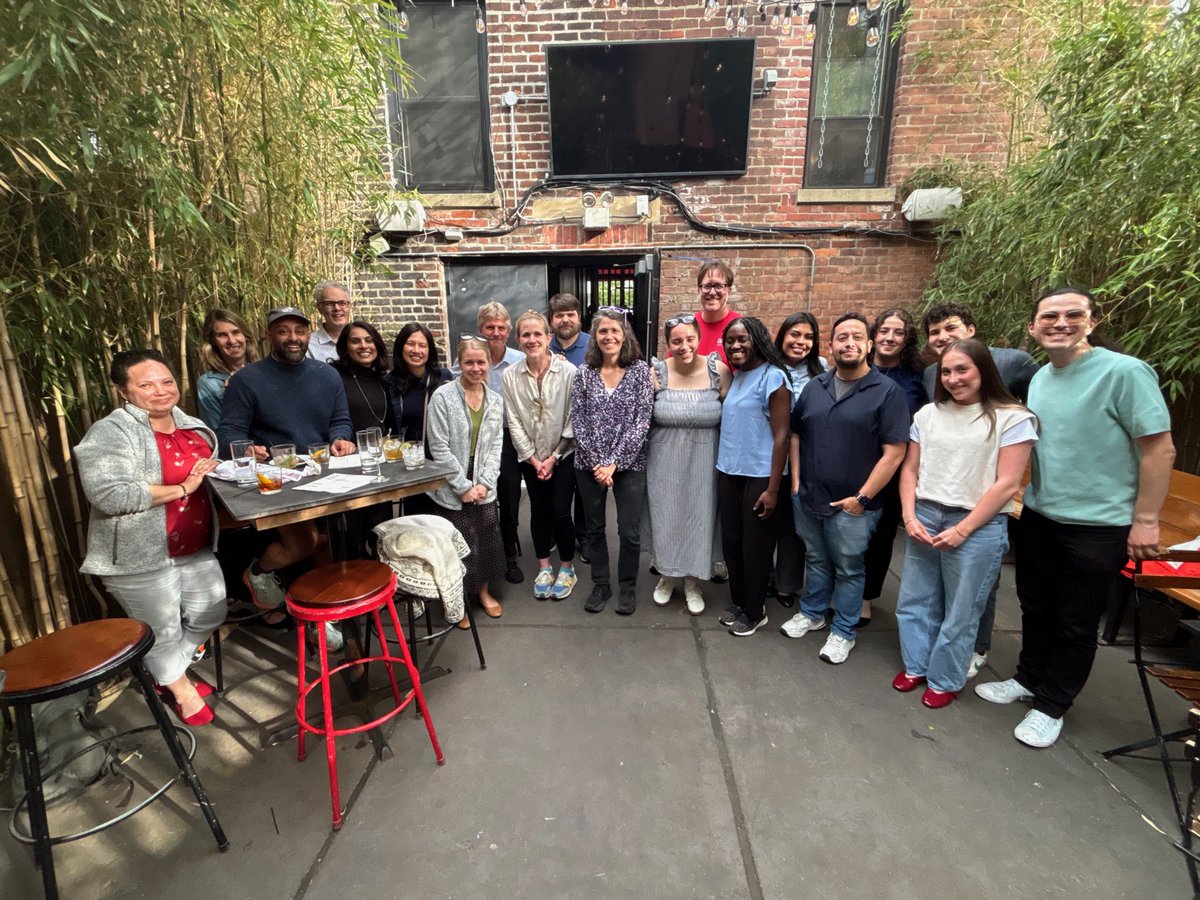
Yesterday CEID faculty and students gathered to celebrate the center's 5-year anniversary and our renewal for another five years. Thank you to everyone who has made our continuing work possible!
Welcome to our @busph practicum students who will be working with us throughout the summer to provide departments of public health throughout North America with daily disease risk assessments related to the @FIFAWorldCup.
Dr. @BhadeliaMD joined @DeanObeidallah detailing the crushing effect of cuts to funding in the scientific and medical fields.
LISTEN: https://t.co/uG3pdQnkVs
Reflecting on her prior experience with Ebola outbreak response, @BhadeliaMD discusses the importance safe funeral practices, & of building trust between affected communities & foreign healthcare responders.
https://t.co/6YlYpQcygH
In our latest episode, we’re joined by Dr. Nahid Bhadelia (@BhadeliaMD), director of @BUCEID and @beacon_bio to discuss the ongoing #Ebola and #Hantavirus outbreaks, including:
The rare Bundibugyo strain of Ebola, with limited treatments and vaccines
How conflict and urban spread are complicating outbreak control efforts
The Andes hantavirus cluster and its likelihood (or lack thereof) of becoming a pandemic threat
https://t.co/PourjEsAyS
Speaking w/ @CNN, @BhadeliaMD explains the challenges of differentiating Ebola cases from other diseases like malaria or cholera. She adds that because Ebola is blood-borne, the greatest risk is to those in close contact, living with or treating patients.
https://t.co/S26Ewvf2AD
The Brink highlights the work being done at @BU_Tweets, including @beacon_bio, to monitor and respond to the Bundibugyo strain Ebola virus outbreak in DRC.
https://t.co/dpVKbSQq6Y
In the Bay Area next month? Join us for an introductory presentation on BEACON by CEID Director @BhadeliaMD, & a panel exploring the benefits, risks, & challenges of integrating AI & LLMs into public health policy decisions for pandemic preparedness.
https://t.co/LVjhE1dz2F
Ebola virus disease is a severe infection which can progress in a matter of days to shock, multi-organ failure, & require advanced supportive care, which is why it's critical to bring someone who has a confirmed infection to care quickly says @BhadeliaMD.
https://t.co/hLkyNIR6Kn
Despite the high mortality of Ebola, widespread global transmission is unlikely, both because cases are mainly occurring in very remote areas & because unlike Covid, asymptomatic transmission is not seen with Ebola, explains @BhadeliaMD.
https://t.co/KPj8wWrrAi
Writing for @NYASciences, @drsyramadad gives an overview of key considerations around the current Ebola outbreak, including what this means for preparations for this summer's FIFA World Cup.
https://t.co/ZBLP5UImc9
Adding to the challenges of containing DRC's current Ebola outbreak, is the ongoing armed conflict in the area. Less funding means it’s harder to find an Ebola signal in the noise of many other flu-like illnesses, @BhadeliaMD explains to @NatGeo.
https://t.co/Ru7jRs7XYh
@BhadeliaMD@ChannelNewsAsia She emphasizes though that "Ebola does not pose the same global pandemic risk as airborne viruses like COVID-19, as it requires close contact to spread," & adds that airport screening of passengers coming from effected areas has worked well in the past to control further spread.
Because the current Bundibugyo Ebola virus outbreak is only the 3rd outbreak of this strain, "we don't have as much clinical experience, & there haven't been as many investments in vaccines & therapeutics," explains @BhadeliaMD.
@ChannelNewsAsia
https://t.co/FocEMkli8Y