At You Make Me Sick! podcast we focus on pathogenic microorganisms, infectious diseases, health care practice and all things that can make you sick (or better)!
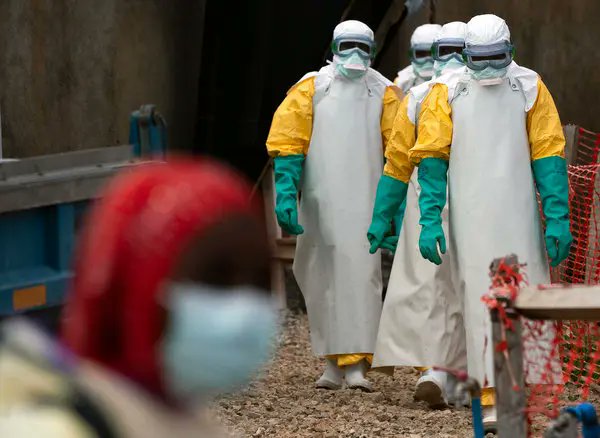
In our latest episode, we’re joined by Dr. Nahid Bhadelia (@BhadeliaMD), director of @BUCEID and @beacon_bio to discuss the ongoing #Ebola and #Hantavirus outbreaks, including:
The rare Bundibugyo strain of Ebola, with limited treatments and vaccines
How conflict and urban spread are complicating outbreak control efforts
The Andes hantavirus cluster and its likelihood (or lack thereof) of becoming a pandemic threat
https://t.co/PourjEsAyS
Not all bacterial cells in a biofilm are equally susceptible to phages. What factors drive phage activity and how can phages adapt to target different bacterial subpopulations?
We discuss this, the implications for phage therapy and much more!
Enjoy the episode!
New Phage Bites episode!
We speak with @lperestrelom about her recent Nature Communications study on the directed evolution of phages in biofilms and how this approach can improve the control of Pseudomonas aeruginosa.
https://t.co/G1DFC4yIdd
02 Jun 2026 – Bundibugyo virus disease outbreak: DRC case count remains at 321; Uganda reports six additional cases; WOAH statement
Read more at: https://t.co/cc6T1YOXhL
Supporting our analysis of potential health threats connected to the mass-gatherings associated with FWC2026 on @beacon_bio, we've developed interactive maps to highlight locations of related stadiums, team basecamps, airports, & large scale events.
https://t.co/UE631ZSINV
"The garbage disposal units of the body are backing up, and that backs up into the blood system," Dr. John Connor explains the progression of organ failure in Ebola patients, speaking with @npr.
https://t.co/kbjEoJ7HC3
@PrayingMan2025@Neuroscope_mp Speak to your cardiologist or PCP and try a different statin, may make the difference in your tinnitus while still being effective against heart disease
Sunlight during a hospital stay should be a basic medical right.
In a study of patients who got spinal surgery, those in rooms with more natural sunlight used ~22% less pain medication per hour and reported lower stress.
42 states currently require windows with natural light exposure in hospital rooms used for overnight beds, this becomes more of a relevant factor in ICUs where natural light is major factor in preventing ICU delirium. Should be federally mandated, but for now states have to take the initiative.
The Magnetobiology Episode:
A company in San Francisco, called @NonfictionBio, is building proteins (like antibodies and enzymes) that can be controlled using small magnets.
In this episode, co-founder Maria Ingaramo and scientific advisor Andrew York explain how they engineered a protein, MagLOV, that responds strongly to magnetic fields, why most prior attempts have failed to replicate, and how the mechanism of magnetically-controlled proteins actually works. They also get into the “dream” use cases, like cancer drugs that activate only at the tumor, which might have a lower toxicity inside the body. This podcast is made possible by @AsteraInstitute.
I'm happy with how this episode came out. I think my interviewing skills are improving, and I'm getting better at building up context throughout the episode. Enjoy!
Search for "The New Biology" on YouTube, Spotify, and Apple Podcasts.
Timestamps:
00:00 - Opening
00:54 — Introduction
01:35 — The dream
05:38 — Why magnets vs. light or ultrasound
10:05 — The physics
17:48 — On the name "magnetogenetics"
21:25 — Birds and cryptochromes
27:09 — Why is the field filled with so much junk?
29:51 — Adam Cohen's molecule
33:24 — Markus Meister’s debunking
38:06 — The experiment
46:22 — Finding the LOV domain
54:11 — Singlets, triplets, and cysteine
56:54 — What the magnet is actually doing
1:05:13 — The conformational-change red herring
1:12:46 — The Quantum Biology Institute
1:19:31 — Founding Nonfiction Labs
1:24:38 — How to convince skeptical investors
1:29:39 — What a magnetogenetic medicine might look like
1:38:50 — First clinical indications
1:45:12 — The regulatory path
1:48:01 — What the field needs
1:54:30 — Appendix: Whiteboard lecture
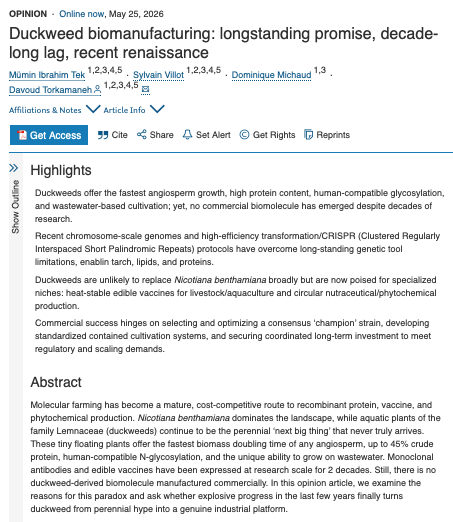
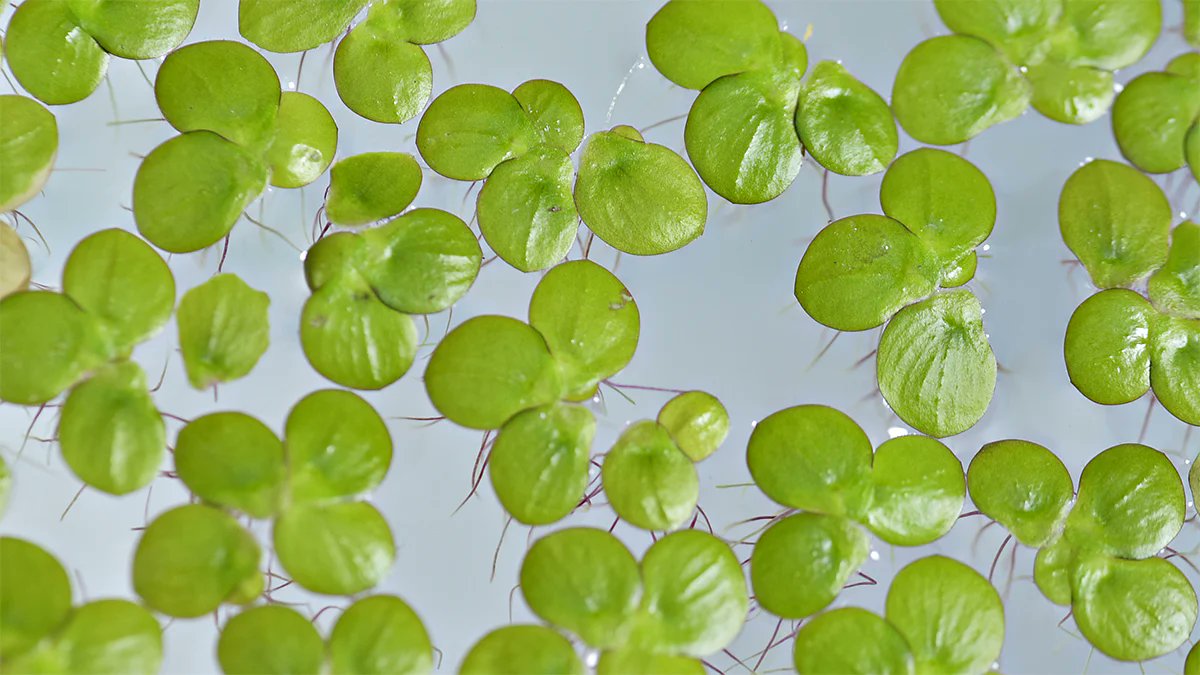
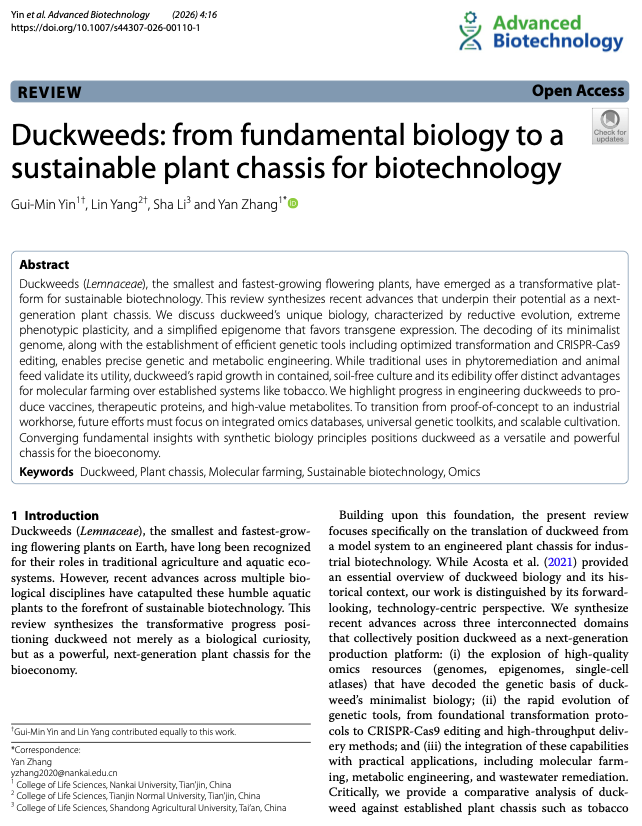
We should manufacture drugs and vaccines using duckweed.
A few reasons:
- They're the fastest-growing flowering plants.
- Duckweed is up to 45% protein by biomass.
- They grow in wastewater.
- Duckweed can be transformed by "dipping" them into a liquid with plasmids and carbon nanotubes; very simple.
- Both monoclonal antibodies and edible vaccines have been made with duckweeds at small scales for ~two decades.
But there are lots of duckweed strains. We should sequence all of them, pick a strain, and start building better biotechnology tools. There is room for a focused philanthropy effort here (and companies), too.
A pot of boiling water changed Kadiatu’s life in seconds. The burns left scars that caused pain, limited movement, and drew unwanted attention from others. But then Mercy Ships arrived!
#MercyShips#HopeAndHealing#SierraLeone#BurnCare
Welcome to our @busph practicum students who will be working with us throughout the summer to provide departments of public health throughout North America with daily disease risk assessments related to the @FIFAWorldCup.
Reflecting on her prior experience with Ebola outbreak response, @BhadeliaMD discusses the importance safe funeral practices, & of building trust between affected communities & foreign healthcare responders.
https://t.co/6YlYpQcygH
NIH researchers identified a key player in the process of programmed cell death, or apoptosis, a crucial process in neurodegenerative conditions like ALS and traumatic brain injury. The findings could present new opportunities to block the death of neurons in the central nervous system, which generally do not regenerate once damaged.
Read more: https://t.co/BaMRfsMWpa
New book chapter: "How to Weigh a Cell."
This chapter explains how scientists have weighed cells throughout history, often using simple equipment and back-of-the-envelope calculations.
It has lots of interactives, so you can "repeat" the experiments directly in your browser.
Speaking w/ @CNN, @BhadeliaMD explains the challenges of differentiating Ebola cases from other diseases like malaria or cholera. She adds that because Ebola is blood-borne, the greatest risk is to those in close contact, living with or treating patients.
https://t.co/S26Ewvf2AD