Eid Mubarak to our Muslim community 🤍🌙
May this season of sacrifice bring peace, joy, answered prayers, and abundant blessings to you and your loved ones.
As you celebrate may your hearts be filled with gratitude, love, and kindness toward one another. ✨
AI agents are already managing real money on-chain, with no system verifying whether what they execute matches what they were told to do.
An agent instructed to "swap 100 USDC for ETH with at most 2% slippage on Uniswap" can route through an unverified contract, accept excessive slippage, or interact with a sanctioned token.
There is no verification layer between intent and execution and that is a major concern.
But now, @navaai is that verification layer.
It's a middleware layer that intercepts transactions after an agent constructs them but before they reach the blockchain.
Three components handle this:
● Execution Escrow: locks user funds until a transaction is verified
● Arbiter: evaluates each transaction using deterministic checks and LLM-powered reasoning
● Nava Chain: a layer-3 blockchain on Arbitrum that records every verification decision on-chain for other AI systems to reference
The flow is straightforward: funds stay in custody until the agent proposes a transaction, verification runs, and execution only happens if the transaction matches user intent.
If it doesn't pass, funds remain locked.
The Arbiter was peer-reviewed at NDSS 2026. The project raised $8.3M in seed funding, co-led by @polychain and @archetypevc.
As agentic commerce grows, AI agents trading, lending, and staking with real capital, the infrastructure holding it together needs more than fast execution. It needs accountability.
@navaai is building exactly that.
Wanting lunch is not a crime.
But spending what is now billions of dollars on two pizzas? 💀
Laszlo Hanyecz did exactly that in 2010 and accidentally proved cryptocurrency could actually be used as money.
Without that order, who knows how long it would've taken us to figure that out.
We owe this man a pizza. Several, actually.
Happy Bitcoin Pizza Day 🍕
Touch grass today by eating pizza😋
Most DeFi protocols buy attention. @flyingtulip_ earns it.
No token incentives, no liquidity bribes, no points programs inflating numbers that reset when the campaign ends.
What you see on the dashboard is what users choose to put there.
Since its launch, things have gradually shifted. Not loudly, but noticeably.
Margin Lending, which started its life on Sonic, crossed into Ethereum, and Ethereum users showed up.
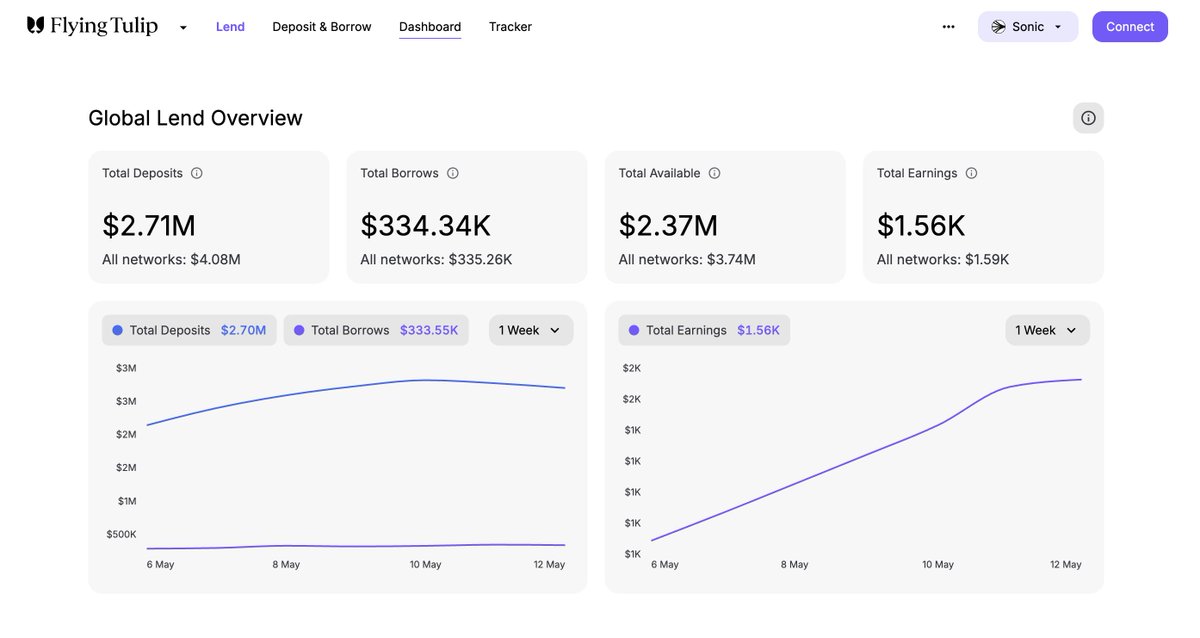
Deposits on ETH Lend climbed past $2M, bringing the total across both networks to over $5.5M.
That's real capital, sitting in a protocol with no incentives to sweeten the deal.
The team responded the way builders respond when something works, they expand. Caps for BTC, USDC, and USDT on Ethereum were raised.
Sonic's lending caps got a significant bump, too.
When a protocol raises its caps, it's not a marketing move. It's the team saying: we have more demand than we planned for.
ftUSD, Flying Tulip's stablecoin, crossed $2M in total supply across both networks.
USSD, Sonic's native stablecoin, was added as collateral, quietly extending what users can do inside the ecosystem without needing to go elsewhere.
The expansion isn't random. ETH Lend didn't launch just because it was next on a roadmap slide. It launched because Sonic Lend proved the model worked.
The cap increases followed actual utilization. USSD integration followed user demand for more collateral options.
The community noticed, too.
External trackers, dashboards, and Telegram alert tools built by community members are now part of how people follow the protocol.
That kind of thing doesn't happen in ecosystems people don't believe in.
Flying Tulip is still early.
But it's the kind of early that feels intentional.
Build with the team!
📌Deposit & Borrow: https://t.co/AQxZew0oey
📌 Lend Docs: https://t.co/AwQLC5hMUA…
📌Do you have questions? Join the community on Discord: https://t.co/LAfQW7YemQ
@flyingtulip_ just expanded its earn and borrow menu, and it's worth paying attention.
For anyone sitting on stablecoins or blue-chip crypto wondering how to put idle assets to work, @flyingtulip_ deposit and borrow suite is quietly becoming one of the more interesting setups in DeFi right now.
Recently, the protocol announced that USSD → ftUSD is now live.
Sonic's native stablecoin USSD can now be deposited, converted to ftUSD, staked, and left to earn .
Assets you can currently deposit for yield:
USDC — 3.65% APY
USDT — 2.48% APY
USSD (via ftUSD) — ~3.18% APY (newly live)
WETH — 1.15% APY
Assets available to borrow:
USDC — 1.50% Borrow APY
USDT — 1.93% Borrow APY
WETH — 1.00% Borrow APY
WBTC — 6.00% Borrow APY
The Flying Tulip ecosystem has been building steadily, and these aren't promis.
It's a live, readable menu of on-chain financial tools with real rates attached.
Your assets are either working or they aren't.
This might be one place worth exploring.
https://t.co/6ThfXezg1d
@flyingtulip_ approach to stablecoin yield is a game-changer for both passive earners and active traders.
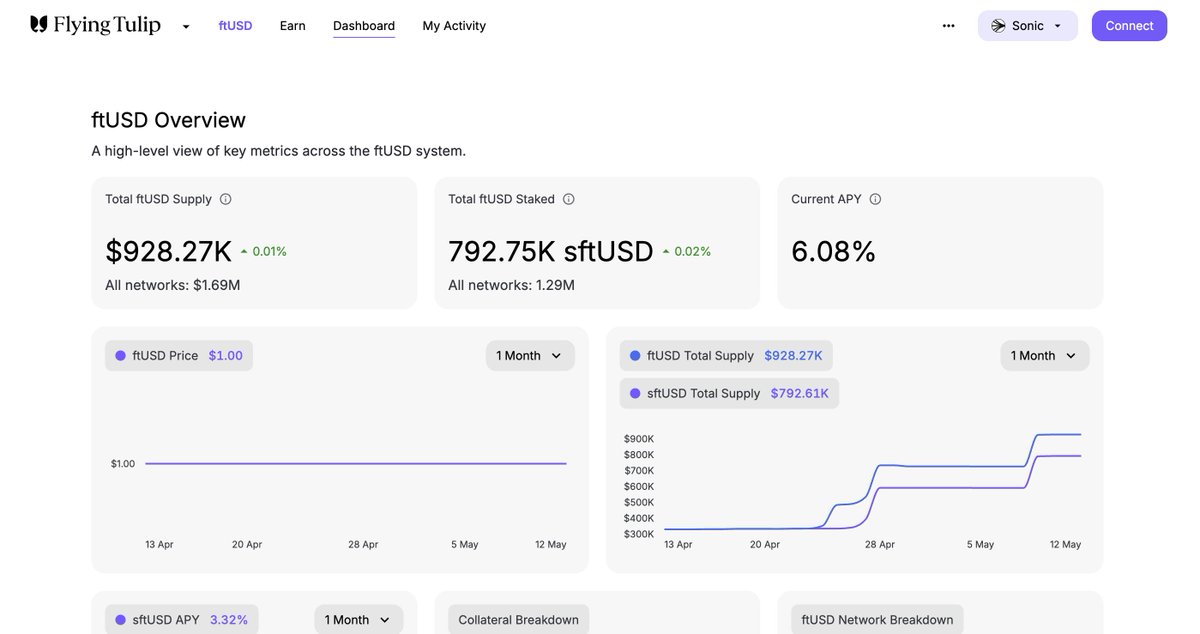
By minting and staking ftUSD on Sonic, you can currently unlock a powerhouse 6% APY.
Why ftUSD Stands Out
The beauty of FT Lend lies in its "living market" design.
Unlike rigid protocols, FT uses an adaptive model that understands depth and volatility to protect your capital.
Key benefits include:
● Pure Organic Yield: Earn high returns with zero external incentives, just pure, sustainable yield.
● Ultimate Liquidity: Enjoy one-click minting and redemption with no unstaking periods and no exit queues.
● Efficiency: Your deposits never stay "dead," a single deposit can simultaneously earn yield, serve as collateral for limit orders, and support future positions.
● Proven Growth: Global Margin Lending has already surged past $4M in total deposits, proving the market's trust in the ecosystem.
How to Get Started
Whether you are looking at the 3.65% APY for USDC on Ethereum or the premium 6.08% current APY for staked ftUSD (sftUSD), the process is seamless.
Stop letting your stables sit idle.
Head over to the Flying Tulip dashboard, mint your ftUSD, and start compounding your wealth today.
https://t.co/6ThfXezg1d
.@flyingtulip_'s Global Margin Lending has now crossed $4M in total deposits with $2.7M on Sonic.
You can now earn 6% APY on your stable by minting and staking ftUSD on Sonic.
One click minting & redemption with no unstaking period and no exit que. Pure yield with 0 incentives!
🔗https://t.co/mpOHLLZrkJ
Don’t sleep on the opportunity to learn the skills shaping the future.
MGSWeb3 Cohort 4 is bringing AI agents for creatives, designed for builders, creators, and curious minds ready to explore what’s next.
If you’ve been waiting for the right time to get started with AI and Web3, this is your sign.
Join the waitlist ↓ 🚀
https://t.co/ZeF7vjzQsR
Imagine owning a piece of a Lagos highrise, a U.S. Treasury bond, or a gold bar, without the paperwork, the middlemen, or the minimum investment of millions.
That's what Real World Assets (RWA) makes possible.
So, what exactly is RWA?
RWA refers to the process of bringing traditional, physical, or financial assets onto the blockchain.
Think real estate, government bonds, commodities, private credit, even art, tokenized, and made accessible on-chain.
When an asset is tokenized, it becomes a digital representation on the blockchain.
That token carries the same value as the underlying asset, but now it can be traded, fractionalized, and accessed by anyone with a crypto wallet.
What does this look like in practice?
@OndoFinance is one of the clearest examples of RWA in action. Through Ondo Global Markets, investors outside the U.S. can gain on-chain exposure to publicly traded U.S. securities, stocks, ETFs, and more, via tokenized assets like $TSLAon.
Each token is fully backed by the underlying asset, tradeable 24/5, and compatible with DeFi protocols.
You can buy fractional amounts and transactions settle instantly, no brokers, no delays.
That is RWA breaking down the limitations and access barriers traditional finance once imposed.
Why does this matter?
Traditional finance has always had gatekeepers, high capital requirements, geographic restrictions, and slow settlement times that locked most people out of valuable asset classes.
RWA breaks those walls down. A retail investor in Nigeria can now access U.S. market exposure on-chain, transparently, and efficiently.
This is infrastructure, bridging the $900+ trillion traditional asset market with the accessibility of DeFi.
The frameworks are being built right now, and the opportunities for those who understand this space early are significant.
Join the momentum!
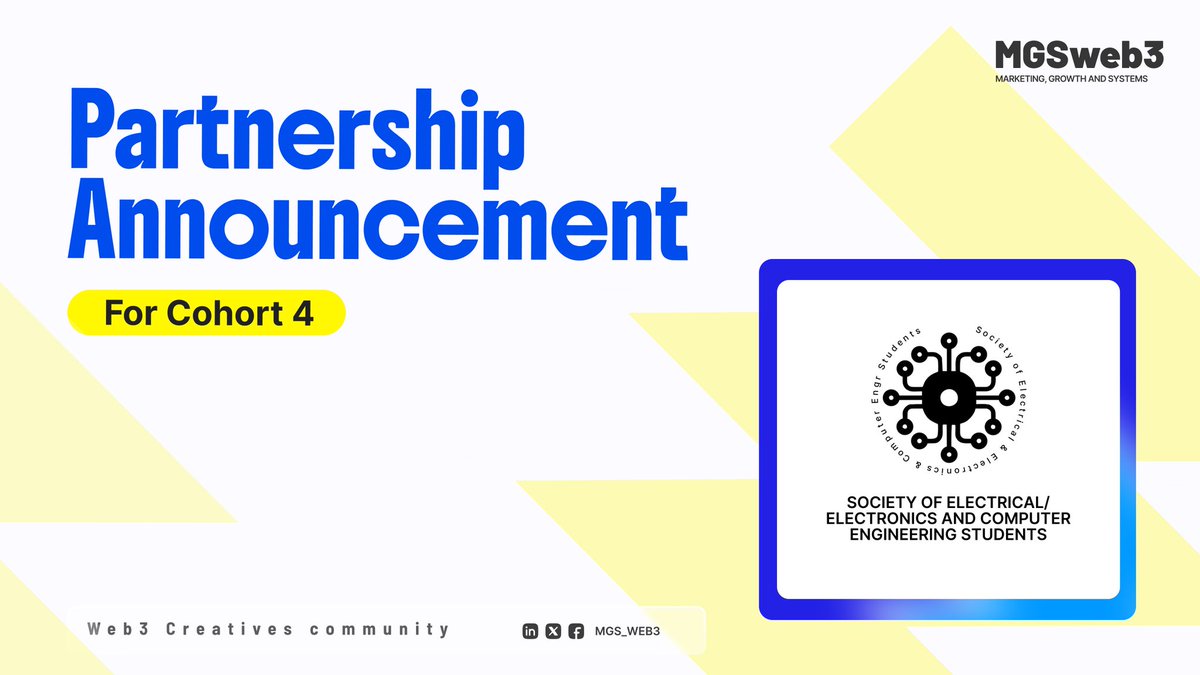
Excited to partner with @SEESUnilag for MGSWeb3 Cohort 4 🤝
Together, we’re bringing students closer to opportunities in Web3, AI automation, design, writing, marketing, and more.
The future belongs to builders. 🚀
https://t.co/EbmqcKY2wa
5.11% on USDC on Sonic
5.27% on USDT and USDT on Ethereum
- No token incentives
- No subsidies
- No "points"
- No looping
- No leverage
- No "unstaking period"
- No "exit queue"
- Instant redemptions & liquidity
Defi hasn't reached its peak yet, there is so much more to explore and build onchain.
🚨Alpha
Just claimed the free MetaMask x Pudgy Penguins SBT
It’s currently open for everyone to mint
- Mint with a MetaMask wallet
- Runs on Ethereum mainnet
- Claim window 28 days
Mint here: https://t.co/D2LeuOtx5F
There are extra SBTs too, but those are only for holders of Big/Lil Pudgy Penguin NFTs. If you don’t hold any, the public MetaMask one is the only relevant claim
This will be the second SBT from pudgy… Goodluck
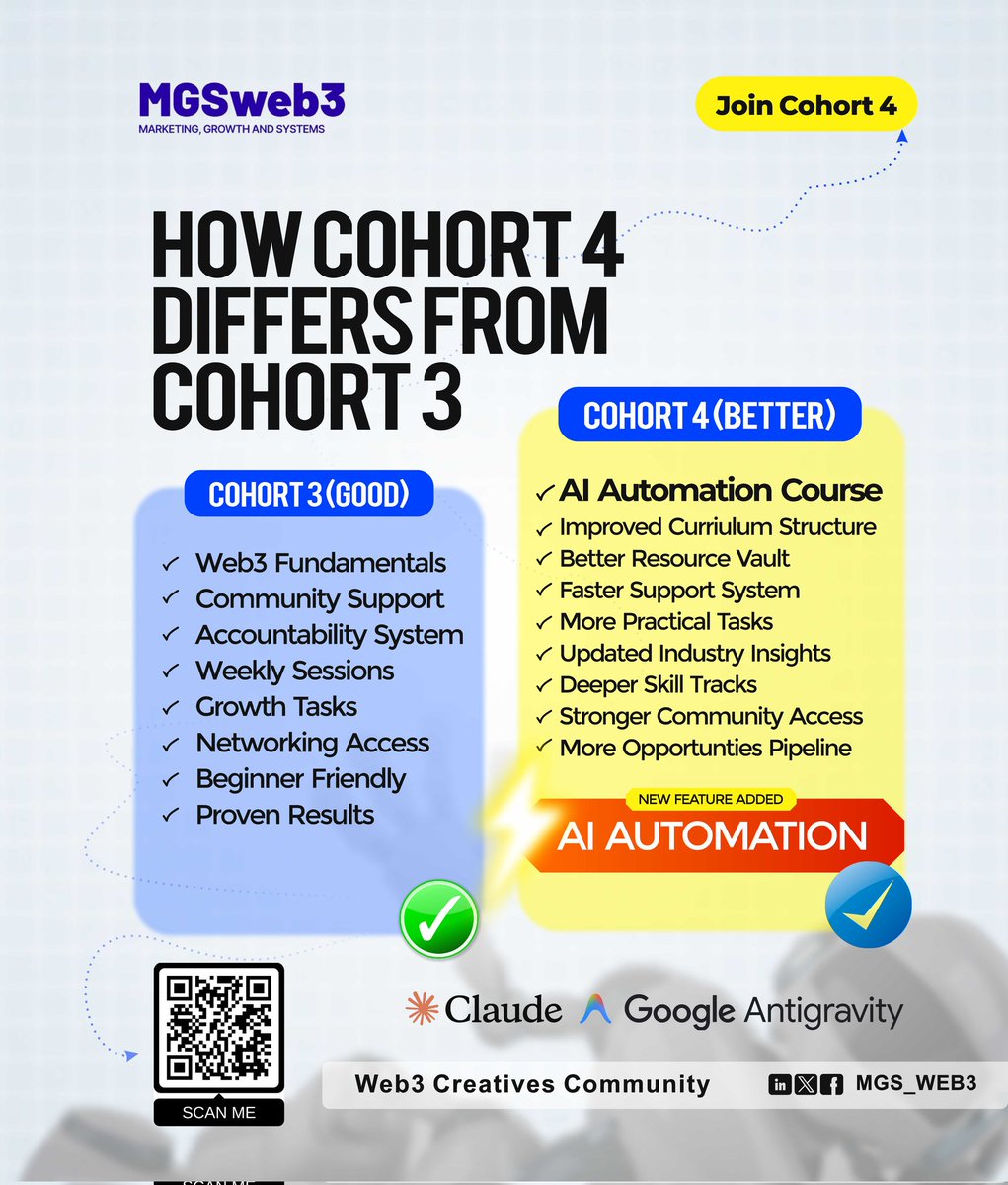
You already know what's coming, now let's talk about what's inside.
Cohort 3 was good.
We built the foundation, Web3 Fundamentals, Community Support, an Accountability System, and more.
But good wasn't enough, so we went back to the drawing board.
Here's what we upgraded:
We're most excited about: AI Automation, a brand new course track that didn't exist in Cohort 3.
Why?
Because the people winning in this space right now aren't just Web3-native.
They're combining Web3 knowledge with AI tools to work faster, think sharper, and stand out.
Web3 doesn't exist in a vacuum, and Cohort 4 puts that combination directly in your hands.
Beyond AI Automation, here's what else we improved:
Improved Curriculum Structure: more intentional, more progressive.
Better Resource Vault: Deeper, more relevant materials.
Faster Support System: Less waiting, more answers.
More Practical Tasks: Because doing beats watching.
And much more you'll discover inside.
The Bottom Line
If you were in Cohort 3, you know what we built. Cohort 4 is everything we built, plus more.
Scan the QR code or click the link below to join.
https://t.co/ZeF7vjzQsR
Imagine owning a piece of a Lagos highrise, a U.S. Treasury bond, or a gold bar, without the paperwork, the middlemen, or the minimum investment of millions.
That's what Real World Assets (RWA) makes possible.
So, what exactly is RWA?
RWA refers to the process of bringing traditional, physical, or financial assets onto the blockchain.
Think real estate, government bonds, commodities, private credit, even art, tokenized, and made accessible on-chain.
When an asset is tokenized, it becomes a digital representation on the blockchain.
That token carries the same value as the underlying asset, but now it can be traded, fractionalized, and accessed by anyone with a crypto wallet.
What does this look like in practice?
@OndoFinance is one of the clearest examples of RWA in action. Through Ondo Global Markets, investors outside the U.S. can gain on-chain exposure to publicly traded U.S. securities, stocks, ETFs, and more, via tokenized assets like $TSLAon.
Each token is fully backed by the underlying asset, tradeable 24/5, and compatible with DeFi protocols.
You can buy fractional amounts and transactions settle instantly, no brokers, no delays.
That is RWA breaking down the limitations and access barriers traditional finance once imposed.
Why does this matter?
Traditional finance has always had gatekeepers, high capital requirements, geographic restrictions, and slow settlement times that locked most people out of valuable asset classes.
RWA breaks those walls down. A retail investor in Nigeria can now access U.S. market exposure on-chain, transparently, and efficiently.
This is infrastructure, bridging the $900+ trillion traditional asset market with the accessibility of DeFi.
The frameworks are being built right now, and the opportunities for those who understand this space early are significant.
Join the momentum!