Introducing Claude Opus 5.5, the first model in our new Claude 5.5 family.
It performs at the level of Claude Fable 5.1 for most tasks, and costs 40% less to run than Opus 5.
🚨Anthropic just showed a 24-minute workshop on how to actually do prompts for Claude.
Taught by the people who built it.
Free. No registration. No paywall.
I've seen $300 courses that don't cover what they teach in the first 8 minutes.
Watch it and bookmark it now.
Claude Code has an updated terminal interface, plus a new VS Code extension for those who prefer to work fully in their IDE.
The new checkpoints feature lets you instantly undo Claude’s latest changes with Esc+Esc or /rewind.
THIS IS INSANE…🔥
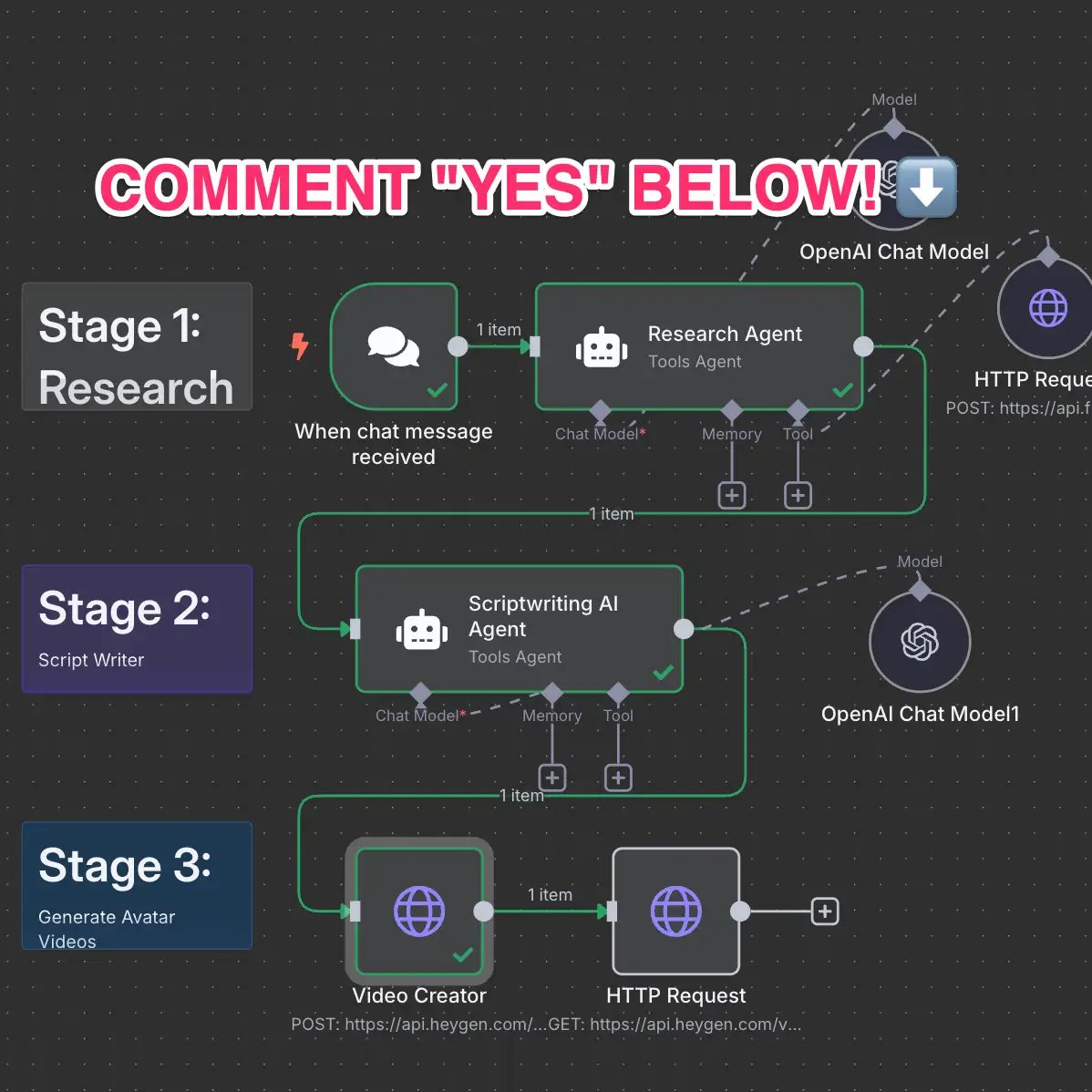
Someone just leaked 1,200+ plug-and-play N8N workflows and it’s breaking the internet 👀
They scraped everything from the official docs, GitHub, AND hidden forums 😮💨
⚡ AI-powered lead gen
⚡ Auto content repurposing
⚡ Sales & CRM automation
This vault would cost a lot to build from scratch.
LIKE + RETWEET + COMMENT “YES” & I’ll send you the FULL workflow + setup FREE!
ChatGPT is useless 😉
If you don't know how to prompt properly.
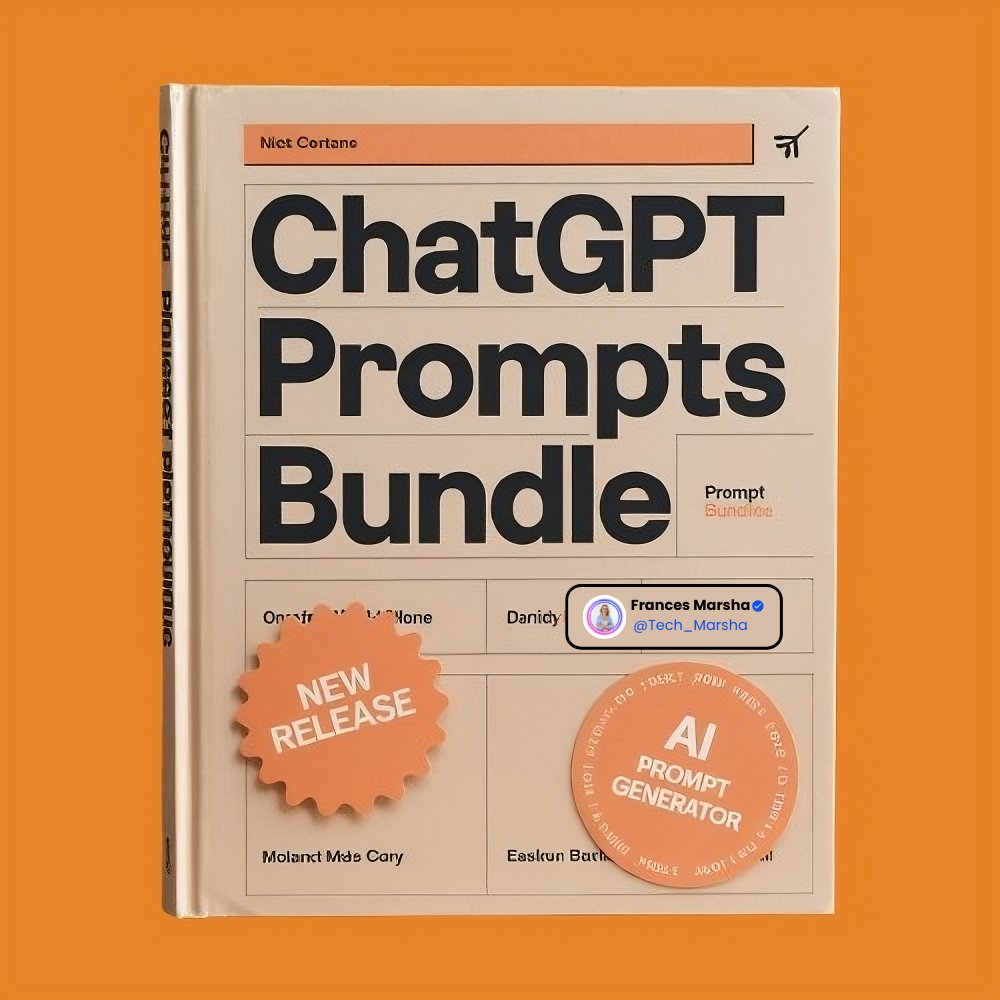
That's why I've built the Ultimate 10,000 ChatGPT Prompts Bundle.
You will get:
• 10,000+ ChatGPT Prompts
• CheatSheet
• 20+ AI Resources
It's 100% FREE!
To get it,
1. Like & RT (MUST)
2. Comment "Prompts"
3. Follow me ( So that I can dm )
How does ChatGPT-like system work?
Since OpenAI hasn't provided all the details, some parts of the diagram may be inaccurate.
1. Training. To train a ChatGPT model, there are two stages:
- Pre-training: In this stage, we train a GPT model (decoder-only transformer) on a large chunk of internet data. The objective is to train a model that can predict future words given a sentence in a way that is grammatically correct and semantically meaningful similar to the internet data. After the pre-training stage, the model can complete given sentences, but it is not capable of responding to questions.
- Fine-tuning: This stage is a 3-step process that turns the pre-trained model into a question-answering ChatGPT model:
1). Collect training data (questions and answers), and fine-tune the pre-trained model on this data. The model takes a question as input and learns to generate an answer similar to the training data.
2). Collect more data (question, several answers) and train a reward model to rank these answers from most relevant to least relevant.
3). Use reinforcement learning (PPO optimization) to fine-tune the model so the model's answers are more accurate.
2. Answer a prompt
🔹Step 1: The user enters the full question, “Explain how a classification algorithm works”.
🔹Step 2: The question is sent to a content moderation component. This component ensures that the question does not violate safety guidelines and filters inappropriate questions.
🔹Steps 3-4: If the input passes content moderation, it is sent to the chatGPT model. If the input doesn’t pass content moderation, it goes straight to template response generation.
🔹Step 5-6: Once the model generates the response, it is sent to a content moderation component again. This ensures the generated response is safe, harmless, unbiased, etc.
🔹Step 7: If the input passes content moderation, it is shown to the user. If the input doesn’t pass content moderation, it goes to template response generation and shows a template answer to the user.
--
Subscribe to our weekly newsletter to get a Free System Design PDF (158 pages): https://t.co/eVEdOFSYPY