In Germany, a talented 14-year-old earns his club money. In America, his parents pay the club $15,000 a year.
That single inversion explains why "we will not" is the most accurate line ever written about US soccer.
FIFA built a global system for this. Training compensation and solidarity payments send a cut of every transfer fee back to the clubs that developed the player, from age 12 onward. Develop one future pro and your academy gets paid for a decade. Barcelona's La Masia, Ajax, every Bundesliga academy runs on this logic. The kid is the asset.
US Soccer refuses to enforce those rules. When Seattle's Crossfire Premier claimed its $60,000 share of DeAndre Yedlin's transfer to Tottenham, it got nothing. Claims on the Dempsey and Bradley transfers died partly because the federation couldn't even produce the youth training records.
So American clubs earn zero dollars when a kid turns pro. They earn when a kid enrolls. Which makes the parent the customer, and the product is whatever keeps the parent writing checks: travel tournaments, hotel weekends, $500 showcase events, private training at $100 an hour. Elite pathways run $8,000 to $20,000 a year. A comparable academy spot in Italy costs about 120 euros.
Follow the incentive one level deeper and it gets darker. A club dependent on fees can't cut its weakest paying players, so rosters optimize for retention over development. The scouting pool shrinks to families who can afford the cliff, which appears around age 11, exactly when development matters most. The country runs a talent filter sorted by household income instead of ability.
Every four years someone proposes fixing this. The proposal always requires the people profiting from the $15,000 model to vote themselves out of business.
They will not.
My father cried.
I had never seen it. Not once in my life.
70 years old. Post-war generation. He hated America with everything he had.
60 years. Not one kind word. Not one.
Then March 2011 came.
He sat in front of the TV. Every day. Silent. Fists on his knees.
Your Marines digging black mud with their bare hands for Japanese strangers.
Your 19-year-old sailors sleeping on cold steel floors so our grandmothers could have beds.
Your carrier sailing INTO the radiation while the whole world ran out.
He watched all of it. And said nothing.
Then one night I passed his room and I froze.
Behind that door, my father, the strongest and most stubborn man I ever knew, was sobbing like a child.
I couldn't move. I just stood there in the dark hallway, listening, crying with him.
Then he said it. One sentence. It tore 60 years apart:
"I was wrong about them."
Do you understand what that took?
A lifetime of hatred. Gone.
Destroyed by soldiers carrying soup to strangers.
America, you didn't just save our towns.
You reached inside my father's chest and healed a wound he swore would never close.
He passed away believing in you.
Happy 250th. 🇺🇸🇯🇵
An old man who hated you died loving you. My father.
America turns 250 today.
Let me read back the resume.
We started by telling a king to pound sand, in writing.
By 1803 we bought half a continent from France for about four cents an acre.
We fought a war with ourselves and somehow stayed one country.
We strung a railroad across the entire thing.
We handed the world the lightbulb, the telephone, and the airplane in about thirty years flat.
Then a man named Willis Carrier invented air conditioning and made half the planet actually livable.
You are welcome, Texas. You are welcome, Dubai.
Twice the whole world caught fire, and twice we showed up and helped put it out.
We split the atom.
We put men on the moon in 1969.
Then we went back and hit golf balls up there, because why not.
We invented jazz, blues, rock and roll, and hip-hop, and the whole planet is still dancing to it.
We put a burger and fries on every corner of the earth.
We built rockets that fly themselves home and land standing straight up.
We flew a helicopter on Mars.
We launched a car into actual space and it is still out there cruising.
We also invented ranch dressing and somehow talked the entire world into putting it on pizza.
Priorities.
We even invented three of our own sports so we could win them.
Baseball, basketball, and football.
Real football, the kind with hands, because we named it and we are not taking corrections.
The rest of the planet can keep soccer, which is fine, we are hosting it in our backyard this summer anyway.
And yes, Canadian football exists, wider field, extra man, one fewer down, and we try very hard not to think about it.
Frankly it was generous of us to invent our own games.
If we put all that energy into soccer, nobody else would ever lift that trophy again.
We would win it so often they would just rename it the America’s Cup and hand us the keys.
You are welcome for the suspense.
And in 2026 we threw a birthday so big a German tourist live-tweeted our gas stations to 750,000 people.
Not every chapter was clean.
We argued, we stumbled, we fixed what we broke, and we kept building.
That is the whole trick.
Two hundred and fifty years in, and we are still the loudest, brightest, most improbable experiment on the map.
Not bad for a country that started as a strongly worded letter to a king.
Happy birthday, America.
🦋
I hadn’t read the Declaration of Independence since high school history class. Ah, yes, history class! In fact we had American history throughout the tenth grade, then world history during our junior year. When I listen to the TikTok crowd spew the nonsense they champion today, I think how easily their knuckle-headed thinking could have been cured with a few good history classes. Alas, I don’t see much hope for the future, as long as the teachers in our urban areas are in the clutches of politicians and unions with a far different agenda from real education.
Now rereading the document for the first time in decades (shame on me for taking so long), I had forgotten that the bulk of the text is a list of grievances suffered by the American colonists at the hands of the king and various elements under his tyrannical regime. What has truly stunned me these 250 years later, however, is how familiar these grievances feel in our contemporary situation. Let’s take a peek at the exact text, and see if anything feels uncomfortably close to home (the “He” refers to King George, of course, and I will use the original spelling and punctuation):
“He has refused to Assent to Laws”
Hmm, every “sanctuary state” governor today for starters…
“He has made Judges dependent of his Will alone”
Hmm, activist judges anybody?
“He has erected a multitude of New Offices, and sent hither swarms of Officers to harass our people”
Hmm, 87,000 new armed IRS agents. Ring a bell?
“For imposing Taxes on us without our Consent”
Hmm, ever looked at your tax bill?
“…transporting large Armies of foreign Mercenaries to compleat the works of death, desolation and tyranny…”
Hmm, thirty million military-age males pouring across our open borders from 2020 to 2024…
“He has excited domestic insurrections amongst us”
Hmm, BLM and Antifa riots…
SHORT VERSION: LEAVE US ALONE!
The very essence of the Declaration of Independence is a concerted celebration of God’s gift of our “unalienable” right to “Life, Liberty, and the pursuit of Happiness.” It was argued, researched, debated yet again, drafted by Jefferson, then edited by Adams, Franklin, and others. Together the bravest men stood together against the storm of tyranny and gambled it all. As I reread it today, I literally shed tears at those miraculous words:
“And for the support of this Declaration, with a firm reliance on the protection of Divine Providence, we mutually pledge to each other our Lives, our Fortune and our sacred Honor.”
And then, of course, there were those who shed more than tears. They shed their blood, watched their homes burn, and too many gave the ultimate sacrifice. Whether they formed local militias or joined the Continental Army, colonists now dedicated to the cause, gambled their very lives. One of those Americans was my ninth generation ancestor. He fought in one of the most consequential battles of the American Revolution, the Battle of Cowpens. I am forever honored that his blood runs in my veins.
I know that this will be a joyful and glorious weekend for all of you, God willing. It should also be, if I may presume to say, a solemn one as well. The sacrifices made by simple men and women those many years ago have made these precious rights and this glorious day possible. Take a moment and honor them in your heart. I know I will.
The vote that would create the United States was deadlocked, and the man who could break the tie was eighty miles away, dying of cancer, on the wrong side of a thunderstorm.
His name was Caesar Rodney. On the first of July 1776, while Congress argued itself toward independence in Philadelphia, he was stuck back in Delaware. He was tamping down Loyalist trouble, in constant pain from the cancer eating at his face and fighting for breath due to his asthma.
Then the letter came. Delaware's two delegates in Congress were split. One for independence, one against. Without a tiebreaker, the colonies would not stand united. And a divided front was exactly what the Crown was counting on.
He did not hesitate. He climbed onto his horse near midnight and rode straight into the storm. Lightning split the sky. The roads turned to sludge. A journey that normally took two days but he made it in eighteen hours. He stopped only to change horses, soaked with every mile.
He reached Independence Hall on the morning of July 2 just as the vote was called, still in his boots and spurs. Caked in mud. Thomas McKean never forgot the sight of him standing in the doorway.
Rodney walked in and cast his vote for independence. It broke Delaware's tie, and with that, not a single colony stood against the break from Britain.
On this day, 250 years ago, a dying man rode all night through a storm so America could be born.
America 250 🇺🇸
America at 250.
July 2 is one of my favorite dates because of John Adams.
July 2, 1786, the delegates are exhausted, the debates have dragged on for weeks, and the weight of history presses down like the summer humidity.
On this very day, July 2, 1776, Adams and his allies push the Continental Congress to vote for independence from Great Britain. The resolution passes. The colonies are no longer subjects; they are free, or at least determined to become so.
Adams writes to his beloved Abigail that day: “The Second Day of July 1776, will be the most memorable Epocha, in the History of America… It ought to be solemnized with Pomp and Parade, with Shews, Games, Sports, Guns, Bells, Bonfires and Illuminations from one End of this Continent to the other from this Time forward forever more.”
He was off by two days. July 4 would get the glory when the Declaration was formally adopted, but he nailed the spirit.
As we race toward America 250 in 2026, this moment feels electric. Two hundred fifty years ago, a group of imperfect but courageous people bet everything on the radical idea that governments derive their power from the consent of the governed. They chose hope over fear, unity over division, and liberty over submission.
Today is all about John Adams!
Fahrenheit is based on human experience:
0° is fucking cold. 100° is fucking hot.
Celsius is based on at sea level water:
Water freezes at 0° and boils at 100°
A. Celsius is flawed because water freezes and boils at different temperatures depending on altitude.
B. When I ask what the temperature is, I’m asking for myself. I don’t give a fuck how water feels about the weather.
A guy used a Kindle for 4 years before he realized he was using it wrong.
He read 60+ books on it. Highlighted hundreds of passages. Never adjusted a single setting beyond font size.
His sister-in-law a librarian who's read 800+ books on her Kindle sat next to him on a flight and watched him read for 20 minutes.
She finally said: "Can I show you something? You're missing the 9 features that make this thing actually useful. Amazon hides them 4 menus deep. Every Kindle owner I know reads way slower because of it."
She changed 9 settings in 6 minutes.
He finished his next book in half the usual time. Remembered twice as much. Looked up zero words on his phone.
Here's everything she showed him
🧵
“We are NOT a Christian nation!”
“Separation of church and state!”
“Benjamin Franklin was a deist!”
On this date, June 28, 1787, Benjamin Franklin delivered his famous “Prayer Speech” at the Constitutional Convention.
This is the one where Franklin, amid deadlocks and frustrations in the Convention, implored the delegates to begin sessions with prayer, acknowledging human limitations and seeking divine assistance. Here is the full transcript (from James Madison’s notes and standard historical sources, with minor spelling normalizations for readability):
Mr. President:
The small progress we have made after four or five weeks close attendance & continual reasonings with each other—our different sentiments on almost every question, several of the last producing as many noes as ays, is methinks a melancholy proof of the imperfection of the Human Understanding. We indeed seem to feel our own want of political wisdom, since we have been running about in search of it. We have gone back to ancient history for models of government, and examined the different forms of those Republics which having been formed with the seeds of their own dissolution now no longer exist. And we have viewed modern states all round Europe, but find none of their Constitutions suitable to our circumstances.
In this situation of this Assembly, groping as it were in the dark to find political truth, and scarce able to distinguish it when presented to us, how has it happened, Sir, that we have not hitherto once thought of humbly applying to the Father of lights to illuminate our understandings? In the beginning of the Contest with G. Britain, when we were sensible of danger we had daily prayer in this room for the divine protection.—Our prayers, Sir, were heard, & they were graciously answered. All of us who were engaged in the struggle must have observed frequent instances of a superintending providence in our favor. To that kind providence we owe this happy opportunity of consulting in peace on the means of establishing our future national felicity. And have we now forgotten that powerful friend? or do we imagine that we no longer need his assistance?
I have lived, Sir, a long time, and the longer I live, the more convincing proofs I see of this truth—that God governs in the affairs of men. And if a sparrow cannot fall to the ground without his notice, is it probable that an empire can rise without his aid? We have been assured, Sir, in the sacred writings, that “except the Lord build the House they labour in vain that build it.” I firmly believe this; and I also believe that without his concurring aid we shall succeed in this political building no better than the Builders of Babel: We shall be divided by our little partial local interests; our projects will be confounded, and we ourselves shall become a reproach and byword down to future ages. And what is worse, mankind may hereafter from this unfortunate instance, despair of establishing Governments by Human wisdom and leave it to chance, war and conquest.
I therefore beg leave to move—that henceforth prayers imploring the assistance of Heaven, and its blessings on our deliberations, be held in this Assembly every morning before we proceed to business, and that one or more of the Clergy of this City be requested to officiate in that service.
A major heatwave will begin next week across the central and eastern U.S.
High temperatures in the 90s and 100s are likely as far north as Southeastern Pennsylvania. So, summer basically lol.
Undoubtedly, there’ll be plenty climate hysteria to go around.
But neither the number of hot days nor heatwaves have increased in the U.S. since 1895.
The chart on the left shows the average annual number of days reaching 95°F (35°C), 100°F (37.8°C) and 105°F (40.6°C) per station at 657 United States NOAA GHCNd stations (area weighted) with at least 100 years of daily data and 90% daily completeness from 1895 to 2025.
The long-term trend is down. ⬇️
𝐓𝐨𝐩 𝟏𝟎 𝐲𝐞𝐚𝐫𝐬 𝐰/ 𝐦𝐨𝐬𝐭 𝐝𝐚𝐲𝐬 𝐓𝐦𝐚𝐱 ≥𝟗𝟓°𝐅:
1️⃣ 1936
2️⃣ 1934
3️⃣ 1954
4️⃣ 1931
5️⃣ 1933
6️⃣ 1913
7️⃣ 1925
8️⃣ 1980 (most recent)
9️⃣ 1930
🔟 1911
Interestingly, only one of top 15 has been in the last 70 years, and only two in the 21st century made the top 20 (2011 and 2012, which rank 17th and 19th place, respectively).
𝐓𝐨𝐩 𝟏𝟎 𝐲𝐞𝐚𝐫𝐬 𝐰/ 𝐦𝐨𝐬𝐭 𝐝𝐚𝐲𝐬 𝐓𝐦𝐚𝐱 ≥𝟏𝟎𝟎°𝐅:
1️⃣ 1936
2️⃣ 1934
3️⃣ 1954
4️⃣ 1930
5️⃣ 1901
6️⃣ 1913
7️⃣ 1980 (most recent)
8️⃣ 1931
9️⃣ 1925
🔟 1918
𝐓𝐨𝐩 𝟏𝟎 𝐲𝐞𝐚𝐫𝐬 𝐰/ 𝐦𝐨𝐬𝐭 𝐝𝐚𝐲𝐬 𝐓𝐦𝐚𝐱 ≥𝟏𝟎𝟓°𝐅:
1️⃣ 1936
2️⃣ 1934
3️⃣ 1954
4️⃣ 1930
5️⃣ 1901
6️⃣ 1980
7️⃣ 1913
8️⃣ 2023 (most recent)
9️⃣ 1918
🔟 1933
The heatwave in Texas and Oklahoma in 2023 bumped it up to 8th place.
But a more robust metric to assess time-dependent changes in extreme heat events would be to look at the area-weighted average number of heatwaves per station per year.
The chart on the right shows that.
Heatwaves are defined here as a ≥3 consecutive day period where the daily maximum temperature is ≥90th percentile (against 1991-2020 averages) for that date for that station and for the months May-September.
Once again, the trend is down. ⬇️
𝐓𝐨𝐩 𝟏𝟎 𝐲𝐞𝐚𝐫𝐬 𝐰/ 𝐦𝐨𝐬𝐭 𝐡𝐞𝐚𝐭𝐰𝐚𝐯𝐞𝐬:
1️⃣ 1936: 5.77
2️⃣ 1934: 5.39
3️⃣ 1933: 5.15
4️⃣ 1931: 4.90
5️⃣ 1911: 4.85
6️⃣ 1954: 4.71
7️⃣ 1925: 4.59
8️⃣ 1930: 4.41
9️⃣ 1913: 4.35
🔟 1952 / 1939: 4.34
None of the top 20 have been in the 21st century. The most recent summer with the greatest number of heatwaves per U.S. station occurred in 1988. All other 19 occurred 70+ years ago. It is also worth mentioning that whether or not you consider the 1930s to be an outlier, 2012 is the most recent entry at #30.
Most of the warming that we measure is in overnight low temperatures, not daytime highs, and a significant amount of that could be due to urbanization.
So, if it reaches 100°F at your house next week, it’s just summer.
Carry on! 🏖️ 🌴
MASSIVE SCANDAL UNFOLDING IN DENVER
You will want to read to the end. Absolutely shocking corruption and coverup.
Denver City Council blocked Denver International Airport from leasing space to Key Lime Air, because the airline worked with ICE.
There was just one problem…
It violates FAA rules.
So what did they do?
City attorney Miko Brown allegedly urged the airport to fabricate an investigation into the airline’s safety record to cover up for illegally discriminating against the airline for political reasons.
When word got out, Brown and Mayor Mike Johnston flat out denied it.
However CBS just obtained an internal airport memo appearing to reveal the entire thing was true.
City officials conspired to discriminate against a private company for political reasons then lied about it to cover it up‼️
The @TheJusticeDept should investigate. @AAGDhillon
What I've learned from World Cup travelers this week.
- Apparently the US is the only country with A/C
- Other countries don't use seasoning on their food
- You can only buy a gallon of milk in the USA
- You have to pay for a 2nd or 3rd pop at a restaurant outside of America. No free refills
- They love to party just like us and boy are they fun!
- Only we do flyovers before games
- America's spring is hotter than Europe's summer
-We have a lot to learn when it comes to soccer chants
- Ranch Dressing is a delicacy to be treasured
- Their media lies to them just like ours does to us
Can we keep em?
In 1967 India ran one of the most inconvenient heart studies of the century, almost by accident, and the field has been quietly looking away from it ever since.
Dr S.L. Malhotra had a researcher's dream sitting in front of him: the Indian railway workforce, well over a million people. Same employer. Same medical cover. Comparable pay and hours. Scattered the length of a subcontinent. Strip all of that out and one great variable remained. Diet, which in India meant geography.
In the north, in Punjab and Rajasthan and UP, the railwaymen ate the way their grandparents had. Ghee. Milk fat. Curd. As much as nineteen times more fat than their southern colleagues, and nearly all of it the saturated animal fat that Ancel Keys was at that very moment teaching the West to dread.
In the south the plate was rice, sambar, and seed oils, groundnut and sesame, with far less fat overall. By the brand-new rules being drafted in America, the southerners were the ones doing everything right.
Then Malhotra counted the bodies.
Heart disease deaths in the south: 135 per hundred thousand. In the ghee-soaked north: 20. Seven times the disease in the men eating the wholesome seed oils. Among the railway sweepers, the leanest and hardest-working of the lot, the gap yawned open to fifteenfold.
He chased down every other explanation within reach. Smoking ran the wrong way, the north smoked more. Activity gave no clean signal. Wealth made things worse if anything, executives dropping dead while the sweepers carried on. The one thing that tracked the dying was the fat in the pan.
It was published. Peer-reviewed. British Heart Journal, 1967.
It landed in the exact decade the West was pouring concrete around the opposite belief. Heart associations were prescribing vegetable oils. Factories were tooling up to turn them out by the tanker. A study showing the seed-oil eaters dying seven times faster was not a study anyone with a budget wished to repeat.
So nobody did. Almost sixty years on, the finding still stands, unrefuted and unloved.
It has never once troubled a dietary guideline.
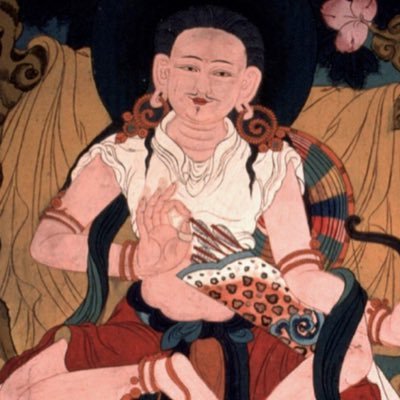
Tom Bombadil is the most mysterious character in The Lord of the Rings.
He's the oldest being in Middle-earth and completely immune to the Ring's power — but why?
Bombadil is the key to the underlying ethics of the entire story, and to resisting evil yourself...
Tom Bombadil is an enigmatic, merry hermit of the countryside, known as "oldest and fatherless" by the Elves. He is truly ancient, and claims he was "here before the river and the trees." He's so confounding that Peter Jackson left him out of the films entirely.
This is understandable, since he's unimportant to the development of the plot. Tolkien, however, saw fit to include him anyway, because Tom reveals a lot about the underlying ethics of Middle-earth, and how to shield yourself from evil.
The hobbits meet Bombadil early on in their quest, before they reach Bree and the Prancing Pony Inn. He rescues Merry and Pippin from Old Man Willow, and invites the hobbits to stay at his house in the Old Forest.
There, the hobbits realize something strange about him: the Ring has no power over Bombadil whatsoever.
When he wears it, he remains visible. He treats it as a plaything, making it disappear with a magic trick. Indeed, at the Council of Elrond, Gandalf rejects the idea of giving the Ring to Tom, for he would likely misplace it or forget about it entirely.
So just who is he, exactly?
When Frodo asks this very question to Tom's wife Goldberry, she simply responds "He is." It's a cryptic answer that echoes God's famous answer to Moses in the Book of Exodus: "I am who I am."
Thus, many theorize that Bombadil is God, some kind of angelic being, or even the spirit of the Music of the Ainur (due to the fact that he is constantly singing). But Tolkien's letters reveal something considerably more interesting…
In April 1954, Tolkien wrote:
"The story is cast in terms of a good side, and a bad side, beauty against ruthless ugliness, tyranny against kingship… but both sides in some degree, conservative or destructive, want a measure of control.But if you have, as it were, taken a 'vow of poverty', renounced control, and take your delight in things for themselves without reference to yourself… then the questions of the rights and wrongs of power and control might become utterly meaningless to you, and the means of power quite valueless…"
So, Bombadil is a representation of what it means to take pure delight in the world around you — to experience people and things simply as they are, without any thought for what they could be or how you could use them. And this is why the Ring has no power over him.
To Bombadil, the One Ring is simply a ring, and the possibilities of what can be achieved through its power are of no importance. He is able to resist its evil precisely because he is entirely content with the world around him.
At the end of the story, having accomplished what he set out to do in Middle-earth, Gandalf pays Tom a visit before returning to the Undying Lands:
"I am going to have a long talk with Bombadil: such a talk as I have not had in all my time."
If Bombadil is the epitome of simply enjoying life and being, Gandalf is the epitome of doing. He guides the hobbits, fights the Balrog, and runs up and down Middle-earth to help destroy the One Ring.
But now that he's finally liberated from doing, he immediately heads to Bombadil's. He does so with a sense of relief, as if he's at last able to access a purer and higher mode of being — a sort of innocence that cannot be fully experienced by those consumed by doing.
Of course, by this Tolkien doesn't disparage the value of action. The entirety of LOTR displays the importance of rising up against evil, even in the face of all odds. But with the inclusion of Bombadil, he does remind readers that fighting isn't all there is.
Bombadil reminds us that while it's important to strive and *do*, it is just as important to occasionally step back and *be*. Indeed, your ability to do so plays a crucial role in helping you resist the allure of evil…
Read the full piece here:
https://t.co/aqK2daehIL
The unsung hero of The Lord of the Rings...