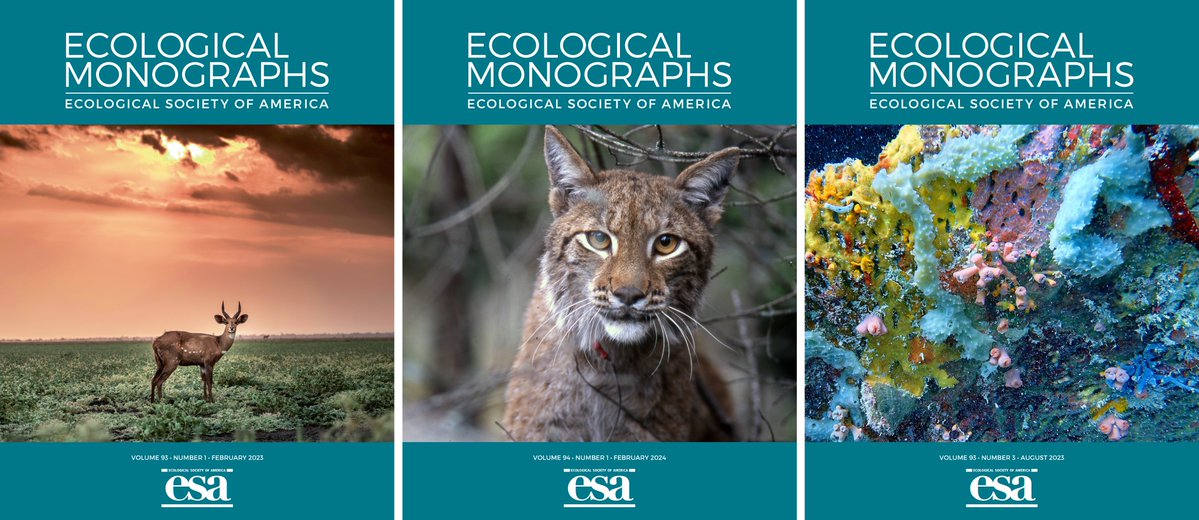
The Ecological Monographs editorial board is growing! We're now accepting applications from ecologists interested in serving as subject-matter editors🙋
Visit our website for more information:
https://t.co/Aj1E8wfngA
And fill out this form to apply: https://t.co/TB4hOE4qj4
May cover reveal! Meet the wasp spider—bold stripes and a big climate story. New research shows its rapid northward spread is fueled by genetic change + plasticity, helping offspring thrive in colder temps
Browse the May issue: https://t.co/78cV0MBBxG
The Ecological Monographs editorial board is growing! We're now accepting applications from ecologists interested in serving as subject-matter editors🙋
Visit our website for more information:
https://t.co/Aj1E8wfngA
And fill out this form to apply: https://t.co/TB4hOE4qj4
We’re missing a global indicator to track insects. By analyzing thousands of butterfly populations, we highlight both promising signals and key challenges—showing why these taxa are strong candidates for building a Global Index to support conservation. https://t.co/fbXCIiOUff
Our February cover gets right to the root! This larch root and its fuzzy fungal partner were photographed as part of a study showing how roots & fungal allies shift their foraging strategies as forests age
Find the whole issue: https://t.co/LeVC05ugiw
🐜Funded PhD position in Community Ecology and Biogeography, Concordia University, Montreal, Canada
🔬Research topics
Ecological and evolutionary determinants of range limits
Assembly of ecological networks
Role of soil arthropods in carbon storage
https://t.co/yDcJS8FAD6
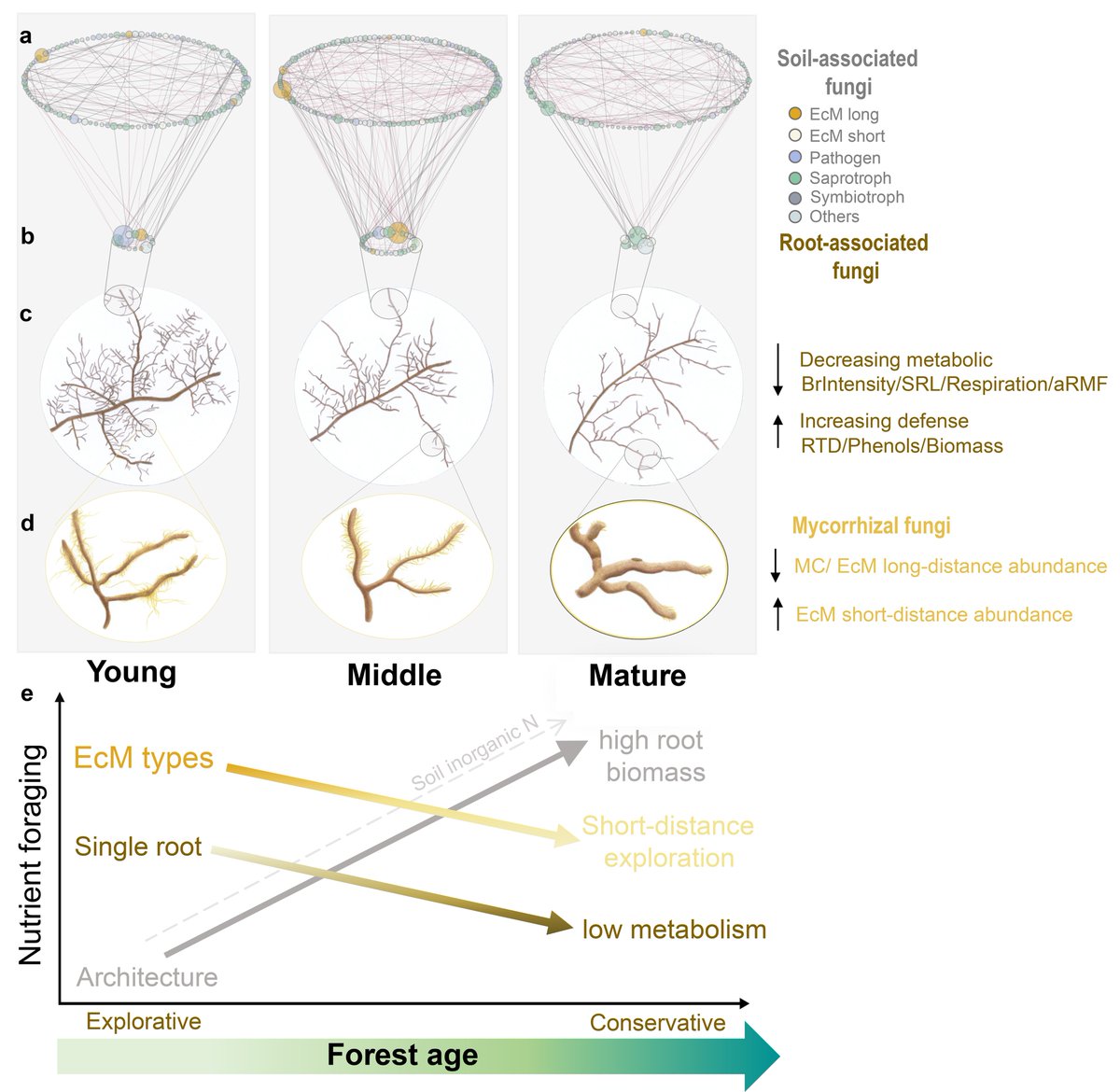
🆕 & #OpenAccess in the journal: Roots and fungi team up differently as forests age, resulting in movement along a nutrient acquisition continuum over time
📄Root-mycorrhizal foraging strategies shift with forest age more than with nitrogen manipulation
https://t.co/vCxEIVN9AX
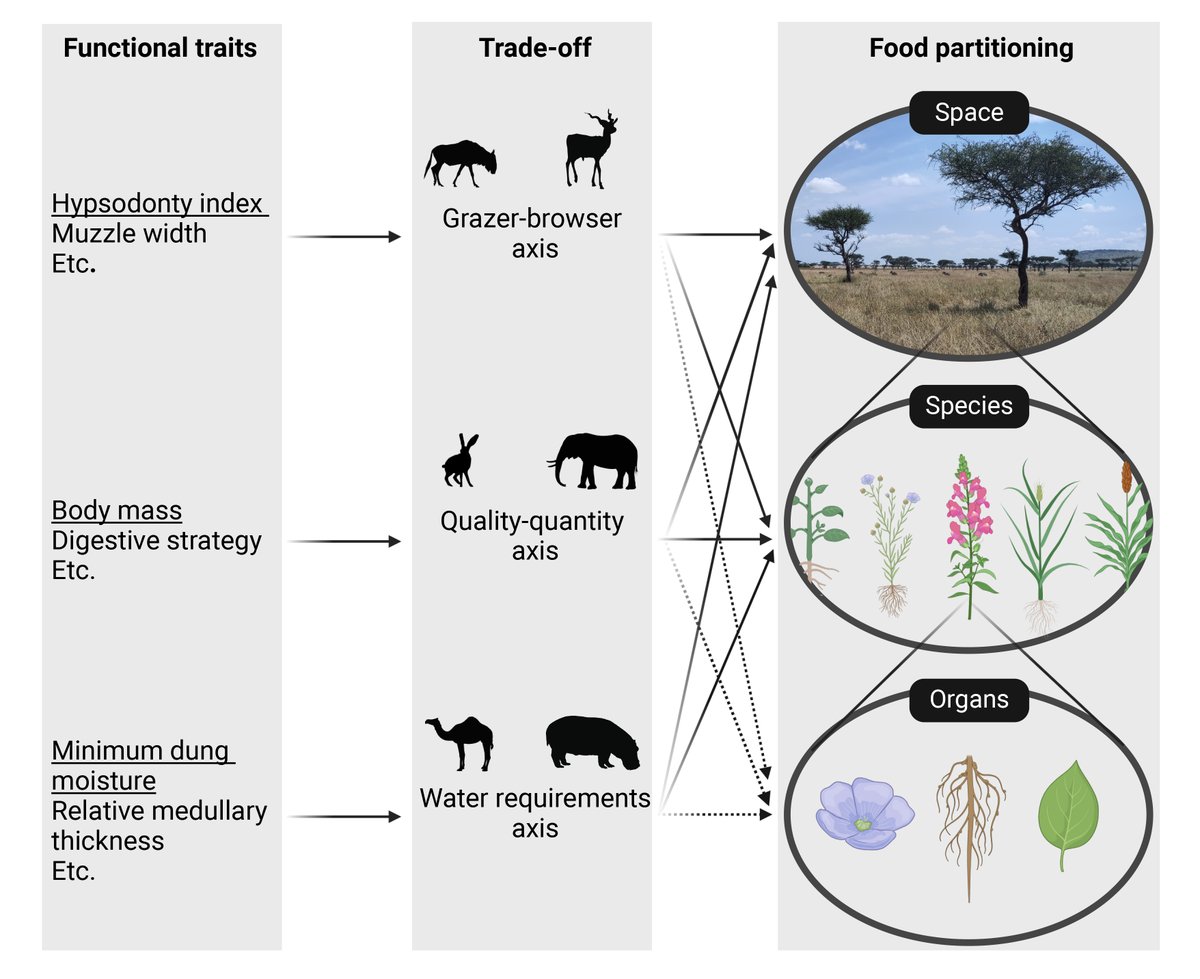
🆕 & #OpenAccess in the journal: Coexistence in the Serengeti isn’t simple: body size, dental traits, and water needs together shape how herbivores divide space and food
📄Multidimensional resource partitioning by Serengeti herbivores
https://t.co/p3gv7O6cwL
Our research group has an open PhD position! Please share widely!
Possible topics include:
Determinants of range limits
Assembly of ecological networks (eg,
plant-pollinator)
The role of soil arthropods (eg, ants) in carbon storage
Details:
https://t.co/X7CAM31qb6
🆕 & #OpenAccess in the journal: Roots and fungi team up differently as forests age, resulting in movement along a nutrient acquisition continuum over time
📄Root-mycorrhizal foraging strategies shift with forest age more than with nitrogen manipulation
https://t.co/vCxEIVN9AX
🆕 in the journal: Static models miss the mark—adding nonlinear, density-based facilitation helps predict coexistence, persistence, and realistic community dynamics
📄Neighbor density-dependent facilitation promotes coexistence and internal oscillation
https://t.co/LCiLdGF6xl
What to with you analysis of ecological data when you are missing some data points?
Check out this @ESAMonographs paper summarizing approaches and providing guidelines!
https://t.co/4ybYNSHSyn
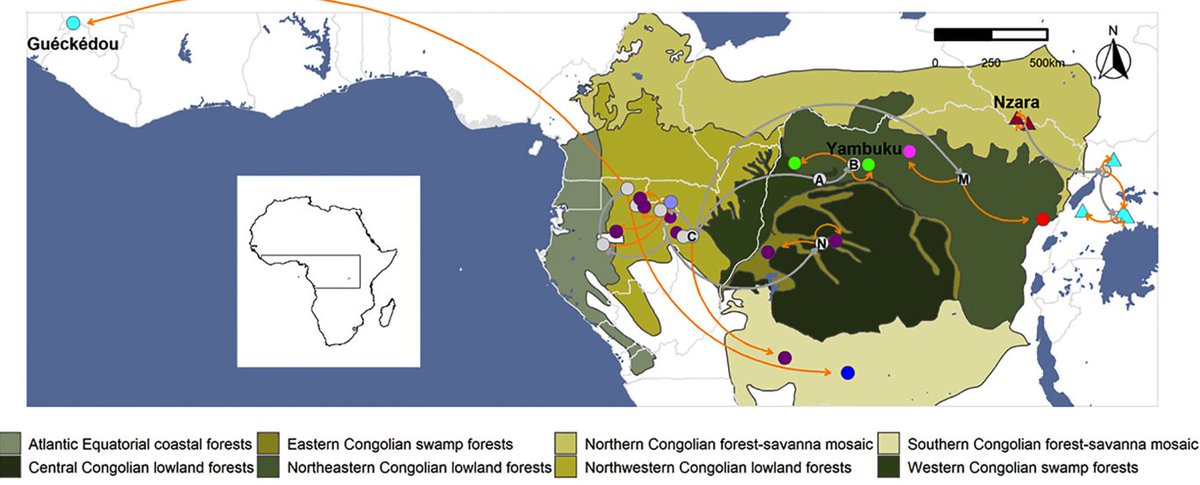
🆕 & #OpenAccess in the journal: thousands of root & soil samples show Arctic plants & fungi aren't picky—they partner with whoever's there
📄Opportunistic partner choice among arctic plants and root-associated fungi is driven by environmental conditions
https://t.co/timsemqnBu
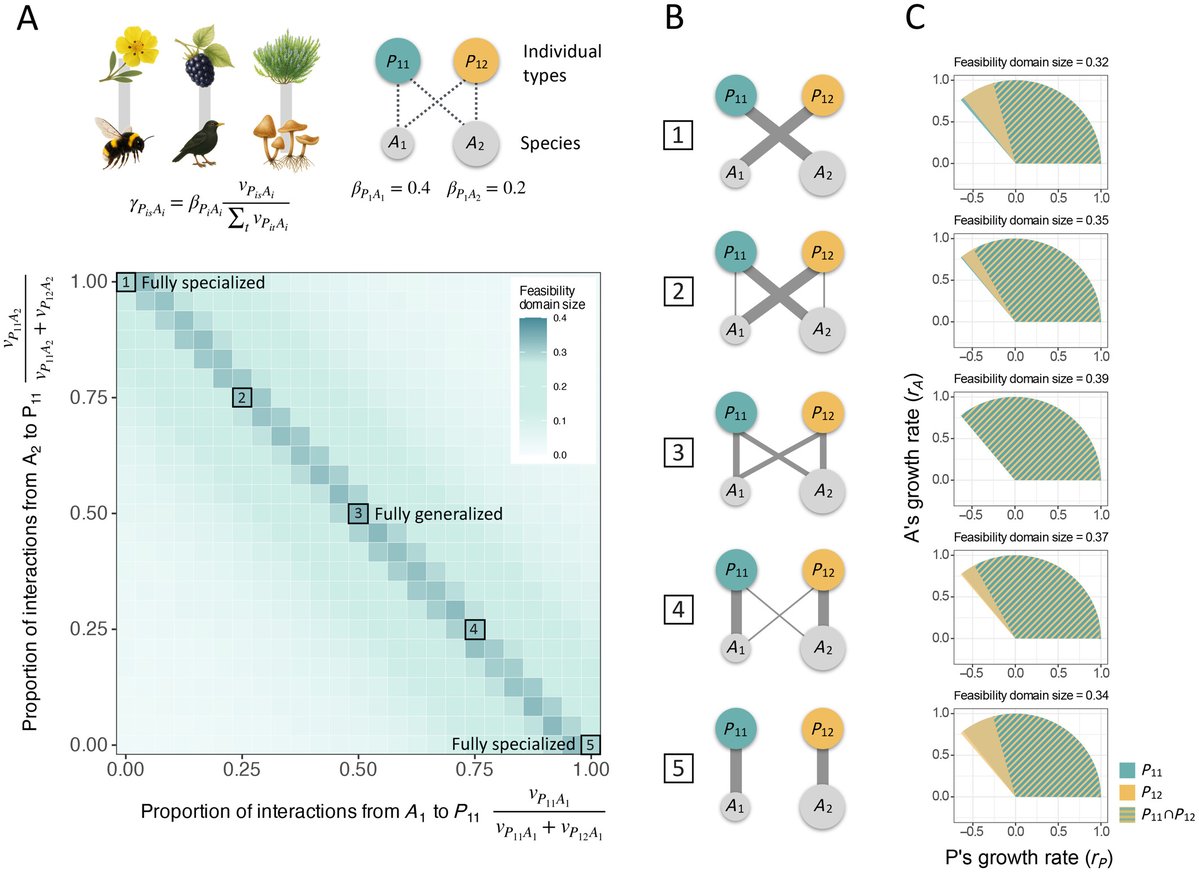
New paper alert @ESAMonographs !!!
Bridging the gap between individual specialization and species persistence in mutualistic communities
https://t.co/ScgpPeIC6X
We mourn the passing of our Editor-in-Chief Steve Long.
His vision to establish one of the first journals dedicated to Global Change over 30 years ago was truly ahead of its time. Through GCB, researchers have demonstrated that biology & ecosystems are not simply victims of..
Nutrients from sewage waste, agricultural runoff, rock weathering and other terrestrial sources make their way to the ocean not only in rivers, but also via groundwater!
@ESAMonographs
https://t.co/tgU0cXlkeX
Check out recent research from our journals with our new media tip sheet! Including:
🪸How nutrients from land shape life in the sea
🪻Biocontrol of a widespread wetland weed
🦌Whether wildlife take a hike when humans are around
...and more!
Read it here: https://t.co/SFB2CUlgS0
A 12-year effort by entomologists in Iowa solves some mysteries about an elusive planthopper, Fitchiella robertsonii, including its key host plants and environments, marking a leap forward for prospective conservation of the species. https://t.co/W4r5XMscfb