Dnes v @czechcrunch text o Scoutu - interním nástroji, který si stavím pro @point_fm na screening a valuaci firem. Díky @LKrec
~150 hodin práce, žádný engineer team, jen Claude Code.
K bližšímu popisu nástroje mě inspiroval @dusenn s jeho “AI chief of staff”, který byl na CC před pár týdny.
Pro mě je to (další) dílčí důkaz teze, kterou opakuju: středně velké PE fondy v příští dekádě zmizí. Zůstanou mega-fondy s obrovskou scale a malé AI-native fondy se schopností pokrýt trh i bez 10 analytiků.
https://t.co/h6c9xndUfr
Had drinks with 30 CTOs last night at an off-the-record gathering in Palo Alto
Every single one showed me the same internal PowerPoint slide
"2026 AI Headcount Targets: Path to 70% Cost Reduction"
The numbers will make you physically sick
Fintech CTO planning to cut 280-person engineering org down to 43 "AI orchestrators" by September. Same product roadmap. Same delivery expectations.
Healthcare CTO already eliminated his entire manual QA department. 67 people. Replaced with 3 senior engineers running autonomous testing agents that ship code directly to production.
SaaS CTO walked me through his "human depreciation timeline": 340 engineers today, 89 planned for 2027. Customer support going from 120 humans to 12 "escalation specialists" managing AI conversations.
The most chilling part: they're all using the exact same consulting deck from McKinsey called "The 30% Organization"
One CTO literally said "hiring humans for code is like hiring horses for transportation"
Another showed me Slack screenshots where his L7s are asking if they should train their replacements
The consensus was unanimous: if you can't manage 10 AI agents by Christmas, you're not making it to New Year's
Every single one of them is planning to announce these cuts as "AI transformation success stories"
While their stock options vest at record highs built on the backs of workers they're about to execute
The future of engineering is 3 humans with 50 AI agents in a WeWork somewhere while 500 families lose their homes
Researchers trained a humanoid robot to play tennis using only 5 hours of motion capture data
The robot can now sustain multi-shot rallies with human players, hitting balls traveling >15 m/s with a ~90% success rate
AlphaGo for every sport is coming
There's a fruit fly walking around right now that was never born.
@eonsys just released a video where they took a real fly's connectome — the wiring diagram of its brain — and simulated it. Dropped it into a virtual body. It started walking. Grooming. Feeding. Doing what flies do.
Nobody taught it to walk. No training data, no gradient descent toward fly-like behavior. This is the opposite of how AI works. They rebuilt the mind from the inside, neuron by neuron, and behavior just... emerged. It's the first time a biological organism has been recreated not by modeling what it does, but by modeling what it is.
A human brain is 6 OOM more neurons. That's a scaling problem, something we've gotten very good at solving. So what happens when we have a working copy of the human mind?
An Ostrich Approaches War Risk
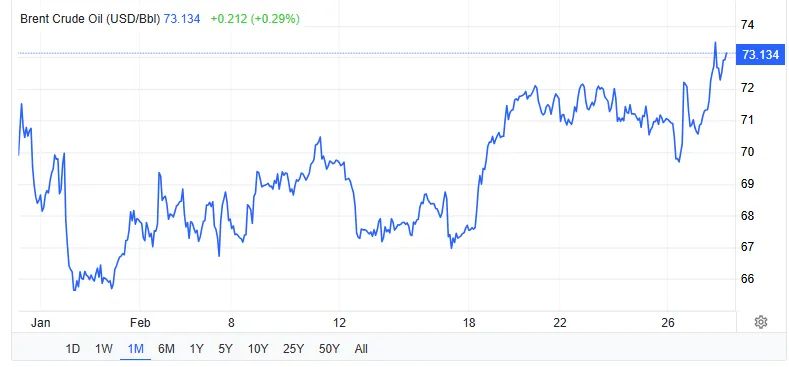
The overwhelming consensus is that any conflict will be short-lived, with nearly all investors underweight assets that benefit from an extended war environment and modest market moves so far.
https://t.co/CwVFxrODeK
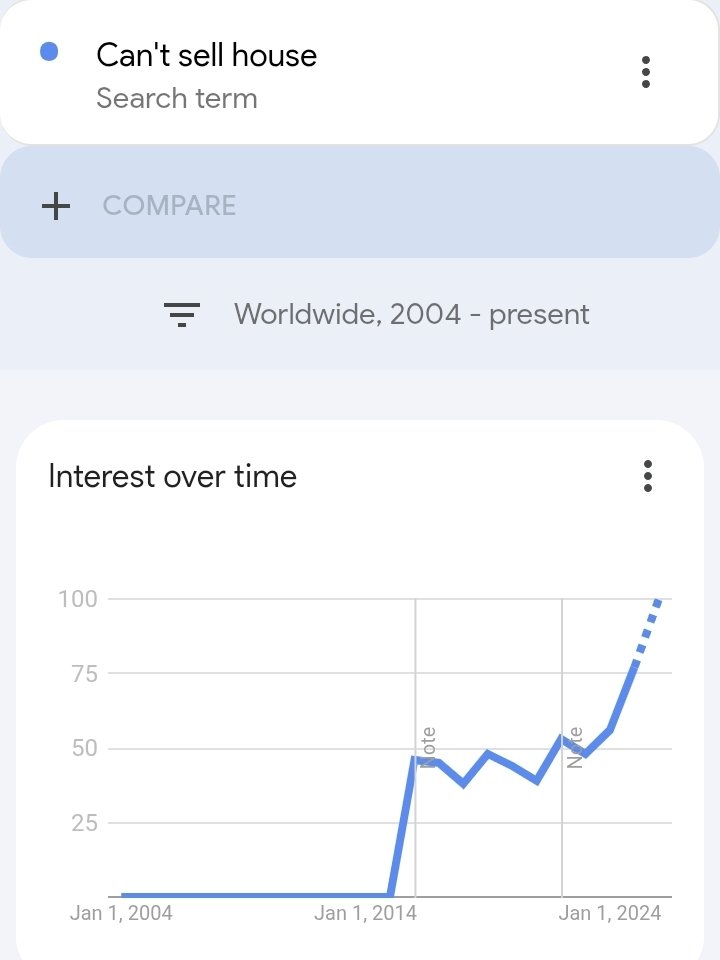
It's happening. Expect housing prices to crash up to 60-80%, just like in Japan during the 1990s.
Not only are available houses unaffordable, there are too few people to inherit the boomers' houses.
The selling pressure is going to be cataclysmic.
The math on this project should mass-humble every AI lab on the planet.
1 cubic millimeter. One-millionth of a human brain. Harvard and Google spent 10 years mapping it. The imaging alone took 326 days. They sliced the tissue into 5,000 wafers each 30 nanometers thick, ran them through a $6 million electron microscope, then needed Google’s ML models to stitch the 3D reconstruction because no human team could process the output.
The result: 57,000 cells, 150 million synapses, 230 millimeters of blood vessels, compressed into 1.4 petabytes of raw data. For context, 1.4 petabytes is roughly 1.4 million gigabytes. From a speck smaller than a grain of rice.
Now scale that. The full human brain is one million times larger. Mapping the whole thing at this resolution would produce approximately 1.4 zettabytes of data. That’s roughly equal to all the data generated on Earth in a single year. The storage alone would cost an estimated $50 billion and require a 140-acre data center, which would make it the largest on the planet.
And they found things textbooks don’t contain. One neuron had over 5,000 connection points. Some axons had coiled themselves into tight whorls for completely unknown reasons. Pairs of cell clusters grew in mirror images of each other. Jeff Lichtman, the Harvard lead, said there’s “a chasm between what we already know and what we need to know.”
This is why the next step isn’t a human brain. It’s a mouse hippocampus, 10 cubic millimeters, over the next five years. Because even a mouse brain is 1,000x larger than what they just mapped, and the full mouse connectome is the proof of concept before anyone attempts the human one.
We’re building AI systems that loosely mimic neural networks while still unable to fully read the wiring diagram of a single cubic millimeter of the thing we’re trying to imitate. The original is 1.4 petabytes per millionth of its volume. Every AI model on Earth fits in a fraction of that.
The brain runs on 20 watts and fits in your skull. The data center required to merely describe one-millionth of it would span 140 acres.