Telling someone to just ‘be tougher’ or be ‘more resilient’ is like the coach standing on the side of the track telling the athlete to ‘run faster’ — 👏🏼 @building_elite@ALTIS#ThorneCONNECT
Knowledge is only useful to the extent that it supports behavior.
The ability to recite a lot of trivia about swim technique and Froude numbers won't get you safely back to shore.
When the test comes, you've either done the work or you haven't.
We often talk about the role of the mind and emotions in physical performance during SOF selection, but that doesn't mean that you can willpower your way through selection with an unprepared body. Remember: the most important factor is the one that's most limiting.
We are always adapting.
If you're carrying a heavy ruck while keeping your heart rate low and practicing good breathing patterns, you're adapting to that.
If you're sitting still, spending your day in comfort and learning nothing, you're adapting to that.
Your success in SOF selection isn't just about your individual performance. It's about how well you work within a team.
Two important factors in peer evaluations are competence and emotional regulation under stress.
Some people are accustomed to procrastinating on a task and then rallying at the last minute to hit the deadline.
In the SOF environment, this won't be the case. You will be in a setting of near chaos, with constantly shifting objectives, constraints, and timelines.
An important piece of training for SOF selection is identifying all of the things that can and will be taken away in your course, and ensuring that you are not dependent on them.
SOF selection courses are designed so that you're never working under optimal conditions. Selection is essentially a long string of days and weeks in which you have to perform while feeling like you've been hit by a car.
It's incredibly difficult to metabolically break the body of a healthy person. Yes, you can kipping pullup your way to a torn shoulder in a heartbeat, but if you're moving in a way that doesn't endanger you mechanically, your body can keep going through almost anything.
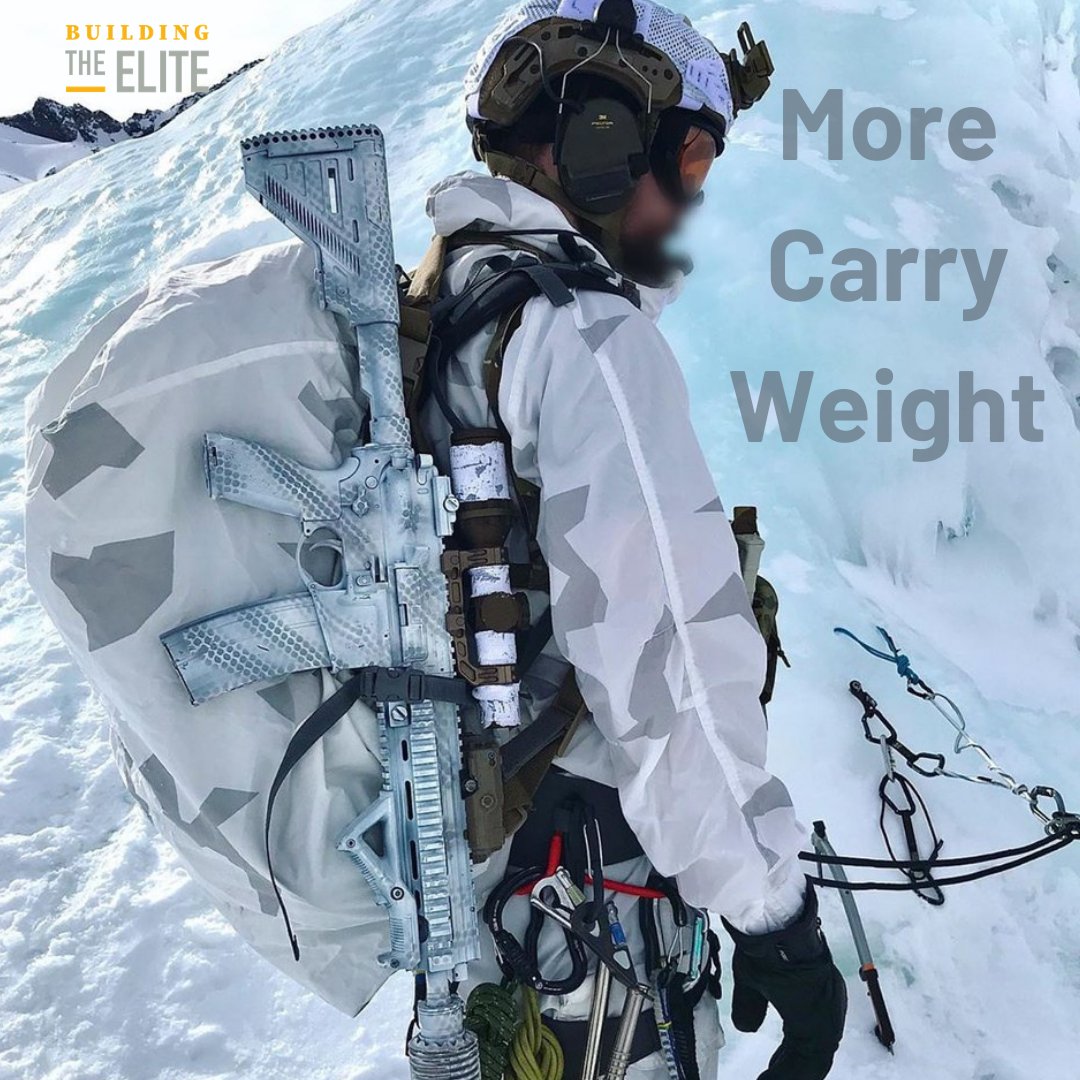
“That’s... a lot of weight.”
The Sherpa took a sip of water and looked out across the valley.
“More carry weight is more money for family.”
https://t.co/dQExv8ysVH
You cannot say that an isolated heart rate variability reading is "good" or "bad" without a long-term trend and context. It's sort of like asking if it's better to be asleep or wide awake. You need to know when and in what situation.
Your thoughts and emotions are influenced by your nervous system and environment. You also have the ability to direct your mindset and beliefs — and, in turn, your emotions. Thoughts make feelings. Feelings affect physiology. Thoughts can be controlled, chosen, and changed.
A rocket launched into space uses a third of its fuel within the first 60 seconds or so of flight. People are similar when it comes to establishing new training routines. Being consistent and building a new baseline of "normal" will initially require a lot of energy.
Break each day up into segments and stack small victories. Years of progress are made up of minutes of small decisions.
Remember: Our choices don't just reveal our preferences. They also shape them over time.
Your chronotype varies along a continuum of eveningness and morningness, more commonly known as night owls and early birds. Night owls do best when they sleep in and go to bed later in the day. Early birds function better with earlier bedtimes and waking times.
The recuperative benefits of sleep are determined by three variables:
Duration (total sleep time)
Quality
Phase (circadian timing)
A decrease in any of them can impair performance and recovery.
The balance between effort and recovery or disturbance and repair happens on multiple scales. They’re interdependent. Training triggers recovery processes. The effectiveness of your recovery drives the adaptations that allow you to train harder in the future.
Overtraining during SOF prep can often be thought of as under-recovering. It's not that you've hit the absolute limits of what a human body can sustain, it's that you're not eating, sleeping and engaging in restorative lifestyle practices to support strong recovery.