@Vet_X0@XRPoutsider Thank you so much for allocating your busy time to respond to my query and providing the reference guide!!
Now I see why estimating hard :D, I don’t think i can ever make it to the UNL list. Thanks to you and all validators and developers making things happen on #xrpl!
@Vet_X0@XRPoutsider@Vet_X0 just wondering do you happen to have may be an average monthly cost estimation for running the xrpl infra. I’m thinking of running a minimal infra in AWS… i want to implement some sort auto scaling and server-less architecture
✈️ Travel with effortlessly with @airx_aero
Offering a range of bespoke services, catering to your needs.
You can pay with XRP(@Ripple) via Bitpay for fast and secure transactions.
Book now:
https://t.co/3JIGQKXKM9
#BitPay#XRP#AirX#Ripple
Today was an even better day.
Ripple: 3
SEC: 0
In all seriousness, Chris and I (in a case involving no claims of fraud or misrepresentations) were targeted by the SEC in a ruthless attempt to personally ruin us and the company so many have worked hard to build for over a decade.
The SEC repeatedly kept its eye off the ball while secretly meeting with the likes of SBF – failing again and again to protect US consumers & businesses. How many millions of taxpayer $ were wasted?!
Feels good to finally be vindicated.
Based on my last explainer and further conversations, https://t.co/l1eF32EX7I is now signalling support for XLS-39d, also known as “Clawback”. While casting the vote, we also voted yay for fixReducedOffersV1 and fixNFTokenRemint.
Our stance regarding AMM remains the same, with a hard nay for now.
We are monitoring the votes and will act accordingly to prevent amendment blocking.
https://t.co/UmG0vknvXv
What is clawback on the XRP Ledger?
NOTE: The video version is attached. All relevant links are in the second tweet along with links to all other platform.
In the evolving world of digital assets and cryptocurrencies, the management and control of tokens have become paramount. One such feature that has emerged to address specific needs is the "Clawback" function. As we looked into the XRP Ledgers freeze function already, and clawback has been addressed vaguely so far, let’s have a look at it.
At its core, the Clawback feature allows issuers to retract or "take back" previously distributed tokens. However, it's essential to note that this function is not activated by default. To utilise the Clawback feature, issuers must initiate a unique transaction called "AccountSet." This action enables the "Allow Trust Line Clawback" setting, granting the issuer the power to claw back tokens.
The process of enabling Clawback comes with specific prerequisites. Issuers who have already distributed tokens or activated certain account features, such as trust lines, offers, escrows, payment channels, checks, or signer lists, are ineligible to activate Clawback. This stipulation underscores the importance of strategic planning; issuers must decide on using the Clawback feature before any other significant account activity. Furthermore, once the Clawback function is activated, it becomes a permanent feature of the account, eliminating the possibility of reversal.
Other than with freeze, which makes tokens unspendable, clawback deducts the token balance in the target account. This is a fundamental difference.
The introduction of the Clawback feature addresses regulatory and compliance needs in the digital asset space. There are instances where, for legal reasons, issuers must retract tokens. For example, if tokens inadvertently land in the hands of entities involved in illicit activities, the Clawback function empowers issuers to recover those assets, ensuring compliance with legal standards. However, a critical distinction exists: this feature is exclusively for specific tokens and does not apply to XRP.
Clawback brings both advantages and disadvantages to the table. On the positive side, it facilitates issuers in meeting stringent regulatory requirements, ensuring that the on-chain record of tokens remains accurate and representative of actual balances. It offers a more straightforward approach than other on-ledger features, like the "freeze" function. On the downside, Clawback introduces an added layer of transactional complexity and necessitates comprehensive documentation, especially to clarify its inapplicability to XRP.
Conclusion
The clawback feature is a testament to the dynamic nature of the digital asset landscape. As the industry matures, tools like clawback will play a pivotal role in bridging the gap between the decentralised world of cryptocurrencies and the regulatory frameworks that seek to govern them. While the feature offers clear benefits, its implementation requires careful consideration and strategic foresight.
Opinion: Why is clawback controversial?
Certain features like the AMM and clawback have been heavily promoted in the past weeks with sometimes obscure arguments. While the legal requirements are often cited, no real example has ever been given. As a matter of fact, David Schartz stated that as of the time of writing, no real legal requirement or request exists.
Other chains like Stellar, Chia or Ethereum do support the feature, and some stable coin issuers are using them on certain chains, while they don’t on others.
Contrary to a freeze, which technically allows a user to dispute the action in court before any tokens are moved, a clawback can be executed at any given time, leaving the user empty-handed.
The community often cites the risk of project-related rug pulls. However, few reports exist on abusive usage of the feature on any chain. During my research, I found only one issuer publicly citing support for clawback on the XRPL. StraitsX, which is, according to their website, providing “Payments infrastructure for Digital Assets”.
Nonetheless, I do believe that clawback is an important feature and a step in the right direction.
If you consider this information useful, let me know your thoughts and do a retweet.
Are you ready for seamless crypto investing?
#AnodosFund is:
• Trustless multi-chain investment platform
• Non-custodial
• On-chain and transparent
#Anodos is your trusted partner on your crypto journey.
Join us: https://t.co/G3By5EVxDy
How does voting on amendments work?
Note: Video attached, links to the video and sources on all platforms in the second tweet. I would appreciate you subscribing to me on YouTube and TikTok as well.
In the decentralised world of the XRP Ledger, there isn’t a single entity or authority dictating the rules or making unilateral decisions. Instead, the ledger relies on a process involving a select group, known as the Unique Node List (UNL) validators, to navigate its course, particularly when making changes or updates, known as "amendments".
Amendments for the XRPL are proposed alterations to functionality and can encompass various aspects, such as introducing new features, enhancing existing functionalities, or rectifying issues. While the network is open to everyone, the 35 UNL validators hold the voting power to decide whether these proposed amendments get a green light.
The network independently tallies these votes and determines if an amendment has garnered enough "yes" votes to be instituted as a new rule. If an amendment secures a "yes" from enough nodes for a continuous two-week period, it becomes activated, making the introduced change or feature available. The threshold is 80% of all eligible nodes.
An intriguing aspect of this process lies in the evolution of rippled itself. In earlier software versions, servers would automatically vote "yes" to any amendments they understood unless configured otherwise by their operators. However, in more recent versions, such as 1.9.2 and newer, the default to voting was changed to "no" for new features, except for changes to fix bugs.
Regardless of whether the default vote is "yes" or "no", it’s imperative for the operators, those who manage the servers, to assess the impact of amendments diligently. They ought to decide their vote based on their best judgement and the criteria they deem significant. This information is pivotal in sharing insights on amendments and elucidating how validators should cast their votes.
When a rule has been in place for two years, it can be "retired". This means it becomes a standard part of how things work and isn’t considered an amendment anymore. It's like the rule becomes so normal that it's just a regular part of the game.
If you are curious to see how validators vote and the progress of certain amendments is, you can check the visualisation on xrpscan. Please remember that UNL nodes can be added or dropped at any time, which means the number of nodes can change. The threshold in percent remains the same.
In simpler terms, the XRPL employs a democratic approach to implement changes, albeit with voting power concentrated in the hands of the 35 UNL validators. Amendments, or proposed changes, need a substantial amount of "yes" votes, from 80% of all eligible nodes, to become a permanent part of the ledger’s operation. It’s crucial for server operators to thoughtfully consider how they vote on amendments, ensuring the network remains secure and operates effectively for all participants.
The unwavering commitment of UNL node operators is sole to the XRPL, irrespective of the preferences or wishes of any particular party. All participants tirelessly endeavour to ensure the ledger remains secure and operational at all times.
NOTE: As voting is a hot topic, I quoted the AMM Tweet, allowing you to see the process in action.
What is an Automated Market Maker (AMM)?
*************
Notes: The video is attached. Links to the shorts on other platforms are in the second Tweet. Voting on fees using your LP tokens is limited to the 8 biggest LP holders. For auctions, the discount gets you close to 0% but not effectively 0%. The math example couldn’t exist in reality based on G3M. It is just an example to explain the process.
*************
Imagine a robot (AMM) that's always ready to help you trade your money (assets) with others on a special online platform (the XRP Ledger's decentralised exchange). This robot doesn’t need to find someone else to take the other side of your trade; it just makes the trade happen using a big pot of money (pool) it manages.
How Does it Work?
Trading: You can swap one type of money (asset) for another anytime you want, using the robot’s pot of money. The robot uses a special formula to decide the swap rate.
Creating a Pool: Anyone can create a new pot of money for two different types of assets if it doesn’t exist yet, or add to an existing one.
Rewards for Pool Creators: People who add money to the pot (liquidity providers) get special tokens (LP Tokens) as a thank-you. These tokens can be used to:
• Get a share of the money in the pot back, along with some extra (fees collected).
• Have a say in changing the robot’s settings, like trading fees.
• Bid to get a temporary discount on trading fees.
Risks and Rewards: If many people are swapping money and the pot stays balanced, the people who added money to the pot earn some passive income from the fees. But, if the value of the assets changes a lot, they might lose some money.
More Technical Bits:
Exchange Rate: The robot adjusts the swap rate based on how much each asset has in its pot. If it has a lot of one asset, that asset becomes cheaper to swap.
Trading Fees: The robot charges a small fee for each swap, which goes to the people who added money to the pot.
Voting on Fees: People with LP Tokens can vote to change the trading fee; the more tokens you have, the more your vote counts.
Auction Slot: There’s a special feature where you can bid to get a discount on trading fees for a day. You bid with LP Tokens, and if you win, you (and up to 4 friends) pay no trading fees for 24 hours.
LP Tokens: These are special tokens you get for adding money to the pot. They can be traded, used to vote on fees, or redeemed to pull your money out of the pot.
Deleting an AMM: If all the money gets pulled out of the pot, the robot (AMM) gets deleted. But, it can be recreated by adding money to the pot again.
In a Nutshell:
An AMM is like a robot banker that helps people easily swap different types of money using a big shared pot. People who add money to the pot get special tokens and can earn fees from the swaps, but there are some risks if the market changes a lot. They can also vote on settings and bid for fee discounts. If the pot empties, the robot goes away but can be brought back by refilling the pot.
Let’s look at an Example:
Step 1: Creating a Money Pot with the AMM Robot
Alice creates a new money pot (AMM) using the robot. She chooses two types of money: US Dollars (USD) and XRP. She puts in:
1000 USD
10 XRP
In this example, we assume an exchange rate of $1 per XRP for easy math.
Alice gets special tokens (LP Tokens) from the robot as a thank-you for adding money to the pot. These tokens prove she added money and can be used later to get her money back, plus some extra if the robot earns fees.
Step 2: Bob Makes a Swap
Bob wants to swap his 100 USD for XRP. He doesn’t have to wait for someone to take his offer; the robot does it instantly using the money in the pot. The robot uses a formula to decide how much XRP Bob gets for his 100 USD, ensuring it's a fair rate based on how much USD and XRP are in the pot.
Step 3: Earning Fees
The robot charges Bob a small fee, let’s say 1%, for convenience. So, Bob pays 1 USD as a fee, which stays in the pot. Now, the pot has more money than it started with, which is good for Alice because she can earn that extra when she uses her LP Tokens.
Step 4: Alice Withdraws Her Money
After some time, Alice decides to take her money out of the pot. Thanks to the fees the robot earned from Bob and others, the pot has grown to:
1101 USD
9 XRP
Alice uses her LP Tokens to claim her share of the money in the pot. If she puts in 100% of the original money, she gets 100% of what’s in the pot now, including the extra earned from fees.
Step 5: Voting and Discounts
Alice can also use her LP Tokens to vote on things, like changing the robot’s fee. And, if she wants a discount on fees, she can bid for a special 24-hour discount slot using her LP Tokens.
Conclusion
In this example, the AMM robot helped Alice earn extra money by providing a convenient way for Bob to swap his USD for XRP. Alice took on some risk by putting her money into the pot, but she earned fees from Bob’s and others’ trades as a reward. Bob enjoyed the convenience of instant, hassle-free trading. And the AMM robot managed it all automatically!
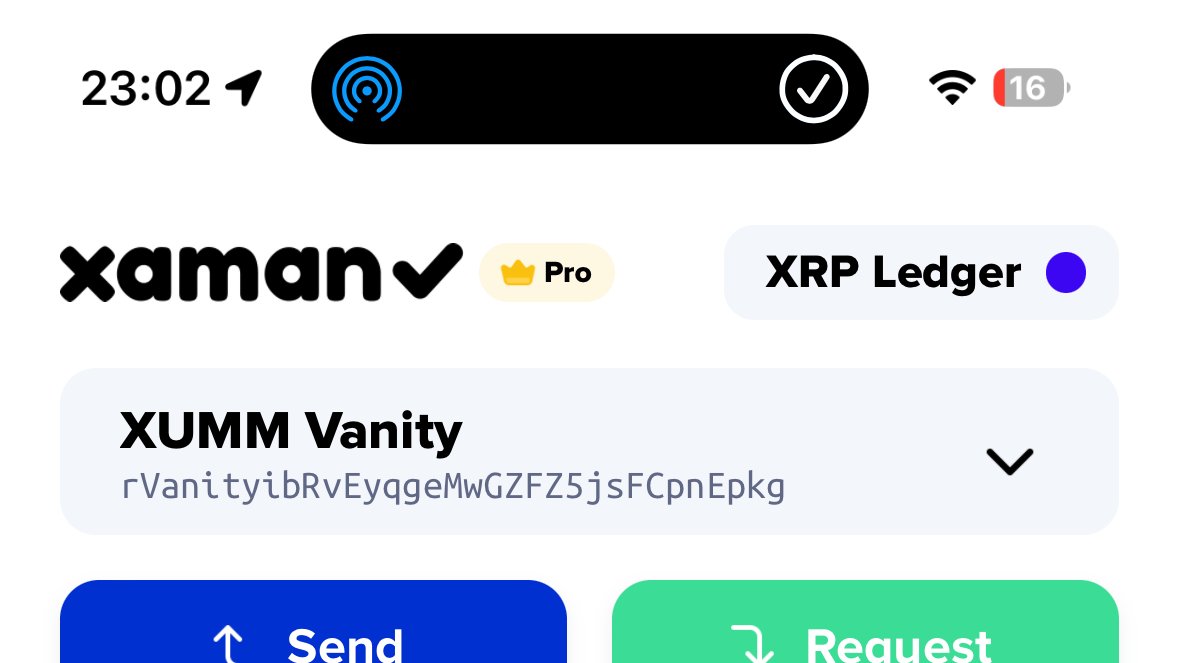
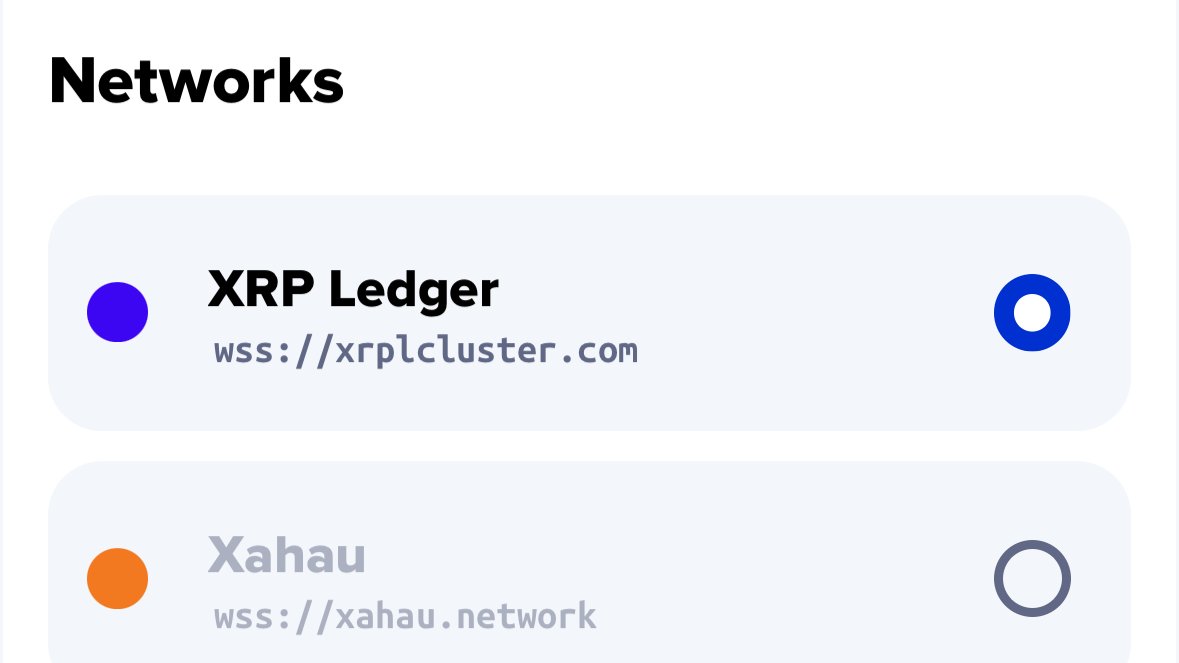
Upcoming Xumm 2.6 will show the new app name, rebrand splash screen & feature network switching. Straight from the home screen & xApps.
In "Developer Mode" Xumm will show the connected node and all testnets & devnets too.