This is an interesting theory, but one may worry that the inefficient and broken sectors of the economy will simply eat up any dark economic surplus, the same way they did during the computer revolution. https://t.co/VLGWQUSoiZ
Executive Mansion, Washington, D.C.
November 21, 1864
Dear Madam,
I have been shown in the files of the War Department a statement of the Adjutant-General of Massachusetts, that you are the mother of five sons who have died gloriously on the field of battle. I feel how weak and fruitless must be any words of mine which should attempt to beguile you from the grief of a loss so overwhelming. But I cannot refrain from tendering to you the consolation that may be found in the thanks of the Republic they died to save. I pray that our Heavenly Father may assuage the anguish of your bereavement, and leave you only the cherished memory of the loved and lost, and the solemn pride that must be yours, to have laid so costly a sacrifice upon the altar of Freedom.
Yours, very sincerely and respectfully,
Abraham Lincoln
Moment has raised a $78M Series C, led by @IndexVentures.
Agents are coming to investment management.
And firms managing $10T in assets are building that future with us.
https://t.co/RaDt8Yknim
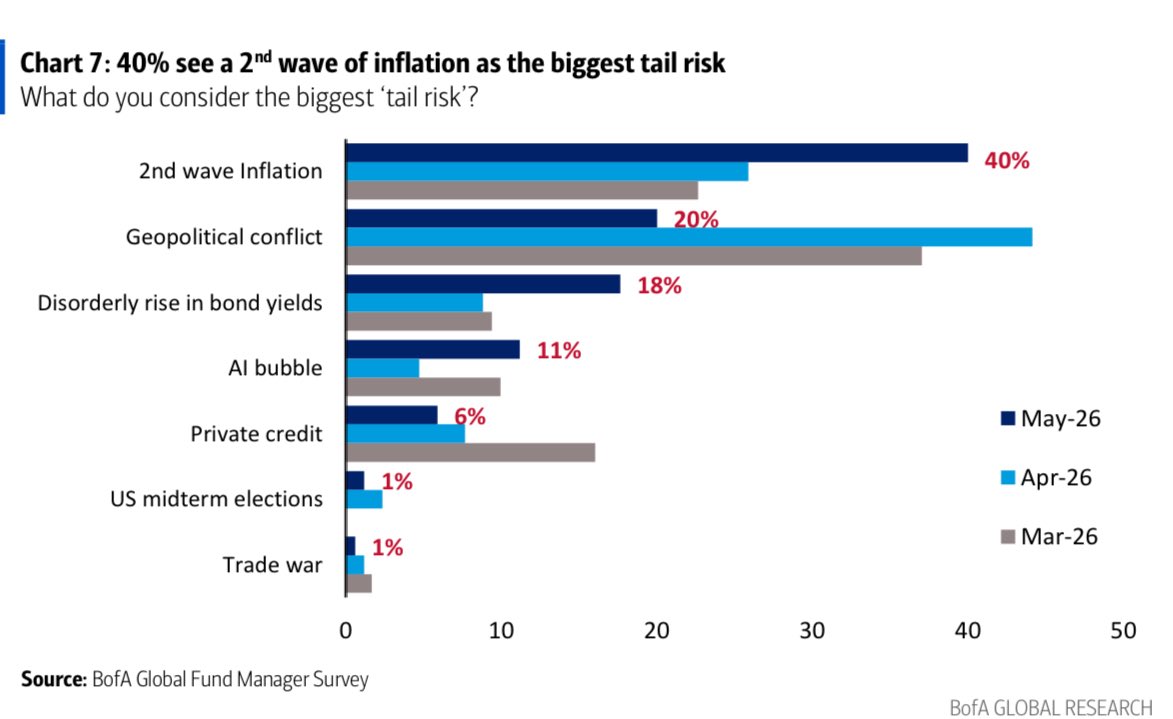
Two takeaways from May’s BofA fund manager survey: first, equity allocations surged by a record amount on the month, and second, 40% of respondents see a second wave of inflation as the biggest tail risk. The two ideas are connected: stocks are increasingly seen as an inflation hedge
Clemson is $1.5B in debt. Syracuse is closing or pausing 93 programs, UNC-Chapel Hill plans to cut spending by $89M over 3 years. Duke recently let 600 employees go in a $350M budget cut. Indiana public colleges announced a plan to eliminate or merge 580 programs statewide.
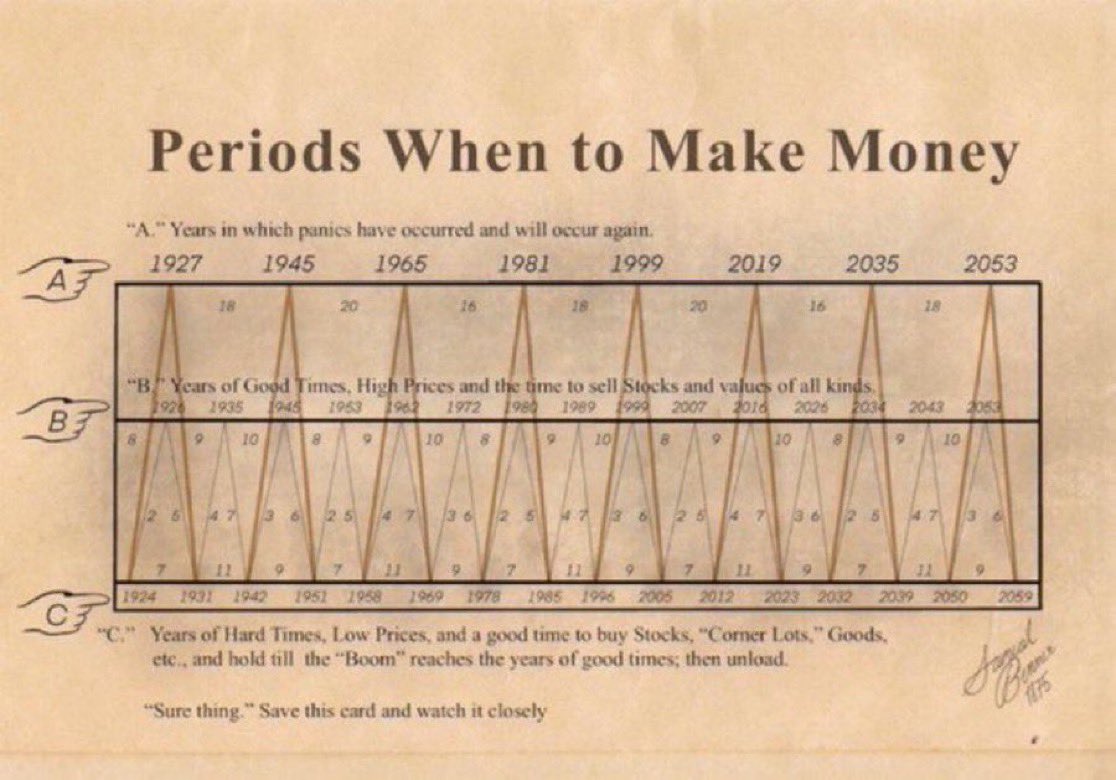
Samuel Benner, a farmer from the 1800s, published a book with market analysis on periods of panic, good times to buy, and good times to sell. 150 years later, his analysis has proven to be remarkably accurate.
Jamie Dimon warns private credit losses will be larger than feared.
JPMorgan chief raises alarm on weakening lending standards in annual shareholder letter.
[Will it spill over into the banking, pension or insurance systems @SecScottBessent?] https://t.co/XrGQjzw7Kn
People ask about muni’s and I typically don’t have much to say.
But now, looking at the deficits caused by absurd spending, and tax policies accelerating revenue erosion, I can say avoid all General Obligation muni’s in California, Illinois & New York.
I’ve never bought a GO.
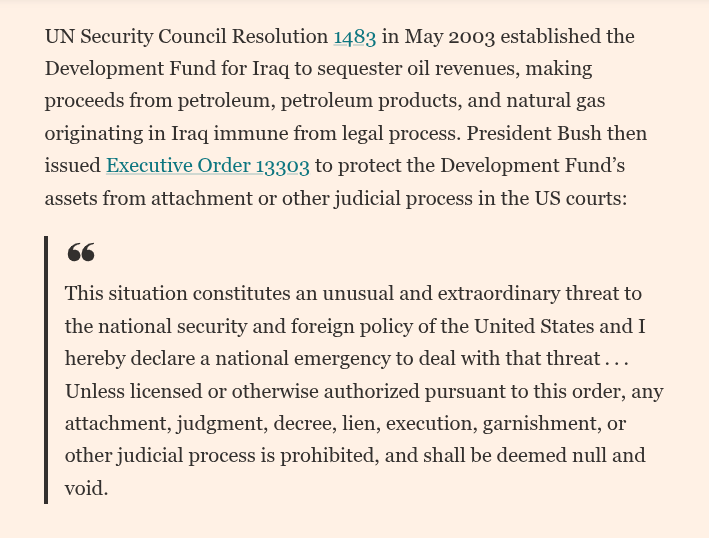
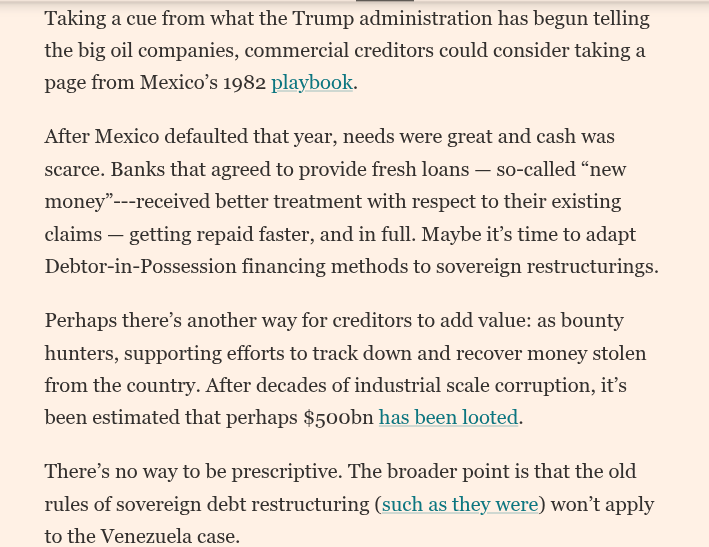
Sovereign debt restructuring mastermind @jaynewman suggests Venezuala's debts are too onerous to repaid in full after decades of looting & corruption by govt officials. He suggests VZ be treated like Iraq where the UN & White House built an extrajudicial moat around oil revenues.
He proposes other, creative pathways for sov bondholders to get recoveries like using DIPs & giving bondholders "bounty rights" to recover looted govt assets (an estimated $500 billion).
The prescriptions he lays out, with coauthors Nicholas Kumleben and Richard Carty, jive perfectly with what the Trump admin has been telling energy supermajors (ie get in there and rebuild VZ's energy infrastructure). New cashflow from increased oil production needs to incentivize oil extraction & benefit the people of VZ.
https://t.co/m1tYPuMgeV
Baby boomers, who make up about 20% of the U.S. population, hold more than $85 trillion in assets, according to Fed data.
By comparison, millennials, who make up about the same percentage of Americans, hold just about $18 trillion, roughly one-fifth that of baby boomers.
EXCLUSIVE: Luxury cars, private villas and overseas wire transfers: CBS News obtained dozens of files and photos that reveal how Minnesota fraudsters blew through hundreds of millions in taxpayer dollars as part of one of the biggest COVID-era fraud schemes. https://t.co/jg0OfaU4Mq














![cate_long's tweet photo. Jamie Dimon warns private credit losses will be larger than feared.
JPMorgan chief raises alarm on weakening lending standards in annual shareholder letter.
[Will it spill over into the banking, pension or insurance systems @SecScottBessent?] https://t.co/XrGQjzw7Kn https://t.co/Sf1O8PSU91](https://pbs.twimg.com/media/HFOKKqDbUAAp0Rv.png)