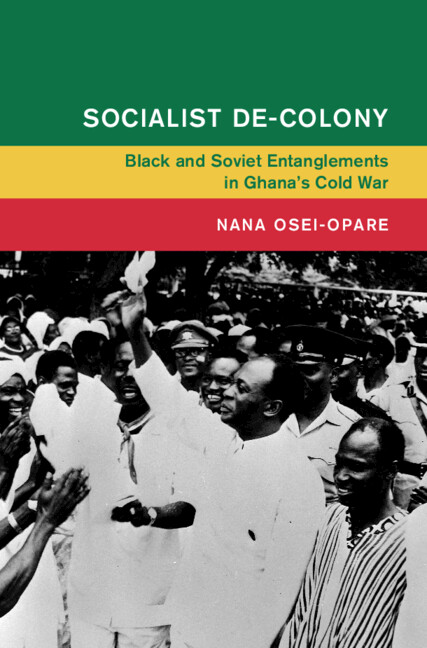
In this excerpt from his new book, @NanaOseiOpare argues Black Marxists’ understandings of 1920s Soviet policy & Lenin’s writings on state capitalism influenced the socialist Ghanaian state's embrace of private capital & foreign investment in the 1960s.
https://t.co/MgA7wqCFyz
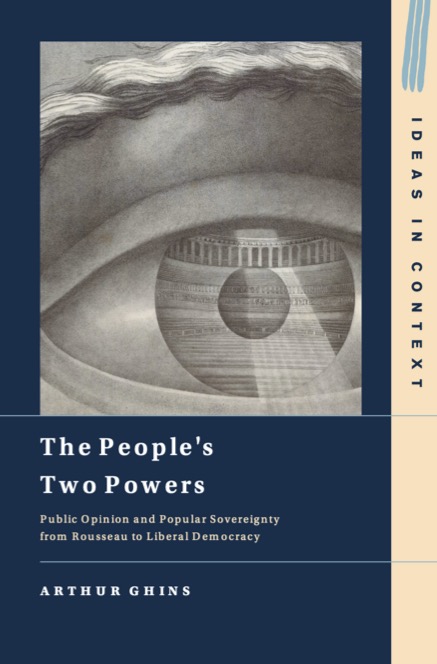
let me introduce reflexiveAI. It will help you stay one step ahead of everyone else, you’ll be able see how people’s positions shape their tastes. Have to admit, it isnt entirely my invention... it’s a martial art, invented by sensei Pierre Bourdieu, who never worked in academia
A German bureaucrat who never held a single academic position wrote more books than most universities produce in a decade, and the system he used has been sitting in libraries for 70 years waiting for someone to build it into software.
His name is Niklas Luhmann, and he was not a genius.
He was a civil servant. Government office job in postwar Germany. No research budget. No graduate students. No institutional support. Nothing about his early life suggested what was coming.
What he had was a wooden box and a stack of index cards.
And one rule so simple it sounds almost insulting.
One idea per card. Every card linked to at least one other card. No folders. No categories. No hierarchy of any kind.
He called it the Zettelkasten. German for slip box.
Over the next 40 years, that wooden box grew into 90,000 handwritten cards. Those cards generated 70 published books. Over 400 academic papers. An entirely new theory of modern society that sociologists are still arguing about today.
He was once asked in an interview how he managed to be so productive.
His answer: "I never work against resistance. I follow what the box is already pulling me toward."
He did not treat the Zettelkasten as a filing system.
He called it his communication partner. He said it was often smarter than he was, because it remembered connections his conscious mind had long since forgotten making.
Most people assume that is false modesty.
It is not. It is the most precise description of what the system actually does.
Here is the problem Luhmann had figured out that almost nobody else understood at the time.
Information without connection is invisible.
You can read a hundred books and retain almost nothing from them. Not because your memory is bad. Because isolated facts have nothing to attach themselves to. Memory is not a filing cabinet. It is a web. The more threads a new idea connects to, the harder it is to lose. The fewer threads it has, the faster it vanishes.
Most note-taking systems work against this completely.
You highlight. You summarize. You organize everything into neat folders by topic or source. Then you never look at any of it again. Not because you are lazy. Because the system produced a graveyard of isolated information with no living connections between any of it.
Luhmann's system did the opposite.
Every new card forced a single question: what does this connect to?
What does this contradict? What does this extend? You could not add something to the box without placing it in relationship to what was already there.
Over time the box did not just store knowledge. It generated it. Because the connections themselves became a source of ideas that neither card contained alone.
This is what he called the communication effect.
He would pull out a card he had written years earlier and find that it connected to something he had just added in a way he had never anticipated when he wrote either one. The box was surfacing a relationship his conscious mind had never consciously made.
He was not retrieving stored information.
He was discovering something new inside material he already owned.
The framework behind it has four pieces.
First: atomic notes. One idea per card, written in your own words, never copied directly from a source. The act of rewriting forces you to actually process what you read. Most people take notes in the author's language. Luhmann insisted on his own, because the moment you translate something into your own words you find out immediately whether you understood it.
Second: linking over filing. The temptation in any note system is to organize first. Create the folder. Assign the category. Luhmann rejected this completely. Organization is the enemy of connection, because the moment you put something in a folder you have decided in advance what it relates to, which means you will never discover what else it might.
Third: writing as thinking, not recording. The Zettelkasten was not a place to store ideas after you had them. It was the place where you had them. The act of writing a card was itself the intellectual work, not the result of it.
Fourth: trusting emergence over planning. Luhmann never sat down to write a book by planning a book. He followed the clusters of densely connected cards, the arguments that had been building for years without his conscious direction, and he wrote from those. The books were not planned. They were discovered inside material he had already accumulated.
NotebookLM is the Zettelkasten Luhmann never had.
Upload everything you are reading into one notebook. Books. Papers. Articles. Transcripts. Your own notes. Do not organize them. Do not sort by topic. Just let it all sit together.
Then run this prompt:
"What are the 10 most important ideas across everything I've uploaded? Don't summarize each source separately. Find the ideas that appear in multiple places in different forms."
That is the move.
You are not asking for summaries. You are asking it to find the connections Luhmann would have drawn manually across 40 years of index cards.
NotebookLM does it in seconds.
Then run this:
"What ideas in these sources directly contradict each other? Where are the tensions?"
Luhmann believed the most interesting card in his box was always the one that disagreed with another card. Contradiction is where original thinking lives.
Then before you write anything, run this:
"I'm about to write about [your topic]. What connections in this material would a non-obvious thinker pull together that most people would miss?"
This is the prompt that produces insights you didn't know you had.
Because you did have them. They were sitting in separate documents, never introduced to each other.
Luhmann spent 40 years building his communication partner by hand, one card at a time, inside a wooden box in a government office in Germany.
He said the box knew things he had forgotten he knew.
That is not a metaphor. That is exactly what happens when you stop treating your notes as storage and start treating them as a network.
The people generating the most original thinking right now are not reading more than everyone else.
They are connecting better.
The box is now inside your browser.
Most people are still using it like a simple note-taking software.
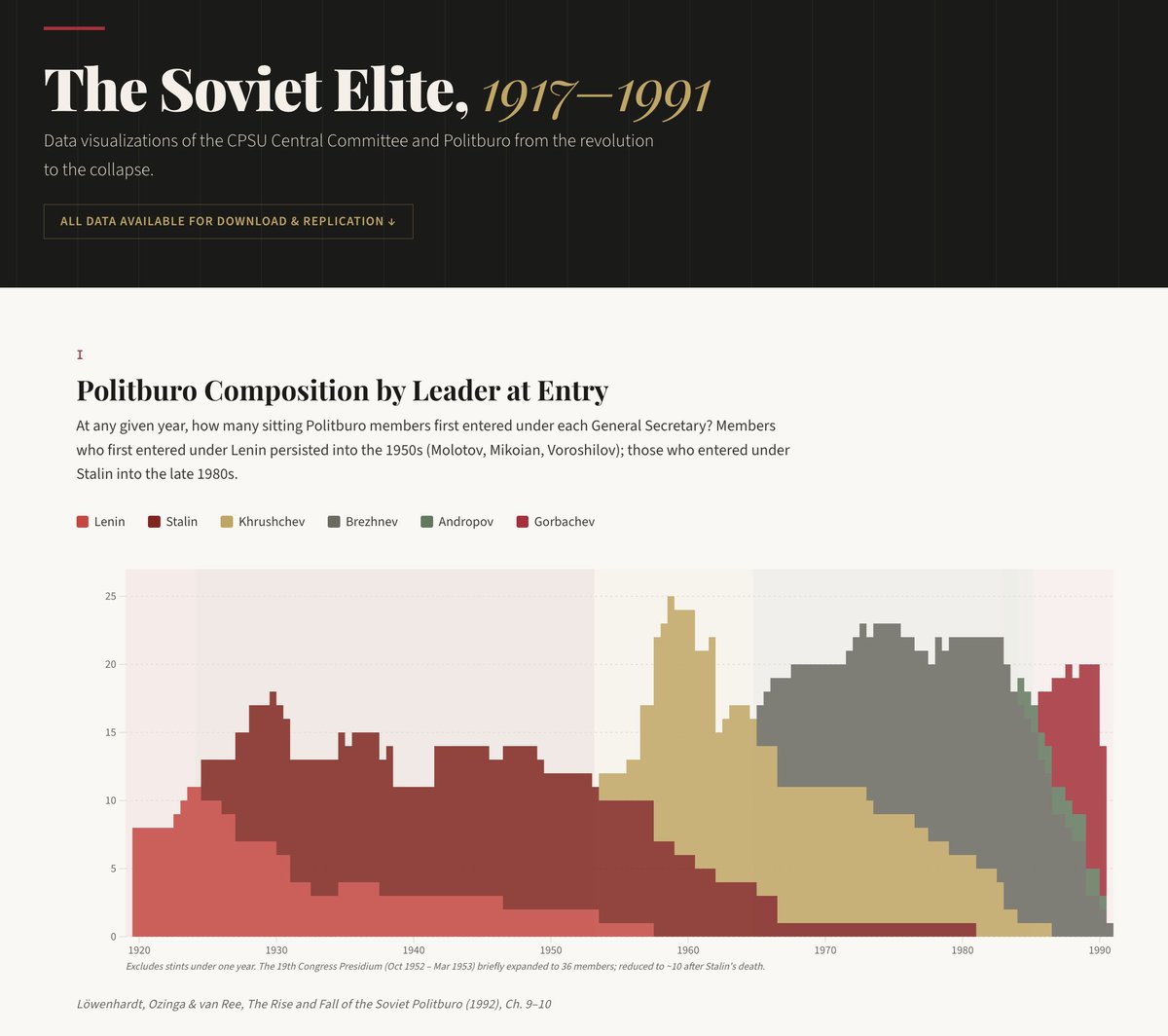
An open source website on the Soviet elite with data visualizations. Every Central Committee (4,480) and Politburo member (130) from 1917–1991.
All data made easily available for replication (compiled from books below and other sources)
https://t.co/yy7Imvc1ps
A Sociology of Post-Imperial Constitutions by Chris Thornhill
This book explains how democratic constitutions were created by imperialism and how they have been detached from their military origins.
📚 https://t.co/S9xATbk322
#constitutionallaw
My new book--'A Popular History of Idi Amin's Uganda'--is available for pre-order @YalePress. The book explains why so many Ugandans found reason to invest energy & loyalty in Amin's regime.
Given the election results, the book is altogether too timely.
https://t.co/XwPQPHyrNw
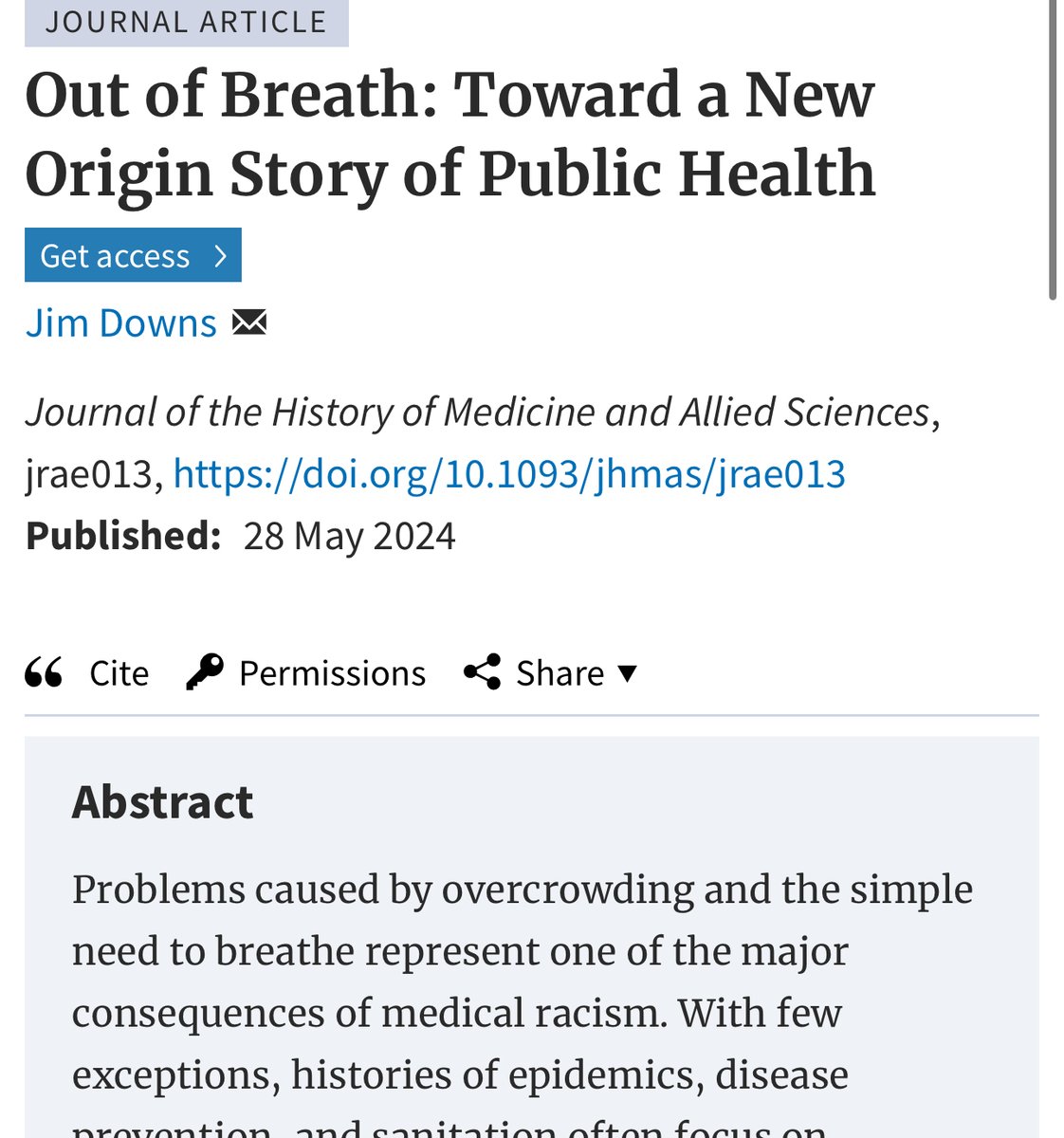
Thrilled this is published. I explain how the transatlantic slave trade coincided w/ the rise of chemistry as a field, which crystalized ideas about oxygen.I then track ventilation from the c19 slavey to TB to CoVid to BLM. Thanks @steerewilliams & Hirshbein for excellent edits! https://t.co/o9kBUWMLxT
On 15 May, 3pm EAT, @UgandaStudies will host Patrick Otim @BatesCollege on the occasion of his remarkable new book, which rethinks Uganda's intellectual history. Details are below. We hope to see you there! @OhioUnivPress @ASANewsOnline
Je voudrais que tout le monde lise cet ouvrage: "Enfances de classe. De l'inégalité parmi les enfants" sous la direction de Bernard Lahire.
Une enquête sociologique qui démontre à quel point "les enfants vivent au même moment dans la même réalité, mais pas dans le même monde". ⬇️


![ihteshamali's tweet photo. A German bureaucrat who never held a single academic position wrote more books than most universities produce in a decade, and the system he used has been sitting in libraries for 70 years waiting for someone to build it into software.
His name is Niklas Luhmann, and he was not a genius.
He was a civil servant. Government office job in postwar Germany. No research budget. No graduate students. No institutional support. Nothing about his early life suggested what was coming.
What he had was a wooden box and a stack of index cards.
And one rule so simple it sounds almost insulting.
One idea per card. Every card linked to at least one other card. No folders. No categories. No hierarchy of any kind.
He called it the Zettelkasten. German for slip box.
Over the next 40 years, that wooden box grew into 90,000 handwritten cards. Those cards generated 70 published books. Over 400 academic papers. An entirely new theory of modern society that sociologists are still arguing about today.
He was once asked in an interview how he managed to be so productive.
His answer: "I never work against resistance. I follow what the box is already pulling me toward."
He did not treat the Zettelkasten as a filing system.
He called it his communication partner. He said it was often smarter than he was, because it remembered connections his conscious mind had long since forgotten making.
Most people assume that is false modesty.
It is not. It is the most precise description of what the system actually does.
Here is the problem Luhmann had figured out that almost nobody else understood at the time.
Information without connection is invisible.
You can read a hundred books and retain almost nothing from them. Not because your memory is bad. Because isolated facts have nothing to attach themselves to. Memory is not a filing cabinet. It is a web. The more threads a new idea connects to, the harder it is to lose. The fewer threads it has, the faster it vanishes.
Most note-taking systems work against this completely.
You highlight. You summarize. You organize everything into neat folders by topic or source. Then you never look at any of it again. Not because you are lazy. Because the system produced a graveyard of isolated information with no living connections between any of it.
Luhmann's system did the opposite.
Every new card forced a single question: what does this connect to?
What does this contradict? What does this extend? You could not add something to the box without placing it in relationship to what was already there.
Over time the box did not just store knowledge. It generated it. Because the connections themselves became a source of ideas that neither card contained alone.
This is what he called the communication effect.
He would pull out a card he had written years earlier and find that it connected to something he had just added in a way he had never anticipated when he wrote either one. The box was surfacing a relationship his conscious mind had never consciously made.
He was not retrieving stored information.
He was discovering something new inside material he already owned.
The framework behind it has four pieces.
First: atomic notes. One idea per card, written in your own words, never copied directly from a source. The act of rewriting forces you to actually process what you read. Most people take notes in the author's language. Luhmann insisted on his own, because the moment you translate something into your own words you find out immediately whether you understood it.
Second: linking over filing. The temptation in any note system is to organize first. Create the folder. Assign the category. Luhmann rejected this completely. Organization is the enemy of connection, because the moment you put something in a folder you have decided in advance what it relates to, which means you will never discover what else it might.
Third: writing as thinking, not recording. The Zettelkasten was not a place to store ideas after you had them. It was the place where you had them. The act of writing a card was itself the intellectual work, not the result of it.
Fourth: trusting emergence over planning. Luhmann never sat down to write a book by planning a book. He followed the clusters of densely connected cards, the arguments that had been building for years without his conscious direction, and he wrote from those. The books were not planned. They were discovered inside material he had already accumulated.
NotebookLM is the Zettelkasten Luhmann never had.
Upload everything you are reading into one notebook. Books. Papers. Articles. Transcripts. Your own notes. Do not organize them. Do not sort by topic. Just let it all sit together.
Then run this prompt:
"What are the 10 most important ideas across everything I've uploaded? Don't summarize each source separately. Find the ideas that appear in multiple places in different forms."
That is the move.
You are not asking for summaries. You are asking it to find the connections Luhmann would have drawn manually across 40 years of index cards.
NotebookLM does it in seconds.
Then run this:
"What ideas in these sources directly contradict each other? Where are the tensions?"
Luhmann believed the most interesting card in his box was always the one that disagreed with another card. Contradiction is where original thinking lives.
Then before you write anything, run this:
"I'm about to write about [your topic]. What connections in this material would a non-obvious thinker pull together that most people would miss?"
This is the prompt that produces insights you didn't know you had.
Because you did have them. They were sitting in separate documents, never introduced to each other.
Luhmann spent 40 years building his communication partner by hand, one card at a time, inside a wooden box in a government office in Germany.
He said the box knew things he had forgotten he knew.
That is not a metaphor. That is exactly what happens when you stop treating your notes as storage and start treating them as a network.
The people generating the most original thinking right now are not reading more than everyone else.
They are connecting better.
The box is now inside your browser.
Most people are still using it like a simple note-taking software.](https://pbs.twimg.com/media/HGXf9elbAAE48hp.jpg)