New report finds links between Iowa’s high cancer rates and environmental exposures — like pesticides, nitrates, PFAS and radon — raising concerns about Iowa’s intensive agriculture footprint and the state's increasing cancer rates. https://t.co/hTargIcMJU
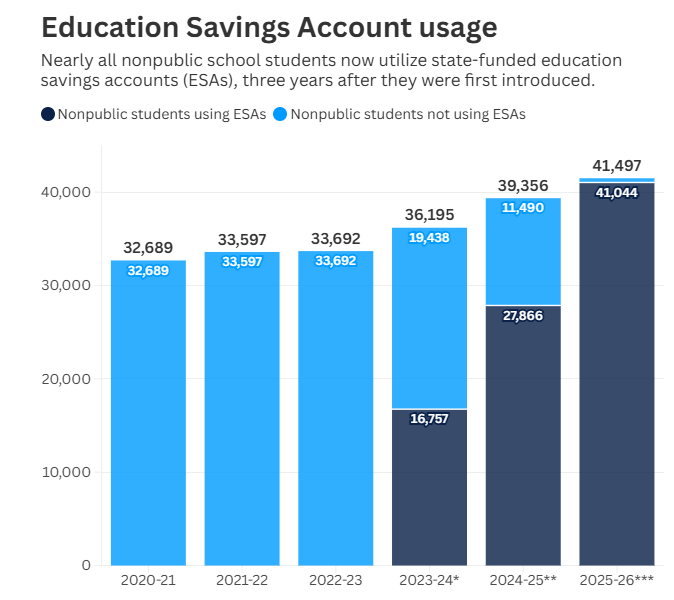
Just how much has @IAGovernor's education savings accounts reshaped K-12 education? 99% of Iowa's private school students are now publicly funded, costing an estimated $350M next year. https://t.co/YrKmDrRLJK via @HelloTimWebber@svhernandez
LLMs process text from left to right — each token can only look back at what came before it, never forward. This means that when you write a long prompt with context at the beginning and a question at the end, the model answers the question having "seen" the context, but the context tokens were generated without any awareness of what question was coming. This asymmetry is a basic structural property of how these models work.
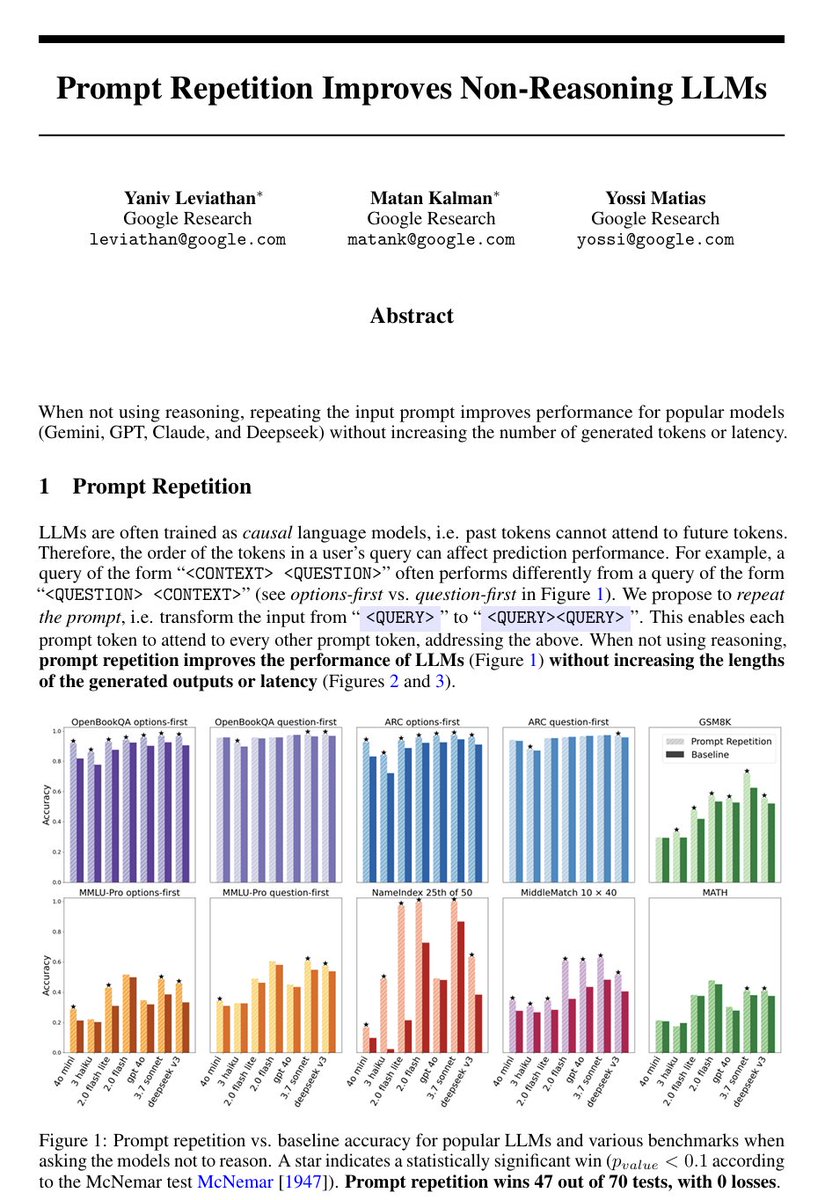
The paper asks what happens if you just send the prompt twice in a row, so that every part of the input gets a second pass where it can attend to every other part. The answer is that accuracy goes up across seven different benchmarks and seven different models (from the Gemini, ChatGPT, Claude, and DeepSeek series of LLMs), with no increase in the length of the model's output and no meaningful increase in response time — because processing the input is done in parallel by the hardware anyway.
There are no new losses to compute, no finetuning, no clever prompt engineering beyond the repetition itself.
The gap between this technique and doing nothing is sometimes small, sometimes large (one model went from 21% to 97% on a task involving finding a name in a list). If you are thinking about how to get better results from these models without paying for longer outputs or slower responses, that's a fairly concrete and low-effort finding.
Read with AI tutor: https://t.co/MipHHO6rjX
Get the PDF: https://t.co/XQrqiaGwIO
Pope Leo said in a Christmas Eve sermon that the story of Jesus being born in a stable because there was no room at an inn should remind Christians that refusing to help the poor and strangers today is tantamount to rejecting God himself. For @Reuters
https://t.co/Z91z9fGMKB
A Swiss study found that sharing classrooms drives viral transmission significantly more than brief close contact.
Consequently, improving ventilation is likely more effective than solely reducing proximity.
https://t.co/z9IGQC3nkL
Police officers handcuffed what they believed to be a 16 year old student armed with a gun at his high school based on an AI system telling them so.
It turned out the student had a Doritos bag, not a firearm, and the AI may have mistaken the two.
https://t.co/JCLKuAXqc1