What if your trading edge came from where your strategy runs, not just how much you pay in fees?
That’s an interesting idea behind Raiku Blackline.
In traditional finance, firms invest in proximity to exchanges because even small delays can matter when markets move quickly.
Blackline brings a similar concept to Solana.
Instead of running a trading strategy on a separate machine and sending orders across the network, it runs alongside a Raiku validator.
Why does that matter?
→ Your strategy can react closer to where transactions are processed.
→ Eligible orders get guaranteed inclusion in blocks produced by Raiku.
→ Your execution setup becomes part of your trading strategy, not just an afterthought.
It doesn't guarantee profits, but it changes how traders can approach execution.
Sometimes, the advantage isn't about paying more to get ahead. It's about building closer to the point where decisions turn into transactions.
That's what makes Raiku worth watching. 🐉
@raikucom@duckk9x
In trading, being faster isn't always about paying a higher fee.
Sometimes, it's about where your strategy runs.
Traditional finance figured this out years ago. Trading firms place their servers close to exchanges to reduce the time it takes to react and execute.
Raiku is bringing a similar approach to Solana with Blackline.
Instead of sending trading instructions across the network to a validator, the strategy runs on the same machine as a Raiku validator.
That changes a few things:
→ Less network distance between the strategy and execution
→ Faster reactions to transactions that have already executed
→ Guaranteed inclusion for eligible orders in blocks produced by Raiku
Of course, lower latency doesn't guarantee a profitable trade. But when you're competing in milliseconds, the infrastructure behind your strategy can make a real difference.
You can keep bidding higher for priority, or rethink how close your strategy is to execution.
That's what makes Blackline interesting to me.
@RaikuCN@ZhugeLyang@duckk9x@_offmylawn@raikucom
one thing i find interesting about @BNBCHAIN is how much more useful onchain applications could become if they could verify data from outside the blockchain.
think about it.
a DeFi app might want to check someone's financial history. an RWA platform needs reliable information about real-world assets. an identity app may need to confirm something about a user without asking them to reveal everything.
but most of this information lives outside the blockchain.
and that's where things get complicated. a smart contract can't simply trust whatever data someone submits.
this is why i've been looking into what PrimusLabs is building with zkTLS.
the idea is to make data from supported web sources verifiable, so applications can use it without blindly trusting a user's claim.
now imagine what that could mean for BNB Chain.
~> DeFi apps could use verified offchain information when checking eligibility.
~> RWA platforms could explore better ways to verify information connected to real-world assets.
~> identity systems could verify specific claims without exposing unnecessary personal details.
~> AI agents could use more trustworthy information before making decisions or executing transactions.
of course, zkTLS doesn't solve everything. data sources still have limitations, and each application needs to handle verification and privacy properly.
but i think the bigger opportunity is worth paying attention to.
blockchains already give us a way to verify onchain activity. connecting that with reliable information from the outside world could open up a different set of possibilities.
curious to see how PrimusLabs develops this on BNB Chain and what builders end up doing with it.
Join :- https://t.co/nNY37yqT6q
@primus_labs #PrimusLabs
What if your trading edge came from where your strategy runs, not just how much you pay in fees?
That’s an interesting idea behind Raiku Blackline.
In traditional finance, firms invest in proximity to exchanges because even small delays can matter when markets move quickly.
Blackline brings a similar concept to Solana.
Instead of running a trading strategy on a separate machine and sending orders across the network, it runs alongside a Raiku validator.
Why does that matter?
→ Your strategy can react closer to where transactions are processed.
→ Eligible orders get guaranteed inclusion in blocks produced by Raiku.
→ Your execution setup becomes part of your trading strategy, not just an afterthought.
It doesn't guarantee profits, but it changes how traders can approach execution.
Sometimes, the advantage isn't about paying more to get ahead. It's about building closer to the point where decisions turn into transactions.
That's what makes Raiku worth watching. 🐉
@raikucom@duckk9x
In trading, being faster isn't always about paying a higher fee.
Sometimes, it's about where your strategy runs.
Traditional finance figured this out years ago. Trading firms place their servers close to exchanges to reduce the time it takes to react and execute.
Raiku is bringing a similar approach to Solana with Blackline.
Instead of sending trading instructions across the network to a validator, the strategy runs on the same machine as a Raiku validator.
That changes a few things:
→ Less network distance between the strategy and execution
→ Faster reactions to transactions that have already executed
→ Guaranteed inclusion for eligible orders in blocks produced by Raiku
Of course, lower latency doesn't guarantee a profitable trade. But when you're competing in milliseconds, the infrastructure behind your strategy can make a real difference.
You can keep bidding higher for priority, or rethink how close your strategy is to execution.
That's what makes Blackline interesting to me.
@RaikuCN@ZhugeLyang@duckk9x@_offmylawn@raikucom
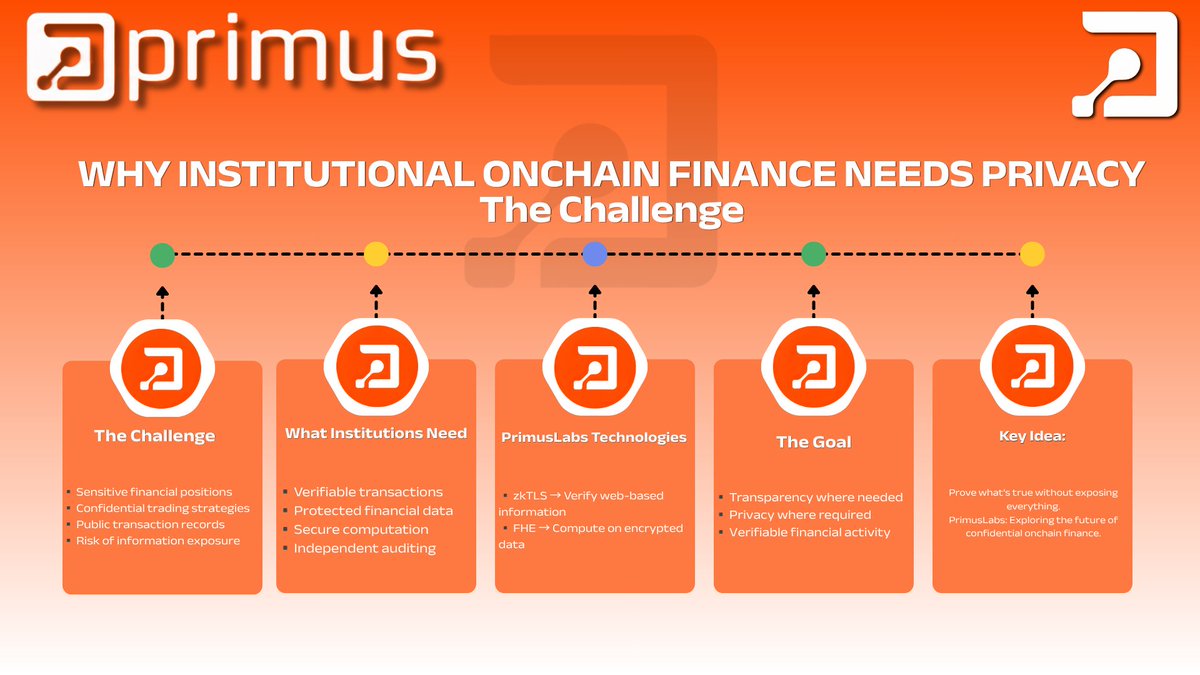
𝐖𝐡𝐲 𝐈𝐧𝐬𝐭𝐢𝐭𝐮𝐭𝐢𝐨𝐧𝐚𝐥 𝐎𝐧𝐜𝐡𝐚𝐢𝐧 𝐅𝐢𝐧𝐚𝐧𝐜𝐞 𝐍𝐞𝐞𝐝𝐬 𝐌𝐨𝐫𝐞 𝐓𝐡𝐚𝐧 𝐓𝐫𝐚𝐧𝐬𝐩𝐚𝐫𝐞𝐧𝐜𝐲
Transparency has always been one of blockchain’s biggest strengths. Every transaction can be recorded and verified, creating a system where users don’t have to rely entirely on trust.
But when it comes to institutional finance, transparency alone isn’t enough.
Think about a financial institution managing millions of dollars across different positions. It needs to prove that its transactions are legitimate and its assets are accounted for. At the same time, revealing every balance, trading strategy, and financial position could expose sensitive information to competitors.
That creates a difficult balance.
Institutions need the security and verifiability of blockchain without making every financial detail publicly accessible.
This is where privacy infrastructure becomes important.
Instead of choosing between complete transparency and complete confidentiality, the goal is to combine both. Transactions and specific claims should be verifiable, while sensitive information remains protected wherever possible.
This is the direction PrimusLabs is exploring through its work on confidential onchain finance, zkTLS, and fully homomorphic encryption (FHE).
zkTLS helps verify information originating from web sources, while FHE enables computation on encrypted data without requiring the underlying information to be exposed during computation.
These technologies address different problems, but together they point toward a more flexible approach to financial infrastructure.
Of course, privacy alone doesn’t guarantee security. Institutions still need reliable verification, sound risk controls, and systems that can be independently audited.
The bigger idea is simple: financial systems shouldn’t have to expose everything just to prove something is true.
If onchain finance wants to attract more institutional participation, 𝐯𝐞𝐫𝐢𝐟𝐢𝐚𝐛𝐥𝐞 𝐭𝐫𝐮𝐬𝐭 𝐰𝐢𝐭𝐡 𝐜𝐨𝐧𝐭𝐫𝐨𝐥𝐥𝐞𝐝 𝐩𝐫𝐢𝐯𝐚𝐜𝐲 𝐜𝐨𝐮𝐥𝐝 𝐛𝐞𝐜𝐨𝐦𝐞 𝐣𝐮𝐬𝐭 𝐚𝐬 𝐢𝐦𝐩𝐨𝐫𝐭𝐚𝐧𝐭 𝐚𝐬 𝐭𝐫𝐚𝐧𝐬𝐩𝐚𝐫𝐞𝐧𝐜𝐲 𝐢𝐭𝐬𝐞𝐥𝐟.
Join :- https://t.co/PGJ5NOazv7
@primus_labs #PrimusLabs
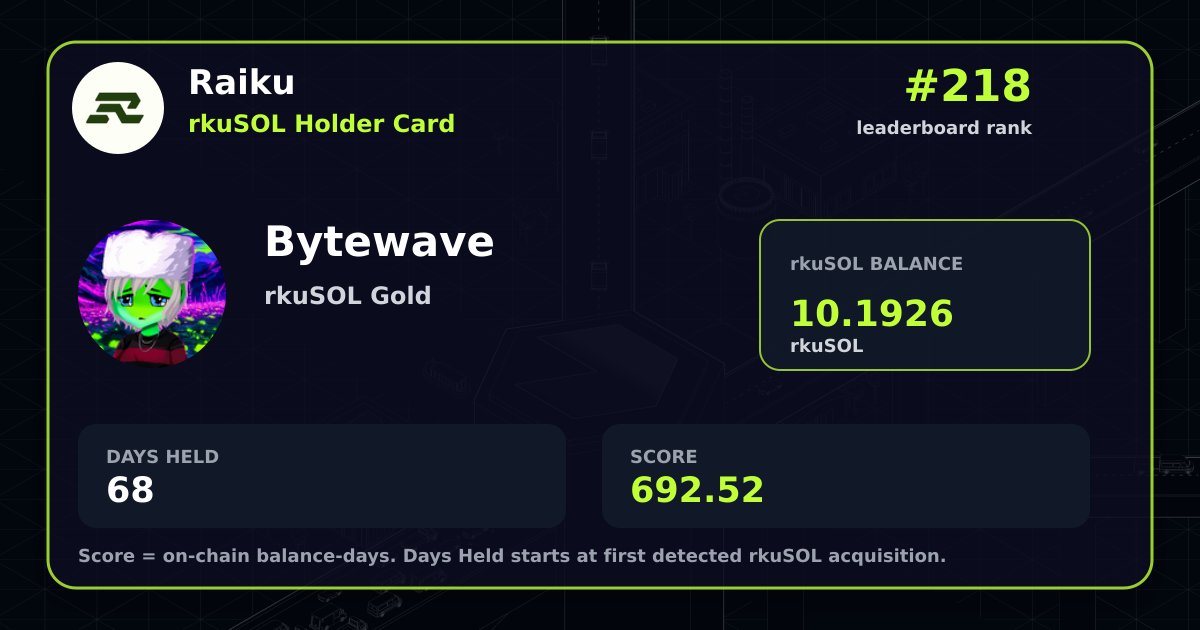
68 days → still holding $rkuSOL.
Current stats:
→ 𝟏𝟎.𝟏𝟗𝟐𝟔 𝐫𝐤𝐮𝐒����𝐋
→ 𝟔𝟖 𝐝𝐚𝐲𝐬 𝐡𝐞𝐥𝐝
→ 𝟔𝟗𝟐.𝟓𝟐 𝐬𝐜𝐨𝐫𝐞
→ #𝟐𝟏𝟖 𝐨𝐧 𝐭𝐡𝐞 𝐥𝐞𝐚𝐝𝐞𝐫𝐛𝐨𝐚𝐫𝐝
→ 𝐆𝐨𝐥𝐝 𝐡𝐨𝐥𝐝𝐞𝐫
Still holding. Still showing up.
68 days in, and the journey with $rkuSOL keeps going.
Not looking for a quick exit. I’m more interested in seeing how far Raiku can go from here.
Patience is part of the game.
gRaiku 🐉
@raikucom
@ZhugeLyang
@duckk9x
𝐖𝐡𝐚𝐭 𝐝𝐨𝐞𝐬 𝐚 𝐯𝐚𝐥𝐢𝐝𝐚𝐭𝐨𝐫 𝐤𝐧𝐨�� 𝐭𝐡𝐚𝐭 𝐚𝐧 𝐨𝐫𝐝𝐢𝐧𝐚𝐫𝐲 𝐑𝐏𝐂 𝐝𝐨𝐞𝐬𝐧'𝐭?
More than you might think.
An RPC helps your app communicate with Solana. It lets you read account data, send transactions, and check network activity.
A validator operates closer to block production. It processes transactions and participates in deciding what gets included in its blocks.
That difference matters when you're building trading systems where reacting to onchain activity is only half the job.
This is an interesting part of what @raikucom is exploring with Blackline: bringing trading logic closer to the validator itself.
Sometimes, the advantage isn't just about getting better data. It's about where your software sits in the process.
gRaiku 🐉
@RaikuCN
@ZhugeLyang
@duckk9x
@_offmylawn