Founder, PharmaForward. Analytics, measurement, and AI search for pharma and biotech. Get found, trusted, and cited when answers come from AI. PM360 ELITE 100
New home base: https://t.co/uBI2EsSj0E Writing there about analytics, AI search, and pharma digital strategy, including the prompts I use to audit how brands show up in AI assistants. Recent: "The 76% conversion rate that wasn't," on why impressive metrics deserve suspicion.
@OpenEvidence This is the part pharma marketers should watch. If copay and PA help live inside the tool doctors already use, a lot of HCP media and hub outreach gets judged on whether it shows up there. Who supplies the program data, and how often is it refreshed?
@lilyraynyc@HannsKronenberg So we'll get impressions and clicks, but not the prompt. That's like getting Search Console with the queries column deleted.
Well this is pretty big news: OpenAI is building an analytics tool to see how businesses appear and get cited in ChatGPT.
Is this the first iteration of a ChatGPT Search Console? 👀👀👀
Will be following this closely!
H/t @HannsKronenberg for flagging
https://t.co/bz9zyMDSjL
@sejournal@Marie_Haynes A check that's worked for me: compare the spike against GA4 organic landing page sessions for the same pages and hours. If GSC clicks jump and sessions don't, it's bots. Worth flagging before it lands in someone's monthly report.
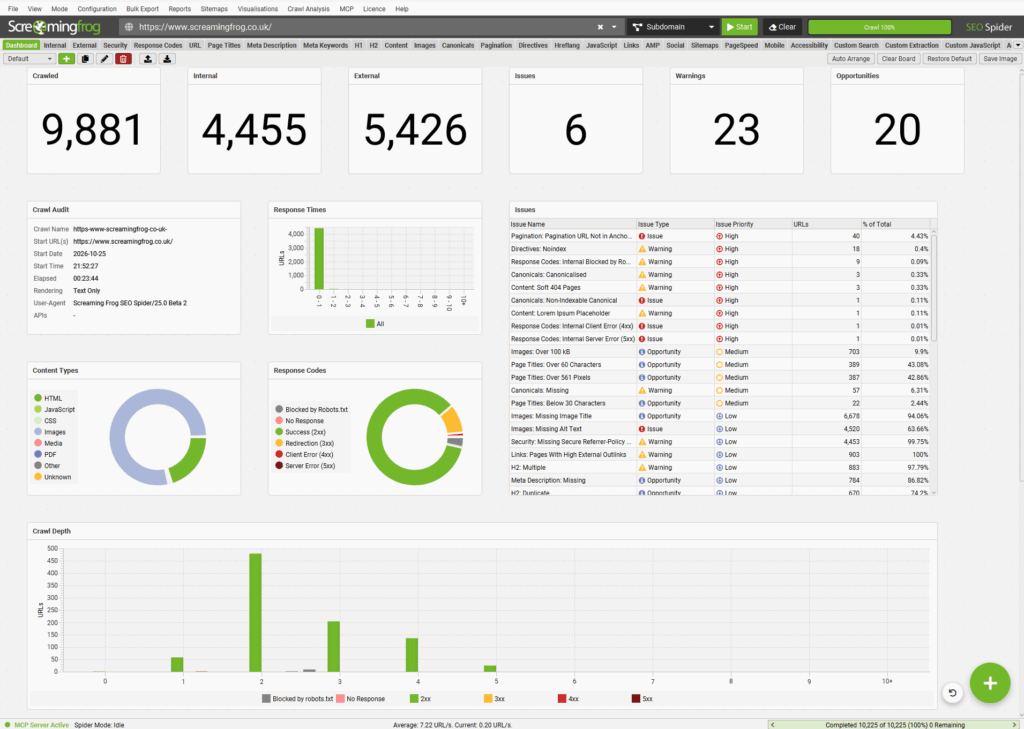
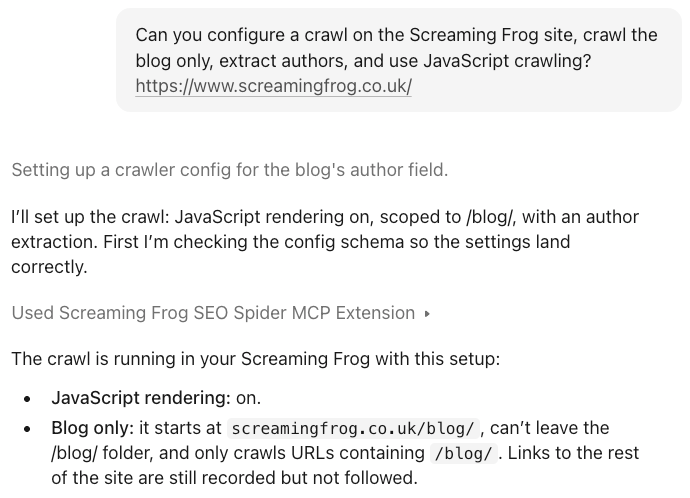
Whoa SEOs, this new update gives Claude full command over Screaming Frog. AI can now build custom extractions, adjust workflows, change crawl configs + way more:
So this was a great update from the good folks over at @screamingfrog. They've made some massive improvements to the MCP experience. The biggest shift is that the crawl configs are now available in JSON-formats meaning that AI agents such as Claude will be able to read and edit them.
So now Claude has a LOT more power in how it can operate a crawl. Instead of just using the available properties, it now has the ability to read, write and completely customize what Screaming Frog is doing. Now through MCP + conversational commands, you can tell Screaming Frog to do a variety of things:
- Create custom JavaScript snippets, XPath
- Directly configure a crawl settings (rendering, extraction)
- Autonomously adjust and debug workflows
- Identify new/better ways to improve an existing crawl
- Build custom filters
- Define new crawl segments
So now through Claude, you can just tell it what you want it to crawl, the exact things you're looking to get out of it and it now has the ability to create the custom experience. This will be extremely powerful, especially if you can weave into existing skills + workflows that you've already created.
@googlewaqas Very cool! Also a good reason to check what your own container exposes. But this only shows the client-side container. Anything moved to server-side GTM won't show up, so a thin container can mean a mature setup, not a weak one.
@Marie_Haynes Same in pharma. Branded drug searches now get an AI Overview summarizing the product, often without the fair balance the brand site has to carry. Audit what it says and which pages it pulls from, then fix those pages first.
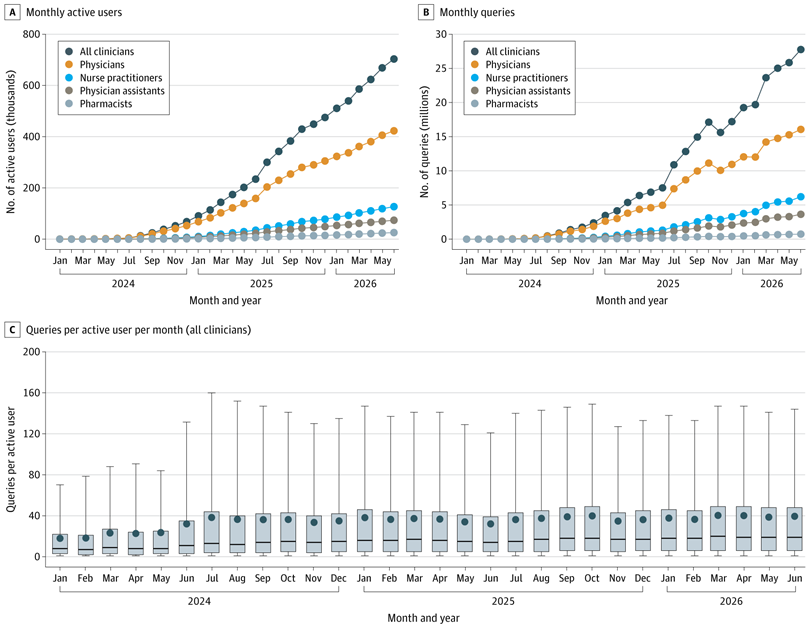
Doctors stopped Googling. 952,000 US clinicians sent OpenEvidence 271M clinical questions — a third about what to do next, the moment pharma marketing chases. It’s happening inside a tool most brand teams have never opened.https://t.co/9ALXbQv9mx
@Berci 271M queries from about 950k clinicians says HCP search has already moved. For pharma the real question isn't whether to buy media there. It's whether your label and guideline content is what the model pulls when a doctor asks.
OpenEvidence, as a physician-facing LLM, is being used by more healthcare professionals month by month. Now, a study analyzes how almost a million US clinicians use it while submitting 271 million AI-enabled clinical queries!
"Early-career physicians (use ratio, 2.54) and those in oncology and hematology (2.00), internal medicine (1.88), and family medicine (1.80) submitted a higher-than-average share of queries; treatment and management accounted for 33.1% of physician queries and diagnosis for 13.9%."
I really liked their concluding remark:
"For much of modern medicine, clinicians have been expected to internalize a body of knowledge through training and maintain it through continuing education. Study findings suggest a growing share of knowledge access is shifting from recall to retrieval."
We cannot expect physicians to know everything, but we can expect them to know where to find the information they need.
The study: https://t.co/gUhb3TnDWZ
@SBakerMD A TV ban wouldn't end drug advertising, it would move it. The money goes to streaming, search, social and influencers, where the risk info becomes a link or a caption instead of a voiceover. Worth asking which version is easier to police.
@rustybrick@glenngabe@Adweek Curious how fair balance holds up here. A TV spot or search ad controls everything around it, but this sits next to an answer Google writes on the fly. If that answer leans off-label, whose problem is it?
Scoop: Google is testing ads for branded prescription drugs in AI Mode and AI Overviews, opening its AI search platformto one of the most tightly regulated categories in advertising, the company confirmed with me. More details on what this entails ⬇️
https://t.co/aeBN0O8mXL
@Timothy_Hughes HCP gating is often required by regulation, so suggest an ungated summary page with schema markup and the full content kept behind HCP verification.