@ScottMorrisonMP It’s my 21st at the end on next month, my one birthday wish, is that you can have the ban lifted so I can celebrate this event with my family and friends. Thank you 😊
At the beginning I was hesitant on how using Twitter would be useful as a professional platform for educators, since then it has helped develop my Unit project assignment as well as provided me with a range of resources I can use for my teachings #UoNTeach
An excellent video to share with students. It covers sustainability and an Asian understanding on it. It is full of information for students to make into graphs and charts, they could also use this to create, in groups, a poster on plastic pollution #UoNTeach
How have you found engaging with Twitter as a professional platform? I know personally it has been challenging trying to ensure my tweets are summarised enough to be posted, although overall, I have found it to be a great source to share resources and information #UoNTeach
This is a wonderful idea. While teaching local geography and history you could use this as a field work excursion to engage students in their local environment and community. Thank you for sharing this @morts_a#UoNTeach
An excursion set in local nature can deepen students learning, excite & engage while showing how to sustain & protect local heritage and cultural sites within their #community. NSW National Parks excursions are supportive of the NSW curriculum #UoNTeach https://t.co/66ewJ6KKLc
To reflect on my use of Twitter, Carpenter & Krutka (2014) accurately discuss how Twitter can be used by educators for communication, class activities and professional development, and provides resources from other educators world-wide for own use. #UoNTeach
Monitored social media with boundaries & policies in place, incorporated in units and school curriculums will provide numerous benefits for students as it is a way to teach safe social media use in a controlled environment for future uses (Ahn, Bivona & DiScala, 2012) #UoNTeach
Critical thinking and problem solving are essential skills that should be taught in every curriculum. Kivunja (2015) presents an article discussing the ways in which De Bono’s Six Thinking Hats model can be applied to teach these strategies. #UoNTeach
@brentontaylor92 I agree with this idea. It will be extremely beneficial for students to learn the importance reusable plastic has on both water/marine life and other environmental life. Thank you for sharing this idea, I plan to incorporate this into a lesson myself #UoNTeach
“As students learn the concept of good citizenship, then act in ways that demonstrate citizenship, they become good citizens” (Drake & Reid, 2018). This is a perfect example of the Know, Do, & Be framework that should be incorporated in all effective curriculum's. #UoNTeach
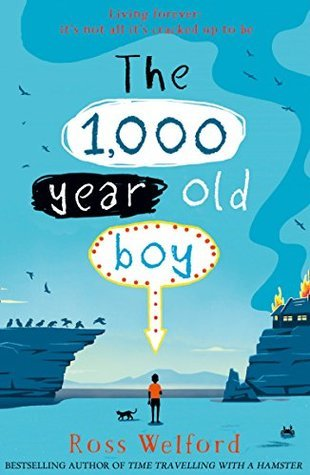
The 1,000-Year-Old Boy is a beautiful book providing references to historical events, and mainly covers the idea on how difference can make people treat you harshly but real friends and a loving family is all you need. I recommend reading this to your class. #UoNTeach
Moss, Godinho & Chao (2019) discusses the importance of 21st century learning fitting into strategically designed curriculums, if a curriculum does not incorporate an integrated approach then it will not cover 21st century learning effectively. #UoNTeach
Teaching students to think creatively is best done integrated in lessons rather than taught alone. Gregory, Hardiman, Yarmolinskaya, Rinne & Limb (2013) provide researched ways to teach students to be creative thinkers, an article all educators should read. #UoNTeach
Collaboration is a key 21st century learning skill needed for students living in the 21st century. Collaboration is learnt through cooperative learning in the classroom (Ferguson-Patrick & Jolliffe, 2018). #UoNTeach
@brentontaylor92 I agree with this idea. It will be extremely beneficial for students to learn the importance reusable plastic has on both water/marine life and other environmental life. Thank you for sharing this idea, I plan to incorporate this into a lesson myself #UoNTeach
reuseable reuseable reuseable. It is a simple solution to prevent plastic pollution destroying the water and marine life. If we encourage our students to reuse what they have then maybe we can stop this issue. I will be incorporating this solution and more in my unit. #UoNTeach
@brentontaylor92 I agree with this idea. It will be extremely beneficial for students to learn the importance reusable plastic has on both water/marine life and other environmental life. Thank you for sharing this idea, I plan to incorporate this into a lesson myself #UoNTeach
This is information which more Central Coast schools should be made aware of, lessons can be done in the classroom and an excursion could follow where students gather data on the beach on information which fits their age level #UoNTeach
I have learnt that Terrigal Beach has had the lowest water quality and highest pollution count on the Coast for almost a decade. The causes and effects of water pollution and how we can make a difference, is an important local issue to be addressed in schools. #UoNTeach
Outdoor learning allows children to engage with the world around them, geographical fieldwork ensures students are outdoors engaging with their local environment (Dolan, 2015). #UoNTeach
Teaching local geography within the classroom setting is important, according to Catling (2006), children continuously bring their knowledge of geography into the classroom which they learnt from their home environment and local area. #UoNTeach
When creating a unit of work, it should incorporate a global perspective, Education Services Australia (2011) provides a book discussing the 'five learning emphases' of global education and how they can be taught across the curriculum in multiple KLA’s #UoNTeach