Dr. Becky Kennedy flipped how I think about kids’ meltdowns and frustration
She says true resilience isn’t avoiding hard things, it’s learning to tolerate them. When your toddler is losing it over a puzzle and begging “do it for me,” that’s actually your Super Bowl moment as a parent. Those are the times you’re wiring their nervous system for how they’ll handle life later.
Her line that stuck with me: “A parent’s words become a child’s self-talk.”
This one really made me pause. I’ve jumped in too fast to fix frustration instead of sitting with it. Being the “dimmer switch” for big emotions instead of the off switch feels like such a better approach.
We’re not raising kids for an easy life. We’re raising them to handle a hard one. The small moments of tolerated discomfort build real strength.
Have you caught yourself rescuing your kid from frustration too quickly, or are you learning to sit with it?
Parenting is hard etc but I’m sorry if you’re allowing your toddler 2-3 hours of screen time per day you actually are failing them and you’re failing as a parent. This past week I saw at least a dozen toddlers running around with devices, some with phones clipped to their strollers(!). Your toddler has only been in the world for a short time. It’s still very interesting to them if you let them look up at it.
This, right here, is the canary in the coal mine for higher education. For my upper-level in-person teaching, I've switched to in-class, no-device, open notes essay exams. Online humanities courses at any significant scale are dead, and publicly available LLMs are the reason. Our fundamental skills -- reading, writing, reasoning, remembering -- are decaying at an alarming rate. We are losing a generation, and when that generation is grown, there will be virtually no one left to teach basic skills to the next.
I love the good things that generative AI can do. Some of them are absolutely amazing. I use these tools to create projects that I think will be groundbreaking. But we are facing an extinction event for higher education.
And with the best will in the world, my colleagues don't have a plan. They mill around, acknowledging that, yes, there are problems, and opining that perhaps we should move to in-class exercises that incorporate AI and ask students to think about the outputs. There is no coherent university-wide policy. There is no movement to recover the lost tools of learning.
I mention memory palaces, but most of my colleagues have never heard of them. Those who have think that I'm trying to be clever, recommending going backward in order to go forward. How quaint! It does not occur to them that training young people in such skills might become a lynchpin of civilizational survival.
Intensive reading, effortful study, deep learning -- a few individuals will always gravitate toward these things. But at scale, all of this is dying. We are drowning ourselves face-down in the shallows.
φάσκοντες εἶναι σοφοὶ ἐμωράνθησαν
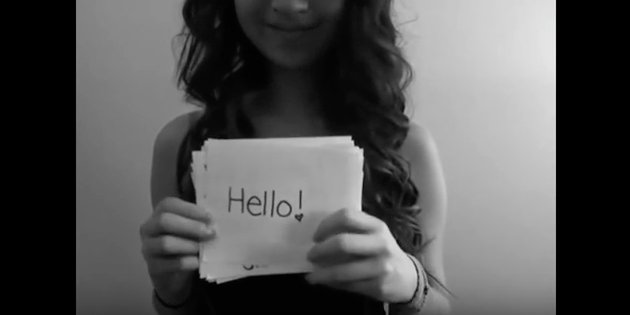
“When I am gone, do not fear my memory. Do not be afraid to speak my name or look through old photographs. Do not be scared to play old videos so that you might hear my voice and see me laughing. Do not be wary of visiting my favourite places or eating my favourite foods or singing along to my favourite songs.
I know it will hurt. Those memories will remind you that I am gone. They will stab at you like a knife in an open, gaping wound. Raw, excruciating pain.
But after a while the knife will become less sharp, the wound will become less open and the pain will become less raw. And those memories will remind you that I was here. That I lived.
Do not reduce my life to my death. Speak my name, hear my voice, sing my favourite songs and visit my favourite places. Because that’s how I can stay alive a little. Right here with you.” 🧡
Memories are the legacy of love.
Wonderfully written by
Becky Hemsley ❤️
Artwork by
Amanda Cass ❤️
The British Columbia government has dropped its threshold for its homeowner grant program for the first time in six years as assessed values for homes fall in the province’s Lower Mainland. https://t.co/17r03NEFhm
"My name's Raymond. I'm 73. I work the parking lot at St. Joseph's Hospital. Minimum wage, orange vest, a whistle I barely use. Most people don't even look at me. I'm just the old man waving cars into spaces.
But I see everything.
Like the black sedan that circled the lot every morning at 6 a.m. for three weeks. Young man driving, grandmother in the passenger seat. Chemotherapy, I figured. He'd drop her at the entrance, then spend 20 minutes hunting for parking, missing her appointments.
One morning, I stopped him. "What time tomorrow?"
"6:15," he said, confused.
"Space A-7 will be empty. I'll save it."
He blinked. "You... you can do that?"
"I can now," I said.
Next morning, I stood in A-7, holding my ground as cars circled angrily. When his sedan pulled up, I moved. He rolled down his window, speechless. "Why?"
"Because she needs you in there with her," I said. "Not out here stressing."
He cried. Right there in the parking lot.
Word spread quietly. A father with a sick baby asked if I could help. A woman visiting her dying husband. I started arriving at 5 a.m., notebook in hand, tracking who needed what. Saved spots became sacred. People stopped honking. They waited. Because they knew someone else was fighting something bigger than traffic.
But here's what changed everything, A businessman in a Mercedes screamed at me one morning. "I'm not sick! I need that spot for a meeting!"
"Then walk," I said calmly. "That space is for someone whose hands are shaking too hard to grip a steering wheel."
He sped off, furious. But a woman behind him got out of her car and hugged me. "My son has leukemia," she sobbed. "Thank you for seeing us."
The hospital tried to stop me. "Liability issues," they said. But then families started writing letters. Dozens. "Raymond made the worst days bearable." "He gave us one less thing to break over."
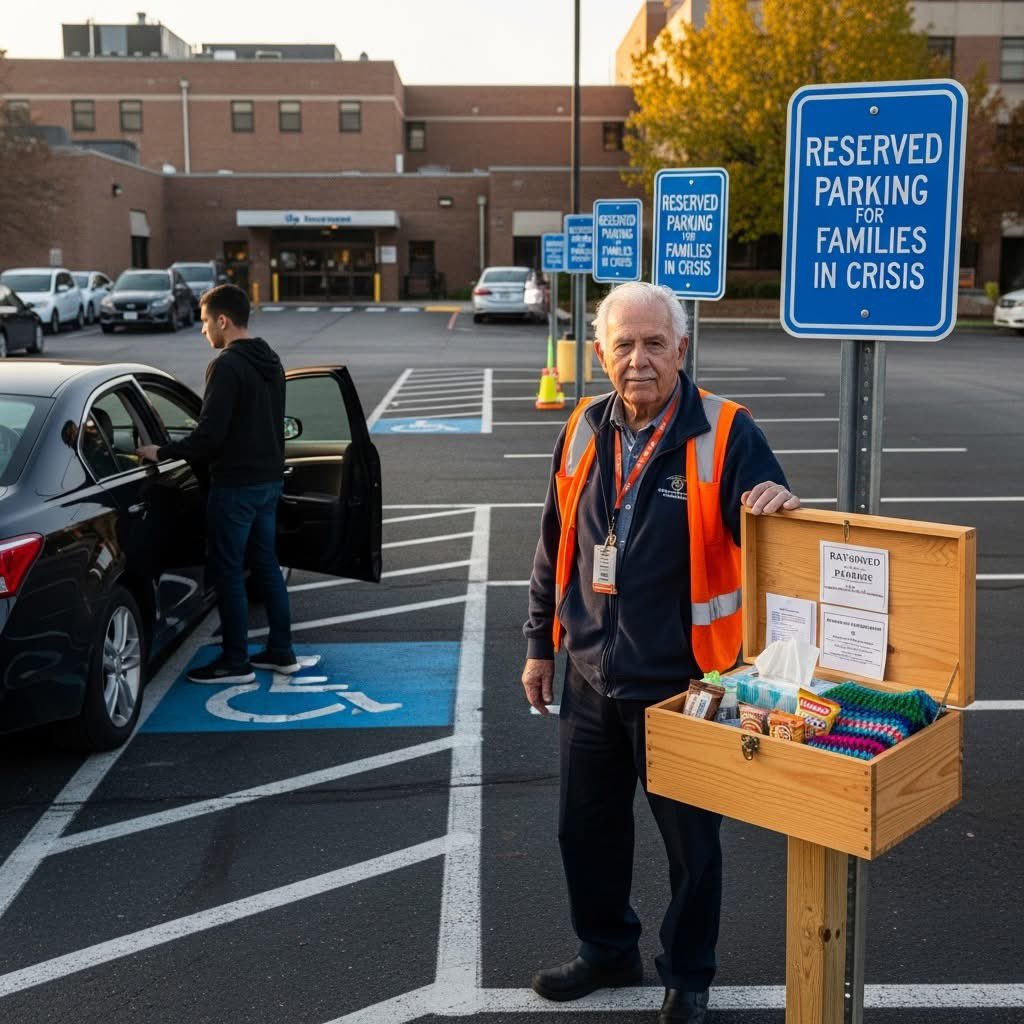
Last month, they made it official. "Reserved Parking for Families in Crisis." Ten spots, marked with blue signs. And they asked me to manage it.
But the best part? A man I'd helped two years ago, his mother survived, came back. He's a carpenter. Built a small wooden box, mounted it by the reserved spaces. Inside? Prayer cards, tissues, breath mints, and a note,
"Take what you need. You're not alone. -Raymond & Friends"
People leave things now. Granola bars. Phone chargers. Yesterday, someone left a hand-knitted blanket.
I'm 73. I direct traffic in a hospital parking lot. But I've learned this: Healing doesn't just happen in operating rooms. Sometimes it starts in a parking space. When someone says, "I see your crisis. Let me carry this one small piece."
So pay attention. At the grocery checkout, the coffee line, wherever you are. Someone's drowning in the little things while fighting the big ones.
Hold a door. Save a spot. Carry the weight no one else sees.
It's not glamorous. But it's everything."
Let this story reach more hearts....
Credit: Mary Nelson
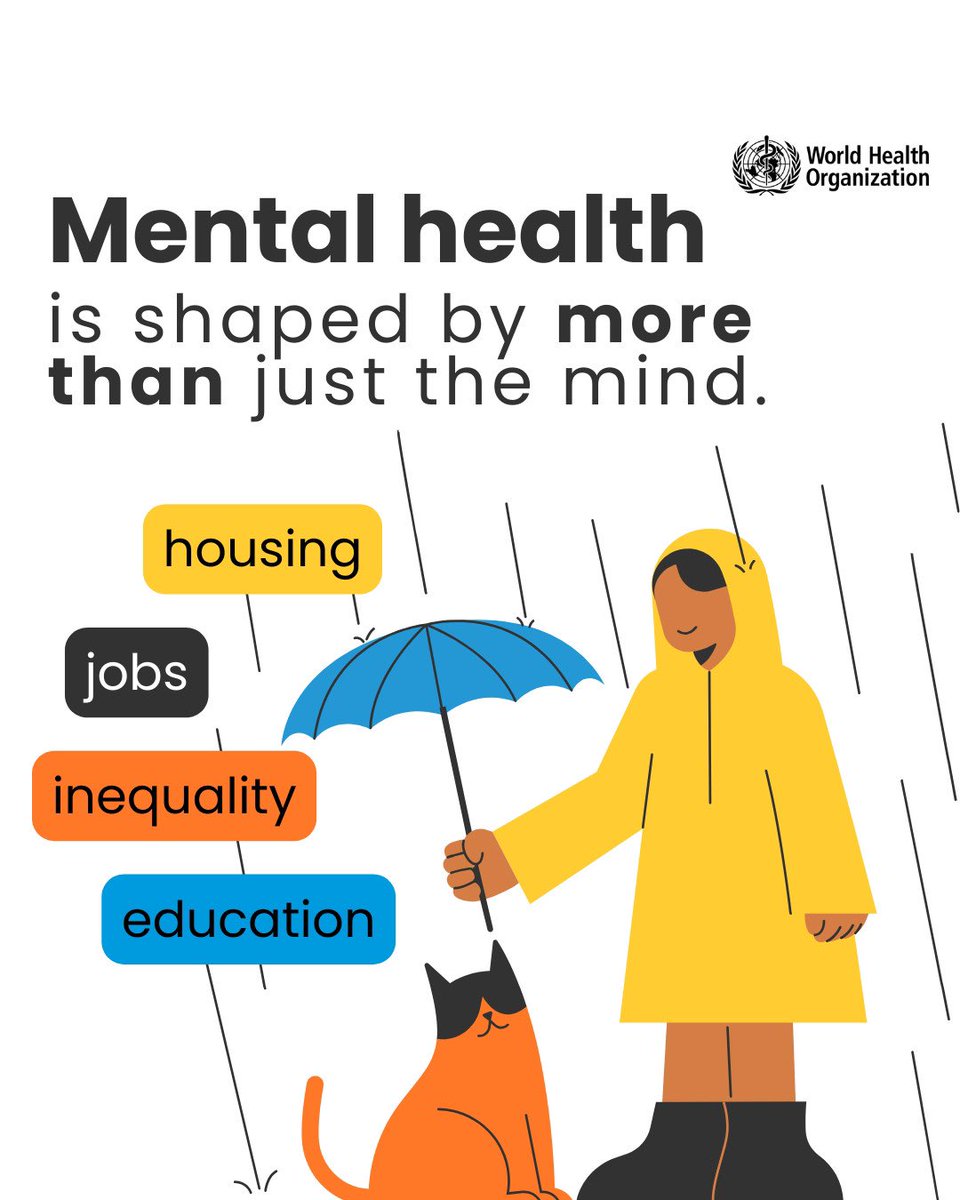
#MentalHealth is shaped by more than just the mind. Social factors like poverty & housing also affect mental health.
WHO mental health guidance provides all countries with practical tools to strengthen policies & services, ensures people with lived experience have a voice & promotes rights-based care https://t.co/QYwvYAnhTC
This podcast series is a must listen. As caring humans, we are responsible for learning as much as we can about the digital world to understand better an to have constructive conversations with our children. @AToddLegacy@Safety_Canada@NCMEC@CanadianPM@CdnChildProtect
When the world feels uncertain, it's helpful to stay hopeful. Join us for #OptimisticOctober and find ways to keep moving forward and helps others do the same
🗓️ Get your action calendar https://t.co/Zwx28pfSN9
✅ Join the optimism challenge https://t.co/uW8mqy0tr4
ICYMI: CBC's Marketplace talks to Canadian families whose children were sextorted and died by suicide. An important, but heartbreaking watch.
https://t.co/t5pH2OCOq9
TikTok and Roblox added new safety tools. 📱
You can now block games, set time away, and manage friends.
See how these features help protect your family online.
Saw this on Linked In…powerful….
We will never forget.
"Dear 77,301,997 Americans who voted for Trump,
Being Canadian has never been about shouting the loudest. We don’t pound our chests or demand attention. We are sometimes like the quiet kid on the playground, just wanting to get along with others. We hold doors, say sorry even when it’s not our fault, and shovel our neighbour’s driveway just because it’s the right thing to do. We believe in fairness, decency, and looking out for one another.
We are the world’s greatest neighbour… and yes, our spelling is the correct one. We show up. In the words of our Prime Minister on Saturday night, “from the beaches of Normandy to the mountains of the Korean Peninsula, from the fields of Flanders to the streets of Kandahar, we have fought and died alongside you during your darkest hours. During the summer of 2005, when Hurricane Katrina ravaged your great city of New Orleans, or mere weeks ago, when we sent water bombers to tackle the wildfires in California, and during the day the world stood still — Sept. 11, 2001 — when we provided refuge to stranded passengers and planes, we were always there, standing with you”.
And yet, here we are – watching your president, a man who built his legacy on bullying, turn his sights on us. He mocks us, belittles us, and treats us like some inconvenience rather than the ally who has stood by you through thick and thin.
It’s easy to mistake our politeness for passivity, or our kindness for weakness. But here’s the thing about the quiet kid on the playground: push that kid far enough, and that kid pushes back.
Canada has never needed to boast about its strength. We just prove it. On battlefields. In boardrooms. On the ice. So, if you think you can push us around and take us for granted – think again. You think we will become your “cherished 51st state” – think again. Underestimate us… that will be fun. Because the quiet kid? The quiet kid remembers. And when the quiet kid finally stands up, the whole playground takes notice.
Now we are pissed.
Sincerely,
Canada"
Stunning new findings on device use by young children: 40% of two-year-olds now have their own tablet. From @CommonSense.
We have to roll back the phone-based childhood now. An iPad is not a babysitter, it is an experience blocker.
https://t.co/QpAApoWM91
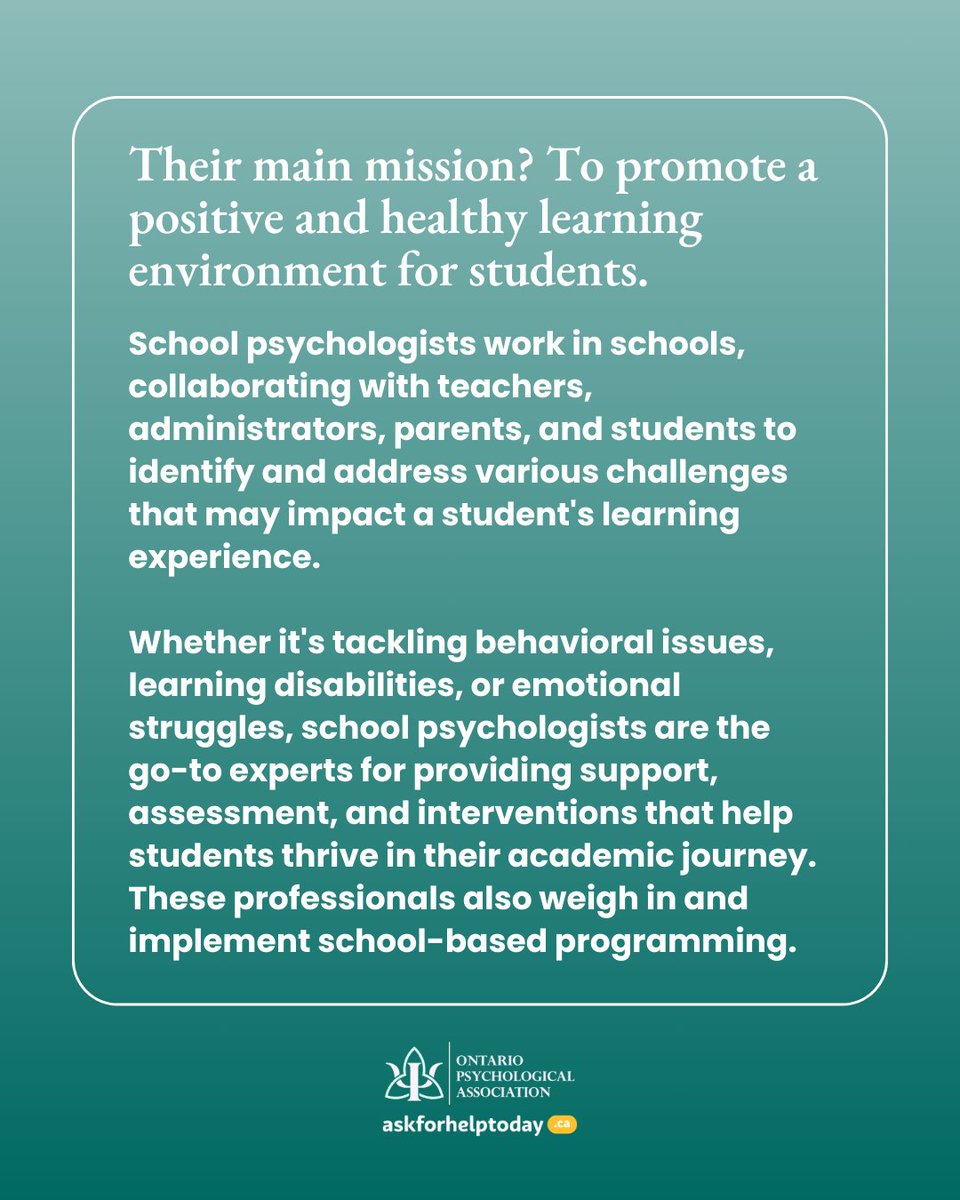
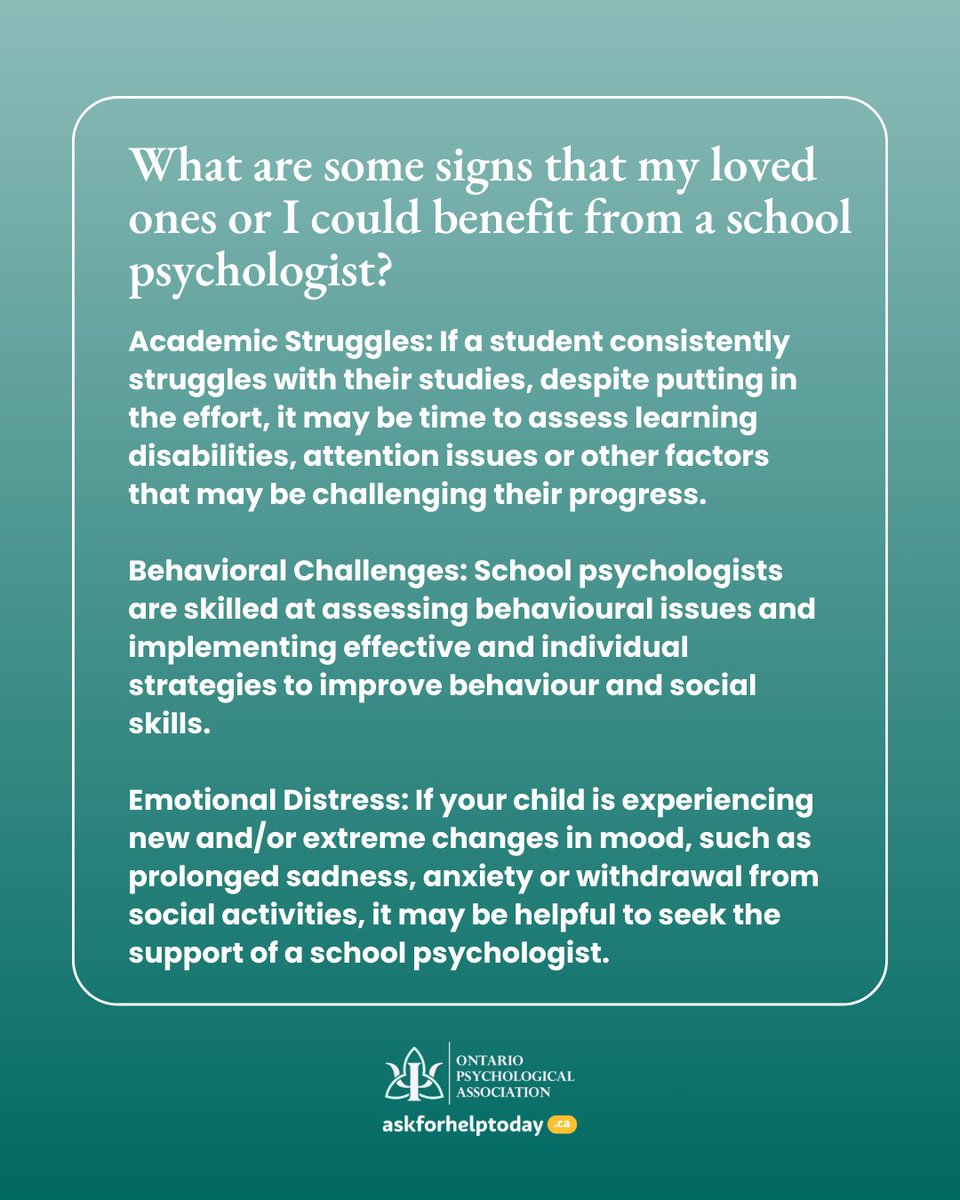
If you or a loved one are facing challenges in a school environment, don’t hesitate to connect with the OPA for the support of a school psychologist. Visit https://t.co/7uYsnXgBib to find the right professional for you.
#schoolpsychology#schoolpsychologist#psychologymonth