@elonmusk Every Tesla should have the option of an integrated Starlink receiver from the factory. No external antennas. Just native satellite connectivity.
@Tesla And 5 months with no answers, no updates, no people to interact with, the worst UI in the app. Not proud for a software company. You need a lot of improvement in that process in the app.
@hyperconectado Y eso cumple el marco de datos personales ? No es una infracción al régimen de datos ? Públicamente expuesto no es lo mismo que de uso público. Yo haría doble check con una abogado en datos una buena intención se puede volver un embeleco jurídico
@jofpin Decir que ISO 27001 “solo audita procesos” es una sobre simplificación. La norma no certifica invulnerabilidad, pero sí obliga a diseñar, operar, medir y auditar controles de seguridad sobre riesgos reales. Las pruebas de penetración son parte del alcance explícito de la norma
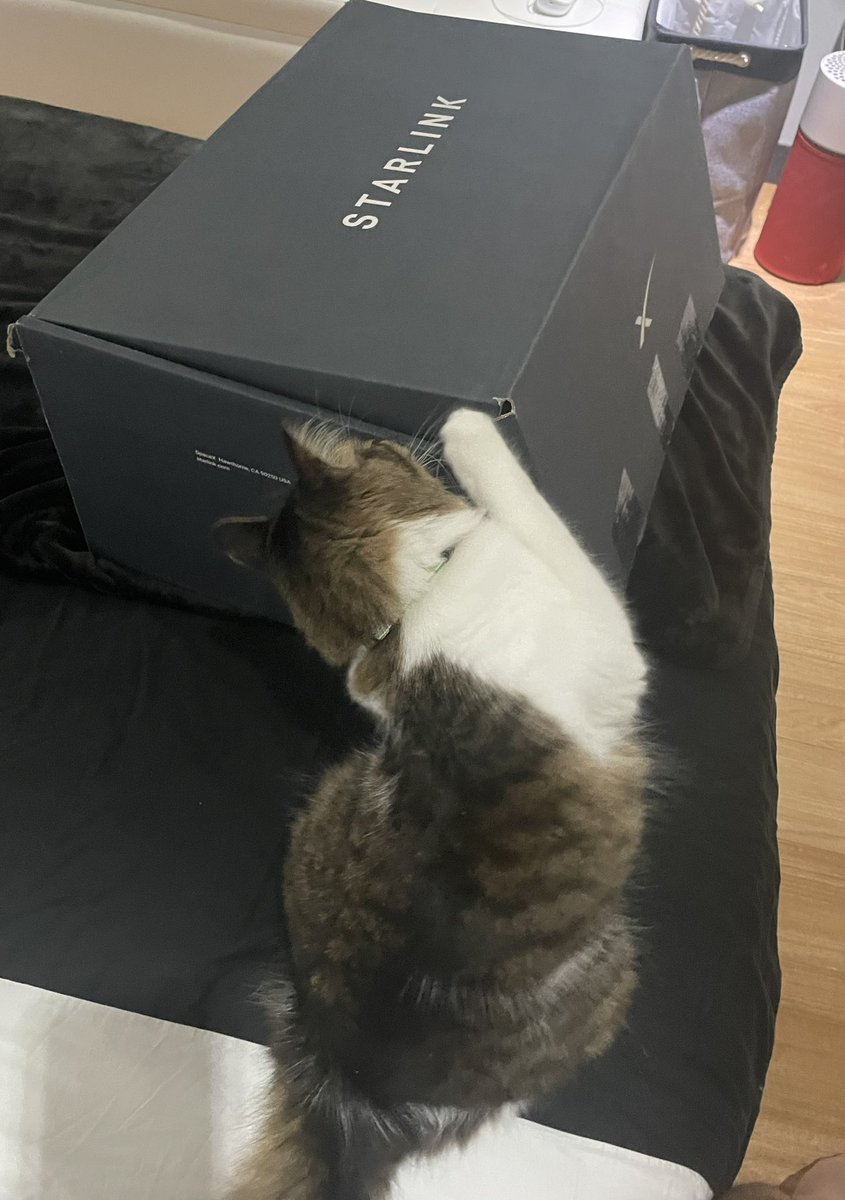
@elonmusk did you see an starlink cat ? Thanks to contemplate Colombia 🇨🇴 for a starlink service. You also need to think in make available @Tesla cars for our country. I will buy one too!
We believe it's important to give people the ability to fix things themselves if they prefer to do so
You can find service manuals for all of our cars, buy parts, access info on diagnostic tools & more via https://t.co/243adViPj1
LLMs can now self-optimize.
A new method allows an AI to rewrite its own prompts to achieve up to 35x greater efficiency, outperforming both Reinforcement Learning and Fine-Tuning for complex reasoning.
UC Berkeley, Stanford, and Databricks introduce a new method called GEPA (Genetic-Pareto), an autonomous system for prompt optimization.
The researchers tested this across diverse tasks like multi-hop Q&A and instruction following.
They demonstrated gains using proprietary models like GPT-4.1 Mini and open-source models like Qwen3 8B.
Here's a look at how it works:
GEPA treats prompt optimization as a genetic evolution problem. It starts with a diverse "pool" of prompt candidates.
It uses Pareto optimization to select the "fittest" prompts. It finds the ones that offer the best tradeoff between high performance on a task and low computational cost (measured in "rollouts").
It "evolves" new, better prompts using two key mechanisms:
Crossover: Intelligently combining the best parts of two successful "parent" prompts to create a new "child" prompt.
Reflective Mutation: This is the self-optimization engine. The system tasks an LLM to analyze its own detailed execution trace (its successes and failures) and then intelligently rewrite its own instructions to fix the flaws.
How GEPA fits into your AI strategy:
This method provides a powerful new tool without replacing existing ones. Here’s the distinction:
GEPA works on its own. You can apply it directly to any base LLM to achieve significant performance gains just by optimizing the prompt.
Fine-Tuning teaches the model what (domain knowledge), while GEPA optimizes how the model uses that knowledge (its reasoning process).
This makes them powerful complements. You can use GEPA to supercharge a base model, OR you can apply it to an already fine-tuned model to get the absolute best performance from your expert AI.
It's a new, flexible layer in the optimization toolkit that allows AI to optimize itself.
@jijaraba@merlin_robledo@DCoronell Para trabajar extras de recurrente debe pedir un permiso al ministerio de trabajo de lo contrario con la normas actuales solo puede trabajar máximo 8 h diarias.
We discovered faster way to compute product of matrix by its transpose!
This has profound implications for data analysis, chip design, wireless communication, and LLM training!
paper: https://t.co/6CMNliyW7j
The algorithm is based on the following discovery: we can compute XX^t for 4x4 matrix in just 34 multiplications, a huge save compared to compared to naive way (40 multiplications 🤯).
We can apply this algorithm to any m x n matrix X (with n, m >= 4) by dividing it into 16 blocks X_1, ..., X_16.
- Estimated energy save: 5-10% ✅
- Estimated time save: 5% ✅
The discovery was made by combining Machine Learning-based Search and Combinatorial Optimization. We used RL to sample bilinear expressions. We then used combinatorial solvers (Gurobi) to enumerate relations between these expressions and combine these expressions together into one algorithm for XX^t. One way think of it is modification of AlphaTensor approach - We reduced the action space by a factor of a million (x1000000) at the expense of relying on combinatorial solvers.
The matrix XX^t is used everywhere:
- Data Analysis: linear regression
- Finance: covariance matrix for asset returns
- LLM training: Muon, SOAP, Shampoo
- Wireless Communication: 5G, MIMO channel capacity
This operation is performed trillions of times every minute globally. Imagine if we can save 5% of energy used for these computations!
Coauthors: Yushun Zhang @ericzhang0410, Zhi-Quan Luo.
@bindureddy It doesn’t matter what the benchmarks say—OpenAI’s API has noticeably declined in quality and performance compared to earlier versions. As a result, we have been transitioning our API usage to Anthropic.