@4moonsettler@L0RINC@andrew_s_toth It’ll take a few more days to finish the re-testing, but it seems to me that this slowdown has nothing to do with LevelDB. The disk reads are coming from the files blk/rev*.dat. For some reason, those files aren’t staying in RAM the way they do with the default dbcache setting.
Can someone explain this?
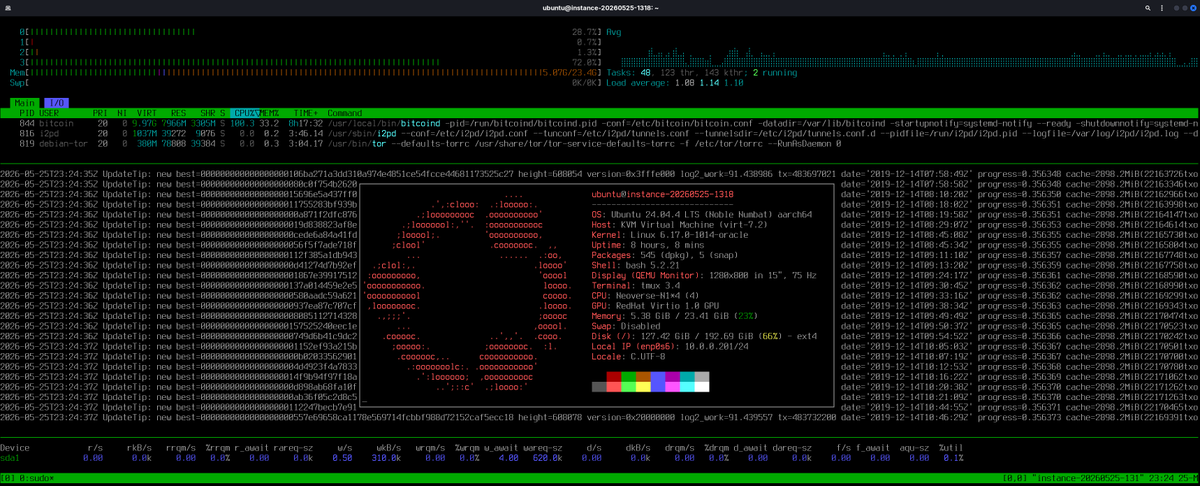
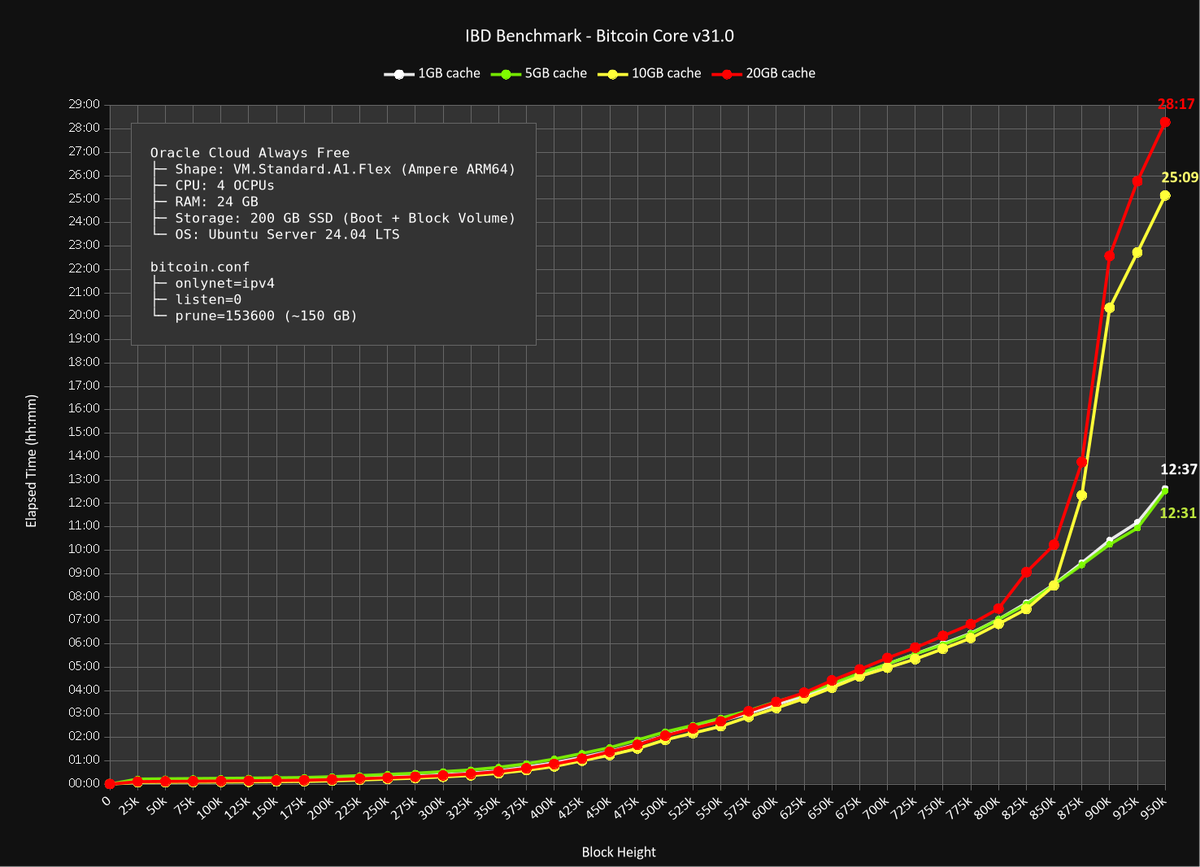
IBD with a +10GB dbcache runs fine until ~820k blocks, then disk reads suddenly explode and I/O becomes the bottleneck.
If the cache is supposed to prevent this, why does it happen right there?
#Bitcoin#Benchmark#Performance
@4moonsettler@L0RINC@andrew_s_toth I'm rerunning all the tests, and this time I'm logging all the activity (vmstat, iostat, and iotop) with timestamps so I can create several graphs showing disk and memory usage.
@L0RINC@murchandamus@andrew_s_toth The performance level I'm using is Balanced. Let's assume that's the cause - in that case, shouldn't I also see the same bottleneck during IBD with dbcache=1024 starting from block ~820,000 onwards, like I do with higher dbcache values?
https://t.co/rEX8zjUDVq
@L0RINC@andrew_s_toth@4moonsettler I'm trying to understand this performance discrepancy between different dbcache values and why this bottleneck occurs with dbcache=10240 when there's still plenty of free memory available.
@andrew_s_toth@4moonsettler I don't think it's a disk performance limitation. If it were, I'd expect it to be present throughout the entire process, not only starting around block ~820,000.
Also, with more memory available for "dbcache", shouldn't disk usage be significantly lower?
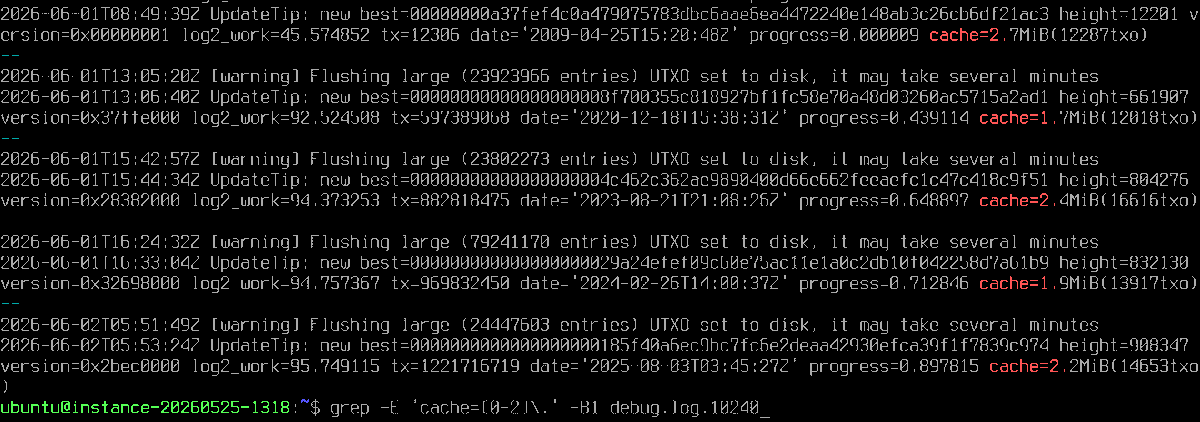
@L0RINC I assume that warning only appears when "dbcache" is configured higher than the total amount of RAM available. With 24 GB of RAM, "dbcache=10 GB" should work fine.
The only warnings I ran into were these:
@4moonsettler@andrew_s_toth I didn't get a chance to generate the disk I/O graph, but I do have this screenshot from when I first started noticing the excessive disk usage.
🚨NEW: MINED IN AMERICA ACT WOULD PUT BITCOIN NETWORK AT RISK
The Mined in America Act would distort the overall economic incentives of the Bitcoin network and capture U.S. based miners in a situation where dependence on associated loan or grant programs makes it economically non-viable for them to deny government demands.
Effectively, the bill would turn miners into their own surveillance teams, collecting and reporting information to the government in exchange for economic favoritism.
⬇️ Full story by @brian_trollz
#Bitcoin Core v31.0
IBD completed in ~24h50m on:
- Ubuntu 24.04 ARM64
- Oracle Cloud Ampere A1
- 4 OCPU / 24GB RAM
- 200GB SSD
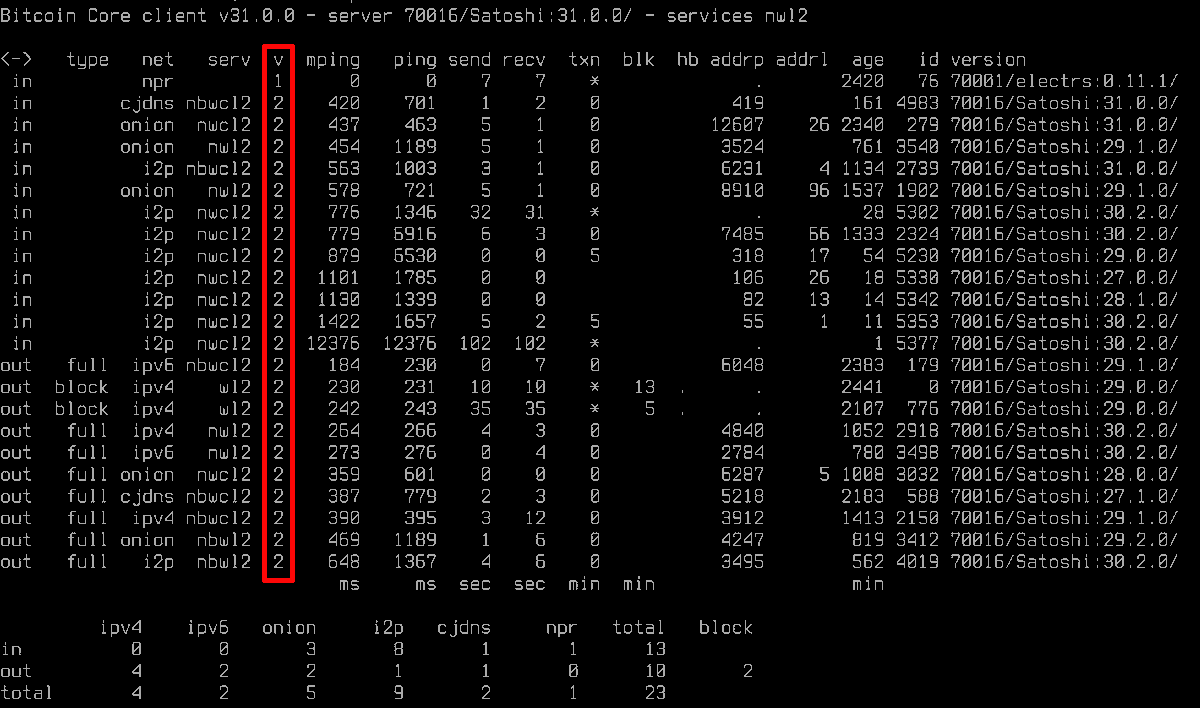
600+ peers during sync.
Obs: Tor/I2P peers rarely stayed connected for more than ~10 min during IBD due to lower throughput compared to IPv4 peers.