The action of a quantum convolutional neural network, which is a promising architecture for quantum machine learning, can be efficiently simulated by a classical computer.
Read the paper: https://t.co/alZPVAWTze
Ooshiro's depiction of grief continues to be so masterfully crafted
Asa never truly left the cycle of loss. Her disparaging behavior at the only proximate individual in her life was but a small step for her to gradually find acceptance in her new reality.
Her parents are gone
De um lado, tem o bobão que se sente superior por fazer quatro disciplinas de Cálculo e é totalmente alienado;
Do outro, tem a garota que não sabe resolver equação de segundo grau e jura que é crítica e inteligente porque leu 2 livros do Niet e escreveu resenhas com o chatgpt...
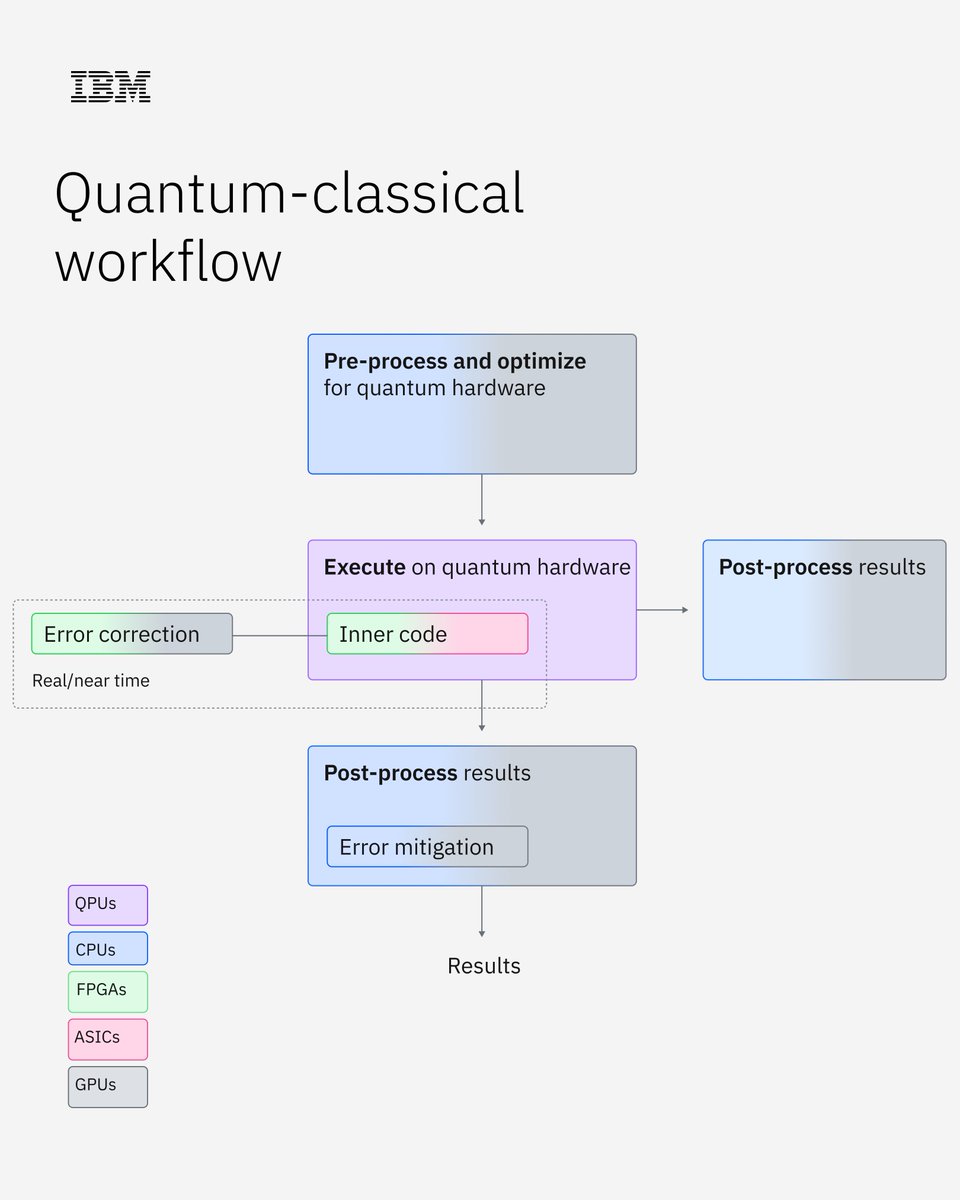
Momentum is building for quantum-centric supercomputing.
Results from our partners at @ORNL, @AMD, @RIKEN_en, @AlgorithmiqHQ, and the quantum community are showing how GPUs + QPUs can accelerate workflows and boost the fidelity of quantum computations: https://t.co/RTzFFFmlFb
na minha antiga empresa um estagiário foi demitido
por que? não sei, mas ele era interessante
ele nomeava as variáveis e funções com nome de carro, e ele nunca comentava explicando aquela variável
era tipo variável Fusca é utilizada para guardar o retorno da função Kombi
Three things.
First, poverty.
When people say China "ended poverty," they are talking about extreme poverty, the kind where people starve, have no electricity, no access to schools, no medical care.
China went from 90% extreme poverty in 1980 to near zero today.
That is the largest poverty-reduction achievement in human history.
No other nation has ever done that.
Certainly not the nations lecturing China about governance while letting their own citizens sleep under bridges.
Second, "human rights violations."
This is always the part where Western rhetoric enters autopilot.
Human rights discourse in the West functions like this:
If a country is useful to Washington, its human rights issues are "complex."
If a country is independent, its issues become a "crisis."
If a country competes with the United States, its issues become an "atrocity."
Meanwhile:
The U.S. runs the largest prison population on Earth.
It bombs countries without UN approval.
It sanctions nations into famine.
It freezes, seizes, and plunders foreign assets whenever a nation refuses to submit.
It supports dictatorships so long as they serve its interests.
It tortured people in black sites across the world.
So forgive me if I do not treat Washington as the global ombudsman of moral authority.
China has problems, yes.
But China also raised life expectancy, built universal healthcare, created the largest middle class on Earth, and lifted more people into education, housing, and stability than any nation in history.
That is a human rights achievement on a civilizational scale.
Third, stability.
If you think China is unstable, ask yourself a simple question:
Why is every U.S. administration terrified of China's economy, not China's collapse?
Why is the West obsessed with "containing" China instead of "saving" it?
Why are Western corporations begging to stay in China despite the rhetoric?
Because they know the truth:
China is not falling apart.
China is the economic center of gravity.
America’s economy is stable only so long as the world keeps financing its debt.
China’s economy is stable because China finances itself.
So my opinion?
China has flaws.
China has challenges.
China also has achievements unprecedented in scale, speed, and historic impact.
What China does not have is the luxury of pretending to be a moral authority while the world burns in the wake of its foreign policy.
Here's a probability problem that stumps almost everyone:
A person has two children. You are given that at least one is a boy born on a Tuesday. What is the probability that both children are boys?
The answer is NOT 1/2 or 1/3. Let's break it down:
1/5
Simulating quantum chaotic systems is where quantum computers have arguably the strongest gap with respect classical systems.
I do think quantum computers have a future as generators of training data for coarser-grained physics-based AI models for matter and biology.
The road to that point is still long, but Google is making consistent progress.