@OurFavOnlineDoc She left for ilorin from Akure on Monday and we haven't been able to reach her since then.
This night her Captors called the family and were demanding for 40 million naira
SOS!!!!
@PoliceNG@HQNigerianArmy
There was a time in Nigeria when the man carrying a sewing machine on his shoulder was called Obioma.
Because almost all the artisanal tailors were Easterners of Igbo descent.
After the Civil War, many Easterners emerged from one of the most devastating chapters in Nigerian history with almost nothing but skill, mobility, discipline, and a survival instinct.
Some carried sewing machines from street to street, patching clothes, repairing trousers, adjusting school uniforms, and moving from compound to compound looking for work.
That image became so common that the name stuck.
Obioma.
A man with a sewing machine on his shoulder, moving under the sun and doing work many people looked down on.
But the same people who were once reduced in the public imagination to street tailoring slowly began to move.
From roadside tailoring to shops.
From shops to markets.
From markets to importation.
From importation to manufacturing.
From apprenticeship to industrial clusters.
From survival to ownership.
Go to Nnewi.
Go to Aba.
Go to Onitsha.
Go to Alaba.
Go to Ladipo.
Go to Ariaria.
You will still see poverty, struggle, disorder, bad roads, poor power supply, and all the normal Nigerian problems. Nobody is pretending the Southeast has become Singapore.
But you will also see something powerful.
You will see a people who took humiliation, displacement, and economic ruin and built a survival machine around trade, apprenticeship, mobility, and family capital.
And this is what makes my heart sink as a Northerner.
Today, the mai guard, mai ruwa, mai shayi, mai kaya, shoe repairer, the man pushing a wheelbarrow, carrying loads, shining shoes, patching clothes, riding okada, clearing construction sites, packing refuse, digging soakaway pits, hawking small goods, or sleeping beside a kiosk in Lagos, Abuja, Port Harcourt, Ibadan, Onitsha, and other cities is often called "Aboki."
That is the story we don't want to face.
One people moved from grass to grace.
Another moved from grace to grass.
This is not to take anything away from the Igbo people. I have nothing but admiration for them.
And it is not an insult to the Hausa people or to menial jobs. I am a proud son of Arewa, and in Arewa we do not look down on any vocation earned through halal means.
This is a history lesson.
Now look at us in the North.
We did not begin from the bottom.
Long before colonial Nigeria existed, Kano was already one of the great commercial cities of West Africa. Merchants from Tripoli, Fez, Agadez, Timbuktu, and Bornu passed through its markets. Caravans crossed the Sahara carrying leather goods, textiles, kola nuts, salt, and livestock. The city walls of Kano were not built around a village. They were built around a thriving urban economy that connected West Africa to North Africa.
We had cities that were centres of commerce when many parts of modern Nigeria were still organized around smaller local economies.
We had emirates that provided administration, taxation, courts, and political order across vast territories.
We had centres of Islamic scholarship that attracted students from across the region. In places like Kano, Katsina, Sokoto, and Borno, generations of scholars produced manuscripts and taught jurisprudence, theology, grammar, astronomy, and history. The reputation of northern scholarship travelled far beyond Nigeria's borders.
We had trade routes that linked us to the wider world. For centuries, merchants moved goods across the Sahara and across the savannah belt. Northern markets were not isolated local markets. They were part of international commercial networks.
We had cattle wealth on a scale few regions could match. Fulani pastoralists moved millions of cattle across grazing routes stretching from Senegal to Cameroon. Livestock was not merely food. It was wealth, trade, transport, status, and economic security.
We had one of the most respected leather industries in Africa. Kano leather was famous across the continent. Tanned hides from northern Nigeria found their way into trans-Saharan commerce and international markets. The famous red goatskin known as Morocco leather often originated from skins processed through West African leather networks in which Kano played a major role.
We had textile industries that employed thousands long before modern factories arrived. Hand-spun cotton was woven into cloth across northern towns. Entire communities depended on spinning, weaving, dyeing, trading, and transporting textiles.
We had the famous dye pits of Kano.
Not one or two pits.
Dozens of them.
For centuries, the Kofar Mata dye pits transformed locally woven cloth into richly coloured fabrics using indigo. Traders came from different parts of West Africa to buy these textiles. The dye pits became one of the oldest continuously operating industrial sites on the continent. They supported craftsmen, traders, transporters, farmers growing indigo, and entire commercial networks built around textile production.
We had the groundnut economy.
There was a time when the groundnut pyramids of Kano were not merely tourist attractions on postcards.
They were symbols of enormous agricultural wealth.
Thousands of farmers cultivated groundnuts across the North. Rail lines carried produce southward for export. Groundnut exports generated foreign exchange, supported industries, created jobs, and helped finance government revenues. The pyramids themselves represented mountains of produce waiting to enter global markets.
And if we move into the colonial and post-colonial era, the advantages become even harder to ignore.
We had numbers.
The North occupies roughly three-quarters of Nigeria's landmass. Depending on how one defines the region, the nineteen northern states account for well over half of Nigeria's population. Kano State alone has a population larger than many African countries.
We had manpower.
For decades, millions of young people entered the labour force every year. We were not a small minority struggling to find relevance. We were one of the largest demographic blocs in Africa.
We had land.
Hundreds of thousands of square kilometres of territory stretching across the Sudan and Sahel savannahs.
Land suitable for millet, sorghum, maize, rice, cotton, groundnuts, and livestock.
Land crossed by major river systems such as the Niger and Benue, and supported by irrigation projects in several states.
We had agricultural potential that many countries would envy.
We had political influence.
From independence onward, northern politicians, military officers, civil servants, traditional rulers, and power brokers occupied some of the most influential positions in the Nigerian state for long periods.
Prime ministers.
Heads of state.
Presidents.
Military rulers.
Senior ministers.
Powerful bureaucrats.
Influential legislators.
Whether one likes that fact or not, the North was never politically invisible.
We had religious authority.
The Sultanate of Sokoto remains one of the most influential Islamic institutions in Africa.
The emirates commanded legitimacy that extended beyond politics.
Mosques, Islamic schools, scholars, judges, and religious networks shaped social life across millions of households.
We had institutions.
Not perfect institutions.
But institutions nonetheless.
Emirate councils.
Traditional courts.
Islamic learning centres.
Agricultural boards.
Marketing boards.
Regional administrations.
Cooperative systems.
Educational establishments.
Commercial associations.
Structures that survived for generations.
We had a head start.
That is what makes the present situation so painful.
Because today, when millions of young Hausa and northern boys enter any big city, what work are many of them known for?
These boys are not lazy.
A lazy man does not leave Kano, Katsina, Zamfara, Sokoto, Jigawa, Bauchi, Kebbi, or Borno and sleep under a bridge in Lagos just to survive.
A lazy man does not push water from street to street.
A lazy man does not carry cement until his back bends.
A lazy man does not guard another man's house all night and still open a kiosk by morning.
The problem is not laziness.
The problem is that too many of our people enter the modern economy from the lowest possible point.
No certificate.
No skill that scales.
No capital.
No protection.
No formal training.
No strong educational foundation.
No industrial ladder waiting for them.
So they sell their bodies first.
Their backs.
Their hands.
Their legs.
Their sleep.
Their youth.
That is the real tragedy.
The Igbo Obioma story became a ladder because it was connected to apprenticeship, trade discipline, family networks, and commercial ambition.
The Hausa Aboki story too often becomes a trap because it is connected to poverty, broken schooling, rural collapse, insecurity, and survival migration.
One system turns a boy into a trader.
The other turns a boy into cheap labour or, worse, a recruitment ground for terrorism.
This is the painful contrast.
The Southeast came out of war and produced commercial networks.
The North came out of power and produced surplus labour.
That sentence is harsh, but look around before you reject it.
Who is carrying the load?
Who is guarding the gate?
Who is pushing the cart?
Who is fetching the water?
Who is sleeping in the market?
Who is leaving the village because bandits have made farming impossible?
Who is entering the city with nothing but strength?
If the answer to all the questions above is Arewa youth, then you must not be offended by the diagnosis. Instead, start asking your leaders the harder questions.
Because what is happening to Arewa is a failure of social organization. We shield our leaders too much and outsource criticism of them.
Our fathers inherited a civilization.
Too many of our boys inherited migration.
Our fathers inherited functioning economic systems.
Too many of our boys inherited survival.
Our fathers participated in trade networks stretching across continents.
Too many of our boys participate only in daily labour markets.
Our fathers built industries around leather, textiles, livestock, agriculture, and commerce.
Too many of our boys now rent out their muscles by the day.
And the painful thing is that the word Aboki, which originally means "friend," now, in the mouth of the Nigerian city, often becomes a class marker.
It becomes a way of saying: the northern poor man who does the work nobody respects but everybody needs.
That should break our hearts.
Not because the work is shameful.
No honest work is shameful.
What is shameful is that a whole region with history, population, religious authority, political influence, institutions, agricultural potential, and vast territory keeps producing young people whose first contact with the economy is desperation.
This is why history matters.
The question is not whether the Igbo are better than the Hausa.
That is a childish argument.
The real question is: what system turns hardship into enterprise, and what system turns heritage into dependency?
Because poverty alone does not explain everything.
War did not stop the Igbo from building trade networks.
Lack of oil did not stop Nnewi from producing industrialists.
Bad Nigerian roads did not stop Aba from becoming a manufacturing symbol.
Weak government did not stop apprenticeship from creating business owners.
So what stopped us?
What happened to the North that inherited thriving cities, trans-Saharan commerce, respected scholarship, textile industries, leather industries, livestock wealth, agricultural exports, demographic strength, political influence, and enormous land resources?
How did a people with so much historical structure produce so many young men with so little modern preparation?
That is the conversation we need.
Not insults.
Not denial.
Not ethnic pride.
Not hiding behind "our culture."
Not pretending every criticism is hatred.
The Obioma story should humble us.
Because it shows that a people can begin with a sewing machine on the shoulder and still build a commercial ladder.
The Aboki story should disturb us.
Because it shows that a people can begin with history on their side and still end up supplying cheap labour to other people's cities.
That is the mirror.
Igbo moved from Obioma to enterprise.
Hausa must not remain trapped inside Aboki survival.
The North needs a ladder.
I was born with sickle cell disease.
I had Crisis after crisis, constant pain, multiple organ damage by age 28. Doctors said I wouldn’t see 35.
During one brutal episode, I prayed like never before while hooked up to morphine. The pain vanished overnight.
Follow up tests showed my hemoglobin was normal. No sickle cells. Geneticists ran every test, markers for the disease had disappeared. I haven’t had a crisis in 4 years.
My hematologist calls me the walking miracle file.
You have to believe that there is God.
@Maggiewitdsauce@ArcSadam I agree with you
I was thinking her probing into his account would be when he's not providing as he used to do.
Then you'll be concerned and have a convo with him, not policing.
Then she can also ask to help him in some aspects, not expecting him to have a certain amount.
@Adasomma1 I told him I wanted to be in the first batch they'll pay so I go run. He told me that's true but it's night already & no payment again. Told me he for refund me but his Oga dey aware,said his 1st name only saying make I no track him with full name
We laughed o, since then NO WAY!
Bode was that typical Nigerian man who wore “I’m African and strong” like a badge of honour.
“Doctor? For what? I don’t have time for all that hospital nonsense. Only weak people run there.”
He would laugh it off, chest puffed out, always talking about how real men endure pain. Bode hustled from morning till night spare parts business in Ladipo, pure water supply, sometimes even driving danfo. Rest? For who? Money doesn’t rest, so why should he?
The first sign came quietly.
A strange tingling in his toes, like ants marching under the skin. He would just shake his leg, slip on his sandals, drink some herbal mixture and carry on. “It’s just stress,” he would tell his friends at the beer parlour. They would laugh and life went on.
But the feeling never left.
Weeks turned into months. At night, the same feet that carried him all day would start burning like fire. He would toss and turn in bed. His wife would ask, “Bode, what’s wrong?” He would mumble, “I’m fine, it’s just tiredness.”
Then one morning, everything changed.
He stepped on a small nail. Blood spilled on the floor but Bode felt nothing. No pain at all. He stood there staring at the blood in disbelief. For the first time, real fear hit him not pain, but fear. How can you injure yourself and not feel a thing?
That same day, he finally went to the hospital the first time in many years.
After the tests, the doctor looked at him and said, “My brother, this is diabetic neuropathy. Your blood sugar has been high for years. The nerves are already damaged.”
Bode, a man who hadn’t cried since secondary school, had tears in his eyes that day. All the “I’m strong” talk, all the times he ignored the warning signs, all the “a man must push” mentality it had cost him.
Now the same legs that powered his hustle bring him both pain and numbness. The doctor said some of the damage may never fully heal.
My people, listen.
That “I don’t go to hospital” attitude many of us carry it is not strength. It is slow suicide.
If your toes tingle, if you urinate too frequently, if wounds refuse to heal, if your vision is blurring stop forming strong until you lose everything. Real strength is listening to your body before it’s too late.
If this story touches you, please send it to that brother, uncle or friend who is still doing “Bode” every day.
Your body is the only house you have. Don’t burn it down with pride.
I’m Stranded in Lagos guys
I Need Your Support 🙏
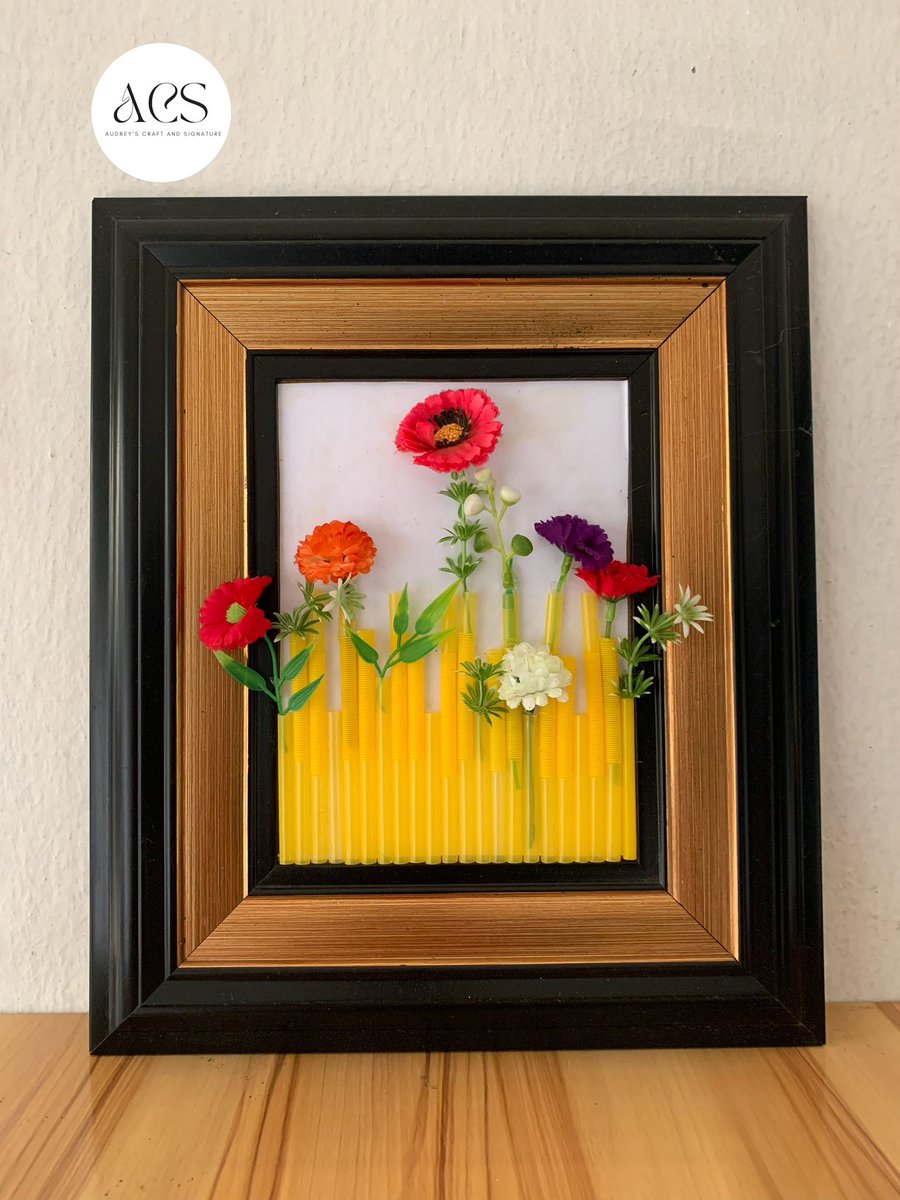
Hi, my name is Esther Ubak. I came all the way from Akwa Ibom State to Lagos for an exhibition, full of hope and excitement, dreaming that this trip would open doors for my craft and creativity.
I’m a startup without funding anywhere, and to make this trip possible, I had to borrow money from friends, gather materials, and cover my travel expenses, all with the hope that the exhibition would be a success.
But things didn’t turn out as I expected. The exhibition didn’t go as planned, and now, I’m faced with the reality of having to refund every single amount I borrowed.
I really need the support I can get right now.
So here I am, still in Ajah, Lagos, with all the beautiful, handcrafted, upcycled pieces I brought along. I cannot go back home until they are sold, and every piece carries the love, time, and creativity I poured into it.
Below this post are the products available for pickup, each with its price tag clearly displayed.
So If you’re in Lagos and love unique art, this is your chance to grab something special.
📍 Location: Ajah, Lagos
📲 To order: Screenshot your favorite piece(s) and DM me on WhatsApp: +2347080501180
If you can’t afford a piece right now, you can still share this post, refer a friend, or invite someone who might love them. Your support, big or small really means the world and can help turn this setback into a blessing. 🙏