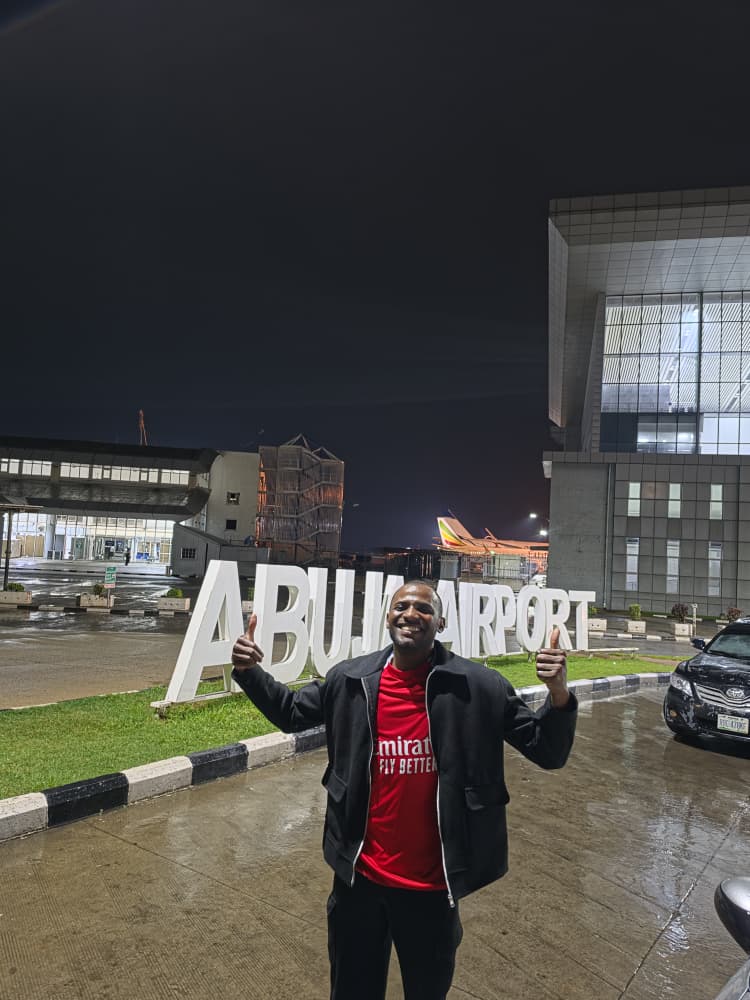
How Someone Took My Bag At The Airplane in Abuja
As soon as I left Incheon Airport and arrived in Dubai, the quiet peace of Korea vanished from the air around me. People no longer queued to board the airport shuttle bus. People no longer lined up to use the escalator or stayed only on the right side; some users stood in the middle with their carry-on luggage, blocking the whole aisle.
At the boarding gate lounge for my connecting flight, a woman sat at the end playing a Christian song loudly from her phone, while a man a few seats away watched football highlights with the sound bleeding out enough for the quiet lounge to reflect it. The airplane was like a marketplace before it took off, full of chattering, loud reunions, and attempts at friendship with seatmates. This particular lady talked about how she was connecting from Malaysia and had lived a substantial number of years there; going to Nigeria now feels like a visit and not home.
The flight was pleasant and eased us into the Lagos airport smoothly. I had a connecting flight to the east at 5:00 p.m. We arrived at 3:45 p.m., but I spent the next hour waiting for my luggage at the baggage claim section of the airport. When I finally claimed it, customs and immigration clearance was easy, and luckily, not many people begged or insisted that I give them money.
I was charged ₦15,000 for a taxi from the international wing to the domestic wing of the airport. I arrived at the airline counter late; the flight was delayed, but they still could not let me check in. I eventually rebooked the ticket for a 6:45 pm Abuja flight. It was delayed by 50 minutes due to a delay caused by the late arrival of the aircraft.
The waiting area was littered with water bottles, biscuit wrappers, apple remnants, and similar food items that one could buy at the airport. One of the airlines had earlier served food items to waiting passengers because of the delay in their own flight to another destination. Delayed flights were on everyone's lips.
There is no way Nigerians today are among the happiest people on earth; everyone's face looks gloomy, dejected, or angry. Others are complaining, arguing, or making a faux show of rights they are not entitled to, while the rest are indifferent or locked into phone calls.
Shortly after we prepared to board the aircraft, a woman arrived to clean the area with a lack of enthusiasm that suggested she might be overworked, underpaid or owed months of salary.
The flight attendant responsible for the two rows near my seat, which happened to be the emergency exit, appeared quite stern and somewhat discourteous. Her instructions were delivered firmly, and her tone was strictly professional. The passenger beside me remarked that she would make an excellent head teacher, adding that it can be challenging to serve Nigerian generally, as many tend to disregard instructions. One man confronted her for touching his bag in the overhead locker, claiming it contained a laptop. She explained without apology that she was simply organizing the carry-on items to ensure the locker could accommodate more luggage. The exchange lasted several minutes, with both parties asserting their positions. Shortly thereafter, our flight departed for Abuja.
The Air Peace flight to Abuja was peaceful; sitting above the weather, time seemed to slow down, and I fell asleep and saw myself in Abuja with only a deep, quiet peace and a sense of absolute freedom like a hero's return. It was raining at the airport.
Then, the unimaginable happened: someone stole or mistakenly took my checked- in bag from the overhead luggage compartment, leaving their own behind. My bag contained all my personal effects—my passport, flight tickets, laptop, phone, books, other invaluable items, and the two iPhones Collins bought for his siblings in Enugu.
I ran down the boarding staircase, but the person had disappeared even before the airport shuttle bus arrived to drive passengers to the terminal building. I reported it to the airport attendants and security, and they used their intercom to notify the exit gate and baggage inspection officers. The person evaded all these protocols and is already home.
The flight attendant handed over the bag he left behind to airport security. The bag was inspected, and an MTN Nigeria staff identity card was found inside along with other items. The identity card provided the passenger's phone number, and he was contacted. He said it was a mistake caused by his hurried exit and travel fatigue. He arrived one hour later, by which time it was already 11:10 p.m.
The taxi driver who took me home was full of cautionary and advisory stories. Everyone is afraid. Everyone is warning you about places not to go at night. Stories of armed robbery attacks and daytime betrayals of trust burdened his lips and sank my heart.
In one of the stories, he said a man who had returned from overseas with his little children negotiated a taxi ride with a driver. The driver did not come down to help him put his luggage in the boot, which he said was understandable as the task force usually impounded non-union member vehicles picking up passengers at the airport. He remained in the driver's seat, and as soon as the luggage had been loaded, he drove off with it, leaving the man and his children behind.
That was it. The father was left shouting for help, and no one seemed to understand what was even happening to him. It reminded me of the helplessness you face in Nigeria when you suddenly become a victim of robbery. No one around seems interested in what is happening to you, sometimes not even the police when they are at the scene.
When my previous phone was stolen as I walked through the exiting crowd at the National Institute for Policy and Strategic Studies (NIPSS) in Jos, after the graduation ceremony of senior military and paramilitary officers and directorate-level civil servants, I shouted for help. Everyone was completely disinterested, as though there was nothing bizarre about what had just happened.
The taxi driver said he had suspected that the other driver was a fraud from the moment he agreed to carry the man and his family for a terribly low fare of ₦15, 000 compared with the ₦25,000 he himself had quoted, which he considered a reasonable fare from the airport into Abuja city centre.
The light at the end of this particular story was that he decided to pursue the fleeing driver in his empty vehicle. He tried several times to stop him, but there were no police checkpoints along the Lugbe Expressway. Eventually, however, he caught up with him in traffic on a service lane shortly after the driver entered the city.
Begging you people to please look at the lives of your age mates outside the country and understand what this people have taken from us.
Nothing about how we’re living is ok. Absolutely nothing. It is not language or culture or alliance to tribesmen that will save us.
Because she's dated a guy who drives a Benz, she thinks she's above the guy with a Corolla even when she can't afford one herself.
This is how most women think.